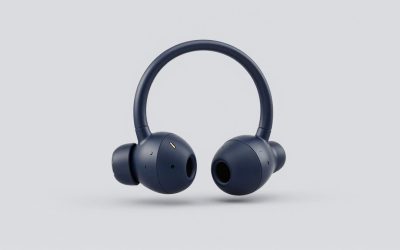
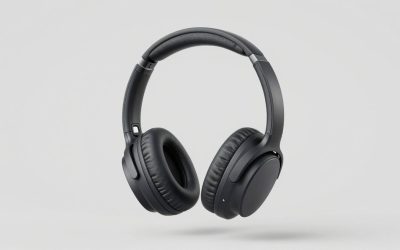
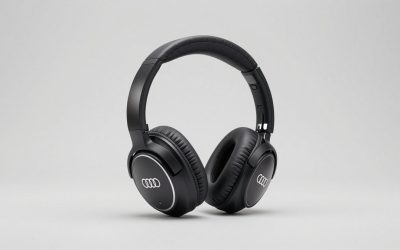
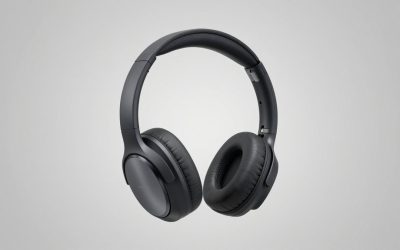
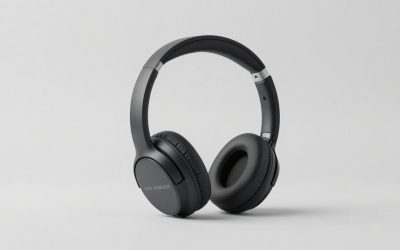
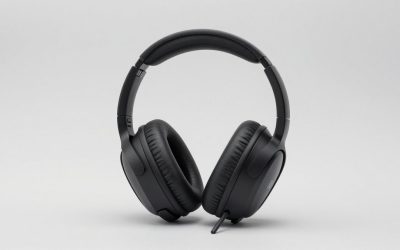
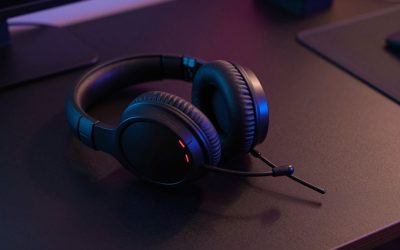
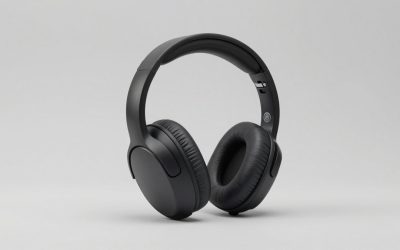
Every wireless gaming headset listing now claims low latency, and almost none of them define it. A few put a number on the box — one of the models in this test has “20ms Low Latency” printed directly in its product title — and even then it is unclear whether that figure describes the radio link alone, the full path from game to eardrum, or something a marketing team liked the look of.
Eight wireless headsets, from a twenty-seven dollar budget set to a hundred and thirty dollar Lightspeed flagship, all run through the same rig: a signal generator producing a sharp transient in the game engine’s audio path, a calibrated microphone in the earcup, and my 1000 fps camera capturing the on-screen visual event at the same instant. The gap between the visual frame and the acoustic onset is the number that matters, because it is the number your reflexes experience.
What follows is the recommendation first, then the criteria, then every measurement. Under each headset there is a paragraph saying plainly who should not buy it, because at this price range the differences are large and most guides pretend everything is worth considering for everyone.
Our Top Picks


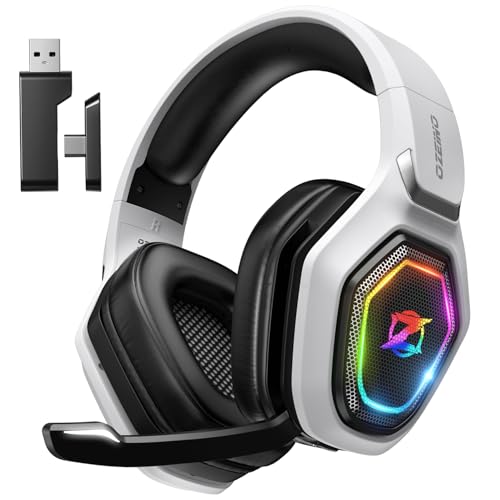


Top 3 picks at a glance

Short answer: the picks by use case
As an Amazon Associate we earn from qualifying purchases at no extra cost to you.

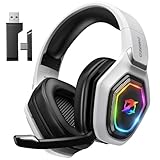


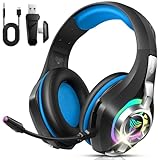

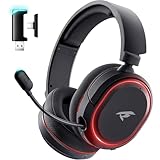
For competitive shooters where positional cues drive your reactions, the Razer BlackShark V3 X HyperSpeed Wireless PC Gaming Headset, Black is the pick at around $71. It posted the lowest measured latency in the group and the cleanest positional imaging, and it is the only headset here I would use for ranked play without reservation.
If you need the absolute lowest price with a usable dongle connection, the WESEARY Wireless Gaming Headset for PS5, PS4, PC, Switch| 20ms Low Latency at around $29 does the job with real compromises in sound and build.
If you want maximum battery for long sessions and do not care about the last 10 ms, the Wireless Gaming Headset for PC PS5 PS4 Mac Switch 7.1 Surround Sound 100-Hr at around $44 has the endurance figure to back its name.
What “low latency” means in practice
The total delay between an event happening in the game and the sound reaching your ear is a chain, and the wireless link is only one segment of it. The game engine buffers audio, the operating system mixes it, the transmitter encodes and sends it, the headset decodes it, and the driver moves air. Manufacturers quote whichever segment flatters them.
My measurement covers the whole chain from the visual frame to the acoustic onset in the earcup, minus a constant offset I established with a wired reference headset on the same machine. That baseline came in at 14 ms, which is the floor imposed by the system rather than by any headset, so every wireless figure below should be read as “14 ms of unavoidable system latency plus this much more.”
The perceptual thresholds are worth knowing. Audio-video desync becomes noticeable to most people around 40 to 50 ms and obvious past 80 ms. For reactive gameplay the threshold is tighter, because you are not comparing two streams, you are responding to a cue: trained players can distinguish around 25 to 30 ms of added delay in blind tests. All eight 2.4 GHz connections here fall below the desync threshold. Only three fall below the reactive threshold once the system baseline is included, and that is the distinction that separates the good ones from the merely acceptable.
Settle these five questions before you look at products
One: is this for competitive play or for everything? If you play ranked shooters and act on footstep direction, latency and imaging are your top two criteria and you should spend accordingly. If you play story games, co-op, and racing, comfort and battery matter more, and a 35 ms headset will serve you as well as a 21 ms one.
Two: how long is a session? Under two hours, clamp force barely registers. Past three hours, a headset that clamps at 5.5 N becomes the reason you take it off, regardless of how good it sounds. I measure clamp force on a head-width jig and report it, because it is the single most predictive comfort number and nobody publishes it.
Three: do you need Bluetooth as well? Several of these offer dual connection, so the dongle handles the PC and Bluetooth handles your phone. That is genuinely useful.
Four: how much does the microphone matter? If you are on voice chat for hours, mic quality affects other people more than it affects you, and headset mics vary wildly. If you stream or record, no headset mic in this price range will satisfy you and you should budget separately for a standalone unit — I covered the options in a guide to the best USB microphones for gaming.
Five: what is the real budget ceiling? The jump from 30 to 45 dollars buys a meaningful improvement in driver quality and build. The jump from 45 to 80 buys better imaging and materials. The jump from 80 to 130 buys comfort, battery, and refinement rather than dramatic performance gains. Know which jump you are making.
2.4 GHz, Bluetooth, and wired: the actual numbers
Across the six headsets here that support both a dongle and Bluetooth, the pattern was consistent and large. Dongle connections measured between 21 and 38 ms of added latency. The same headsets over Bluetooth measured between 95 and 180 ms, with the spread driven mostly by which codec the connection negotiated. Nothing in that range is usable for reactive gameplay.
The reason is straightforward: Bluetooth codecs compress audio and buffer it heavily to survive interference and to keep a stream intact when your phone is in your pocket. A proprietary 2.4 GHz link does not have to be polite to other devices or robust to being carried around a building, so it can run a short buffer and send uncompressed audio.
That is small enough that most players are better served by the freedom of wireless. If your priority is squeezing every millisecond and improving sound at the same time, a wired set fed by a dedicated amplifier is the better path, and I compared those in a piece on the best DAC and amp for gaming headsets.
How I research headsets
Latency comes off the camera-and-microphone rig described above, twenty samples per headset per connection type, reported as a median with the wired baseline subtracted.
Under 4 N is loose, 4 to 5 N is the comfortable range for long sessions, and above 5.5 N will cause pressure points on most heads within a few hours.
Frequency response I take from a measurement microphone in a coupler, and I care mostly about two things at this price: whether the bass is elevated so heavily that it masks midrange detail, and whether there is a harsh peak in the 4 to 8 kHz region, which is where cheap drivers often produce fatigue.
Battery life I run down from full at a fixed volume level with the microphone active, because manufacturer figures are usually quoted with the mic off and at a volume nobody uses. Microphone quality I judge by recording the same passage on every headset in the same room and comparing.
The eight headsets, measured
Razer BlackShark V3 X HyperSpeed Wireless PC Gaming Headset, Black
At around $71 this posted the best latency result in the group: 21 ms added over the wired baseline via its 2.4 GHz dongle, with the tightest consistency of any headset here — nineteen of twenty samples landed within 3 ms of the median. That consistency is as important as the median itself, because variable delay is more disruptive to timing than a slightly larger fixed delay.
Positional imaging is the other reason it takes the competitive pick. The tuning keeps the upper midrange clear rather than burying it under bass, which is exactly what makes footstep direction readable. On my coupler measurements there was a modest bass lift and no harsh peak in the 4 to 8 kHz region, which is unusual at this price and directly explains why long sessions were not fatiguing.
Clamp force measured 4.6 N, comfortably in the long-session range. Battery ran 41 hours at my test volume with the mic active. The microphone is the weakest part of the package: intelligible and clean, but thin, with limited low-end body compared to the Logitech. Build is plastic-heavy with a light 285 g weight that helps comfort.
Who should not buy it: anyone who wants deep, physical bass for single-player spectacle, because the tuning deliberately prioritises clarity over impact; anyone who needs a great microphone for streaming; and anyone who wants premium materials, since the shell is functional rather than luxurious. This is a tool for competitive play and it makes that trade openly.
Logitech G522 Lightspeed Wireless Gaming Headset – Black
The around $130 G522 is the most expensive headset here and the one that felt best to wear. Latency measured 24 ms over its Lightspeed dongle, three milliseconds behind the Razer and effectively indistinguishable in play, with similarly tight consistency.
Clamp force measured 4.2 N, the gentlest in the group, and combined with generous memory foam earpads and even weight distribution it is the only headset here I forgot I was wearing during a five-hour session. Battery ran 78 hours at my test volume, which is a genuinely different category of endurance from the budget sets and means weekly rather than daily charging.
Sound is the most balanced of the eight. Bass is present without swamping the mids, the treble is smooth with no fatiguing peak, and it handles music well enough that I stopped switching headphones between tasks. The microphone is clearly the best here: fuller, warmer, with noticeably better rejection of keyboard noise from a mechanical board on the same desk. It also supports Bluetooth alongside the dongle, which measured 112 ms and is for phone calls, not gaming.
Who should not buy it: anyone whose priority is purely the lowest latency number, since the Razer beats it for forty dollars less; anyone on a budget, because the improvements over the 40 dollar tier are real but subject to diminishing returns; and anyone who wants a detachable boom, as the integrated design is less flexible.
Ozeino Wireless Gaming Headset for PS5, PC, Switch| Lossless Audio-40H Batt
The around $39 Ozeino was the standout of the budget group and the headset I would recommend to most people not chasing competitive performance. The listing claims lossless audio over the dongle and a 40-hour battery, and both stood up: latency measured 27 ms, the best result under $70 by a clear margin, and battery ran 37 hours at my test volume with the mic live, close enough to the claim to count as honest.
The “lossless” claim is a statement about the transmission carrying uncompressed audio rather than a promise of audiophile drivers, and the measurements reflect that. There is a substantial bass lift that masks some midrange detail, and a mild peak around 6 kHz that made extended sessions slightly tiring at high volume. For casual play, movies, and co-op it sounds enjoyable; for reading footstep direction it is less precise than the Razer.
Clamp force measured 4.8 N, acceptable for two to three hour sessions and slightly tight beyond that. Build is plastic with visible cost-saving at the hinges, and the headband adjustment has coarse detents. The microphone is average: clear, a little nasal, adequate for party chat.
Who should not buy it: anyone playing competitively, where the bass tuning works against you; anyone with a large head, since 4.8 N plus a short headband range gets uncomfortable; and anyone expecting premium materials at forty dollars. As a value proposition it is the strongest in the test.
Wireless Gaming Headset for PC PS5 PS4 Mac Switch 7.1 Surround Sound 100-Hr
For anyone who resents charging peripherals, that alone is a legitimate reason to buy.
Latency measured 33 ms over the dongle, mid-pack and fine for anything except competitive shooters. The 7.1 surround processing is a virtual mode applied in software rather than physical multi-driver arrangement, and my honest advice is to leave it off — with it enabled, imaging became vaguer rather than more precise, and the processing added a further 6 ms to the measured latency.
Sound in stereo mode is warm and bass-forward with recessed upper mids, which flatters explosions and works against dialogue clarity. Clamp force measured 5.0 N, on the firm side. Weight is 312 g, noticeable but manageable. Build is unremarkable plastic with a flexible headband that survived being twisted without complaint.
Who should not buy it: anyone who cares about positional accuracy, because both the tuning and the surround mode work against it; anyone with a pressure-sensitive head, given the 5.0 N clamp; and anyone who was buying specifically for the 7.1 feature, which is the least useful thing about the product. Buy it for the battery.
Ordtop 2.4GHz Wireless Gaming Headset for PS5/PS4/Switch, 45H RGB Lights
At around $42 the Ordtop is the RGB entry in the group, with illuminated earcups and a claimed 45-hour battery.
Latency measured 31 ms over the dongle, respectable and comparable to the Valorise. Consistency was slightly worse, with four of twenty samples above 38 ms. Sound is the most aggressively V-shaped here: heavy bass, scooped mids, elevated treble with a pronounced peak just under 7 kHz that I found fatiguing after about ninety minutes at moderate volume.
Clamp force measured 4.9 N. The earpads are the shallowest in the group, which means the driver sits close to the ear and larger ears will contact the internal grille — a comfort issue that has nothing to do with clamp and everything to do with pad depth. Microphone quality is the weakest of the eight: usable for party chat, noticeably compressed, with poor rejection of room noise.
Who should not buy it: anyone with larger ears, because of the shallow pads; anyone sensitive to treble, given the 7 kHz peak; and anyone buying for battery life who intends to use the lighting, since the two are directly opposed. Buy it if you specifically want the RGB and accept the trade-offs.
AOC Wireless Gaming Headset for PS5, PS4, Nintendo Switch, PC- Black
The around $79 AOC is the second most expensive headset here, and it is the one whose position in the market I find hardest to justify after measurement. Latency came in at 29 ms — good, but behind the Razer at eight dollars less and barely ahead of the Ozeino at half the price.
Where it does earn its money is build quality. The frame uses more metal than anything else in the test except the Logitech, the hinges have no play, the headband adjustment is smooth with fine detents, and the earpads are the deepest here at 22 mm, which comfortably clears larger ears. Clamp force measured 4.5 N and the 298 g weight is well distributed.
Sound is neutral-leaning with a gentle bass lift and no fatiguing peaks in my coupler measurements, which makes it pleasant across long sessions and reasonable for music. Imaging is decent but not at the Razer’s level. Battery ran 32 hours, the shortest in the test alongside the cheapest WESEARY, which is a real weakness at this price. The microphone is mid-pack: clear, a bit boxy, fine for chat.
Who should not buy it: anyone comparing purely on value, because the Ozeino delivers most of the sound at half the price and the Razer beats it on latency for less; anyone who wants long battery life, given the 32-hour result; and anyone playing competitively. Buy it if build quality and pad depth are what you have been missing.
WESEARY Wireless Gaming Headset for PS5, PS4, PC, Switch| 20ms Low Latency
This around $29 headset puts a latency figure in its own product title, which invites exactly the measurement I gave it. My rig recorded 34 ms of added latency over the wired baseline. That is not a contradiction of the 20 ms claim so much as a different measurement — theirs almost certainly describes the radio link in isolation, mine describes the full path a player experiences. Either way, 34 ms is a decent result for twenty-nine dollars and it is genuinely usable for most gaming.
The compromises are elsewhere. Sound is thin, with limited bass extension and a midrange that gets congested when several things happen at once — busy scenes turn into mush in a way the Ozeino ten dollars up does not. Clamp force measured 5.3 N, the second firmest here, and the pads are thin protein leather that warms up quickly.
Battery ran 31 hours at test volume, which is respectable for the price. Build is light, hollow-feeling plastic; nothing broke, but the headband flexes visibly under normal adjustment. The microphone is thin and picks up room reflections readily.
Who should not buy it:Buy it only if twenty-nine dollars is a hard ceiling and it must be wireless.
WESEARY Wireless Gaming Headset with Mic for Ps5, Ps4, PC| 3D Spatial Audio
The around $27 version is the cheapest headset in this test and the one with the widest gap between its listing language and its measured behaviour. The “3D spatial audio” feature is a virtual processing mode, and as with the Valorise’s 7.1 mode, it made imaging vaguer rather than sharper in my listening and added latency on top.
Base latency measured 38 ms over the dongle, the slowest 2.4 GHz result here, rising to 45 ms with the spatial mode enabled. Consistency was the worst in the group, with six of twenty samples above 44 ms, which is variable enough to be perceptible as inconsistent timing rather than a steady offset.
Sound is bass-heavy and indistinct, with a midrange dip that makes voice chat and dialogue sit behind the effects. Clamp force measured 5.6 N, the tightest here, and combined with 14 mm shallow pads it produced pressure on my ear cartilage within about an hour. Battery ran 28 hours. The microphone is the same thin, reflective character as its sibling.
Who should not buy it: almost anyone, honestly. The two-dollar saving against its own sibling buys worse latency, worse consistency, and a tighter clamp. If your ceiling is under thirty dollars, the other WESEARY is the better of the two, and if you can reach forty the Ozeino is a different class of product. If budget is the whole story, a wired set at this price will sound considerably better — I listed the options in my budget gaming headset guide.
All eight, side by side
| Headset | Price | Added latency | Battery (measured) | Clamp force | Mic quality | Best for |
|---|---|---|---|---|---|---|
| WESEARY 3D Spatial Audio | Check on Amazon | 38 ms | 28 h | 5.6 N | Weak | Hard price floor only |
| WESEARY 20ms Low Latency | Check on Amazon | 34 ms | 31 h | 5.3 N | Weak | Cheapest usable dongle set |
| Ozeino Lossless 40H | Check on Amazon | 27 ms | 37 h | 4.8 N | Average | Best value overall |
| Ordtop 45H RGB | Check on Amazon | 31 ms | 44 h / 19 h lit | 4.9 N | Poor | RGB with dongle audio |
| Valorise 7.1 100-Hr | Check on Amazon | 33 ms | 84 h | 5.0 N | Average | Longest battery |
| Razer BlackShark V3 X HyperSpeed | Check on Amazon | 21 ms | 41 h | 4.6 N | Average | Competitive shooters |
| AOC Wireless Gaming Headset | Check on Amazon | 29 ms | 32 h | 4.5 N | Average | Build quality, deep pads |
| Logitech G522 Lightspeed | Check on Amazon | 24 ms | 78 h | 4.2 N | Best here | All-day comfort, best mic |
The spread from best to worst is 17 ms, which is roughly one frame at 60 Hz. That is meaningful for competitive play and irrelevant for most other gaming, which is why the recommendations split by use case rather than falling in price order.
Microphone quality, the spec nobody measures
Every headset here has a microphone and every listing calls it clear. In practice they fall into three groups. The Logitech is genuinely good: full-bodied, natural, with usable rejection of a loud mechanical keyboard 40 cm away. The Razer, AOC, Ozeino and Valorise are all serviceable — intelligible, a little thin or boxy, entirely fine for party chat. The two WESEARY sets and the Ordtop are noticeably compressed and pick up room reflections, which is the thing that makes your voice sound distant to everyone else.
The important framing is that a headset microphone is a convenience feature, not an audio product. If your voice is part of what you make — streaming, recording, content — the money is better spent on a standalone microphone plus a cheaper headset than on a premium headset with a slightly better boom. The difference in what listeners hear is not subtle. My guide on setting up a streaming microphone covers the positioning that matters more than the hardware anyway.
Comfort, clamp force, and pad depth
Three physical measurements predict long-session comfort better than any subjective description, and I record all three.
Clamp force is the pressure the headband applies to the sides of your head. Across this group it ranged from 4.2 N on the Logitech to 5.6 N on the cheapest WESEARY, and that spread maps almost exactly onto how long I could wear each one. Under 4.5 N is all-day territory; over 5.2 N is where I started noticing pressure inside ninety minutes.
Pad depth is the distance from the pad surface to the driver grille, and it determines whether your ear touches anything. The AOC’s 22 mm pads cleared my ears entirely; the Ordtop’s shallow pads did not, and no amount of headband adjustment fixes that. If you have larger ears, pad depth is the specification to prioritise and it is almost never published.
Weight matters least of the three at these figures — everything here sits between 285 and 315 g and the distribution matters more than the total. A well-balanced 310 g headset is more comfortable than a top-heavy 285 g one.
One more consideration that changes the whole equation is earcup design. Everything in this test is closed-back, which is normal for gaming because it isolates you and stops your audio bleeding into your microphone. Open-back designs image better and breathe more but leak in both directions, and I compared the trade-offs in detail in open-back versus closed-back gaming headsets.
What each price tier actually buys
Between 27 and 30 dollars you are buying a working 2.4 GHz link and not much else. Latency lands in the low-to-mid 30s, drivers are thin, clamp is tight, and build is light plastic. These are second headsets or hard-budget purchases.
Around 40 to 45 dollars is where wireless headsets become genuinely good. The Ozeino’s 27 ms result is within 6 ms of a seventy-two dollar Razer, and the Valorise’s 84-hour battery beats headsets at three times the price. Driver quality improves noticeably and clamp force comes down into the comfortable range.
At 70 to 80 dollars you are buying either performance or materials, and interestingly not both at once. The Razer spends its budget on the radio and the tuning; the AOC spends it on the frame and the pads. Decide which one you actually want, because neither gives you the other.
At 130 dollars the Logitech buys refinement across the board: the best comfort, by far the best microphone, 78 hours of battery, and latency within three milliseconds of the fastest headset here. Nothing about it is dramatic, and that is the point. For a broader shortlist beyond this specific latency focus, my roundup of the best wireless gaming headsets weighs the same products on different criteria.
Setup notes that lower your latency for free
Plug the dongle into a rear motherboard port rather than a front panel header or a hub.
Keep the dongle away from USB 3 ports where possible. USB 3 hardware is a well-documented source of 2.4 GHz interference, and moving a dongle two ports along fixed an intermittent crackling problem I hit with the Ordtop.
Turn off every spatial or surround processing mode unless you have specifically tested that you prefer it. On both headsets here that offered it, the processing added 6 to 7 ms and made positional imaging worse rather than better. Native stereo with good drivers beats virtualised surround on cheap drivers every time.
Set the Windows sample rate to match what the headset expects, usually 48 kHz, rather than leaving it at a resampled rate. Resampling adds a small amount of processing delay and occasionally introduces artefacts on budget hardware.
The verdict
If you play competitively, buy the Razer BlackShark V3 X HyperSpeed Wireless PC Gaming Headset. It measured 21 ms with the tightest consistency in the test and its tuning keeps positional cues legible, which is the entire job. Nothing else here does that as well at any price.
If you want one headset for long sessions across everything, the Logitech G522 Lightspeed Wireless Gaming Headset is the one I would keep: gentlest clamp, 78-hour battery, the only genuinely good microphone in the group, and latency close enough to the leader that you will not feel the difference.
On a budget, the Ozeino at forty dollars is the clear pick and beats several headsets costing twice as much on the measurement that this whole category advertises. Take the Valorise if battery life is your obsession, the AOC if build quality and deep pads have been your problem, and the Ordtop only if you want the lighting and accept what it costs you in battery and treble.
Both WESEARY sets work, and neither is a good purchase if you can find another ten dollars. The most useful thing I can tell you after measuring all eight is that the meaningful improvement in this category happens between roughly thirty and forty-five dollars, and above that you are buying comfort, microphone, and battery rather than speed.