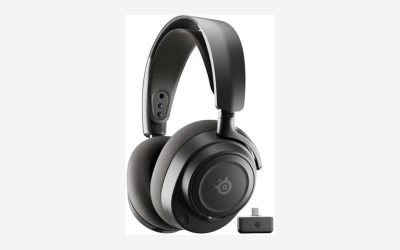
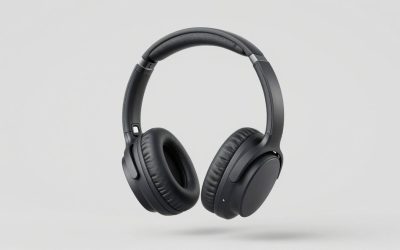
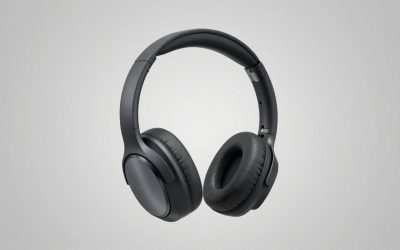
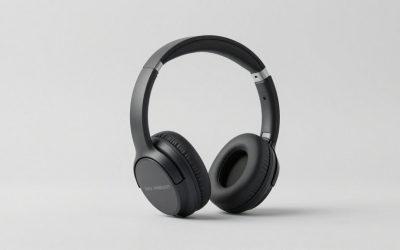
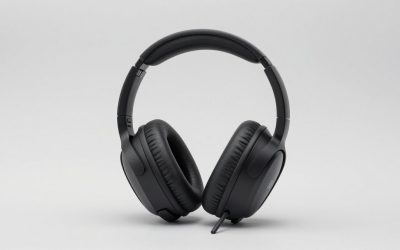
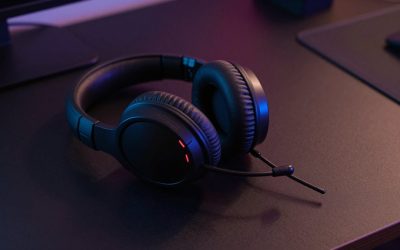
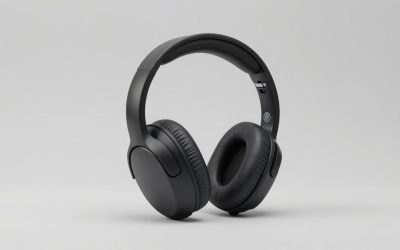
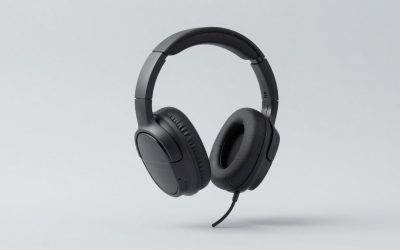
Our top pick for detailed sound is the Sennheiser HD 800 S, an open-back reference headphone with one of the widest, most precise presentations available, best suited to a quiet room and a capable amplifier. At a lower price tier, the HIFIMAN Edition XS brings planar detail and a spacious stage, the Audeze LCD-2 Classic adds weighty planar bass, and the closed-back Beyerdynamic DT 700 Pro X suits shared rooms where isolation matters.
As an Amazon Associate we earn from qualifying purchases at no extra cost to you.
Our Top Picks
 Sennheiser HD 800 S Over-The-Ear Audiophile Reference Headphones10.7 x 5.7 x 13.8 inches0.7 PoundsCheck on Amazon
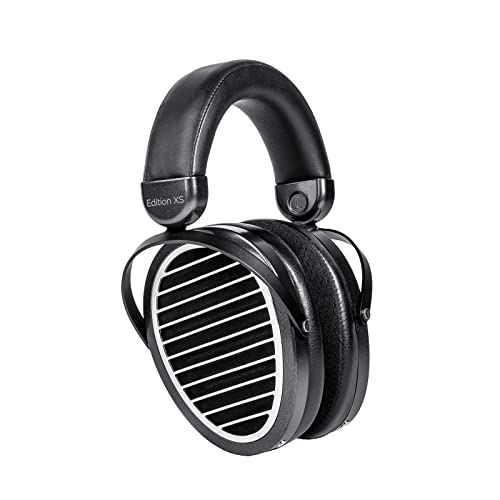 HIFIMAN Edition XS Full-Size Over-Ear Open-Back Planar Magnetic3.1 x 0.1 x 6.3 inches0.9 PoundsCheck on Amazon
 ASUS ROG Kithara Hifiman Gaming/Audiophile Open Wired Headphones6.7 x 10.2 x 4.3 inches0.7 PoundsCheck on Amazon


Top 3 picks at a glance

Quick recommendations by listening situation
| Your situation | Best starting point | Why it fits | Important limitation |
|---|---|---|---|
| Competitive PC gaming in a quiet room | Sennheiser HD 800 S | Very wide presentation and precise positional imaging | Expensive, bright for some listeners, and leaks sound |
| Music, games, and a modest headphone amp | HIFIMAN Edition XS | Planar detail, spacious sound, and moderate 18-ohm impedance | Open-back leakage and variable comfort depending on head shape |
| First serious audiophile purchase | Sennheiser HD 600 | Natural midrange, replaceable parts, and broad compatibility | Narrower soundstage and limited sub-bass compared with some planars |
| Shared room or noisy environment | Beyerdynamic DT 700 Pro X | Closed isolation, durable construction, and relatively easy drive requirements | Less spacious imaging than a good open-back headphone |
| Powerful bass with high resolution | Audeze LCD-2 Classic | Planar bass extension and dense, smooth detail | Heavy and requires a more capable amplifier than many dynamic headphones |
Audiophile headphones worth shortlisting, in detail
The table above names starting points by situation. The sections below go deeper on six headphones that cover the main routes into detailed sound: a reference dynamic flagship, a classic high-impedance all-rounder, two planar magnetic options, a planar built specifically for gamers, and a closed-back studio model for shared rooms. Specs come from each manufacturer’s published data.
Sennheiser HD 800 S

The HD 800 S is the specialist’s choice when imaging and separation matter more than anything else. Its 56 mm ring radiator drivers sit angled inside very large open earcups, which places sound slightly in front of the ears rather than directly beside them. The result is one of the widest, most precise stereo presentations available from a headphone, which is why it is so often recommended for competitive gaming in a quiet room as well as for orchestral and live recordings.
Sennheiser rates it at 300 ohms with a sensitivity of 102 dB SPL at 1 V, and it weighs just 330 g without the cable, light for its size. It ships with both a 6.35 mm single-ended cable and a 4.4 mm balanced cable. Frequency response is rated from 4 Hz to 51 kHz with distortion under 0.02%. The “S” revision added an absorber to tame the treble peak that critics noted on the original HD 800.
Best for: listeners in a quiet room who prioritize positional precision and a large, airy soundstage, and who already own or plan to buy a capable amplifier.
Drawbacks: it sits in the premium price tier, well above most of this guide. Treble remains bright for some listeners, which can make harsh game mixes or poorly mastered music fatiguing. As a 300-ohm dynamic headphone it needs real voltage swing; plan on a dedicated headphone amplifier rather than a motherboard output. And like any open-back, it leaks sound freely.
Using the calculation from the amplifier section, reaching 110 dB peaks from 102 dB per volt requires about 2.5 V RMS, which many laptops and onboard audio chips cannot deliver cleanly. The good news is that 330 g and generous pads make it comfortable for very long sessions once properly powered, and Sennheiser supplies replacement pads, cables and headband padding.
Sennheiser HD 650
The HD 650 is the warmer sibling of the HD 600 named in the recommendations above, and it has been a reference point in audiophile circles for two decades. It uses 42 mm dynamic drivers in an open-back design, rated at 300 ohms and 103 dB SPL at 1 V, with a frequency response of 10 Hz to 41 kHz. Weight is roughly 260 g without the cable, making it one of the lightest full-size audiophile headphones available.
The tuning is smooth and slightly warm, with a rich midrange that flatters vocals, acoustic instruments and dialogue. Compared with the HD 600, it adds a little bass body and slightly softer treble, which makes it more forgiving of bright game audio and compressed recordings. Clamp force is firm when new and relaxes with use.
For gamers, the HD 650’s strength is consistency rather than spectacle. Dialogue in story-driven games stays clear and natural, and its smooth top end means bright gunfire or UI sounds rarely become harsh over long sessions. Positional cues are accurate, though the stage feels closer to the head than on the HD 800 S. The headphone also scales well: it sounds good from a modest USB DAC/amp with enough voltage, and better still from a quality desktop amplifier, so it can grow with the rest of a system.
Best for: long listening sessions, story-driven games, vocals and acoustic music, and anyone who finds brighter headphones fatiguing.
Drawbacks: the soundstage is more intimate than the HD 800 S or the planar options, and the relaxed treble gives less of the “crisp detail” effect some buyers expect. Like the HD 800 S, its 300-ohm load benefits from an amplifier with good voltage output. Some listeners also find the bass rolls off below the lowest octave.
The HD 600-series reputation for repairability applies here too: pads, cables, headband padding and even drivers are sold separately. That longevity means the HD 650 can be one of the lowest cost-per-year headphones in this guide, sitting in the mid price tier alongside the Edition XS and DT 700 Pro X.
HIFIMAN Edition XS
The Edition XS is the most affordable way into large-format planar magnetic sound, and it appears in the recommendation table above for good reason. HIFIMAN uses a thin Neo Super-Nano Diaphragm with its Stealth Magnet design, which shapes the magnets to reduce wave turbulence as sound passes through the open grille. The large oval earcups and open-back design create a spacious presentation that suits open-world games, live recordings and electronic music.
HIFIMAN rates it at 18 ohms with a sensitivity of 92 dB, a frequency response of 8 Hz to 50 kHz, and a weight of about 405 g. The low impedance makes it easy to get loud on most sources, but the modest sensitivity means it draws more current than typical dynamic headphones. Using the same method as the amplifier section, reaching 110 dB peaks from 92 dB/mW needs around 63 mW, so a USB DAC/amp with solid power output is a worthwhile pairing.
The headband uses a suspension strap under a metal arc, and the cups swivel to follow the shape of the head, though larger or smaller heads may need to experiment with the strap position for a good seal. HIFIMAN supplies a detachable cable with 3.5 mm connectors at the cups, making replacements and balanced cables easy to source. For music, its scale suits orchestral, live and electronic recordings, and its bass extension gives games and films a fuller foundation than most open-back dynamics.
Best for: listeners who want planar bass extension and a wide stage at a mid-tier price, and gamers who enjoy immersive single-player titles.
Drawbacks: fit varies with head shape because of the large cups and headband design, build quality has historically been less consistent than Sennheiser’s, and open-back leakage is significant. Treble can sound slightly bright on some recordings.
Compared with the HD 650, it trades midrange warmth for scale and extension. Compared with the LCD-2 Classic, it is lighter and less expensive, with a brighter, airier character instead of Audeze’s dense, smooth tone.
Audeze LCD-2 Classic
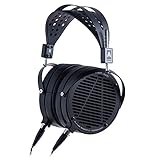
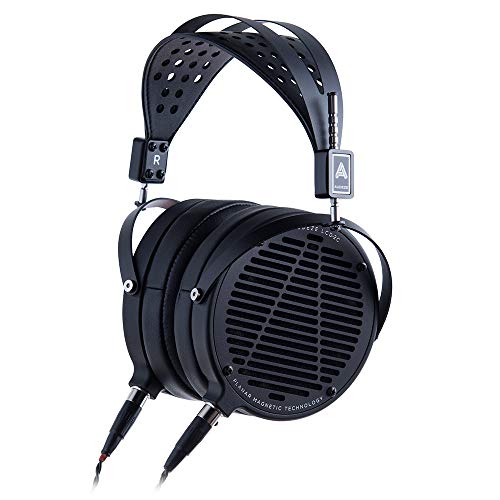
The LCD-2 Classic is the pick for listeners who want planar bass weight and a dense, smooth sound. It uses large 106 mm planar magnetic drivers with neodymium N50 magnets, rated at 70 ohms and 101 dB/mW, with a 10 Hz to 50 kHz frequency response. Bass extends deep with very low distortion, which gives explosions, synths and orchestral percussion a physical weight that dynamic headphones rarely match.
It is a heavy headphone at around 544 to 550 g, so Audeze uses a suspension headband to distribute the load. Audeze lists a minimum power requirement above 100 mW and recommends more than 250 mW for best results, which reflects the headroom planar drivers benefit from rather than difficulty reaching normal volume.
In games, the LCD-2 Classic favors immersion: engines, explosions and soundtrack bass carry real physical weight, and its smooth treble keeps long sessions free of harshness. Positional detail is good, but the stage is less expansive than on the HD 800 S or Edition XS, so competitive players who value pinpoint imaging may prefer those. Because the drivers are efficient per milliwatt for a planar, it gets loud easily; the extra power Audeze recommends mainly improves dynamics and control on peaks.
Best for: bass-focused listening, electronic and rock music, and cinematic games where scale matters more than pinpoint competitive imaging.
Drawbacks: the weight makes long sessions tiring for some listeners, as the comfort section warns. Its top end is deliberately relaxed, so it can sound less “detailed” in the treble than the HD 800 S. It sits in the upper price tier and needs a capable amplifier.
Audeze sells replacement pads and cables, and the headphone uses standard mini-XLR connectors that make third-party cables easy to find. Choose the open-back version for this guide’s quiet-room recommendations; Audeze also sells a closed-back LCD-2 Classic variant for listeners who need isolation.
ASUS ROG Kithara

The ROG Kithara, launched in early 2026, is an open-back planar headphone built specifically for audiophile-minded gamers. ASUS developed it with HIFIMAN, using 100 mm planar magnetic drivers tuned by ROG, with a rated frequency response of 8 Hz to 55 kHz, 16-ohm impedance and 94 dB sensitivity. The difference from a conventional audiophile headphone is that it ships with a detachable full-band MEMS boom microphone cable, solving the voice-chat problem that open-back headphones usually create.
The box includes two cables: one with the boom mic on dual 3.5 mm connectors, and a hi-fi cable with interchangeable 3.5 mm, 6.35 mm and 4.4 mm balanced plugs. A USB-C adapter, velour pads and leatherette-with-mesh pads are also included. It weighs about 420 g and uses an adjustable headband and metal frame.
The two pad sets let you tune comfort and sound. Velour pads breathe better for long sessions and generally give a slightly more open sound, while the leatherette-with-mesh pads seal more firmly for a little more bass. The included USB-C adapter makes it usable with laptops and handheld PCs that lack a headphone jack, although a dedicated DAC/amp will get more out of the planar drivers. ASUS lists compatibility with PC, Mac, PlayStation, Switch and mobile devices, plus Xbox over a 3.5 mm connection.
Best for: PC gamers who want planar detail and a wide stage without adding a separate desk microphone, and who still want a proper hi-fi cable for music.
Drawbacks: as an open-back design it leaks sound, and the microphone will pick up some of your game audio at higher volumes. There is no wireless option or active noise cancellation. Like the Edition XS, its low impedance and modest sensitivity mean it benefits from a source with good current output.
It sits in the mid-to-upper price tier, close to the Edition XS plus a decent microphone, and its rated 16 ohms and 94 dB sensitivity suggest similar power needs to the Edition XS.
Beyerdynamic DT 700 Pro X

The DT 700 Pro X is the closed-back recommendation from the table above, for shared rooms, late-night listening or setups where a desk microphone sits nearby. It uses Beyerdynamic’s 45 mm Stellar.45 driver, rated at 48 ohms and 100 dB/mW (114 dB at 1 V), with a 5 Hz to 40 kHz frequency response. Isolation is rated at up to 20 dB.
The low impedance and high voltage sensitivity mean it reaches comfortable levels from laptops, controllers and motherboard outputs, so an amplifier is optional rather than required. At about 350 g without the cable, with soft velour pads and a padded headband, it is comfortable for long sessions.
For voice chat and streaming, the closed design is the deciding advantage. A desk microphone sitting near your face will pick up far less game audio than with any open-back headphone, so you can use push-to-talk less and avoid echo complaints from teammates. Beyerdynamic also sells the open-back DT 900 Pro X with the same driver platform for listeners who later move into a quieter room and want a more spacious sound.
Best for: anyone who needs isolation and low leakage, streamers using a desk mic, and listeners who want one headphone for studio work, music and games.
Drawbacks: as with any closed-back, the soundstage is narrower and less natural than the open-back picks. Treble has some of Beyerdynamic’s characteristic energy, which suits detail-hungry listeners but can be sharp on bright recordings.
Repairability is a strong point: Beyerdynamic sells replacement pads, headband padding and cables, and the detachable mini-XLR cable is easy to replace. Compared with entry-level closed-back studio monitors such as the Audio-Technica ATH-M50x and Sony MDR7506, it offers a smoother, more refined tuning and better long-session comfort in a higher price tier.
The detailed picks compared
| Headphone | Design | Driver | Impedance | Sensitivity (rated) | Weight | Amp needed? | Price tier |
|---|---|---|---|---|---|---|---|
| Sennheiser HD 800 S | Open-back | 56 mm ring radiator dynamic | 300 ohms | 102 dB at 1 V | About 330 g | Yes, voltage | Premium |
| Sennheiser HD 650 | Open-back | 42 mm dynamic | 300 ohms | 103 dB at 1 V | About 260 g | Recommended | Mid |
| HIFIMAN Edition XS | Open-back | Planar magnetic | 18 ohms | 92 dB | About 405 g | Recommended, current | Mid |
| Audeze LCD-2 Classic | Open-back | 106 mm planar magnetic | 70 ohms | 101 dB/mW | About 545 g | Yes, for headroom | Upper |
| ASUS ROG Kithara | Open-back with boom mic | 100 mm planar magnetic | 16 ohms | 94 dB | About 420 g | Helpful | Mid to upper |
| Beyerdynamic DT 700 Pro X | Closed-back | 45 mm dynamic | 48 ohms | 100 dB/mW (114 dB at 1 V) | About 350 g | Optional | Mid |
Two patterns stand out. The 300-ohm Sennheisers need voltage, so a desktop amplifier makes the biggest difference for them. The planars have low impedance but lower sensitivity, so they need current and clean power, which a good USB DAC/amp usually provides. The DT 700 Pro X is the only pick that works well straight from a laptop or controller.
Open-back versus closed-back headphones
Open-back: the choice for spacious imaging
Open-back earcups allow air and sound to pass through the rear of the driver. This usually produces a more natural sense of space, clearer separation between instruments, and less of the “sound inside your head” effect. Those traits are valuable in games: footsteps, reloads, distant ambience, and vertical cues can be easier to place.
The Sennheiser HD 800 S is a specialist option for imaging. Its large presentation can make positional details easy to follow, although its treble emphasis may make gunshots, cymbals, or poorly mastered recordings sound sharp. The HD 600 is less expansive but has a reliable midrange balance that works well for dialogue, vocals, acoustic music, and long sessions. The HIFIMAN Edition XS offers planar-driver detail and a larger presentation at a lower price tier, while the Audeze LCD-2 Classic emphasizes weighty bass and a smoother top end.
Open-back headphones do not block outside noise and leak your audio into the room. They are a poor choice beside a sleeping partner, a recording microphone, or a loud PC fan. They also provide little privacy for voice chat.
Closed-back: the practical choice for isolation
Closed-back headphones seal the rear of the driver. This reduces leakage and blocks some environmental noise, while often giving bass a stronger and more immediate character. The trade-off is that reflections inside the cup can make imaging feel narrower or less natural.
The Beyerdynamic DT 700 Pro X is a useful closed-back all-rounder for gaming, music, and voice chat. The AKG K371 is another sensible option when you want a balanced tuning and a relatively low-power setup. The Audeze LCD-XC provides high-end planar resolution in a closed design, but its cost and weight make it a specialist purchase rather than an automatic recommendation.
How to choose tonal balance for games and music
- Neutral or mid-forward: Good for dialogue, vocals, acoustic instruments, and hearing the frequency range where many game sounds are designed to remain intelligible. The HD 600 is a classic example.
- Warm: Adds body to lower mids and bass. It can make music and cinematic games satisfying, but excessive warmth may obscure low-level footsteps or texture.
- Bright: Emphasizes upper mids and treble, which can increase perceived detail and attack. Too much energy can cause fatigue and exaggerate harsh recordings.
- V-shaped: Boosted bass and treble with recessed mids. This can sound exciting, but dialogue and competitive audio cues may be less prominent.
- Planar-style presentation: Many planar magnetic headphones offer clean bass and fine low-level texture, though driver quality and tuning matter more than the technology label alone.
For competitive gaming, do not automatically select the brightest headphone. Imaging accuracy depends on frequency balance, cup geometry, driver behavior, and the game’s mix. A sharp treble peak may make footsteps seem louder without making their direction more reliable.
Planar magnetic versus dynamic drivers
Most headphones use dynamic drivers: a cone-shaped diaphragm pushed by a voice coil sitting in a magnetic field. Planar magnetic headphones instead use a very thin, flat diaphragm with an embedded conductive trace, suspended between arrays of magnets. The whole surface moves at once rather than being driven from the center.
- Bass behavior: planar drivers typically keep distortion very low in the bass, so low notes sound clean and extended rather than boomy. The LCD-2 Classic and Edition XS show this clearly.
- Detail and speed: the light diaphragm responds quickly, which many listeners hear as fine texture and clean transients. Good dynamic headphones such as the HD 800 S can match or exceed planars in imaging, so the technology label alone does not decide quality.
- Weight: magnet arrays add mass. Planars are often heavier, from the roughly 405 g Edition XS to the 545 g LCD-2 Classic, compared with 260 to 350 g for the dynamic picks.
- Power: planars usually have low impedance but modest sensitivity, so they want current and clean power. High-impedance dynamics want voltage. Neither type works at its best from a weak laptop output.
- Durability: both types last for many years with care. Planar diaphragms are delicate if exposed, so avoid pressing on the grilles or storing them under weight.
Choose by sound and comfort rather than technology. A light, well-tuned dynamic headphone that you can wear for hours will be more useful than a heavy planar you take off after one album.
Using audiophile headphones for gaming and voice chat
Most audiophile headphones have no microphone, which is the main practical barrier for gamers. There are several clean solutions:
- Choose a model with a mic option. The ASUS ROG Kithara includes a detachable boom mic cable, and some other headphones accept third-party boom mic cables that replace the standard cable.
- Add a clip-on or attachable boom mic. Detachable boom microphones that stick to the earcup and connect over USB or 3.5 mm give headset-style voice pickup without changing your headphones.
- Use a desk microphone. A USB or XLR mic on an arm sounds best, but with open-back headphones it will pick up some of the audio leaking from your earcups. A dynamic microphone with a cardioid pattern, placed close to your mouth, reduces this. Closed-back headphones such as the DT 700 Pro X avoid the problem almost entirely.
- Use a DAC/amp with a mic input. Several gaming-oriented USB DAC/amps include a microphone input and game/chat balance controls, combining power for demanding headphones with headset-style voice features.
For positional audio, set games to their headphone or stereo output and avoid stacking virtual surround from Windows, a DAC app and the game at the same time. Good open-back headphones already provide the natural stage that virtual surround tries to simulate.
Impedance, sensitivity, and amplifier requirements
Impedance alone does not tell you whether a headphone is easy to drive. Sensitivity, measured in decibels per milliwatt or per volt, is equally important. A 32-ohm headphone can still need substantial current, while a 300-ohm dynamic headphone may need more voltage but modest current.
Here is a practical power calculation. Suppose a headphone has a sensitivity of 100 dB per milliwatt and you want 110 dB peaks. A 10 dB increase requires ten times the power, so:
1 mW × 10(10/10) = 10 mW.
That is the theoretical continuous power target before allowing headroom. A sensible amplifier might provide at least 20–30 mW into that load, with clean output and no audible clipping. For a 300-ohm headphone rated around 102 dB per volt, the same 110 dB target needs approximately 2.5 volts RMS because the 8 dB increase from 102 dB to 110 dB requires about 2.5 times the 1 V reference (each 10 dB step needs 3.16 times the voltage). Many laptop outputs can reach neither the necessary voltage nor clean headroom into high impedance.
| Headphone class | Typical impedance | What to check | Likely setup |
|---|---|---|---|
| Efficient closed-back dynamic | 16–80 ohms | Output noise and microphone compatibility | Motherboard, controller, laptop, or basic USB DAC |
| High-impedance dynamic | 120–300 ohms | Voltage swing and clean headroom | Dedicated headphone amp often beneficial |
| Low-sensitivity planar | 18–60 ohms | Current delivery and power at the rated impedance | Quality USB amp/DAC or integrated desktop amplifier |
| Very efficient IEM-style load | Below 32 ohms | Hiss and output impedance | Low-noise source with output impedance preferably under 2 ohms |
If your volume knob reaches a comfortable level with several decibels of adjustment remaining and the sound does not become harsh during peaks, an upgrade may not be necessary. An amplifier cannot repair poor tuning, bad positioning, or compressed game audio.
Matching a DAC and amplifier to your headphones
The amplifier section above explains the maths; this section turns it into practical pairings for a PC desk.
- Efficient closed-backs (DT 700 Pro X, ATH-M50x, MDR7506): motherboard audio, a controller or a basic USB-C dongle DAC is usually enough. Upgrade only if you hear hiss, interference from the PC, or you run out of volume.
- Low-impedance planars (Edition XS, ROG Kithara): a compact desktop USB DAC/amp with solid current output into low impedances is the right match. Look for power figures quoted at 16 to 32 ohms, not only at 300 ohms.
- High-impedance dynamics (HD 600, HD 650, HD 800 S): choose an amplifier with strong voltage output, quoted in milliwatts at 300 ohms or in volts RMS. Balanced outputs often deliver more voltage, and the HD 800 S already includes a 4.4 mm balanced cable.
- Power-hungry planars (LCD-2 Classic): a desktop amplifier rated for several hundred milliwatts into 50 to 70 ohms provides the headroom Audeze recommends.
Three features matter for gaming setups in particular: a physical volume knob you can reach quickly, low output impedance (preferably under 2 ohms) so tuning stays consistent across headphones, and, if you use a headset-style microphone, a mic input or game/chat mixing. Spending roughly a quarter to a third of your headphone budget on the DAC/amp is a sensible starting point; spending more rarely produces gains as large as choosing the right headphone in the first place.
Comfort matters more than small detail differences
Check clamp force, pad depth, headband pressure, weight, and heat before judging sound quality. The HD 800 S is unusually light for its size, while the LCD-2 Classic and LCD-XC can feel heavy during long sessions. Velour pads often breathe better than sealed leather or synthetic leather, but they may provide less isolation and alter the treble response.
Glasses can create a gap under the pads and reduce bass on closed-back headphones. If possible, choose pads with a flexible sealing surface. Avoid judging a headphone solely by its first ten minutes: clamp can relax, but hot pads, a pressure point, or excessive weight rarely becomes acceptable after weeks of use.
Repairability and replaceable parts
A repairable headphone can cost less over its useful life than a cheaper model with glued cables and proprietary cushions. Before buying, confirm that the following parts are available separately:
- Cable: A detachable cable is easier to replace than a permanently attached one. Dual-entry connectors can be more secure but less convenient for third-party replacements.
- Earpads: Pads wear from sweat and compression. Replacements also change bass, treble, seal, and comfort.
- Headband padding: A removable or replaceable headband cover is preferable to a permanently bonded surface.
- Driver protection: Grilles and mesh should be cleanable without exposing the driver to accidental damage.
- Connectors and hinges: Robust yokes and standard sockets are easier for a technician to service.
Sennheiser HD 600-series headphones, many Beyerdynamic models, and several Audeze headphones are known for having replaceable cables and pads, although availability and regional service policies can change. HIFIMAN models commonly offer replaceable cables and pads, but the exact construction differs between product lines. Check the manufacturer’s current parts catalog rather than assuming every component is user-replaceable.
Source files, EQ and burn-in: what actually matters
Once the headphone and amplifier are right, a few other factors affect how much detail you hear. Some matter a great deal; others are mostly myth.
- Recording quality matters most. A well-mastered CD-quality file reveals more than a heavily compressed modern master at any resolution. Lossless streaming at 16-bit/44.1 kHz is enough for most listeners; higher sample rates rarely produce an audible difference on their own.
- Avoid low-bitrate streams. Very low-bitrate lossy files can smear cymbals and ambience, which detailed headphones expose. Set streaming apps to their highest quality setting.
- EQ is a legitimate tool. A few decibels of parametric EQ can tame a treble peak or add sub-bass to an open-back. Free system-wide EQ tools let you apply published correction profiles, but keep boosts modest to avoid clipping and reduce preamp gain to compensate.
- Burn-in is overstated. Measurements generally show little change in driver behavior after the first hours. Pads, however, do compress over the first weeks, which can slightly change clamp, seal and bass. Your ears also adapt to a new sound signature.
- Cables are rarely the bottleneck. A properly built stock cable performs as well as expensive aftermarket cables for sound. Replace a cable when it is damaged, too short or long, or when you need a balanced connection.
- Bypass unnecessary processing. Turn off “audio enhancements,” loudness equalization and virtual surround in Windows unless you deliberately want them, and use exclusive or bit-perfect output modes in music players where available.
A sensible buying process
- Choose the environment first. Select open-back for a quiet room and maximum spatial openness; select closed-back for isolation and reduced leakage.
- Set a tonal target. Choose neutral for accuracy, warm for relaxed listening, or brighter for extra perceived attack—but treat bright treble cautiously.
- Check source compatibility. Compare impedance and sensitivity with your motherboard, controller, laptop, or headphone amplifier.
- Prioritize fit. A comfortable headphone used for two hours is more useful than a technically impressive model removed after fifteen minutes.
- Plan for ownership. Confirm replacement pads, cables, warranty service, and driver repair options before paying a premium.
Our top pick, the HD 800 S, is the choice when imaging and fine detail take priority over price and bass impact, provided you pair it with a capable amplifier. For PC gamers who can use open-back headphones at a lower price tier, the HD 650 and its more neutral sibling the HD 600 are safe natural-sounding starting points, and the Edition XS is attractive for a larger planar presentation. For shared spaces, the DT 700 Pro X is a practical closed-back choice, while the LCD-XC targets listeners who want closed-back isolation without giving up a high-end planar design.
Frequently asked questions
Are audiophile headphones good for gaming?
Yes, especially open-back models in a quiet room. Their wide, natural presentation can make positional cues such as footsteps easier to place than on many gaming headsets. The main drawbacks are the lack of a built-in microphone and the sound leakage of open-back designs. Models like the ASUS ROG Kithara address the mic problem directly.
Do I need a headphone amplifier?
It depends on the headphone. High-impedance models such as the Sennheiser HD 800 S and HD 650 need more voltage than most laptops and motherboards provide, and planar models like the Audeze LCD-2 Classic benefit from extra power headroom. Efficient headphones like the Beyerdynamic DT 700 Pro X work well without one. Use the power calculation earlier in this guide to check your specific pairing.
Which is better for detail, open-back or closed-back?
Open-back headphones usually sound more spacious and separate instruments more clearly, which many listeners hear as more detail. Closed-back headphones can be just as resolving, but internal reflections often make the stage narrower. Choose open-back for a quiet room and closed-back for isolation.
Is the Sennheiser HD 650 or HD 600 better?
Neither is objectively better. The HD 600 is slightly more neutral and open-sounding, while the HD 650 adds a touch of warmth, more bass body and softer treble. Choose the HD 600 for accuracy and the HD 650 if you prefer a relaxed sound or find bright headphones fatiguing.
Can I use audiophile headphones with a PS5 or Xbox controller?
Low-impedance, efficient headphones such as the DT 700 Pro X work reasonably well from a controller’s 3.5 mm jack. High-impedance models like the HD 650 will sound quiet and thin. For demanding headphones on console, use a USB DAC/amp that supports the console, or connect an amp to the console’s audio output where available.
How long do audiophile headphones last?
Many last a decade or more with basic care, particularly models with replaceable parts. Pads and cables are the most common wear items. Sennheiser HD 600-series, many Beyerdynamic models and Audeze headphones are known for parts availability, so budget for new pads every few years of daily use.