
Best Budget Mechanical Keyboards: Switches, Case Material, Typing Feel: 10 Compared (2026)
The best budget mechanical keyboards split into two camps: boards that just swap in mechanical...
We research everything we recommend. When you buy through our links, we may earn a commission. As an Amazon Associate we earn from qualifying purchases.
Keyboards covers mechanical keyboard selection by switch type, layout, and connection, the category where a spec most buyers ignore, switch type, ends up mattering more than backlighting or build material for actual gaming feel. Switch choice is the central decision: linear switches suit fast, repeated key presses common in FPS titles, tactile switches give feedback without a full click for typing-heavy use, and clicky switches trade noise for the most pronounced feedback, which matters for anyone recording audio nearby. Layout size is a secondary but practical factor, since a full-size board’s number pad goes unused by most gamers while a TKL or smaller layout frees up desk space for wider mouse movement, a real consideration for low-DPI, high-sensitivity players. Wireless mechanical keyboards have matured enough that latency is rarely the deciding factor anymore, but polling rate and connection type, 2.4GHz dongle versus Bluetooth, still vary meaningfully between models. Maintenance matters too, since mechanical switches accumulate dust and debris under the keycaps over time, and cleaning method depends on whether the switches are hot-swappable or soldered. Start by deciding on switch feel through detailed research where possible, then narrow by layout size and wired versus wireless. Mechanical Keyboard Switches Explained covers the switch decision, while Best TKL Gaming Keyboard and Best Mechanical Keyboard For Gaming narrow the product picks.
The best budget mechanical keyboards split into two camps: boards that just swap in mechanical...
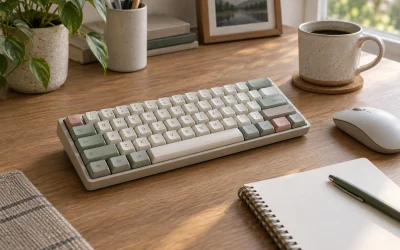
Every mechanical switch has an actuation force, the amount of pressure in grams needed to...
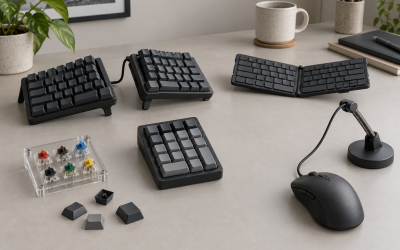
Before committing to a mechanical keyboard, you have to choose a switch, and the descriptions...
If you are picking a mechanical keyboard for a shared office or a home desk...
Once you are into mechanical keyboards, you will run into artisan keycaps: individually made, often...
Keycaps come in two main plastics, ABS and PBT, and the difference shows up in...
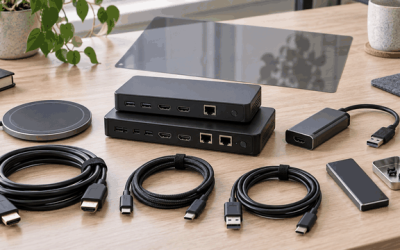
Browse any custom keyboard photo and you will spot a coiled, fabric-sleeved cable ending in...
Keycap profile is the shape and height of your keys, and it changes how a...
When you shop for a mechanical keyboard beyond the basics, one term keeps appearing: hot-swap....
As you go deeper into mechanical keyboards, you meet a tiny mod called switch films:...