
The best noise cancelling headphones for gaming are the SteelSeries Arctis Nova Pro Wireless for a complete gaming setup, the Audeze Maxwell for sound quality and low-latency wireless audio, and the Sony WH-1000XM5 for travel, work, and everyday listening.
There is no single winner because active noise cancellation, microphone quality, wireless latency, comfort, and battery life rarely peak in the same model. The right choice depends on whether you need a dedicated gaming headset, a music-first ANC headphone, or one device that can cover both jobs.
As an Amazon Associate we earn from qualifying purchases at no extra cost to you.


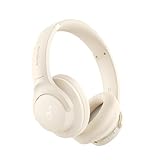
Top 3 picks at a glance
Best noise cancelling headphones for gaming at a glance
| Model | Noise reduction | Gaming connection | Microphone | Battery claim | Typical market range |
|---|---|---|---|---|---|
| SteelSeries Arctis Nova Pro Wireless | Strong ANC; adjustable transparency | 2.4 GHz wireless, Bluetooth, wired base station | Good boom mic with noise reduction | Two swappable batteries; about 20 hours each | Usually $300–$350 |
| Audeze Maxwell | No ANC; passive isolation only | 2.4 GHz wireless, Bluetooth, USB and analog | Very clear detachable boom mic | Up to about 80 hours | Usually $300–$400 |
| Bose QuietComfort Ultra Headphones | Among the strongest ANC in its class | Bluetooth and wired; no gaming USB receiver | Acceptable for calls, weaker than a boom mic | About 24 hours, less with some immersive modes | Usually $350–$450 |
| Sony WH-1000XM5 | Excellent low-frequency ANC | Bluetooth, wired USB audio and analog | Clear in quiet rooms; limited for noisy chat | Up to about 30 hours with ANC | Usually $300–$400 |
| Sennheiser Momentum 4 Wireless | Good ANC, behind Bose and Sony | Bluetooth, USB audio and analog | Usable, but not a dedicated gaming mic | Up to about 60 hours with ANC | Usually $250–$350 |
Noise-reduction figures are best treated as comparisons rather than laboratory constants. Results change with ear shape, seal, glasses, hair, firmware, and the frequency being measured. ANC usually performs best against steady low-frequency sounds such as an air conditioner, fan, engine, or nearby traffic. It is less effective against voices, keyboard clicks, and sudden high-pitched sounds.
Head-to-head: which type suits your setup?
For PC and console gaming in a noisy room: SteelSeries Arctis Nova Pro Wireless
The Arctis Nova Pro Wireless is the most complete choice when you need real gaming features rather than merely headphones that happen to connect to a console. Its wireless base station supports game/chat mixing, multiple connections, and quick switching between sources. The 2.4 GHz link is designed for gaming, while Bluetooth can handle a phone or second device.
Its ANC is useful for reducing fans, air conditioning, and household hum, though it is not as isolating as the best travel-focused headphones. The retractable boom microphone is also more appropriate for multiplayer chat than the built-in microphones on most music headphones. The main compromise is battery capacity: each battery lasts roughly 20 hours, but the spare can be charged while the other is installed. That makes battery life effectively continuous if you remember to swap cells.
Choose the Nova Pro Wireless if you want one desk-centered headset for PC, PlayStation or Xbox, depending on the specific version. Check the platform version before buying: console compatibility is not identical across editions.
For the best sound and long battery life: Audeze Maxwell
The Audeze Maxwell is a gaming headset rather than an ANC headphone. It does not use active noise cancellation, but its closed-back earcups provide passive isolation and its planar-magnetic drivers deliver unusually detailed, powerful sound for gaming and music. The 2.4 GHz wireless connection provides the low-latency behavior gamers expect, and Bluetooth is available for everyday listening.
Its detachable boom microphone is one of its strongest features. It generally gives teammates a more natural voice than the small built-in microphones used by Sony, Bose, or Sennheiser travel headphones. The battery is also exceptional: Audeze rates it for up to about 80 hours, so charging once a week is realistic for many players.
The cost is weight. Maxwell is noticeably heavier than a typical travel headphone, and its passive isolation cannot remove low-frequency room noise as effectively as ANC. It is the better decision for a quiet or moderately noisy room where sound quality, chat clarity, and battery life matter more than maximum isolation.
For flights, shared offices, and casual gaming: Bose QuietComfort Ultra
The Bose QuietComfort Ultra is the strongest option when noise cancellation is the main requirement. It is particularly effective against continuous low-frequency noise, making it well suited to aircraft cabins, trains, HVAC systems, and busy offices. Its earcups and headband are comfortable for long listening sessions, although fit remains personal.
For gaming, the limitation is connectivity. Bluetooth introduces more delay than a dedicated 2.4 GHz gaming receiver, and platform support can vary. On a PC, wired operation can avoid some latency, but the headset does not provide the same game/chat controls or boom microphone as a dedicated gaming model. Its built-in microphone is adequate for occasional calls, not ideal for competitive team communication in a noisy room.
Pick Bose when you play mostly single-player games, use a separate desktop microphone, or prioritize travel and office use over wireless competitive gaming.
For the best all-round everyday headphone: Sony WH-1000XM5
The Sony WH-1000XM5 remains a strong hybrid choice because it combines very good ANC, low weight, comfortable earcups, long battery life, multipoint Bluetooth, and a balanced sound profile that works for music, video, and games. Its ANC is especially effective with steady background noise.
It is less convincing as a multiplayer headset. The microphone can sound clear in a quiet room, but built-in microphones are more vulnerable to keyboard noise, fans, and room echo than a close-positioned boom mic. Bluetooth gaming latency also depends on the device, codec, operating system, and game. A wired connection is safer for rhythm games, competitive shooters, and any application where lip-sync or input timing matters.
Choose the XM5 if gaming is one activity among several and you do not need a dedicated wireless gaming link.
For exceptional battery life at a lower range: Sennheiser Momentum 4 Wireless
The Momentum 4 is worth considering when battery life and music quality are more important than maximum ANC. Its rated battery life of up to about 60 hours is far beyond most ANC competitors. It is also comfortable and supports wired listening, Bluetooth, and USB audio.
Its ANC is good enough for commuting and office noise, but it generally does not suppress deep continuous noise as aggressively as the Bose QuietComfort Ultra or Sony WH-1000XM5. The built-in microphone is suitable for calls, but the headset is not a substitute for a boom mic in competitive gaming.
Latency: what matters for gaming?
Bluetooth latency can range from barely noticeable to clearly distracting depending on the codec and operating system. A dedicated 2.4 GHz receiver normally provides a more consistent low-latency connection, which is why the Arctis Nova Pro Wireless and Audeze Maxwell are safer choices for competitive play.
- Competitive shooters and rhythm games: use a 2.4 GHz receiver or wired connection.
- Single-player games and strategy titles: Bluetooth is usually acceptable if audio-video sync is correct.
- Console gaming: verify platform support before buying; many Bluetooth headphones cannot connect directly to consoles for game audio.
- PC gaming with a separate microphone: travel ANC headphones become more practical, especially over USB or analog cable.
Do not assume USB-C automatically means low latency. On some headphones, USB-C is used only for charging; on others it carries digital audio. Check the manufacturer’s connection modes and whether microphone input works over that connection.
Battery life in practical use
Advertised runtime is normally measured at moderate volume and may fall when ANC, a microphone, high-volume playback, or an immersive audio mode is active. A simple planning calculation helps: if you play for three hours per evening, five evenings per week, that is 15 hours weekly. A 24-hour headphone needs charging roughly every one to two weeks if used only for gaming, while a 60-hour model can often last three to four weeks.
For example, the Nova Pro Wireless uses two batteries rated at approximately 20 hours each. One battery gives around 20 hours of play, but the system can provide roughly 40 hours between full charging cycles if the spare is charged during use. The practical advantage is not just total capacity; it is avoiding a forced shutdown during a session.
Decision matrix
| Your situation | Best fit | Why | Main compromise |
|---|---|---|---|
| Noisy room, PC or console, frequent voice chat | SteelSeries Arctis Nova Pro Wireless | ANC, boom mic, 2.4 GHz, base-station controls | Shorter individual battery runtime and complex platform variants |
| Quiet room, competitive gaming, music quality first | Audeze Maxwell | Low-latency wireless, detailed sound, strong boom mic | No ANC and relatively high weight |
| Travel, office, and occasional single-player gaming | Bose QuietComfort Ultra | Excellent ANC and comfortable long-session fit | Bluetooth-focused gaming and average built-in mic |
| One lightweight headphone for work, travel, and gaming | Sony WH-1000XM5 | Strong ANC, comfortable design, good battery and multipoint | No dedicated gaming receiver or boom microphone |
| Charging as rarely as possible | Sennheiser Momentum 4 Wireless | Up to about 60 hours of claimed battery life | ANC and chat quality are not class-leading |
Buying recommendation
Buy the SteelSeries Arctis Nova Pro Wireless if your priority is a complete gaming system with ANC, game/chat mixing, and a proper microphone. Buy the Audeze Maxwell if you can accept passive isolation and want the strongest combination of sound quality, boom-mic clarity, low-latency wireless, and battery life. Choose the Bose QuietComfort Ultra or Sony WH-1000XM5 when travel and everyday noise cancellation matter more than competitive gaming features. The Sennheiser Momentum 4 is the battery-life specialist and often the sensible value choice when ANC only needs to be good rather than exceptional.
Before purchasing, confirm three things: the exact console or PC connection you need, whether the microphone must handle keyboard and fan noise, and whether you prefer maximum isolation or a lighter headset. Those checks matter more than a small difference in advertised battery life or driver specifications.


