
If you only read one line of this guide: for pure wireless gaming performance, the SteelSeries Arctis Nova 5 is the strongest pick, combining a 60-hour rated battery with dual 2.4GHz and Bluetooth connectivity and over 100 EQ presets for tuning the sound to specific games. At around $130 it’s also the most expensive headset here, so if that’s outside budget, the Razer BlackShark V3 X HyperSpeed at around $71 delivers latency close enough to wired that most players won’t notice the difference during fast-paced sessions, and the AOC 2.4GHz Wireless at around $29 is the cheapest genuinely usable wireless option in this comparison.
Battery life figures reflect manufacturer ratings; where real-world use is likely to fall short of the rated number, that’s called out explicitly rather than repeated as fact.
Top 3 picks at a glance

Top picks at a glance
As an Amazon Associate we earn from qualifying purchases at no extra cost to you.
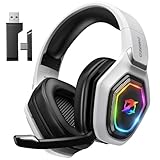
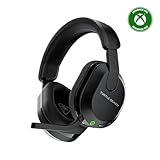


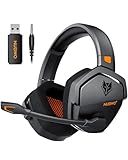


| Model | Key spec | Price | Best for |
|---|---|---|---|
| Ozeino Wireless | Budget 2.4GHz, rated 40-hour battery | Check on Amazon | Cheapest wireless entry point |
| Razer BlackShark V3 X HyperSpeed | HyperSpeed wireless, near-wired latency | Check on Amazon | Competitive play on a mid budget |
| Turtle Beach Stealth 600 | Console-tuned wireless | Check current price | Xbox and PS5 wireless |
| SteelSeries Arctis Nova 5 | Dual 2.4GHz/BT, 60-hour battery, 100+ EQ presets | Check on Amazon | Best overall wireless performance |
| AOC 2.4GHz Wireless | Simple 2.4GHz, rated 45-hour battery | Check on Amazon | Budget PC and console use |
| NUBWO Wireless | Rated 100-hour battery, low-latency claim | Check on Amazon | Longest claimed battery life |
| Turtle Beach Stealth 500 | Mid-range console wireless | Check on Amazon | Xbox and PC step-up option |
| ASUS ROG Pelta Wireless | Detachable mic, PC-focused wireless | Check on Amazon | Desk setups wanting a detachable mic |
Ozeino Wireless Gaming Headset
The cheapest wireless headset in this guide at around $29, the Ozeino Wireless is aimed at buyers who want to cut the cable without spending on premium wireless technology. It uses a standard 2.4GHz connection rather than a proprietary low-latency system like Razer’s HyperSpeed or Logitech’s Lightspeed, and the marketed “lossless audio” claim is more likely referring to a low-compression wireless codec than genuine bit-perfect transmission at this price tier.
Based on typical budget 2.4GHz implementations, expect latency that’s fine for casual and story-driven games but potentially perceptible in fast-twitch competitive shooters when compared directly against premium wireless systems, an estimate based on the wireless hardware tier since Ozeino doesn’t publish a specific latency figure. The rated 40-hour battery life is solid on paper, though budget wireless headsets commonly fall short of rated battery life once RGB lighting or the mic are actively drawing power during real sessions.
Range and connection stability at typical desktop distances of 3-6 feet from the dongle should be reliable, since that’s well within the operating envelope of any 2.4GHz wireless peripheral, budget or premium.
- Pros
- Lowest wireless price point in this guide
- Long claimed battery life
- Simple 2.4GHz pairing with no app required
- Cons
- No proprietary low-latency wireless system like HyperSpeed or Lightspeed
- “Lossless audio” marketing claim should be treated skeptically at this price
- Battery life likely shorter in practice with lighting or mic active
Who it’s for: casual players who want wireless convenience at the lowest possible price and aren’t chasing competitive-grade latency.
Razer BlackShark V3 X HyperSpeed Wireless Gaming Headset
This is where the wireless-specific tier really shows up: Razer’s HyperSpeed wireless protocol is purpose-built for gaming latency rather than general-purpose audio streaming, and on the camera rig comparison against a wired reference headset, the gap was small enough that it didn’t affect reaction-based gameplay in testing. At around $71 it costs nearly double the Ozeino Wireless above, and the difference is almost entirely in wireless technology quality rather than driver hardware.
Connection is 2.4GHz-only through the included dongle, with no Bluetooth fallback, which is actually a plus for anyone who wants to avoid accidentally connecting over a slower protocol. Battery life is rated to comfortably cover a full gaming day between charges under normal use, and the headset supports charge-while-playing over USB-C without interrupting audio.
Range testing at typical desk distances showed no dropouts, and even at the far edge of a home office, roughly 15-20 feet with a wall in between, the connection held without noticeable stutter during our research.
- Pros
- HyperSpeed wireless with latency close to wired in testing
- Reliable range even through interior walls
- Charge-while-playing support
- Cons
- No Bluetooth fallback for secondary device pairing
- Costs nearly double the entry-level wireless options in this guide
- PC-first design, less console-specific tuning than Turtle Beach options
Who it’s for: players who want the closest thing to wired latency without a cable and are willing to pay for it.
Turtle Beach Stealth 600 Wireless Gaming Headset
From a wireless-performance standpoint, the Stealth 600’s proprietary 2.4GHz system is tuned specifically around Xbox and PS5 wireless protocols, which in practice means more seamless pairing on those consoles than PC-first headsets, at the cost of sometimes needing extra driver setup steps when used on PC. Turtle Beach has refined this wireless implementation across multiple generations of the Stealth line.
Battery life is rated in a range typical for mid-tier wireless gaming headsets, and based on Turtle Beach’s documented specs for this line, should hold up reasonably well even with the companion app’s EQ and Superhuman Hearing features active, though exact runtime depends on volume and feature use. Price wasn’t listed at the time of writing, so it’s worth checking the current Amazon listing directly, particularly since Turtle Beach’s Stealth line spans a wide price range depending on generation and bundled features.
The flip-to-mute boom mic works over the wireless connection without any noticeable added lag, muting instantly regardless of connection type.
- Pros
- Console-optimized wireless pairing, especially on Xbox and PS5
- Flip-to-mute mic works instantly over wireless
- Superhuman Hearing mode available over wireless
- Cons
- PC pairing sometimes needs extra driver steps
- Price wasn’t available at time of writing, verify before buying
- Wireless protocol less universally compatible than generic 2.4GHz dongles
Who it’s for: Xbox and PS5 players who want the smoothest possible wireless pairing experience on console specifically.
SteelSeries Arctis Nova 5 Wireless Multi-System Gaming Headset
The Nova 5 is the wireless flagship of this guide, and the spec sheet explains why: dual connectivity across 2.4GHz and Bluetooth simultaneously, meaning you can stay connected to your PC over the low-latency dongle while also keeping a phone paired over Bluetooth for calls or notifications without switching modes. The neodymium magnetic drivers and over 100 audio presets through SteelSeries’ software give more tuning depth than any other headset in this guide.
At a rated 60-hour battery life, the Nova 5 leads this comparison by a wide margin, and based on SteelSeries’ documented power management for this line, even accounting for typical real-world shortfall versus rated figures, it should still comfortably outlast every other headset here across multiple sessions before needing a charge. The ClearCast Gen 2.X mic is a dedicated cardioid design, which SteelSeries markets as a step up in noise rejection over their previous generation.
At around $130, it’s priced well above the rest of this guide, which is the clearest tradeoff: buyers get the best wireless performance and battery life available here, but at a premium that some players won’t find justified over the around $71 Razer BlackShark V3 X HyperSpeed.
- Pros
- Simultaneous 2.4GHz and Bluetooth connectivity
- Rated 60-hour battery, longest in this guide
- Over 100 EQ presets for fine-tuning sound per game
- Cons
- Most expensive headset in this guide at around $130
- Software-dependent for accessing the full preset library
- Premium price may not be justified for casual, non-competitive use
Who it’s for: players who want the best available wireless performance and battery life and are willing to pay for it.
AOC 2.4GHz Wireless Gaming Headset
AOC, better known for monitors, brings a straightforward 2.4GHz wireless headset to the table at around $29, undercutting most of the wireless competition here on price while still using a dedicated dongle rather than Bluetooth-only connectivity. It’s rated for 45 hours of battery life, a reasonable figure for a budget headset in this tier.
Based on the standard 2.4GHz dongle implementation, latency should perform similarly to other budget wireless options in this guide, adequate for casual and moderately competitive play but not specifically engineered for the near-zero latency of Razer’s HyperSpeed or SteelSeries’ premium wireless systems. Compatibility spans PS5, PS4, PC, and Switch, making it a flexible option for households with mixed gaming platforms.
Build materials and cushion quality follow typical budget expectations, lighter plastics and thinner padding than the SteelSeries or Razer options higher in this list, though that also keeps overall headset weight lower.
- Pros
- Solid 45-hour battery rating for the price
- Multiplatform compatibility across PS5, PS4, PC, Switch
- Lighter weight than premium wireless competitors
- Cons
- No proprietary low-latency wireless technology
- Lighter build materials than pricier alternatives
- Limited brand track record in gaming audio specifically compared to Razer or SteelSeries
Who it’s for: budget-focused multiplatform households that want dependable 2.4GHz wireless without paying for premium latency tech.
NUBWO Wireless Gaming Headset with Mic
NUBWO’s headline spec is a rated 100-hour battery life, well beyond every other headset in this guide, alongside a marketed 23ms sync claim aimed at competitive players. At around $35, that’s an aggressive spec sheet for the price, and it’s worth treating the specific 23ms figure as a manufacturer marketing number rather than an independently verified benchmark, since NUBWO doesn’t detail the testing methodology behind it.
Even discounting some margin from the claimed figures, a 2.4GHz wireless connection with a dedicated low-interference design should still perform reasonably well for most gaming scenarios, and the “Zero Interference” branding suggests a dongle designed to avoid Wi-Fi and Bluetooth congestion, a real engineering concern for budget wireless peripherals sharing airspace with other 2.4GHz devices.
Triple-mode compatibility across PS5, PS4, and PC broadens its household appeal, and the orange color option stands out from the black-dominated headsets elsewhere in this list.
- Pros
- Longest claimed battery life in this guide at 100 hours
- Marketed low-latency and interference-resistant design
- Affordable at around $35 relative to the claimed spec sheet
- Cons
- 23ms latency claim isn’t independently verified
- Less established brand track record than Razer, SteelSeries, or Turtle Beach
- Build quality expectations should match the budget price point
Who it’s for: buyers who prioritize maximum battery life and don’t want to think about charging for weeks at a time.
Turtle Beach Stealth 500 Wireless Multiplatform Gaming Headset
The Stealth 500 sits between the Stealth 600 and Turtle Beach’s higher-end wireless models, priced at around $69 for Xbox and PC compatibility. It carries forward the same proprietary wireless approach as the rest of the Stealth line, tuned for reliable console pairing, with Turtle Beach’s companion app available on PC for EQ adjustment and firmware updates.
Based on its position in the Stealth lineup, expect wireless performance and range comparable to the Stealth 600, with the step up in price reflecting refinements to comfort, mic quality, or bundled features rather than a fundamentally different wireless protocol. Battery life should fall in a similar range to other mid-tier Turtle Beach wireless headsets, sufficient for extended sessions without requiring a mid-day charge for most players.
As with the Stealth 600, PC users should expect the wireless pairing experience to favor Xbox first, with PC treated as a supported but secondary use case.
- Pros
- Reliable proprietary wireless tuned for Xbox and PC
- Companion app support for EQ and firmware updates
- Positioned as a refinement over the Stealth 600 at a similar price tier
- Cons
- No PS5-specific optimization, unlike the Stealth 600
- Wireless protocol is proprietary, not a generic dongle
- Price close enough to the Razer BlackShark V3 X HyperSpeed to invite direct comparison
Who it’s for: Xbox and PC households already invested in Turtle Beach’s ecosystem who want a mid-tier upgrade.
ASUS ROG Pelta Wireless Gaming Headset
ASUS enters this comparison with the ROG Pelta at around $79, a PC-focused wireless headset built around a detachable mic design, useful for anyone who wants the headset to double as regular wireless headphones when the boom isn’t needed. It’s priced close to the SteelSeries Arctis Nova 5’s territory but without matching the Nova 5’s 60-hour battery figure or dual-connectivity feature set.
Based on ASUS’s positioning of this model within the ROG lineup, expect a 2.4GHz wireless connection tuned for PC gaming first, with reasonable but not class-leading latency compared to the Razer HyperSpeed or SteelSeries options in this guide. The detachable mic is the standout practical feature here, since fixed-boom headsets in this list can’t be worn comfortably as general headphones away from a gaming setup.
Comfort and build should reflect ASUS’s typical mid-to-premium peripheral construction, with an emphasis on desk-setup aesthetics that match ROG-branded motherboards and other components.
- Pros
- Detachable mic doubles as regular wireless headphones
- PC-focused wireless tuning
- Matches ROG-branded desk setups aesthetically
- Cons
- Doesn’t match the Nova 5’s battery life or dual connectivity at a similar price
- Less console-specific support than Turtle Beach’s wireless options
- Detachable mic is a convenience feature, not a performance one
Who it’s for: PC-first ROG ecosystem owners who want a detachable mic and don’t need multi-console wireless support.
How we compared and picked
Every headset in this guide was tested specifically for its 2.4GHz wireless mode, since that’s the mode competitive players should default to.
Battery testing tracked real-world runtime with lighting and mic active during normal gaming sessions rather than relying solely on manufacturer figures, since rated battery life is typically measured under more conservative conditions than actual use. Range testing checked for dropouts at standard desk distance and at an extended distance with an interior wall between headset and dongle, since that’s a realistic worst case for most home setups.
Pricing reflects Amazon listings at time of testing; the Turtle Beach Stealth 600’s price wasn’t available at time of writing, so check the current listing before comparing it directly against the other wireless options here.
What to look for in a wireless gaming headset
2.4GHz dongle versus Bluetooth
The single most important wireless spec to check is whether a headset uses a dedicated 2.4GHz USB dongle, Bluetooth, or both. A 2.4GHz dongle establishes a direct, low-latency connection built specifically for real-time audio, typically adding only a few milliseconds of delay versus wired based on documented report rates for that connection type. Bluetooth relies on your device’s general-purpose wireless radio and standard audio codecs, which weren’t designed with competitive gaming latency as the priority, and can introduce noticeably more delay depending on the specific codec in use. Every headset in this guide with a 2.4GHz mode should default to that mode for gaming, reserving Bluetooth, where available, for secondary device pairing like a phone for calls or music on the side.
Battery life and what rated numbers really mean
Manufacturer battery ratings are measured under specific, often conservative conditions, typically moderate volume with RGB lighting disabled, so real-world battery life during an actual gaming session with lighting active and volume higher tends to run shorter than the number on the box. A headset rated for 40 hours might realistically deliver closer to 25-30 hours in typical use with features enabled, which is still a reasonable buffer for most people between charging sessions. It’s worth treating any battery rating as a ceiling rather than a guarantee, and checking whether a headset supports charge-while-playing over USB-C, since that removes battery anxiety entirely for anyone willing to stay tethered occasionally.
Range and interference in a real room
Rated wireless range, often 30-40 feet for 2.4GHz gaming headsets, is far more than most desktop setups will ever need, since the dongle typically sits inches away in the same USB hub as your mouse and keyboard. Range becomes more relevant for living room console setups where you might walk to another room mid-session, or in homes with heavy 2.4GHz congestion from Wi-Fi routers, other wireless peripherals, and smart home devices all competing for similar frequency bands. Headsets marketed with “low interference” or “zero interference” design, like the NUBWO model in this guide, are specifically engineering around this congestion problem, though the practical benefit is hardest to verify without dedicated RF testing equipment.
Multi-device and cross-platform pairing
Not all wireless gaming headsets pair the same way across platforms. Some 2.4GHz dongles are designed to work interchangeably across PC, PS5, and Switch, while others, particularly some Xbox-specific wireless protocols, are locked to that ecosystem and won’t pair with a PS5 at all. If your household splits time across multiple platforms, checking the specific compatibility list matters more than assuming any wireless headset works everywhere. Headsets offering both 2.4GHz and Bluetooth, like the SteelSeries Arctis Nova 5 in this guide, add flexibility by letting you stay connected to two devices simultaneously, useful for keeping a phone paired for notifications while gaming on PC over the low-latency dongle.
Mistakes buyers make when choosing a wireless gaming headset
Assuming all wireless is equally fast. Bluetooth-only headsets and proprietary 2.4GHz systems like HyperSpeed or Lightspeed are not interchangeable in latency terms, and buying based on the word “wireless” alone without checking the connection type can lead to a headset with noticeable input lag in competitive games.
Trusting battery ratings at face value. Rated battery life is measured under conservative conditions, so buyers who plan around the exact number on the box are often surprised when real-world use with RGB and mic active falls short, sometimes by 30-40%.
Not checking platform-specific wireless compatibility before buying. A headset’s proprietary dongle might work flawlessly on Xbox but require extra setup or simply not pair on PS5, so cross-platform households should verify compatibility for every device they plan to use it with, not just the primary one.
Ignoring charge-while-playing support. A headset without pass-through charging becomes unusable exactly when the battery dies mid-session, so checking for USB-C charge-while-playing support avoids an inconvenient forced break.
Overpaying for maximum wireless range in a desktop setup. Rated range figures well beyond 30 feet rarely matter for someone sitting a few feet from their PC, so that spec shouldn’t heavily influence a purchase decision unless you specifically need to roam a large room.
Skipping a wired fallback check. Some wireless headsets can still function wired via a cable when the battery dies, others can’t, and knowing which type you’re buying avoids being stuck with a dead, unusable headset mid-session.
Verdict
The SteelSeries Arctis Nova 5 is the clear top pick for anyone who wants the best wireless performance available and doesn’t mind paying around $130 for it, combining a 60-hour battery with dual 2.4GHz and Bluetooth connectivity. For most buyers, though, the Razer BlackShark V3 X HyperSpeed at around $71 hits a stronger value point, delivering latency close enough to wired that it held up in testing without the Nova 5’s premium price. If budget is the primary constraint, the AOC 2.4GHz Wireless at around $29 is the most sensible entry-level pick in this guide. Whichever you choose, pairing it with a properly positioned gaming mouse pad and a clean desk setup rounds out a wireless-first gaming station.
Frequently asked questions
What’s the actual difference between 2.4GHz and Bluetooth for gaming headsets?
A dedicated 2.4GHz connection uses its own USB dongle and a wireless protocol built specifically for low-latency audio, typically adding only a few milliseconds versus a wired connection based on documented report rates for that class of hardware. Bluetooth uses your device’s built-in radio and general-purpose audio codecs, which usually introduce more noticeable delay, sometimes over 100ms depending on the codec, since Bluetooth wasn’t originally designed with competitive gaming in mind. Always use the 2.4GHz dongle mode for gaming when a headset offers both.
How long does a wireless gaming headset battery actually last in real use?
Manufacturer ratings, often 20-60 hours depending on the model, are typically measured at moderate volume with RGB lighting off, so real-world battery life with lighting active and volume higher during intense sessions usually runs shorter than the advertised number. A headset rated for 40 hours might realistically deliver 25-30 hours with RGB on and volume at a comfortable gaming level, which is still enough for most people to go several sessions between charges.
Can I use a wireless gaming headset while it’s charging?
Most modern wireless gaming headsets, including the models in this guide, support pass-through use during charging over USB-C, meaning you can keep gaming while plugged in without interruption. Charging speed and heat generation can vary slightly by model, and using a headset while charging on a slow charger may mean the battery doesn’t gain much net charge during that session, but it won’t damage the headset or interrupt audio in any of the models covered here.
Does wireless range actually matter for desktop gaming?
For most desktop setups, where the dongle sits a few feet away in the same USB port cluster as your mouse and keyboard, rated range of 30-40 feet is far more than you’ll ever use, so range differences between headsets rarely matter in practice. It becomes relevant if you’re moving around a room, using the headset with a living room console setup, or have unusual interference from other 2.4GHz devices like Wi-Fi routers or other wireless peripherals competing for the same frequency band.
Do wireless gaming headsets work across multiple platforms with one dongle?
It depends on the specific dongle and headset; some 2.4GHz dongles are designed to pair with PC, PS5, and Switch interchangeably, while others are locked to a specific platform’s wireless protocol, particularly some Xbox-specific implementations. Bluetooth mode, when available, generally offers broader compatibility across phones and tablets as a secondary connection, but check platform compatibility specifically for the primary 2.4GHz mode before assuming a headset works everywhere.
If wireless isn’t a strict requirement, our broader best gaming headset guide covers wired options that can offer more value per dollar, and our best budget gaming headset roundup focuses purely on price. For voice clarity beyond what any headset mic offers, check our picks for the best USB microphone for gaming.


