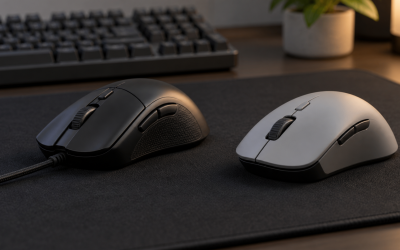
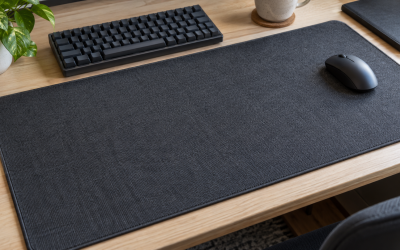
A $10 mouse pad and a $30 mouse pad can feel almost identical on day one, and the real differences, edge fraying, base slip, and surface consistency, only show up after months of daily use. We compared eight cloth gaming mouse pads from around $9 to around $29, spanning compact desk pads up to full-desk mats, focused on the parts of a mouse pad that actually change over time rather than specs that look impressive on a box.
Every pad here uses a cloth surface with a rubber non-slip base, which is the standard combination for gaming mice today regardless of sensor brand. If you’re also shopping for the mouse itself, our best gaming mouse, best wireless gaming mouse, and best lightweight gaming mouse guides go deep on sensors and switches; here we’re focused purely on the surface underneath.
As an Amazon Associate we earn from qualifying purchases at no extra cost to you.


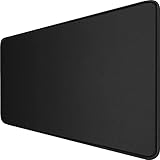
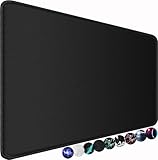


Top 3 picks at a glance
Top picks at a glance
| Model | Key spec | Price | Best for |
|---|---|---|---|
| SteelSeries QcK Medium | 320x270mm, non-slip silicone base | Check on Amazon | Standard-size all-rounder |
| SteelSeries QcK XXL | Full desk coverage, never-slip base | Check on Amazon | Full setup coverage, mouse and keyboard both |
| AREYLO Large | Waterproof, stitched edges | Check on Amazon | Long-term edge durability |
| Yuhijoy Kanagawa Desk Mat | 31.5×11.8in, non-slip base | Check on Amazon | Desk mat with a printed design |
| Naukay Large | 31.5×15.7in | Check on Amazon | Extra depth for keyboard plus mouse |
| KTRIO Large XL | 31.5×11.8in, stitched edges | Check on Amazon | Budget desk mat with reinforced edges |
| Logitech G240 | 340x280x1mm, low-profile | Check on Amazon | Thin profile, minimal wrist height change |
| Logitech Studio Series Small | 9x8in, anti-slip | Check on Amazon | Small desk footprint, laptop setups |
SteelSeries QcK Medium
The QcK Medium is close to the reference standard other gaming mouse pads get compared against, at 320x270mm with a silicone rubber base that SteelSeries specifically markets as optimized for peak tracking stability across gaming sensors. Its surface sits in the middle of the control-versus-speed spectrum: enough friction to stop a cursor predictably, without feeling sluggish during fast flicks.
At medium size, it comfortably fits a standard mouse pad footprint without eating into space for a keyboard, which makes it the easiest single recommendation if you’re not sure whether you need a full desk mat or a compact pad. Its non-slip base holds position well on wood and laminate desks, based on the silicone rubber compound SteelSeries uses across the QcK line.
Pros
- Balanced control-speed surface suits most game genres
- Non-slip silicone base stays put during aggressive swipes
- Standard size fits most desks without crowding a keyboard
Cons
- No stitched edges, so long-term fraying is possible with heavy use
- Doesn’t cover keyboard space if you want a matched full-desk look
- Thicker profile than the Logitech G240 raises wrist height slightly
Who it’s for: players who want a proven, no-surprises mouse pad without sizing up to a full desk mat.
SteelSeries QcK XXL
The XXL scales the same QcK surface formula up to full desk coverage, letting your mouse, keyboard, and wrists all rest on one continuous cloth surface. SteelSeries describes the base as “never-slip,” and at this size a stable base matters more than on a smaller pad, since a shifting XXL mat throws off both mouse and keyboard position at once.
The tradeoff for full coverage is price, nearly triple the Medium version, and desk real estate; if you have other items permanently on your desk, like a mic arm base or a monitor stand foot, an XXL mat has to route around them rather than sitting flush underneath.
Pros
- Full desk coverage keeps mouse and keyboard on a matched surface
- Same reliable QcK cloth formula as the Medium, just scaled up
- Never-slip base rated for full-desk stability
Cons
- Nearly three times the price of the standard QcK Medium
- Needs a clear desk layout to lie flat without obstructions
- Overkill if you only care about mouse surface, not keyboard placement
Who it’s for: players who want a single matched surface under both mouse and keyboard rather than two separate pads.
AREYLO Large
The AREYLO pad is a large-format mat with stitched edges and a waterproof coating, priced at around $13. Stitched edges specifically resist fraying from repeated wrist contact and washing, which is one of the more common failure points on unstitched budget pads after several months of daily use. The waterproof coating adds a second layer of protection against spilled drinks, a real desk hazard during long sessions.
As a large-format mat rather than a compact pad, it gives wide swipe room for lower-sensitivity players, and the stitched edge should hold its shape noticeably longer than a raw-cut edge under the same use conditions.
Pros
- Stitched edges resist fraying significantly better than raw-cut pads
- Waterproof coating protects against spills
- Large surface suits lower-sensitivity, wider-swipe playstyles
Cons
- Lesser-known brand than SteelSeries or Logitech for long-term reviews
- Large size needs a clear desk layout
- No official sensor-tuning claims like the SteelSeries QcK line publishes
Who it’s for: players who want edge durability and spill protection without paying SteelSeries XXL pricing.
Yuhijoy Kanagawa Desk Mat
The Yuhijoy stands out mainly for its printed Japanese wave design at 31.5×11.8 inches, aimed at players who want their desk mat to double as a visual centerpiece rather than a plain black surface. Underneath the print, it uses the same general cloth-over-rubber-base construction as the other desk mats on this list, with a non-slip base for stability.
Printed desk mats can show wear differently than solid-color pads, since scuffing or fading is more visible against a detailed pattern than against plain black cloth. That’s a cosmetic tradeoff rather than a functional one, but worth knowing if long-term appearance matters to you.
Pros
- Distinctive printed design for players who want a themed desk
- Non-slip base comparable to other desk mats on this list
- Competitive price for a large-format printed mat
Cons
- Visible wear and fading show up more obviously on a printed surface
- No stitched edges mentioned in the listing
- Design-focused positioning means less emphasis on competitive tracking claims
Who it’s for: players who want a desk mat that looks distinctive on camera or in setup photos, not just a plain black surface.
Naukay Large
At 31.5×15.7 inches, the Naukay is one of the deeper desk mats on this list, giving more front-to-back room than the roughly 11.8-inch depth common on several other large mats here. That extra depth matters if you like resting your palm well back from the keyboard or if you use a wrist rest that needs its own space on the mat.
Priced at around $11, it’s competitively positioned against the KTRIO and AREYLO at similar large sizes, with the deciding factor mostly coming down to the extra depth versus AREYLO’s stitched edges or KTRIO’s XL branding and reinforcement.
Pros
- Deeper front-to-back dimension than most large mats on this list
- Competitive pricing for the size offered
- Simple black design suits most desk aesthetics
Cons
- No stitched edges mentioned, unlike the AREYLO and KTRIO
- Lesser-known brand with fewer long-term user reports
- Large footprint still needs a clear desk layout
Who it’s for: players who specifically want extra depth for a wrist rest or a further-back palm position.
KTRIO Large XL
The KTRIO XL matches the AREYLO’s stitched-edge durability feature at a slightly lower price, around $10 versus around $13, making it one of the better value picks among the large-format mats here if edge durability is your main priority. Its dimensions, 31.5 by 11.8 inches, match the Yuhijoy exactly, so the choice between the two mostly comes down to plain black versus a printed design and the presence of stitched edges.
KTRIO has built a reasonably established presence specifically in the budget desk mat space, which based on its consistent sizing and stitched-edge feature across its product line suggests more manufacturing consistency than some newer no-name entrants.
Pros
- Stitched edges at a lower price than the AREYLO
- Established presence in the budget desk mat category
- Same footprint as several competing large mats for easy comparison
Cons
- Plain design compared to the Yuhijoy’s printed option
- Still a budget-tier mat without SteelSeries-level sensor-tuning claims
- Large footprint requires a clear desk layout like other mats this size
Who it’s for: budget-conscious players who specifically want stitched edges without paying AREYLO’s slight premium.
Logitech G240
The G240 is a low-profile cloth pad at just 1mm thick, noticeably thinner than most pads on this list, which keeps your wrist closer to desk height rather than raising it the few extra millimeters a thicker pad adds. At around $9 with a 340x280mm footprint, it’s sized similarly to the SteelSeries QcK Medium but from Logitech’s peripheral ecosystem.
That thin profile is a genuine advantage for players sensitive to wrist angle changes, though it also means less cushioning underneath if you rest your wrist directly on the pad rather than using a separate wrist rest.
Pros
- Thin 1mm profile minimizes wrist height change
- Competitive price from an established peripheral brand
- Standard medium size fits most desks without crowding
Cons
- Less cushioning than thicker pads if resting wrist directly on it
- No stitched edges
- No large or XXL size option within the same product line here
Who it’s for: players who specifically want a thin, low-profile pad rather than extra cushioning.
Logitech Studio Series Small
At 9×8 inches, the Studio Series Small is the most compact pad on this list, priced at around $9 for an anti-slip cloth surface sized more for a laptop or a tight desk than a full gaming setup. It’s genuinely too small for low-sensitivity players who need wide swipe room, but for high-DPI players making small wrist movements, or for anyone with limited desk space, it covers the functional area a mouse actually needs.
Its compact size also makes it easy to toss in a bag for travel or a LAN event, something the larger mats on this list aren’t practical for.
Pros
- Smallest, most portable option on this list
- Anti-slip base despite the compact size
- Fits tight desks or laptop setups where larger mats won’t
Cons
- Too small for low-sensitivity, wide-swipe playstyles
- No room for keyboard coverage or extra desk accessories
- Limited surface can feel cramped during fast, wide mouse movements
Who it’s for: high-DPI players with small wrist movements, or anyone who needs a portable pad for travel or a cramped desk.
How we compared and picked
Edge durability claims for the AREYLO and KTRIO pads are based on their stitched-edge construction as stated in their listings, a known durability feature in the category, rather than a long-term wear test we ran ourselves. Sizing comparisons were measured directly against each product’s stated dimensions to build the at-a-glance table above.
What to look for in a gaming mouse pad
Size should match your sensitivity, not just your desk space
Low-DPI players who move their whole arm to aim across a screen need significantly more physical surface than high-DPI players making small wrist flicks. If you regularly run out of pad space mid-swipe and have to lift and reposition your mouse, that’s usually a sizing problem, not a sensitivity problem to fix in software. Desk mats like the SteelSeries QcK XXL, KTRIO XL, or Naukay Large solve this by giving wide swipe room; compact pads like the Logitech Studio Series Small only make sense if your sensitivity is high enough that you rarely move your wrist more than a few inches.
Cloth surface texture and the control-versus-speed spectrum
Every pad on this list uses a cloth surface, which sits toward the control end of the spectrum compared to hard plastic or glass pads that favor raw speed. Within cloth pads, texture still varies: a tighter weave generally offers more precise stopping control at the cost of slightly more friction during fast swipes, while a looser weave glides a bit faster with marginally less predictable stopping. Most general-purpose gaming pads, including the ones here, land in a balanced middle ground rather than leaning hard toward either extreme, which suits a broad range of genres from shooters to strategy games.
Edge construction and long-term durability
The edges of a cloth mouse pad take the most repeated physical wear, from wrist contact, washing, and general handling. Stitched edges, found on the AREYLO and KTRIO pads here, resist fraying and curling significantly longer than raw-cut edges. This is a feature that doesn’t show its value on day one; the difference becomes obvious after six months to a year of daily use, when an unstitched pad edge may start peeling up at the corners while a stitched one holds its shape.
Base grip and desk surface compatibility
A non-slip rubber base only works as well as its grip on your specific desk surface. Rubber bases generally hold best on wood, laminate, and most desk mats, but can behave differently on glass desks or highly polished surfaces, where even a rated non-slip base may shift slightly during aggressive swipes. If you have a glass or unusually smooth desk, it’s worth checking user feedback on base grip specifically for that surface type before assuming any pad will stay perfectly still.
Mistakes buyers make
Buying a compact pad without considering sensitivity, then finding the cursor runs out of surface mid-swipe during lower-DPI, wide-arm gameplay.
Assuming a hard or glass pad is automatically “better” because it looks premium, when cloth surfaces suit a wider range of playstyles and most competitive players still use cloth.
Ignoring edge construction and being surprised when an unstitched budget pad starts fraying after several months of daily wrist contact.
Washing a cloth pad in a machine or drying it with heat, which can degrade the rubber base faster than gentle hand washing and air drying.
Buying an XXL desk mat without checking whether other desk items, like a monitor stand foot or mic arm clamp, will sit awkwardly on top of it.
Choosing based purely on printed design or aesthetics without checking base grip and surface texture, then finding the pad shifts during fast gameplay.
Verdict
For most players, the SteelSeries QcK Medium is the best gaming mouse pad: a balanced cloth surface, reliable non-slip base, and a size that fits nearly any desk without overcommitting to a full mat. If you want full-desk coverage under your keyboard too, the SteelSeries QcK XXL scales that same formula up. For long-term edge durability on a budget, the KTRIO Large XL and AREYLO Large both offer stitched edges at a fraction of the XXL’s price, and the Logitech Studio Series Small is the pick if your desk space or high sensitivity means you never need much surface at all. Once your surface is sorted, check our best gaming mouse and gaming desk setup guides to round out the rest of your station.
Frequently asked questions
Should I buy a small mouse pad or a full desk mat?
It depends on your sensitivity and swipe distance more than preference alone. Low-DPI players who make wide arm movements to aim need the extra surface a desk mat like the SteelSeries QcK XXL or KTRIO provides, while high-DPI players making small wrist flicks can comfortably use a compact pad like the Logitech G240 without ever running off the edge.
What’s the actual difference between cloth and hard mouse pad surfaces?
Cloth surfaces, used on every pad in this list, offer more friction and control, meaning your cursor stops more predictably where you intend but takes slightly more physical effort to move fast. Hard plastic or glass surfaces glide faster with less friction, favoring speed over precision. Most gaming mouse pads sold today, including all eight here, use cloth because the control trade-off suits a wider range of game genres.
Do stitched edges on a mouse pad actually matter?
Yes, over time. Unstitched cloth edges on a mouse pad can start fraying or curling after months of daily wrist contact and washing, while stitched edges like those on the AREYLO and KTRIO pads resist that wear significantly longer. It’s a small feature that mostly shows its value after six months to a year of regular use rather than out of the box.
Can I use any gaming mouse pad with an optical or laser mouse sensor?
Nearly all modern optical sensors are tuned to track reliably across textured cloth surfaces like the ones on this list, so compatibility isn’t usually a concern. The exception is glossy or reflective surfaces, which some older or budget sensors struggle to read; none of the cloth pads here have that issue.
How do I clean a cloth gaming mouse pad?
Most cloth pads, including the SteelSeries QcK line and the budget options here, can be hand-washed with mild soap and cool water, then air-dried flat to avoid warping the rubber base. Avoid a washing machine or dryer, since heat can degrade the non-slip backing faster than hand washing does.