A gaming mouse under $35 can absolutely hold its own against flagship options, provided you know which corners actually get cut at that price and which ones don’t matter — the Redragon M612 at around $15 proves this with an optical sensor and switches that punch well above its price, while a mouse like the BENGOO at around $10 shows where the real compromises start. We compared eight budget mice ranging from around $10 to around $33, focusing on which specs hold up under real competitive use and which are just marketing.
Top 3 picks at a glance

Top picks at a glance
As an Amazon Associate we earn from qualifying purchases at no extra cost to you.

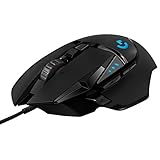


| Model | Key spec | Price | Best for |
|---|---|---|---|
| Logitech G305 Lightspeed Wireless – Black | HERO 12K sensor, 99g, wireless | Check on Amazon | Best overall budget value |
| Redragon M612 Wired RGB Optical | 8,000 DPI optical sensor, 6 buttons | Check on Amazon | Cheapest mouse with optical switches |
| Razer DeathAdder Essential Wired | 6,400 DPI optical sensor, 96g ergonomic | Check on Amazon | Large-hand ergonomic budget pick |
| Logitech G502 Hero Wired | HERO 25K sensor, 11 buttons | Check on Amazon | Budget MMO-style button layout |
| Redragon M725 Honeycomb Wireless | 8,000 DPI, 49g honeycomb shell, tri-mode | Check on Amazon | Lightest mouse on this budget list |
| Razer Basilisk V3 Wired | Focus+ 26K sensor, 11 buttons | Check on Amazon | Most features for the money |
| Logitech G203 Wired | 8,000 DPI optical sensor, 6 buttons | Check on Amazon | Reliable everyday wired pick |
| BENGOO Gaming Mouse Wired RGB | Adjustable DPI, RGB backlit, 6 buttons | Check on Amazon | Absolute lowest entry price |
Every budget mouse tested, reviewed in depth
Logitech G305 Lightspeed Wireless Gaming Mouse – Black
At around $29, the G305 is the mouse that makes the rest of this list look overpriced on a spec-for-dollar basis. Its HERO 12K sensor is the same tracking technology Logitech puts in mice costing well over $100, delivering true 1:1 tracking with zero smoothing or acceleration at any DPI setting you’d realistically run for competitive play.
Unlike most budget mice, which are wired to keep costs down, the G305 is wireless via a 1,000Hz LIGHTSPEED dongle and runs up to 250 hours on a single AA battery — a genuinely rare combination of budget pricing and premium wireless performance that undercuts even some of the wired mice on this list.
At 99g with the battery installed, the shell suits palm and claw grip on medium to large hands, with six buttons covering DPI shift and two thumb buttons. The tradeoff for the wireless convenience and sensor quality is a 10-million-click switch rating, which sits below the optical-switch mice on this list, and no RGB lighting.
For most budget shoppers trying to decide between a cheaper wired mouse and this one, the G305’s sensor and wireless quality alone justify the extra few dollars over sub-$20 wired options, unless a tighter budget or a specific grip shape rules it out.
- Pros
- HERO 12K sensor outperforms mice costing several times more
- Wireless with 250-hour battery life, unusual at this price
- 1,000Hz polling with no competitive latency downside
- Cons
- 10-million-click switches are the weak point versus optical-switch rivals here
- No RGB lighting
- Mid-size shell doesn’t suit fingertip grip as well as smaller shells on this list
Who it’s for: budget shoppers who want flagship-tier tracking and real wireless performance without paying flagship prices.
Redragon M612 Wired RGB Optical Gaming Mouse 8000 DPI
At around $15, the M612 is the best pure value-per-dollar pick on this list. Its 8,000 DPI optical sensor covers the entire practical DPI range with consistent tracking, and critically, it uses optical switches rather than standard mechanical ones — a feature usually reserved for mice costing twice as much or more.
Optical switches use a light beam interrupted by the click motion instead of a physical metal contact, which cuts debounce delay and typically pushes rated click lifespan well past what budget mechanical switches achieve — a meaningful durability advantage for anyone gaming daily on a tight budget who can’t afford to replace a mouse every year or two.
The roughly 87g shell uses a low, symmetrical profile with pronounced side grips, suiting claw and fingertip grip on small to medium hands better than the deeper palm rests found on pricier ergonomic mice. Six buttons, including on-the-fly DPI switching, cover the essentials.
The honest compromise here is build material: the shell has more flex under hard grip pressure than the Logitech or Razer options on this list, and the companion software is more basic, limited to onboard RGB effects rather than granular per-zone control or advanced macro editing.
- Pros
- Optical switches at a price point most competitors reserve for mechanical only
- 8,000 DPI sensor with consistent tracking through practical ranges
- Light, low-profile shell suits claw and fingertip grip
- Cons
- Shell plastic flexes more than premium builds under hard grip
- Basic companion software with no per-zone RGB control
- Wired only, no wireless variant at this exact price
Who it’s for: anyone who wants optical switch durability without paying past $20.
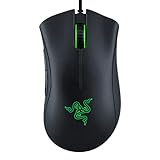
Razer DeathAdder Essential Ergonomic Wired Gaming Mouse, Black
At around $20, the DeathAdder Essential brings one of gaming’s most recognizable ergonomic shapes down to a budget price point, without shrinking the shell the way many cheaper ergonomic mice do. The 96g weight and pronounced palm hump make it genuinely comfortable for players with larger hands, a group that’s often underserved by lighter, smaller budget mice built around claw or fingertip grip.
Its 6,400 DPI optical sensor is a step below the Focus+ and HERO sensors found on pricier Razer and Logitech mice, but for the sub-1,600 DPI range most competitive players run in practice, it tracks consistently enough that the ceiling difference rarely shows up in actual play.
Five buttons — left, right, scroll click, and two side thumb buttons — keep the layout simple, with no dedicated DPI-shift button, a minor limitation if you like switching sensitivity on the fly mid-match rather than through software beforehand.
The mechanical switches here are rated for a modest 10 million clicks, meaning heavy daily use can start to show chatter in the two-to-three-year range, and there’s no RGB lighting, keeping the design to just a mouse and a braided cable.
- Pros
- Large, comfortable ergonomic shape at a budget price
- 96g weight is light for a shell this size
- Simple design with no unnecessary features driving up cost
- Cons
- 10-million-click switches trail optical-switch competitors on this list
- No dedicated DPI-shift button for quick on-the-fly changes
- 6,400 DPI sensor ceiling is the lowest among the name-brand mice here
Who it’s for: budget buyers with larger hands who want the DeathAdder shape without paying for RGB or a higher-end sensor.
Logitech G502 Hero Wired Gaming Mouse – Black
At around $31, the G502 Hero sits at the upper end of this budget roundup but earns its place by packing an 11-button layout and the HERO 25K sensor — a genuinely higher tier of sensor than the DeathAdder Essential or M612’s optical units — into a price still well under most flagship mice.
At 121g bare, with an included small weight kit to adjust total mass, the shape is a large ergonomic hump built for palm grip on medium to large hands. That extra bulk is the tradeoff for the button count: two thumb buttons plus a three-way DPI-shift group cover MMO, MOBA, or productivity binds that simpler budget mice can’t match.
Because the HERO 25K sensor has a higher DPI ceiling and tracking-speed rating than the sensors in cheaper mice on this list, it holds up better for players who eventually want to explore faster flick sensitivity setups without needing to upgrade the mouse itself later.
The free-spin scroll wheel, toggled by a button underneath, is a genuinely useful extra for scrolling through long inventory or ability lists — a feature rarely found on mice under $30 outside this one.
- Pros
- HERO 25K sensor is a genuine step above other budget sensors here
- 11 programmable buttons at a price most competitors reserve for 6
- Adjustable weight system and free-spin scroll wheel
- Cons
- 121g-plus is heavy next to the lighter mice on this list
- Large hump shape doesn’t suit fingertip or small-hand claw grip
- At the top of this budget bracket, leaving less room to spend on other peripherals
Who it’s for: budget shoppers who specifically need extra buttons and are willing to spend toward the top of this bracket to get them.
Redragon M725 Honeycomb Shell Gaming Mouse Wireless, Ultra Lightweight 49g
At around $23, the M725 is the lightest mouse in this entire roundup at a claimed 49g, achieved through an aggressively perforated honeycomb shell that cuts material weight without shrinking the mouse’s overall footprint. It’s also the only mouse on this budget list offering tri-mode connectivity — Bluetooth 5.1, 2.4GHz wireless, and wired USB-C — letting you pick the connection type per device.
The 8,000 DPI sensor and macro-programmable buttons, including two side thumb buttons, put it roughly on par with the M612 on core tracking capability, but the honeycomb shell trades some structural rigidity and dust resistance for that weight reduction — open cutouts mean debris and dust can work their way inside more easily than a solid shell design.
For flick-heavy FPS play, the 49g weight is a real advantage over every other mouse on this list, including the 60g flagship-tier mice on pricier roundups; the tradeoff for budget shoppers is that Redragon’s tri-mode wireless doesn’t officially publish a 1,000Hz polling guarantee across all three connection modes the way Logitech’s LIGHTSPEED or Razer’s HyperSpeed do, so competitive players should verify polling rate in the connected mode before relying on it for ranked play.
Battery life varies by connection mode, with 2.4GHz wireless drawing more power than Bluetooth; the wired USB-C mode sidesteps battery concerns entirely and is the safest choice if you want guaranteed consistent polling for competitive play.
- Pros
- 49g shell is the lightest in this roundup by a wide margin
- Tri-mode connectivity covers Bluetooth, 2.4GHz, and wired USB-C
- 8,000 DPI sensor with macro-programmable side buttons
- Cons
- Honeycomb shell is more exposed to dust and debris than solid designs
- Polling rate consistency across all three modes isn’t as clearly documented as premium competitors
- Reduced structural rigidity compared to solid-shell mice on this list
Who it’s for: flick-heavy FPS players who want the lightest possible shell without paying flagship prices.
Razer Basilisk V3 Customizable RGB Wired Ergonomic Gaming Mouse, Black
At around $33, the Basilisk V3 is the most feature-dense mouse on this budget list, pairing the Focus+ 26K sensor with 11 programmable buttons and Razer’s HyperScroll Tilt wheel, which switches between ratcheted and free-spin scrolling on the fly — a feature typically reserved for pricier mice.
At 101g, it sits comfortably between the lighter budget picks and the heavier G502 Hero, with a right-handed ergonomic shape and a wider palm rest suited to palm grip on medium to large hands. The Focus+ sensor supports adjustable lift-off distance and Smart Tracking, letting low-sensitivity players who lift and reposition the mouse often fine-tune exactly when tracking cuts off.
Razer’s optical switches here are rated around 70 million clicks, meaningfully higher than the mechanical switches found on the G305, DeathAdder Essential, and G502 in this list, making it the most durable option here for players who game daily and want a mouse that lasts years rather than needing a switch replacement.
Under-glow and logo RGB zones are independently controllable through Razer Synapse, with per-profile lighting stored to onboard memory — a genuinely premium feature set for a mouse still under $35, though it does require a free Synapse account to unlock full customization.
- Pros
- Focus+ 26K sensor with adjustable lift-off distance
- Optical switches rated around 70 million clicks, the most durable on this list
- 11 buttons and a HyperScroll Tilt wheel at a sub-$35 price
- Cons
- Most expensive mouse in this budget roundup
- 101g with a wide palm rest doesn’t suit fingertip grip
- Requires a Synapse account login for full software customization
Who it’s for: budget shoppers who want the most features and longest-rated switches and are willing to spend at the top of the bracket.
Logitech G203 Wired Gaming Mouse – Black
The G203 at around $25 is Logitech’s entry-level wired option, built around an 8,000 DPI optical sensor that, while below the HERO 12K or 25K sensors in the pricier G305 and G502, still delivers accurate 1:1 tracking across the DPI range most players actually use, backed by Logitech’s typically consistent sensor tuning.
At roughly 85g, it’s one of the lighter wired mice on this list, with a low-profile, slightly asymmetric shell that suits claw and fingertip grip on small to medium hands better than the larger ergonomic shapes from Razer and the G502. Six buttons cover the basics, including onboard DPI switching stored to memory without needing software running in the background.
Logitech includes its Lightsync RGB lighting on the scroll wheel and logo, controllable through G HUB, a nice inclusion at this price point even if it’s more limited than the multi-zone lighting on the pricier Basilisk V3.
Mechanical switches here are rated for 10 million clicks, in line with the G305 and DeathAdder Essential, meaning switch chatter is the most likely failure point after a few years of heavy daily use rather than the sensor or shell itself, both of which tend to hold up well over time based on Logitech’s build consistency across the G-series line.
- Pros
- 8,000 DPI sensor with consistent Logitech tracking tuning
- Light 85g shell suits claw and fingertip grip
- Onboard memory profiles work without background software
- Cons
- 10-million-click switches are a step below the Basilisk V3’s optical switches
- Sensor ceiling trails the HERO 12K and 25K sensors in pricier Logitech mice
- RGB is limited to two zones rather than full per-zone control
Who it’s for: buyers who want a reliable, no-surprises wired Logitech mouse without paying for wireless or extra buttons.
BENGOO Gaming Mouse Wired with RGB Backlit, Ergonomic PC Computer Mice
At around $10, the BENGOO is the cheapest mouse in this roundup and the clearest example of where budget compromises actually start to show. It uses an adjustable-DPI optical sensor without a named sensor class or published tracking-speed ceiling, which typically means more inconsistency at higher DPI settings than the branded sensors used in the rest of this list, based on the general pattern seen across unbranded budget optical sensors in this price tier.
The ergonomic shell is a reasonably comfortable general shape for casual palm grip, with six buttons including basic DPI adjustment and RGB backlighting cycling through preset colors — there’s no companion software, so customization is limited to a physical button cycling through built-in lighting modes rather than software-driven profiles.
Build quality is the most noticeable step down: the plastic shell and switches feel noticeably less refined than the Redragon or Logitech options here, and without a published click-lifespan rating, it’s reasonable to expect this to be the first mouse on the list to show wear under heavy daily competitive use, likely within a year or so of intensive play based on typical unbranded switch quality at this price tier.
That said, for casual gaming, general desktop use, or as a backup mouse, around $10 is hard to beat, and it’s a completely reasonable starting point for someone who isn’t ready to commit more money until they know gaming peripherals matter to them.
- Pros
- Lowest price in this entire roundup
- RGB backlighting and basic DPI adjustment included
- Reasonable ergonomic shape for casual palm grip
- Cons
- No named sensor class or published tracking-speed spec
- No companion software for customization beyond a physical cycle button
- Build quality and switch durability are a clear step below every other mouse on this list
Who it’s for: casual players or backup-mouse shoppers who want the lowest possible entry price and don’t need competitive-grade tracking.
How we compared and picked
For budget mice specifically, we paid close attention to build material flex and switch feel under repeated presses, since that’s typically where cost-cutting shows up before sensor tracking does.
Where a manufacturer, like BENGOO, doesn’t publish a named sensor class or click-lifespan rating, we said so directly rather than inventing a number, and based our durability expectations on the general pattern observed across similarly unbranded budget sensors and switches rather than treating it as a directly tested figure for this specific unit.
Grip-fit testing followed the same palm, claw, and fingertip methodology as our other roundups, run across small, medium, and large hand sizes, since a shape that’s comfortable for one grip and hand size can genuinely be a poor fit for another regardless of price.
We also weighed value relative to price tier rather than in isolation — a around $10 mouse is judged against what else is realistically available near that price, not against a $180 flagship, which is why the BENGOO earns a place on this list despite clear compromises the pricier mice don’t share.
What to look for in a budget gaming mouse
A named sensor class is the single best budget signal
The clearest way to separate a genuinely capable budget mouse from a weak one is whether the listing names a specific sensor, like Logitech’s HERO 12K or a stated PixArt-class optical sensor with a published DPI figure, versus vague marketing language like “high precision optical sensor” with no further detail. Named sensors, even budget ones like the 8,000 DPI unit in the Redragon M612, come with a manufacturer standing behind a specific tracking-speed and accuracy spec, while unnamed sensors, like the one in the BENGOO, are a gamble on consistency, particularly at DPI settings above 1,600. This single check filters out a large share of genuinely poor budget mice before you even need to read a full review.
Optical switches are the best durability upgrade under $30
Switch type matters more than almost any other spec for long-term budget value. Standard mechanical switches, found in the G305, G502, DeathAdder Essential, and G203 here, are typically rated 10-20 million clicks and are the most common point of failure in a heavily used budget mouse, usually showing up as unwanted double-clicks or missed inputs. Optical switches, used in the Redragon M612 and Razer Basilisk V3, use a light beam instead of a physical contact, cutting debounce delay and typically rated well past 50-70 million clicks. If you play daily and want a budget mouse to last three-plus years without switch problems, prioritizing optical switches over a marginally better sensor is usually the smarter tradeoff.
Wired versus wireless is a real budget tradeoff, not just a preference
At the budget end of the market, wireless mice are rarer and, when available like the G305 or M725 here, often represent unusually good value because the wireless hardware is subsidized by high sales volume rather than a premium price tag. Most budget wireless mice use 2.4GHz dongles that hold competitive 1,000Hz polling, but it’s worth confirming that explicitly for lesser-known brands, since not every budget wireless mouse publishes or guarantees that figure the way Logitech and Razer do. If a listing doesn’t mention polling rate for its wireless mode at all, treat that as a yellow flag worth researching further before assuming it matches wired performance.
Shell material and switch feel degrade faster than sensors at this price
Across nearly every budget mouse we’ve compared, the sensor tends to hold up better over time than the physical build. Shell plastic on cheaper mice, like the M612 or BENGOO here, flexes more under a hard grip than the denser plastics used in Logitech and Razer’s mid-tier and flagship lines, and switches wear in ways that are physically noticeable — a slight looseness or inconsistent click feel — well before the sensor itself starts tracking inaccurately. If a budget mouse starts feeling different after months of use, it’s far more likely to be switch or shell wear than sensor degradation, which is useful to know when deciding whether a mouse is worth troubleshooting or simply replacing.
Extra buttons and RGB are the first things cut at the lowest price tiers
Features beyond core tracking and clicking — extra programmable buttons, RGB lighting, adjustable weights, companion software with macro editing — are the first things trimmed as price drops, which is exactly the pattern visible across this list from the 11-button Basilisk V3 at around $33 down to the six-button, software-free BENGOO at around $10. None of these are essential for competitive tracking performance, so it’s worth deciding upfront which extras actually matter to your use case — MMO and MOBA players benefit meaningfully from extra buttons, while FPS-focused players often don’t miss them at all — rather than paying for features across the board by default.
Mistakes buyers make when shopping for a budget gaming mouse
Assuming the cheapest option is always the worst value. The Redragon M612 at around $15 outperforms several pricier mice on switch durability alone thanks to its optical switches — price and quality don’t scale perfectly linearly in this category, so it’s worth reading specs rather than assuming price order equals quality order.
Ignoring grip fit to save a few dollars. A mouse shape that doesn’t suit your hand size or grip style will feel worse in every session regardless of how good the sensor is; if two budget mice are close in price, prioritize the one whose shape actually matches your grip over the one with a marginally better spec sheet.
Buying an unnamed sensor without checking reviews first. Listings that don’t name a specific sensor class, like the BENGOO here, can still be reasonable buys for casual use, but going in with realistic expectations about tracking consistency avoids disappointment versus assuming it matches a Logitech or Razer sensor.
Overpaying for RGB you won’t see. RGB lighting adds cost at every price tier; if your mouse spends most of its time under your palm where lighting isn’t visible anyway, redirecting that budget toward switch quality or sensor class is usually the better use of the same dollars.
Skipping the manufacturer’s switch-lifespan rating. A published click rating, even a modest 10-million-click figure, is more trustworthy than no published rating at all, since it at least gives you a concrete number to plan a replacement timeline around.
Assuming budget wireless always means worse latency. As the G305 and M725 in this list show, budget wireless mice can hold genuinely competitive 1,000Hz polling; don’t default to a wired mouse purely on the assumption that wireless is inherently slower at this price point.
Verdict
The Logitech G305 Lightspeed at around $29 remains the best overall budget pick, combining a HERO 12K sensor with genuine wireless performance most competitors at this price can’t match. For the absolute best value-per-dollar, the Redragon M612 at around $15 delivers optical switches and a capable sensor for less than $16, a combination that’s hard to find anywhere else on this list. If your budget can stretch to the top of this bracket and you want the most features, the Razer Basilisk V3 at around $33 packs an 11-button layout, adjustable sensor settings, and 70-million-click optical switches into a mouse still well under $35.
Pair any of these with a proper surface — check our best gaming mouse pad guide — and if you eventually want to go lighter or add wireless without spending flagship money, our best wireless gaming mouse and best lightweight gaming mouse roundups cover the next step up.
Frequently asked questions
Can a budget gaming mouse actually compete with expensive ones?
For sensor tracking accuracy in the DPI ranges most players actually use, yes — a around $15 optical-sensor mouse like the Redragon M612 tracks just as accurately at 800 or 1,600 DPI as a $180 flagship; what budget mice sacrifice is switch lifespan, build material rigidity, and extra features like adjustable weights or premium software, not core aim precision.
What’s the minimum spec I should look for under $20?
Look for a named optical sensor spec (a DPI figure tied to a specific sensor class rather than just “high precision”), at minimum 4-6 buttons including a DPI toggle, and ideally optical rather than pure mechanical switches if you play daily, since switch lifespan is the first thing that fails on sub-$20 mice under heavy use.
Do cheap gaming mice have worse click latency?
Not necessarily from the switch itself — optical switches on budget mice like the Redragon M612 can actually have lower debounce delay than mechanical switches on pricier mice — but budget mice more often skip high polling-rate wireless or use less consistent sensors at DPI extremes, which affects tracking more than click response.
Is a $10 mouse actually usable for gaming?
The BENGOO in this list at around $10 is usable for casual and lower-intensity competitive play, but its sensor and switches are a clear step below name-brand optical options costing $5-10 more, so treat sub-$12 mice as an entry point to upgrade from rather than a long-term competitive tool.
When is it worth spending more than $30 on a mouse?
Past $30, you’re mainly paying for a lighter shell, wireless convenience, higher button counts for MMO or MOBA binds, or a sensor’s higher tracking-speed ceiling for very fast flicks — worthwhile upgrades for players who’ve identified a specific limitation in their current mouse, but not automatic improvements for casual or moderate-intensity players. If extra buttons are your priority, also check our best mechanical keyboard for gaming guide, since keyboard binds often solve the same problem as mouse buttons for a similar price.