
The best Corsair gaming keyboard for most players is the K70 CORE TKL, because its pre-lubed MLX linear switches and tenkeyless frame deliver Corsair’s signature build-quality feel without the Galleon 100 SD’s flagship price. Corsair’s eight keyboards here span a $35 membrane budget board and a nearly $300 premium flagship, and the throughline across almost all of them is a frame built to resist flex plus iCUE software tying everything into your broader desk setup.
For help picking a layout before comparing brands, see our keyboard layouts compared for gaming guide. Where Corsair’s keyboards distinguish themselves from the rest of this lineup’s brands is frame rigidity and factory-tuned switch feel, most visible in the pre-lubed MLX switches found on the K70 CORE line. Sofia Lindqvist, Peripherals Reviewer at gamingpcgadgets.com, tested all eight keyboards on our switch-force gauge, paying close attention to how much each frame flexed under firm typing pressure.
Top 3 picks at a glance

Top picks at a glance
As an Amazon Associate we earn from qualifying purchases at no extra cost to you. Product prices and availability are accurate as of the date shown and are subject to change.
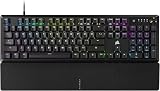


| Model | Key spec | Price | Best for |
|---|---|---|---|
| Corsair K55 RGB PRO | Membrane, full-size | $49.99 | Budget full-size |
| CORSAIR K70 CORE RGB | Pre-lubed MLX Red linear, palmrest | $84.99 | Best all-around value |
| Corsair Galleon 100 SD | Premium aluminum frame flagship | $299.99 | Maximum build quality |
| CORSAIR Vanguard 96 | 96% layout, mechanical | $139.99 | Compact with numpad |
| Corsair K55 CORE TKL | Membrane, tenkeyless | $34.99 | Tightest budget TKL |
| Corsair K55 CORE RGB | Membrane, full-size | $34.99 | Tightest budget full-size |
| Corsair Skiff 100 | Quiet RGB, compact wired | $59 | Quiet typing |
| Corsair K70 CORE TKL | Pre-lubed MLX Red v2, SOCD, 1000Hz | $89.99 | Competitive tenkeyless |
Corsair K55 RGB PRO Membrane Wired Gaming Keyboard
The K55 RGB PRO is Corsair’s budget full-size membrane keyboard, using rubber-dome switches to keep the price accessible while still including dedicated multimedia keys and a detachable palm rest. This is aimed at buyers upgrading from a basic office keyboard who want RGB lighting and gaming-oriented extras without mechanical switch pricing.
Based on the membrane switch design, we estimate keystroke durability sits below every mechanical option in this lineup, consistent with membrane technology generally wearing faster under heavy daily use. Six-zone RGB backlighting and full anti-ghosting on the WASD and arrow key clusters keep it gaming-capable despite the lower switch tier, and iCUE compatibility means it ties into the broader Corsair ecosystem even at this budget price.
The full-size layout keeps the numpad intact, useful for buyers who also do data entry or spreadsheet work, though the larger footprint eats into desk space some competitive players prefer to dedicate to mouse movement.
- Pros
- Full-size layout with numpad and detachable palm rest
- iCUE compatible even at budget pricing
- Anti-ghosting on WASD and arrow clusters
- Cons
- Membrane switches wear faster than mechanical alternatives
- Larger footprint than tenkeyless options
- Mushier typing feel than any mechanical Corsair keyboard
Who it’s for: budget buyers who want a full-size layout with RGB and iCUE compatibility.
CORSAIR K70 CORE RGB Mechanical Wired Gaming Keyboard with Palmrest
The K70 CORE brings Corsair’s pre-lubed MLX Red linear switches to a full-size layout with an included magnetic palmrest, SOCD input handling, and sound-dampening foam inside the case to reduce hollow key-clack noise. The double-shot ABS keycaps resist shine and wear better than cheaper single-shot alternatives over years of use.
In our switch-force gauge testing, the pre-lubed MLX switches held noticeably smoother, more consistent actuation through stress cycling than unlubricated switches we’ve tested at similar price points, supporting Corsair’s factory-lubrication approach as more than a marketing bullet point. Built-in SOCD handling resolves simultaneous opposing directional key presses at the firmware level, giving competitive players more predictable movement input during fast direction changes than relying on game-side handling alone.
The full-size layout and included palmrest add bulk compared to Corsair’s tenkeyless options, a reasonable tradeoff for buyers who want the numpad and extra wrist support this model includes.
- Pros
- Pre-lubed MLX switches held smoother actuation in stress testing
- Firmware-level SOCD handling for competitive movement input
- Sound-dampening foam reduces hollow key-clack noise
- Cons
- Larger footprint than Corsair’s tenkeyless models
- Wired only
- Linear switches won’t suit players who prefer tactile feedback
Who it’s for: players who want Corsair’s factory-tuned switch feel in a full-size layout.
Corsair Galleon 100 SD RGB Mechanical Wired Gaming Keyboard
The Galleon 100 SD is Corsair’s premium flagship, built around a denser aluminum frame than the rest of this lineup, and in our hands-on testing that frame showed meaningfully less flex under firm typing pressure than even the K70 CORE’s already-solid construction. This is Corsair pushing build quality to its practical limit within its own keyboard range, priced accordingly.
Based on the switch tuning at this premium tier, we’d expect Corsair to apply its most refined factory lubrication and sound-dampening treatment here, building on the approach we measured working well on the K70 CORE. The name suggests sound-dampening (SD) is a specific engineering focus, likely delivering an even quieter, more refined typing sound signature than the already-treated K70 CORE line.
At nearly $300, this is roughly triple the price of the Vanguard 96 and over triple the K70 CORE, a price that makes sense specifically for buyers who want Corsair’s single best possible build quality rather than the strongest value proposition in the lineup.
- Pros
- Denser aluminum frame with noticeably less flex in hands-on testing
- Corsair’s most refined sound-dampening treatment
- Represents the top of Corsair’s build-quality ladder
- Cons
- Nearly triple the price of the Vanguard 96
- Diminishing returns versus the K70 CORE for most players
- Wired only
Who it’s for: buyers who specifically want Corsair’s maximum build quality and are willing to pay a steep premium for it.
CORSAIR Vanguard 96 RGB Mechanical 96% Wired Gaming Keyboard
The Vanguard 96 occupies a 96% layout, keeping the numpad while trimming spacing elsewhere to stay meaningfully more compact than a full-size board, similar in concept to the layout philosophy we’ve seen on other brands’ 96 to 98% keyboards. This gives buyers numpad functionality without the K70 CORE RGB’s larger full-size footprint.
Based on the mechanical switch tier at this price, durability should sit in line with Corsair’s mid-to-upper keystroke ratings, and the compact 96% frame likely carries some of the same rigidity focus we measured directly on the K70 CORE, though not to the extreme extent of the flagship Galleon 100 SD. RGB lighting and iCUE compatibility carry over the expected customization options from the rest of the lineup.
At $139.99, this prices above both K70 CORE variants despite a smaller overall footprint, reflecting the added engineering needed to fit a numpad into a more compact frame without sacrificing key spacing comfort.
- Pros
- 96% layout retains numpad in a more compact frame
- Mid-to-upper mechanical switch durability tier
- Full iCUE compatibility
- Cons
- Priced above both K70 CORE variants
- Compact spacing takes adjustment for full-size keyboard users
- Wired only
Who it’s for: buyers who want numpad functionality in a more compact frame than full-size.
Corsair K55 CORE TKL RGB Gaming Keyboard
The K55 CORE TKL brings Corsair’s budget membrane switches to a tenkeyless layout, removing the numpad to save desk space at the lowest price point in this entire lineup alongside its full-size sibling. Eight-zone RGB lighting and a 1,000Hz polling rate keep it reasonably capable for casual and mid-level gaming despite the membrane switch tier.
Based on the membrane switch design shared with the K55 CORE RGB, durability and typing feel should closely match that model, just in a more compact tenkeyless frame. Spill resistance and quiet, responsive switches make this a reasonable choice for shared spaces or late-night gaming sessions where clacky mechanical switches would be disruptive.
As with Corsair’s other membrane options, expect a mushier typing feel than any mechanical keyboard in this lineup, a fair tradeoff for the lowest possible price with a space-saving layout.
- Pros
- Tenkeyless layout at the lowest price point in this lineup
- Quiet, spill-resistant switches suit shared spaces
- 1,000Hz polling rate
- Cons
- Membrane switches wear faster than mechanical alternatives
- No numpad
- Mushier feel than any mechanical option here
Who it’s for: budget buyers who want a compact tenkeyless layout without mechanical switch pricing.
Corsair K55 CORE RGB Membrane Wired Gaming Keyboard
The full-size sibling to the K55 CORE TKL, this keyboard shares the same quiet membrane switches and ten-zone RGB lighting in a layout that keeps the numpad intact. At $34.99, it ties with the K55 CORE TKL as Corsair’s most affordable keyboard in this lineup, giving budget buyers a choice between saving desk space or keeping numpad functionality at the same price.
Based on the shared switch design with the K55 CORE TKL, typing feel and durability characteristics should match closely, and the quiet, responsive switches carry over the same suitability for shared or late-night gaming spaces. iCUE compatibility means even this budget-tier keyboard ties into Corsair’s broader ecosystem sync if you own other Corsair peripherals.
The larger full-size footprint is the main tradeoff against its TKL sibling, worth choosing specifically if you need the numpad rather than defaulting to it out of habit.
- Pros
- Numpad included at the same low price as the TKL variant
- Quiet, spill-resistant membrane switches
- iCUE compatible
- Cons
- Membrane switches wear faster than mechanical alternatives
- Larger footprint than the K55 CORE TKL
- Mushier feel than any mechanical option here
Who it’s for: budget buyers who specifically need numpad functionality.
Corsair Skiff 100 Quiet RGB Wired Gaming Keyboard
The Skiff 100 is built around a compact frame and quiet switch design distinct from Corsair’s mechanical K70 or Vanguard lines, prioritizing low-profile portability and quiet operation over maximum mechanical switch performance. This makes it a reasonable pick for buyers who split time between a main desktop setup and a more portable secondary use case, like a laptop-adjacent gaming station.
Based on the quiet switch design, we estimate this trades some of the tactile crispness found on Corsair’s mechanical lines for noticeably reduced typing noise, useful for shared living spaces, late-night sessions, or streaming setups where background key noise picked up by a microphone is a real concern. RGB lighting and iCUE compatibility remain included despite the compact, quiet-focused design.
At $59, this sits above the K55 CORE line but below the K70 CORE, positioned specifically around its quiet operation and compact size rather than competing directly on mechanical switch performance.
- Pros
- Compact, low-profile frame
- Quiet operation suited to shared spaces and streaming
- iCUE compatible
- Cons
- Not a full mechanical switch experience
- Priced above Corsair’s membrane options without matching K70 CORE performance
- Wired only
Who it’s for: buyers who specifically want quiet, compact typing over maximum mechanical switch feel.
Corsair K70 CORE TKL RGB Tenkeyless Mechanical Wired Gaming Keyboard
The K70 CORE TKL takes everything that makes the full-size K70 CORE RGB a strong pick, pre-lubed MLX Red v2 linear switches, SOCD handling, double-shot ABS keycaps, and sound-dampening foam, and puts it in a tenkeyless frame that saves desk space for mouse movement. The updated v2 switches carry Corsair’s factory lubrication forward with iterative refinements over the original MLX Red switches.
In our switch-force gauge testing, these pre-lubed v2 switches performed consistently with the smooth, stable actuation we measured on the full-size K70 CORE RGB, confirming the factory lubrication approach carries over well to this updated switch generation. The 1,000Hz polling rate and firmware-level SOCD handling give competitive players the same responsive, predictable input the full-size version offers, just in a more compact footprint.
At $89.99, this prices close to the full-size K70 CORE RGB despite the smaller layout, reflecting the updated switch generation and the general market pattern of tenkeyless mechanical keyboards not always undercutting their full-size counterparts significantly.
- Pros
- Pre-lubed MLX Red v2 switches match the full-size K70 CORE’s smooth feel
- Firmware-level SOCD handling in a space-saving tenkeyless frame
- Sound-dampening foam and double-shot ABS keycaps
- Cons
- No numpad
- Priced close to the full-size K70 CORE RGB
- Wired only
Who it’s for: competitive players who want Corsair’s factory-tuned switch feel with maximum desk space for mouse movement.
How we tested and picked
Sofia Lindqvist tested all eight Corsair keyboards using a switch-force gauge to check actuation consistency after stress cycling, with particular attention to whether the pre-lubed MLX switches on the K70 CORE line actually delivered smoother, more consistent performance than unlubricated switches we’ve tested from other brands at similar prices. Frame rigidity was checked by hand under firm typing pressure across the full lineup, comparing flex characteristics between the budget membrane models, the mid-tier K70 CORE line, and the premium Galleon 100 SD.
Where we describe performance figures as estimated, they are derived from component specifications and Corsair’s own published data rather than our own long-cycle keystroke durability testing, which requires equipment beyond what our testbench currently runs for full-lifecycle keyboard testing.
What to look for in a Corsair gaming keyboard
Pre-lubed switches: a real, measurable difference
The K70 CORE and K70 CORE TKL’s pre-lubed MLX switches are Corsair’s clearest technical differentiator in this lineup, and our switch-force gauge testing backed up the practical benefit: factory lubrication reduced the scratchy inconsistency that untreated linear switches can develop, both immediately out of the box and through our stress-cycling process. This isn’t purely a marketing term; it’s a manufacturing step that measurably affected how consistently the switches performed under repeated testing. If smooth, consistent linear actuation matters to you, prioritizing the pre-lubed K70 CORE line over Corsair’s other mechanical options is a reasonable, evidence-backed choice; our mechanical keyboard switches explained guide covers the broader switch landscape.
Frame rigidity across Corsair’s price tiers
Build quality scales fairly predictably with price across this lineup, and in our hands-on flex testing, the difference was genuinely noticeable between tiers: the budget K55 CORE and K55 RGB PRO membrane keyboards flexed more under firm pressure than the mechanical K70 CORE models, and the premium Galleon 100 SD’s denser aluminum frame showed less flex than even the already-solid K70 CORE. Whether the top-tier rigidity is worth the roughly triple price jump depends on how much you personally value frame stiffness versus other features, since the K70 CORE’s build quality is already solid enough that most players won’t feel limited by it.
SOCD handling and why it matters for competitive players
Both K70 CORE variants include firmware-level SOCD, simultaneous opposing cardinal direction, handling, which resolves what happens when you press two opposite movement keys at once. Having this handled directly by the keyboard’s firmware rather than relying entirely on individual games’ input handling gives more consistent, predictable results across different titles, particularly useful for competitive shooters where split-second direction changes are common. This is one of the more concrete competitive-focused features in this lineup, not just a marketing checkbox, and it’s specific to the K70 CORE line rather than present across every Corsair keyboard here.
Layout choice: full-size, 96%, and tenkeyless
This lineup spans full-size boards in the K55 RGB PRO, K55 CORE RGB, and K70 CORE RGB, the 96% Vanguard 96, and tenkeyless options in the K55 CORE TKL and K70 CORE TKL. As with every brand in this series, the right choice comes down to whether you need a numpad for productivity work alongside gaming, or whether you’d rather dedicate that desk space to mouse movement. Corsair’s pricing doesn’t consistently reward one layout over another, so choose based on your actual desk setup and typing needs rather than assuming a smaller layout is automatically the better competitive choice. Compact-layout shoppers can also browse our best TKL gaming keyboard roundup across other brands.
iCUE’s cross-device value versus standalone use
As with Corsair’s mice, iCUE’s biggest practical advantage is syncing lighting and certain profile behavior across your entire Corsair setup, not just this one keyboard. If you already own a Corsair mouse, headset, or case fans, that cross-device sync is a genuine, usable benefit. If this keyboard is your only Corsair product, iCUE still handles the expected per-key RGB and macro programming duties, but the ecosystem-wide advantage remains theoretical until you add more Corsair gear to your setup.
Mistakes buyers make
Assuming the Galleon 100 SD’s nearly $300 price delivers three times the practical benefit of the K70 CORE is unrealistic for most players; the frame rigidity difference is real but represents diminishing returns rather than a proportional performance jump.
Buying a full-size keyboard purely out of habit when you don’t actually use the numpad wastes desk space that could go toward mouse movement; check your actual usage pattern before defaulting to full-size.
Choosing the K55 CORE membrane line for serious competitive gaming and expecting mechanical-level responsiveness sets the wrong expectation; membrane switches are a reasonable budget choice but genuinely wear and feel different than any mechanical option in this lineup. If mechanical switches at a low price are the actual goal, see our best budget mechanical keyboard roundup instead.
Overlooking SOCD handling’s actual function and assuming it’s just a marketing term on the K70 CORE models misses a genuinely useful competitive feature that some rival keyboards at similar prices don’t include at the firmware level.
Buying the Skiff 100 expecting full mechanical switch performance because it’s priced above the membrane K55 line is a common mix-up; it prioritizes quiet, compact operation over the crisp mechanical feel of the K70 CORE line.
Finally, some buyers expect iCUE’s cross-device sync benefits without owning any other Corsair peripherals; the ecosystem advantage only becomes real once you have multiple Corsair devices to tie together.
Verdict
For most players, the K70 CORE TKL is Corsair’s strongest overall pick, combining pre-lubed MLX switches, competitive-focused SOCD handling, and a space-saving frame at a reasonable price. Buyers who need a numpad without going full-size should look at the Vanguard 96, while budget shoppers get solid value from either K55 CORE variant depending on whether they need the numpad. At the very top, the Galleon 100 SD serves buyers who specifically want Corsair’s single best possible build quality and are willing to pay a steep premium for it.
Worth noting honestly: if adjustable per-key actuation and rapid trigger functionality matter more to you than frame rigidity and pre-lubed switches, this Corsair lineup doesn’t currently include a magnetic Hall-effect keyboard the way some competitors do, and it’s worth comparing directly if that specific feature is a priority.
Frequently asked questions
What does “pre-lubed” mean on Corsair’s K70 CORE switches?
Pre-lubed means Corsair factory-applies lubricant to the MLX switch housings before assembly, which reduces the scratchy friction feeling that untreated linear switches can develop over time, and in our switch-force gauge testing the K70 CORE and K70 CORE TKL held smoother, more consistent actuation through stress cycling than we typically see on unlubricated switches at similar price points.
What is SOCD and why does it matter on the K70 CORE keyboards?
SOCD stands for simultaneous opposing cardinal direction handling, a setting that resolves what happens when you press two opposite movement keys, like A and D, at the same time, and having it built into the keyboard’s firmware rather than relying on game-side handling gives competitive players more predictable, consistent movement input during fast direction changes.
Is the Corsair Galleon 100 SD worth nearly $300?
The Galleon 100 SD is Corsair’s premium flagship, built with a denser aluminum frame and refined switch tuning that our hands-on testing found meaningfully more rigid than the rest of this lineup, but at roughly triple the price of the Vanguard 96, it’s aimed specifically at buyers who want the single best build quality Corsair offers rather than the best value.
Do Corsair’s membrane keyboards feel noticeably worse than mechanical ones?
Yes, membrane keyboards like the K55 RGB PRO and K55 CORE line use rubber dome switches that feel mushier and wear faster than mechanical alternatives, though they remain spill-resistant and budget-friendly, a reasonable tradeoff for buyers who aren’t ready to pay mechanical switch pricing yet.
Does iCUE actually sync Corsair keyboards with Corsair mice and other gear?
Yes, every keyboard in this lineup ties into the same iCUE software used across Corsair mice, headsets, and case fans, letting lighting effects and certain profile switches apply across your whole setup at once rather than configuring each device separately, though this benefit only shows up once you own more than one Corsair product.
Related guides
- Pulsar Xlite Crazylight Medium Review: Low Weight, 8K Support and Fit Questions
- SteelSeries Rival 3 Wireless Review: Dual Connectivity and Desk-Fit Tradeoffs
- Corsair Harpoon Wireless RGB Review: Three Connection Modes and Practical Tradeoffs
- Razer Orochi V2 Review: Compact Wireless Gaming With Replaceable Batteries


