If you have ever tried to lube thirty switches with nothing but a toothpick and a bottle of Krytox you bought at a hardware store, you know the specific misery we are talking about. Switch modding without a proper lube kit turns a satisfying hobby into a patience test: springs fly, housings crack, and your application ends up patchy enough to create the same scratchy sound you were trying to eliminate. The difference between a mediocre result and a genuinely smooth, consistent keystroke usually comes down to whether your tools let you work at a pace that matches your own tolerance for error.
The best keyboard lube kits for switch modding address three real problems: they give you a stable platform so switches do not roll off the table, they include brushes fine enough to coat stem rails without flooding the spring, and they bundle an opener that will not snap a housing tab after twenty uses. Some kits also include lube itself, which saves a trip to a second vendor. What separates the top entries from the rest is how complete the workflow feels from unboxing to first keystroke test, and how well the included lube matches the viscosity most modders actually want for linear and tactile switches.
As an Amazon Associate we earn from qualifying purchases at no extra cost to you.


Our Top Picks


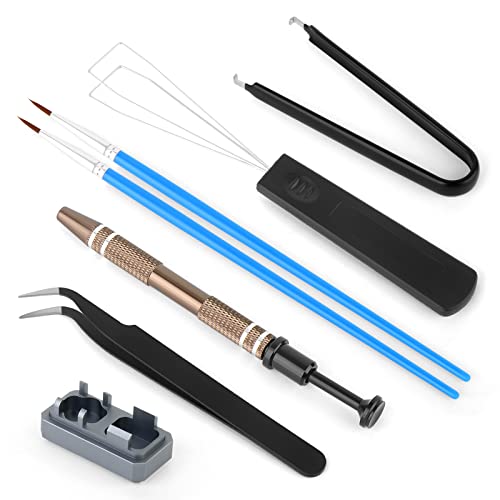

Top 3 picks at a glance
Quick Picks
| Product | Best for | Price tier |
|---|---|---|
| RunJRX YIMAGUJRX Acrylic Lube Station | Full workflow in one box | Mid-range |
| Minatee 9 Pcs Puller Kit | Ultra-budget essentials only | Budget |
| RUNJRX JRX-205 G0 Lube Kit | All-in-one value | Budget |
| YIMAGUJRX RUNJRX JRX 205G0 (6 Pcs) | Compact starter kit | Budget |
| RUNJRX Switch Opener Kit | Opener and lube focus | Budget |
| GLORIOUS G-Lube | Replacement lube alone | Budget |
| YIMAGUJRX RUNJRX JRX 205G0 (MX/Kailh) | Wide switch compatibility | Budget |
| YIMAGUJRX RUNJRX 36-Switch Acrylic Station | Larger batches and testing | Mid-range |
How We Compared
Each kit was compared on four criteria: completeness of the included tool set relative to price, lube quality and viscosity suitability for common MX-compatible switches, build durability of the opener and station (tabs and acrylic joints are the weak points), and how well the included brushes handle stem rails versus spring coils. A kit that nails three of four but skimps on lube quantity is still a strong value if the lube itself is premium.
The 8 Best Keyboard Lube Kits For Switch Modding in 2026
RunJRX YIMAGUJRX Acrylic Lube Station
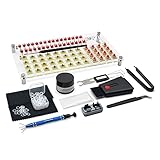
This twelve-piece acrylic station is the most self-contained kit on our list. It holds up to 32 switches at once, includes a lube bottle, opener, pullers, and tweezers, and the acrylic tray keeps everything from migrating across your desk mid-session. For a first-time luber it removes nearly every decision about what else to buy.
- 32-slot station means you can process a full board in fewer batches
- All tools included so nothing needs to be sourced separately
- Acrylic tray flexes slightly under pressure and can crack if you press hard while seating a switch
Skip this if you already own brushes and only need a better opener or lube supply.
Minatee 9 Pcs Keyboard Switch Keycap Puller Kit
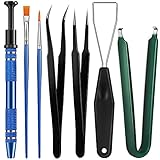
This is the cheapest entry that still covers basic disassembly: wire keycap puller, plastic switch puller, and a small brush set. It does not include lube or an opener, so treat it as a supplemental tool bag rather than a full kit. For someone who already has a bottle of Krytox gathering dust, it fills the puller gap without a commitment.
- Unbeatable price for the pullers and brushes alone
- Wire keycap puller is gentler on PBT caps than cheap plastic fingers
- No switch opener included, so you cannot actually crack a housing
Skip this entirely if you are starting from zero and need a lube bottle and opener too.
RUNJRX Keyboard Lube Kit JRX-205 G0
Fifteen grams of JRX-205 G0 lube paired with a sturdy opener and tweezers makes this the sweet spot for value-focused modders. The lube itself is a PFPE grease thickened with PTFE and modeled on Krytox 205g0, so it smooths linear stems well; like 205g0, it should be kept off the legs of tactile switches. The opener handles MX and most clone housings.
- JRX-205 G0 is a popular 205g0-style grease for linear switches and stabilizer housings
- Opener and tweezers are included alongside the lube
- Brush tip is slightly too broad for precise spring coating on tight-tolerance switches
Skip this if you prefer thin oils for tactiles; you will want to buy a second lubricant separately.
YIMAGUJRX RUNJRX Keyboard Lube Kit JRX 205G0 (6 Pcs)
A trimmed version of the full RUNJRX kit that keeps the 15-gram lube, opener, tweezers, and pullers but drops the acrylic station. The six-piece box is genuinely portable, which matters if you mod boards at a friend’s setup or travel to meetups. Build quality on the opener is the same as its larger sibling.
- Same JRX-205 G0 lube quantity at a lower price than the 12-piece kit
- Compact enough to fit in a keyboard carrying sleeve
- Without a station you will be balancing switches on your palm or a towel
Skip this if you plan to lube more than sixty switches per session; you will miss the tray.
RUNJRX Keyboard Lube Kit with Switch Opener Tweezers
Positioned between the Minatee bare-bones puller set and the full JRX kits, this entry gives you an opener, tweezers, and a small lube supply at a budget price. It suits beginners who already own a keyboard and want to try lubing a few switches before committing further. The included lube tube is modest but enough for a first project.
- Opener tolerances are tight enough for Kailh and Gateron clone housings
- Low enough price to buy as a gift or trial without buyer’s remorse
- Lube quantity is limited to a single small tube with no refill option from this listing
Skip this if you already have an opener and only need bulk lube; buy the standalone JRX bottle instead.
GLORIOUS G-Lube Keyboard Switch Lubricant
Glorious entered the lube market with a proprietary synthetic grease that leans toward a medium viscosity. It ships in a small 10g jar, and Glorious rates it for roughly 400 to 500 switches. As a standalone lubricant it competes well with Krytox 205g0 for linears, though it lacks the tack-free reputation that some enthusiasts insist upon.
- Medium viscosity works on linear switches, springs and stabilizers
- Budget-priced, so it is an easy experiment if you are lube-curious
- Does not include a brush or any tools, so pair it with an opener and brush set separately
Skip this if you want a complete kit; it is strictly a consumable refill bottle.
YIMAGUJRX RUNJRX Keyboard Lube Kit JRX 205G0 (MX/Kailh)
This version explicitly calls out compatibility with both MX-style and Kailh housings for its opener. If your boards mix brands, an opener listed for both saves some fiddly alignment. The lube and tool set are otherwise identical to the compact version above.
- Opener is listed as compatible with both MX and Kailh housings
- Includes keycap puller, switch puller, tweezers, and 15g lube in one box
- Small premium over the 6-piece version, mainly for the opener compatibility, which some modders will not need
Skip this if all your switches are MX-clone; buy the cheaper 6-piece and keep the difference.
YIMAGUJRX RUNJRX 36-Switch Acrylic Lube Station
The 36-slot station with a switch tester is the most capable kit here. Four extra slots over the 32-slot version matter when you want to keep a few test switches lubed at different viscosities side by side during a single session. The tester lets you compare feel without reinstalling into a board, which saves meaningful time on multi-batch projects.
- Built-in switch tester eliminates repeated install-uninstall cycles during tuning
- Compatible with Cherry, Akko, Panda, and Kailh housings per listing
- Largest footprint on this list; requires a dedicated desk corner or a clamp to stay put
Skip this if you only lube occasionally; the 32-slot station covers most hobbyist batches.
More Lube Kit Essentials Worth Considering
Most of the kits above come from one family of RUNJRX and YIMAGUJRX bundles built around JRX-205 G0 grease. Competing modding guides go further. They cover genuine Krytox for people who want the reference lube, a thin oil for springs, a sturdier metal opener, switch films and stabilizer grease. The five picks below complete a modding toolkit and work alongside any of the kits listed above.
Krytox GPL 205 Grade 0

Krytox GPL 205 G0 is the grease that most switch-lubing guides use as their benchmark, and it is what the JRX-205 G0 in the kits above is designed to imitate. It is a PFPE oil thickened with PTFE, made by Chemours. Grade 0 is a soft consistency that spreads thinly with a fine brush. The keyboard community uses it mainly on linear switch stems, housing rails and bottom housings, and as a thin coat inside stabilizer housings.
The main reason to buy genuine Krytox instead of a clone is consistency. Several modding guides warn that some budget kits include grease that is noticeably thinner or oilier than real 205g0. That can lead to inconsistent results or a lube that migrates over time. With the real product you know exactly what you are applying, and a thin coat goes a long way. A small amount is enough for hundreds of switches.
Strengths: the reference lube for linear switches, consistent batches and wide community documentation, so most tutorials assume you are using it.
Drawbacks: it costs more per gram than clones and comes without tools. It is also too thick for the legs of most tactile switches, where it can dull the bump, and for springs, where an oil works better.
Who it is for: modders who mainly lube linear switches and want reliable results. It sits in the mid-range tier for a small tub. Pair it with any opener and brush from the kits above, such as the RUNJRX 6-piece set.
Krytox GPL 105 Oil

GPL 105 is a pure PFPE oil, much thinner than 205g0, and it covers two jobs that grease handles poorly. The first is springs. The standard method is to put springs in a small bag with a few drops of 105, shake, and let the thin film coat every coil. That removes spring ping without adding drag. The second is tactile switches. A very light coat of 105 on the stem and rails smooths the stroke while keeping the bump, which thick grease can mute.
Many guides recommend a simple two-lube setup: 205g0 for linear stems and housings, and 105 for springs. Having both on hand covers almost every common switch. Oil also spreads quickly, so you need only a tiny amount. Apply too much and it pools at the bottom of the housing.
Strengths: the easiest way to fix spring ping, keeps the bump on tactile switches, and a little lasts a very long time.
Drawbacks: it is too thin to do much for a scratchy linear on its own, and larger bottles are expensive. It also needs careful handling because a spill spreads quickly.
Who it is for: anyone serious about lubing who already owns a grease and wants to treat springs and tactiles properly. It sits in the mid-range to premium tier depending on bottle size.
HONKID Aluminum Switch Opener
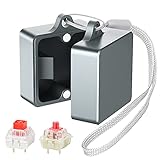
The plastic openers that come in most budget kits work, but they are the part most likely to wear out, as the buying guide above points out. A machined aluminum opener like this HONKID model is a common upgrade. The listing names compatibility with Cherry MX, Kailh Box, Outemu, Akko and Panda-style switches, which covers most MX-style switches you will meet in hot-swap boards.
The advantage of a metal opener is rigidity. The prongs do not flex, so they press the housing clips evenly and the top housing pops off cleanly rather than catching or cracking a tab. When you open 70 or 100 switches in one session, a stable opener saves time and reduces the risk of damaging a costly switch set. It also works well with any of the acrylic stations above, since you open switches one at a time and place the parts in the tray.
Strengths: much more durable and stable than plastic openers, works with common MX-style and Box switches, and is a one-time purchase that outlasts many kits.
Drawbacks: it does nothing on its own, so you still need lube, a brush and tweezers. Some switches with unusual housing clips may still need a different opener.
Who it is for: anyone who has snapped or worn out a plastic opener, or who plans to lube more than one board. It sits in the budget tier.
ZugGear Durock Switch Film 0.15mm

Switch films are thin gaskets placed between the top and bottom housing of a switch before you close it. They take up the small gap that causes housing wobble, which can make a switch sound rattly or “hollow.” This Durock-branded set from ZugGear uses 0.15mm HTV and PC film in a 120-piece pack. That is enough for a full-size keyboard with spares, and it suits the Cherry MX-style switches you are most likely to be lubing.
Filming is usually done during the same session as lubing, since the switch is already open. Many modders consider lube plus film the standard full mod: lube smooths the stroke, and film tightens the housing so the bottom-out and top-out sound more solid. Films matter most on switches with loose housings. Some modern switches already have tight tolerances and gain little, so try a few before filming a whole board.
Strengths: a cheap way to reduce housing wobble and tighten sound, a large pack, and a thin profile that suits most MX-style switches.
Drawbacks: it adds time to every switch, and a film that is too thick can make some switches hard to close or affect how they seat in tight plates.
Who it is for: modders who are already opening switches to lube them and want the tightest possible sound. It sits in the budget tier.
Permatex 22058 Dielectric Tune-Up Grease
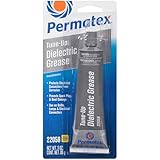
Stabilizers often cause more noise than switches. A rattling space bar or enter key can undo all the work you put into lubing switches. For stabilizer wires, many keyboard modders use dielectric grease, and Permatex’s silicone-based dielectric tune-up grease is one of the most common choices. It is much thicker than 205g0 and stays where you put it on the wire ends, where the metal wire meets the stabilizer stems and clips. That is where the rattle comes from.
A common approach combines the two greases. Put a thin coat of 205g0 on the stabilizer stems and housings for smoothness, then a thicker dab of dielectric grease on the wire ends to silence rattle. This tube is far larger than any keyboard needs, so one purchase covers years of stabilizer work. Its automotive uses also mean it is easy to find.
Strengths: very effective at reducing stabilizer wire rattle, low cost per use, and widely recommended in stabilizer tuning guides.
Drawbacks: it is too thick for switches and should never go on switch stems. Too much on the wire can make large keys feel sluggish, so use a small amount.
Who it is for: anyone tuning stabilizers on a custom or hot-swap keyboard. It sits in the budget tier, and it completes a kit that already includes switch lube.
Buying Guide
Lube Viscosity and Switch Type
Linear switches want something around Krytox 205g0 consistency: enough to eliminate metal-on-metal contact without adding perceptible drag on return. Tactiles often benefit from a thinner oil so the bump is not dampened. JRX-205 G0 is a 205g0-style grease, so it suits linears best; for tactiles, use a thin oil or a very light touch on the rails. If you only buy one lubricant, match it to the switch type you mod most.
Station Capacity and Stability
A lube station is not just a tray; it is the thing that keeps your switches from rolling into the couch while you dip a brush. Thin acrylic stations can crack at stress points, so check thickness in listing photos or reviews. Capacity matters proportionally to how many switches you process per sitting. A 32-slot station handles a 60 or 65 percent board in two batches, while a full-size board takes three or four.
Opener Build Quality
The switch opener is the tool most likely to fail first. Plastic openers with thin side walls can deform with heavy use and start pinching housings instead of prying them. Metal-lever designs or thick ABS shells last far longer. If a kit includes a cheap opener, budget for a replacement rather than risking tab damage on an expensive switch set.
Additional Picks Compared
| Product | Category | Main job | Use on | Avoid on | Price tier |
|---|---|---|---|---|---|
| Krytox GPL 205 G0 | Grease | Smooth linear switches and stabilizer housings | Linear stems, rails, bottom housings | Tactile legs, springs | Mid-range |
| Krytox GPL 105 | Oil | Remove spring ping, light tactile lube | Springs, tactile stems | Scratchy linears as the only lube | Mid-range to premium |
| HONKID Aluminum Opener | Tool | Open housings cleanly | MX-style and Box switches | Unusual clip designs | Budget |
| ZugGear Durock Film 0.15mm | Accessory | Reduce housing wobble | Loose-housing MX-style switches | Switches with very tight housings | Budget |
| Permatex 22058 | Dielectric grease | Silence stabilizer wire rattle | Stabilizer wire ends | Switch stems and housings | Budget |
Lube by Switch Type: A Quick Reference
The buying guide above explains why viscosity matters. This table puts the common community recommendations in one place, so you can match your lube to the switches on your desk.
| Switch type | Stem and rails | Springs | Notes |
|---|---|---|---|
| Linear | Thin coat of 205g0 or a JRX-205 G0 equivalent | 105 oil, bag method | The easiest and most rewarding switches to lube |
| Tactile | Very light 105 oil, or a tiny amount of grease on the rails only | 105 oil | Keep thick grease off the tactile legs to preserve the bump |
| Clicky | Usually left unlubed or very lightly lubed on the rails | Light 105 if spring ping bothers you | Heavy lube can mute or kill the click |
| Silent | Thin coat on the rails, avoiding the silencing pads | 105 oil | Excess lube on the dampers can make them feel sticky |
| Stabilizers | 205g0 in the housings and on the stems | Not applicable | Dielectric grease on the wire ends for rattle |
Step-by-Step: How to Lube Switches With a Kit
- Set up your workspace. Work on a clean, well-lit desk with a mat or towel. Lay out your station, opener, brush, tweezers and lube. A small bag for springs helps if you use oil.
- Test one switch first. Before doing a full set, lube two or three switches and compare them with unlubed ones in a tester or on the board. It is much easier to adjust your amount early than after 90 switches.
- Open the switches. Seat each switch in the opener, press evenly and lift off the top housing. Sort parts into the station: top housings, stems, springs and bottom housings.
- Lube the springs. Drop the springs into a small bag with a few drops of 105 oil, close it and shake gently for a minute. Let any extra drain off before reassembly.
- Lube the stems. Hold each stem with tweezers and brush a thin coat on the sliding rails and the sides of the stem pole. Skip the tactile legs on tactile switches and the top of the stem where it meets the keycap.
- Lube the bottom housing. Brush a thin coat along the inner rails where the stem slides. Keep lube away from the metal contact leaf and the pins, since lube there can cause chatter or a dead key.
- Add film if you use it. Place a film on the bottom housing before you close it, lined up with the posts.
- Reassemble and test. Drop in the spring and stem, press the top housing on until it clicks, and test each switch before reinstalling it. Check that it returns smoothly with no sticking.
Common Lubing Mistakes to Avoid
- Too much lube. Over-lubing is the most common beginner mistake. It makes switches feel sluggish and mushy and can collect dust over time. A thin, even film works best.
- Lubing the metal leaf. Lube on the electrical contact can cause missed or repeated keystrokes. Always keep the leaf and pins dry.
- Thick grease on tactile bumps. 205g0 on the legs of a tactile switch turns a crisp bump into a vague one.
- Skipping the stabilizers. Perfectly lubed switches next to a rattling space bar still sound unfinished. Treat the stabilizers in the same session.
- Rushing the opener. Forcing a housing open with a worn plastic opener can crack the clips. A firm, even press with a rigid opener is safer.
- Mixing parts between switch types. If you are lubing more than one switch model, keep their parts separate in the station so springs and stems do not end up in the wrong housings.
Building a Complete Modding Toolkit
No single kit in this guide covers every job, so it helps to think in terms of a full toolkit and fill the gaps over time. Below are three common setups, from a first project to a full enthusiast bench.
Starter Setup (Budget Tier)
For a first board, a compact all-in-one kit such as the YIMAGUJRX RUNJRX 6-piece JRX 205G0 set gives you grease, an opener, tweezers and pullers in one box. Add a soft towel or a cheap tray to hold parts and you can lube a 60 or 65 percent board. This setup is ideal for finding out whether you enjoy modding before spending more.
Intermediate Setup (Mid-Range Tier)
Once you know you will mod more boards, add a dedicated station such as the 32-slot or 36-slot RUNJRX acrylic stations, a metal opener like the HONKID, and Krytox 105 oil for springs. This combination handles linears, tactiles and springs properly, and the station makes full-size boards much less tedious. A pack of switch films is an inexpensive extra for this stage.
Enthusiast Setup (Premium Tier)
Serious modders usually keep genuine Krytox 205g0 for linears, 105 oil for springs and tactiles, a dedicated stabilizer grease such as Permatex dielectric grease, films in more than one thickness, and a few good brushes in different sizes. Many also keep a switch tester nearby to compare lubed and stock switches side by side, which the 36-slot station with its built-in tester covers.
Choosing and Caring for Brushes
The brush affects your results almost as much as the lube. Most guides recommend a small, fine brush, often size 0 or 00, for stems and rails. A slightly larger flat brush speeds up bottom housings. The brushes in budget kits work, but they can shed bristles or hold too much lube. A pair of fine synthetic art brushes is a cheap upgrade. Keep a separate brush for each lube so you do not mix grease and oil. Wipe brushes on a lint-free cloth between sessions, and store lube containers closed and upright, away from heat, to keep dust and debris out.
Is Lubing Worth It?
Lubing makes the biggest difference on switches that feel scratchy, have spring ping, or have uneven factory lube. The result is a smoother stroke and a deeper, more consistent sound. It matters less on premium switches with good factory lube, and it is not reversible without cleaning each switch. If you are unsure, lube a handful of your most-used keys first, such as the space-adjacent keys and home row, then decide whether the full board is worth the effort. For many people, lubing stabilizers alone brings the most noticeable improvement for the least time.
Our Verdict
Top pick: the RunJRX YIMAGUJRX Acrylic Lube Station wins on completeness. You get everything from opener to lube to a 32-slot tray, and nothing else is missing from your workflow. Budget pick: the Minatee 9-Piece Puller Kit is the least you can spend and still function as a modder; add your own lube and opener separately. Conditional winner: if you mix Kailh and MX clones, the YIMAGUJRX RUNJRX JRX 205G0 (MX/Kailh) saves you time on opener alignment and is the better choice over the standard 6-piece kit.
FAQ
How much lube should I apply per switch?
Use a thin, barely visible coat on each stem rail and housing rail, and a light film of oil on the spring. Too much creates mush and slows return; too little leaves the scratch unchanged. A dedicated brush gives you far better control than a fingertip or toothpick.
Can I use these kits on hot-swappable keyboards?
Yes, but hot-swap sockets are fragile. Always remove the switch with a switch puller rather than prying by the stem, and lube off the board. Re-inserting a lubed switch by hand risks bending a pin.
Is JRX-205 G0 the same as Krytox 205g0?
They are very similar in viscosity and base chemistry, both being PFPE oils thickened with PTFE. JRX-205 G0 is widely considered a near-equivalent substitute, though batch consistency can vary more than Chemours products. For hobbyist modding the practical difference is negligible.
How many switches can one bottle of lube last?
A 15-gram bottle covers roughly 300 to 500 switches depending on how thin you apply. If you coat generously or do housing rails as well, expect closer to the lower end. For a single 65-percent board you will use a fraction of the bottle, so most kits last through many projects.
Should I lube tactile and clicky switches?
Tactiles benefit from a light touch. A thin oil such as Krytox 105, or a very small amount of grease on the rails only, smooths the stroke without muting the bump. Clicky switches are usually left alone or only lightly lubed on the rails, because lube on the click mechanism can reduce or remove the click. Springs on either type can be treated with oil to remove ping.
Do I need to lube factory pre-lubed switches?
Often not. Many modern switches ship with good factory lube and sound smooth out of the box. Hand lubing helps most with switches that feel scratchy, have spring ping, or have thin and uneven factory lube. Try a few switches before deciding to relube a whole set, since hand lubing takes time and some factory-lubed switches gain little.
How long does hand lubing a full keyboard take?
Expect roughly two to four hours for a 60 to 70 switch board as a beginner, including opening, lubing and reassembly. Experienced modders with a good station and opener work faster. Spreading the job over two sessions is common and helps avoid rushed, uneven application.
What lube should I use on stabilizers?
A common setup is a thin coat of 205g0 inside the stabilizer housings and on the stems for smoothness, plus a thicker dielectric grease such as Permatex on the ends of the metal wire to stop rattle. Clip and band-aid mods are separate steps you can add for screw-in PCB stabilizers.
Can I use the same lube for switches and stabilizers?
Partly. A 205g0-type grease works well inside stabilizer housings and on the stems, so one tub can cover both. For the stabilizer wire ends, a thicker dielectric grease is better at stopping rattle, because thin switch grease tends to squeeze out of the contact points over time.
Do switch films replace lube?
No. Films and lube do different jobs. Lube smooths the friction surfaces inside the switch, while films tighten the fit between the top and bottom housings to reduce wobble. Many modders do both in the same session because the switch is already open, but either one can be skipped depending on the switch.