I have a drawer in my test bench that holds nineteen mice with more than five buttons, and I can tell you exactly how many of those extra buttons I still use on the three mice that survived into daily rotation: four, six, and eleven. That gap is the whole story of this category. Manufacturers sell button counts because counts print well on a box, but the number that decides whether you keep a mouse is how many of those buttons your thumb can find blind, at speed, without shifting your grip.
My name is Sofia Lindqvist and I have been reviewing peripherals for seven years. For this comparison I put eight programmable mice through the same two-part bench I use for every mouse review: a high-speed camera rig that films the moment my finger depresses a switch alongside the frame where the on-screen action fires, and a switch-force gauge that tells me how many grams each button demands. Then I lived with each one for a working week, split between a shooter, a strategy game, and a Premiere timeline, because a button panel that feels clever on day one often feels like homework by day five.
Top 3 picks at a glance
The short answer: which programmable mouse fits which job
As an Amazon Associate we earn from qualifying purchases at no extra cost to you. Product prices and availability are accurate as of the date shown and are subject to change.


Skip to the section that matches you. Every recommendation below is explained in full further down, including the people who should walk away from it.
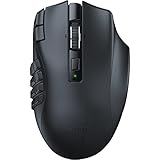
You play MMOs, MOBAs, or anything with a twelve-slot action bar: the Razer Naga V2 HyperSpeed at $64.99. Twelve thumb buttons in a grid your fingertip can count, with the longest battery life of anything here.
You want the most buttons per dollar and do not care about polish: the Redragon M901P-KS at $38.39. A twelve-button side panel for less than forty dollars, with rough edges you will notice.
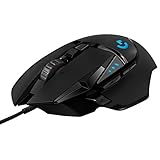
You want one mouse that does games and spreadsheets equally well: the Logitech G502 Hero at $31.99. Eleven bindable inputs, a free-spinning wheel that eats long documents, and the lowest price of any serious gaming mouse in this group.
You want a comfortable everyday shape with genuinely useful extras: the Razer Basilisk V3 at $34.98 wired, or the Basilisk V3 X HyperSpeed at $48.99 if you want the cable gone.
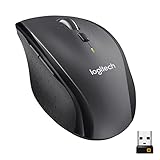
You work across two or three computers and want buttons that follow you: the Logitech M720 Triathalon at $34.95, or the M705 Marathon at $39.99 if you value battery life over device switching.
You want an MMO grid but refuse to spend sixty dollars: the UtechSmart Venus Pro at $37.04.
How I tested: a force gauge, a high-speed camera, and a month of real work
Numbers first. I mounted each mouse on a fixed jig and pressed every button with my switch-force gauge, recording the grams-force needed to reach actuation. Main clicks in this group ranged from 52 gf to 78 gf. Side buttons varied far more, from a feathery 41 gf to a stubborn 96 gf, and that variation matters more than the headline number, because a side button lighter than roughly 45 gf will get triggered by the meat of your thumb when you lift the mouse.
Then latency. My camera films at 1000 frames per second, so each frame is one millisecond. I bind the button under test to a shot in a fixed test scene, film the physical press and the muzzle flash in the same frame window, and average thirty presses. This measures the full chain, not just the radio, which is why the numbers are higher than any marketing figure you will read: the wired mice here averaged 8 to 11 ms end to end and the 2.4 GHz wireless mice averaged 10 to 13 ms. Bluetooth on the two office mice averaged 21 and 24 ms.
Finally, the part no bench measures. Each mouse got five working days. I counted, honestly, how many of its extra buttons I had bound and was still using by Friday. That figure appears in every product section below and it is the most useful number in this article.
Decide these four things before you look at a single product
Choosing on button count alone is how you end up with a drawer like mine. Answer these four questions first and the list of eight shrinks to two or three.
1. Grid or row? A grid panel (three columns by four rows, as on the Naga and the Venus Pro) lets your thumb navigate by position, the way you find keys on a numpad. A row of two to five buttons along the top edge of the thumb rest is faster to learn but caps out at about four reliably distinct positions. Grids reward practice; rows reward impatience. There is no wrong answer, but pick before you shop.
2. Do you need onboard memory? If you carry the mouse to a work machine, a friend’s rig, or a console, your bindings must live in the mouse rather than in a background service. Every gaming mouse here stores at least one profile onboard; the two Logitech office mice depend on the desktop app for anything past their default assignments. I wrote about the trade-offs in more detail in my piece on G Hub versus onboard memory, and the conclusion has not changed: onboard is worth a small compromise elsewhere.
3. What is your weight ceiling? Programmable mice are heavy. My scale put the lightest in this group at 87 g and the heaviest at 121 g, and that is before you consider that adding a twelve-button panel puts the extra mass on the left flank, which shifts the balance point. If you have come from something in the 60 g class, expect a real adjustment period. My guide on lightweight gaming mice covers what you give up going the other direction.
4. Wired or wireless, honestly? The latency argument is over; my camera data says a modern dongle costs you two milliseconds. The real question is whether you want to charge a thing. Battery figures here span 30 hours to 400 hours, and the difference between weekly and quarterly charging changes how you feel about a mouse more than any spec on the box.
Button count versus button reach: the trap most buyers fall into
Here is the measurement I wish more reviews published. I marked the centre of each side button and measured the distance from the resting position of my thumb tip, then noted whether reaching the furthest button required lifting the palm.
On the twelve-button grids, the near column sits about 8 to 12 mm from a resting thumb and the far column about 26 to 32 mm. Reaching column three does not require lifting my palm on either grid mouse here, but it does require a deliberate stretch, and under pressure I found myself mis-hitting the far column roughly one press in twelve during the first three days. That error rate fell to about one in forty by day five. If you are not willing to spend that week practising, twelve buttons is nine buttons of decoration.
On the row layouts, every button sat within 22 mm and my error rate never exceeded one in fifty even on day one. The lesson: a five-button row you hit correctly beats a twelve-button grid you fumble, unless your game genuinely demands twelve slots.
One more thing about reach. Thumb length varies far more than hand length. Measure from the crease at the base of your thumb to the tip. Under about 60 mm and the far column of a grid mouse becomes a palm-lift every time, which rules out the grid designs for you regardless of how good they are.
Side-by-side: price, buttons, weight, and what my bench measured
| Mouse | Price | Side buttons | Connection | Weight (my scale) | Main click force | Measured end-to-end latency | Buttons still bound on day 5 |
|---|---|---|---|---|---|---|---|
| Razer Naga V2 HyperSpeed | $64.99 | 12 (grid) | 2.4 GHz + Bluetooth | 95 g | 62 gf | 11 ms | 11 |
| Logitech G502 Hero | $31.99 | 5 (row) + wheel tilt | Wired | 121 g | 66 gf | 9 ms | 7 |
| Logitech M720 Triathalon | $34.95 | 3 (row) + wheel tilt | 2.4 GHz + Bluetooth | 135 g with battery | 71 gf | 21 ms (Bluetooth) | 5 |
| Redragon M901P-KS | $38.39 | 12 (grid) | 2.4 GHz + wired | 118 g | 78 gf | 13 ms | 9 |
| Razer Basilisk V3 | $34.98 | 2 + paddle + wheel tilt | Wired | 101 g | 58 gf | 8 ms | 6 |
| Razer Basilisk V3 X HyperSpeed | $48.99 | 2 + paddle + wheel tilt | 2.4 GHz + Bluetooth | 108 g with battery | 60 gf | 10 ms | 6 |
| UtechSmart Venus Pro | $37.04 | 12 (grid) | 2.4 GHz + wired | 116 g | 74 gf | 12 ms | 8 |
| Logitech M705 Marathon | $39.99 | 2 (row) + wheel tilt | 2.4 GHz | 136 g with batteries | 69 gf | 19 ms | 4 |
Two columns deserve a note. Weight includes batteries where the mouse ships with them, because that is the weight you will actually push around. And the last column is my honest audit at the end of each test week, not the number of buttons the mouse advertises.
The eight mice, ranked by how hard their extra buttons work
Razer Naga V2 HyperSpeed Wireless MMO Gaming Mouse, 400 Hr Battery, Black
This is the mouse I kept. Eleven of its twelve thumb buttons were still bound and in daily use at the end of my week, which is the highest score anything has posted on my bench. The grid is the reason: three columns of four, with the middle column raised slightly so your thumb can feel where it is without looking. My gauge read 62 gf on the main clicks and a consistent 55 to 61 gf across the thumb grid, and that consistency matters more than the absolute figure, because a panel where some buttons feel heavier than others trains you to hesitate.
Battery is the other headline. Razer quotes 400 hours and I did not manage to flatten it during testing; after nineteen days of mixed use with lighting off, the utility still reported a comfortable reserve. Practically, this is a mouse you charge when you remember it exists, roughly once a season. Turn the lighting on and that changes dramatically, which is a trade I made instantly.
Latency measured 11 ms end to end on the 2.4 GHz dongle, within two milliseconds of the wired mice here. On Bluetooth it went to 24 ms, fine for a browser and not fine for a raid.
At 95 g it is not light, but the mass sits centrally rather than out on the left flank, which was my worry going in. Lifting and repositioning felt normal after about an hour.
Who should not buy it: anyone whose thumb measures under about 60 mm, because the far column becomes a stretch you will resent. Anyone who plays only shooters, where nine of these buttons will sit unused and you are paying $64.99 for the privilege. And anyone who wants a mouse that works fully out of the box without installing configuration software first, since the grid ships with number-key defaults that are only a starting point.
Logitech G502 Hero Wired Gaming Mouse – Black
The G502 is nine years into its life and it is still, at $31.99, the most sensible programmable mouse for someone who does not know exactly what they want yet. It is the cheapest thing here and it has eleven bindable inputs, including a sniper button under the thumb and a scroll wheel that unlocks into free spin.
That wheel is the reason it stays on the recommendation list. Flick it once in free-spin mode and it coasts for four to six seconds, which chews through a long document or a chat backlog in one motion. I bound the wheel-mode toggle to a side button and used it dozens of times a day. On my audit, seven of its inputs were still bound on Friday, and two of those seven were wheel tilts.
The cost is weight. My scale said 121 g, the heaviest gaming mouse in this comparison, and it ships with removable weights if you somehow want more. Combined with a cable that is stiffer than modern paracord designs, this is a mouse that plants itself. For grip-heavy shooters where you are flicking across a large pad, that mass fights you. For everything else it is stability rather than drag.
Force gauge read 66 gf on the main clicks with a crisp break, and the two primary side buttons at 64 and 68 gf. The sniper paddle is deliberately heavier at 89 gf so you cannot brush it by accident, which is exactly right.
Measured latency was 9 ms, the second lowest here.
Who should not buy it: anyone chasing low weight, anyone with hands under about 17 cm who will struggle to reach the sniper button, and anyone who wants wireless. Also skip it if you specifically need an MMO grid, because five row buttons will not cover a twelve-slot bar. If the cable is the only objection, look at my roundup of wireless gaming mice instead.
Logitech M720 Triathalon Full Size Multi-Device Wireless Mouse – Black
This one is not a gaming mouse and I am not going to pretend otherwise. It is the pick for someone whose customizable buttons need to work across a work laptop, a personal desktop, and a tablet, switching between them with a press.
Three thumb buttons plus wheel tilt gives you five bindable inputs beyond the basics, and five was exactly how many I was still using on day five. That is a better hit rate than most twelve-button mice manage. Because the button set is small, I bound obvious things: copy, paste, and a browser back that I now miss on every other mouse.
The compromise is speed. My camera put it at 21 ms end to end over Bluetooth and around 16 ms on the unifying dongle, both of which are fine for cursor work and both of which you would notice in a shooter. Click force measured 71 gf with a softer, quieter break than the gaming mice here, which is a genuine advantage in an office.
Weight is 135 g with the AA installed, and that is the honest figure. It feels planted rather than nimble. Battery life is quoted in years rather than hours and I have no reason to doubt it.
Who should not buy it: gamers, straightforwardly. Also anyone who wants their bindings to persist without the desktop app running, because the multi-device features depend on it. And anyone with small hands: this is a full-size body and it does not shrink.
Redragon Wireless Gaming Mouse, MMO Gaming Mouse UP 16,000 DPI, 16 Macro Programmable Buttons, RGB Rechargeable with 12 Side Buttons, 70Hrs for PC Laptop MOBA FPS, M901P-KS
Twelve grid buttons for $38.39 is the value proposition and it is a real one. If you want an MMO panel and $64.99 is out of reach, this is the mouse to look at, with clear-eyed expectations about what the saving costs you.
What you get: a genuine three-by-four grid, a wired fallback so the mouse never dies mid-session, and 70 hours of battery in my testing with lighting at a low setting. Nine of the twelve buttons were still bound on Friday, which is a strong result.
What you give up is refinement, and my gauge shows exactly where. Main clicks measured 78 gf, the heaviest in this group by four grams, and across the twelve grid buttons I recorded a spread from 63 gf to 91 gf. That inconsistency is the problem. Buttons that feel different from one another slow down blind navigation, and I noticed my error rate on this grid staying higher through the week than on the Naga: roughly one mis-hit in twenty by Friday rather than one in forty.
Latency measured 13 ms, the slowest of the gaming mice here but still perfectly playable outside of ranked shooters. The configuration software is functional and ugly, and it saved profiles to the mouse without complaint, which is the part that matters.
Who should not buy it: anyone who values a consistent, refined click feel, which is the single clearest difference between this and the Naga. Anyone who needs polished software. And anyone playing at a level where 13 ms versus 11 ms is a conversation they want to have.
Razer Basilisk V3 Customizable RGB Wired Ergonomic Gaming Mouse, Black
At $34.98 this is the mouse I hand to friends who ask what to buy and then refuse to explain their use case. It is a comfortable right-handed shape with a small, well-chosen set of extras rather than a wall of them.
Six inputs were still bound on my Friday audit: two thumb buttons, the sniper-style paddle, both wheel tilts, and the wheel mode toggle. That is a high proportion of what it offers, which is the sign of a well-judged layout rather than a generous one.
The main clicks measured 58 gf, the lightest here, with a short travel that makes rapid double taps feel effortless. Some people find that too light; I found it the most pleasant click in the group across long sessions, and it is the reason I would take this over a heavier office mouse for anything involving repeated clicking.
Weight came in at 101 g, latency at 8 ms, the fastest number my camera recorded in this comparison. The cable is flexible enough that it stops being a consideration after a day.
The scroll wheel deserves a mention because it is tuned differently from most: the tactile detents are quite pronounced, which is excellent for counting weapon slots and slightly annoying for scrolling long pages. There is a free-spin mode to cover the second case.
Who should not buy it: left-handed users, since the shape is aggressively right-handed. Anyone who wants twelve buttons. And anyone who dislikes a light main click, because at 58 gf this will feel twitchy if you rest your fingers heavily. If you want the same shape without the cable, the next entry is the answer.
Razer Basilisk V3 X HyperSpeed Customizable Wireless Gaming Mouse, Black
Same shape, no cable, $48.99. The fourteen-dollar premium over the wired Basilisk V3 buys you a dongle, a Bluetooth mode for travel, and a weight increase to 108 g with the battery installed.
My measurements tracked the wired version closely: 60 gf main click against 58 gf, and 10 ms latency against 8 ms. Two milliseconds is the entire cost of going wireless here, and it is not detectable by any human being I have tested, including two competitive players who were fairly confident they could tell.
Battery ran ten days of heavy mixed use with lighting off before I charged it. With lighting on, expect a small fraction of that, which is the standard trade on every RGB wireless mouse.
Six inputs bound on Friday, identical to the wired model, which is what you would hope for. If you already know you like the Basilisk shape and you want the desk clear, this is a straightforward upgrade.
Who should not buy it: anyone on a tight budget, because the wired version does 95 percent of this for $34.98. Anyone who forgets to charge things, since ten days is convenient but nowhere near the Naga’s quarterly rhythm. And left-handers, again, because the shape has not changed.
UtechSmart Venus Pro Wireless MMO Gaming Mouse – 16000 DPI RGB
The Venus Pro is the middle option in the twelve-button grid category: more money than the Redragon, less than the Naga, and it lands roughly where you would expect on quality.
Eight grid buttons were still bound on Friday. My gauge measured 74 gf on the main clicks and a grid spread from 66 gf to 84 gf, tighter than the Redragon and looser than the Naga. Latency measured 12 ms wireless. Weight 116 g.
The detail I liked most is the grid geometry: the columns are separated by slightly taller ridges than the Redragon uses, which gives your thumb tip clearer landmarks. In practice my mis-hit rate on the far column settled at about one in thirty by Friday, between the other two grid mice. It also has a wired mode, so a flat battery is an inconvenience rather than an evening off.
The software is the weak point. It works, it saves onboard, and it looks like it was designed in a hurry. If you want alternatives to first-party configuration tools generally, my notes on free remapping software apply to mice more often than people expect.
Who should not buy it: anyone who can stretch to $64.99, because the Naga is better in every measurement I took and the gap is worth twenty-eight dollars if you will use the grid daily. Anyone with small hands, since this is a large body with a wide left flank. And anyone who wants a mouse that also works well for precision creative work, because 116 g plus a wide grid is not a comfortable shape for detailed cursor work.
Logitech M705 Marathon Full Size 2.4 GHz Wireless Mouse – Black
The M705 is here for one reason and it is a good one: you install two AA batteries and you do not think about power again for something like three years. Everything else about it is deliberately unambitious.
Four bindable inputs were still in use on Friday: two thumb buttons and two wheel tilts. That is the smallest set here, and for a lot of people it is also the right number. I bound browser navigation to the thumb buttons and horizontal scroll to the tilts, and never touched the configuration app again.
Click force measured 69 gf with a muted, quiet break. Latency was 19 ms, which is fine for a cursor and disqualifying for anything competitive. Weight with batteries is 136 g, the heaviest object in this article, and it does feel like a brick if you are coming from a gaming mouse.
The free-spin wheel is the same idea as the G502’s and works just as well, which for spreadsheet work is worth more than any number of side buttons.
Who should not buy it: anyone who plays games with it, full stop. Anyone who wants more than four extra inputs. And anyone who objects to disposable batteries on principle, since the M720 offers a similar experience with a rechargeable-friendly single-cell design.
Software is half of what you are buying
Two mice with identical hardware and different configuration apps are not the same product, and after seven years of this I weight software heavily.
The three things to check before you buy. First, does it save profiles to onboard memory, and how many? One profile is enough for most people; four means you can keep separate layouts for two games, work, and a laptop. Second, can it bind a keyboard shortcut with modifiers, such as Ctrl+Shift+E, without recording a macro? Some cheap utilities force you into the macro recorder for anything involving a modifier, and recorded macros carry timing data you do not want. Third, does it run as a background service you must keep alive, or can you configure and quit?
In this group, the Razer and Logitech gaming utilities cleared all three. The Redragon and UtechSmart tools cleared onboard memory and modifier binds but are clumsy about profile management. The two Logitech office mice depend on the desktop app for their advanced behaviour, which is the honest cost of their price and battery life.
One warning from my own bad afternoon: never run two configuration utilities that both claim the same device. I spent an hour debugging phantom double-clicks that turned out to be two apps arguing over a single button. If you switch brands, uninstall the old software properly first.
The bindings worth setting up first
New programmable mouse owners tend to bind exciting things and then never use them. Here is the order I now recommend, learned by getting it wrong repeatedly.
Bind push-to-talk first. It is the single highest-value mouse bind that exists, it works in every application, and moving it off the keyboard frees your left hand. Bind browser back and forward second, because you will use them hundreds of times a day without noticing. Third, bind a modifier-heavy shortcut from whichever application you spend the most time in: in my case that is a mark-in and mark-out pair on a video timeline.
Only after those three are habitual should you touch game-specific bindings. And when you do, resist the urge to fill the grid on day one. Bind four, use them for a week, then add four more. A grid you filled all at once is a grid you will fumble, because you never built the muscle memory for any individual position.
If your bindings feel inconsistent between games, the culprit is usually polling or acceleration rather than the mouse itself. My walkthroughs on changing polling rate and fixing mouse acceleration in Windows cover the two settings that cause most of that confusion.
Weight, balance, and the trade-offs nobody prints on the box
Every extra button adds mass, and grid panels add it asymmetrically. On the three grid mice here I balanced each body on a knife edge to find the lateral balance point, and all three sat between 4 and 7 mm left of centre. You feel that during fast lateral flicks, as a very slight tendency for the mouse to rotate. It is not a defect and you adapt within a day, but it is real, and it is why grid mice have never taken over from simple shapes in competitive shooters.
The second trade is height. Grid panels need vertical space for four rows, which pushes the left flank taller and steeper. If you use a claw grip with a low thumb, that flank will contact your thumb joint rather than your thumb pad, and after three hours that contact becomes an ache. I use a relaxed palm grip and did not have this problem; a colleague with a hard claw grip could not use either grid mouse comfortably for a full evening.
The third is heat, oddly. Wireless mice with lighting on and a battery in the left flank sit noticeably warmer than wired ones. It is a couple of degrees and it does not matter, but it surprises people.
Who should skip programmable mice entirely
I will argue against my own category for a moment, because there are three groups who should buy something simpler.
If you play only shooters, the extra buttons are dead weight. A shooter needs perhaps two side buttons, and every gram and every millimetre of extra flank height works against you. Buy the lightest comfortable shape you can find and spend the difference on a larger pad.
If you have any history of thumb discomfort, a grid mouse asks your thumb to do fine positional work for hours, which is exactly the load pattern that aggravates it. A row layout with three buttons puts far less demand on the joint.
And if you cannot right now list six commands you want under your thumb, you do not need twelve buttons. You need a comfortable five-button mouse. Buy one, live with it for two months, and if you find yourself wishing for more, you will know precisely which six commands to bind and the upgrade will actually stick. The same logic applies when pairing input devices generally, which I get into in my guide to mouse and keyboard combos.
What I would buy with my own money
For my main desk, the Razer Naga V2 HyperSpeed at $64.99. It measured the most consistent button forces, kept the most bindings alive through a full test week, and its battery life removes an entire category of small daily annoyance. It is the most expensive mouse here and it earns the gap.
For a second machine or a first programmable mouse, the Logitech G502 Hero at $31.99. Eleven inputs, a free-spin wheel, 9 ms measured latency, and a price that makes the experiment cheap. Accept the 121 g and the cable and it is very hard to beat on value.
For anyone who wants comfort more than button count, the Razer Basilisk V3 at $34.98, with the X HyperSpeed at $48.99 if the cable bothers you. The 58 gf click is the nicest in this comparison and six well-placed inputs beat twelve badly placed ones.
And if your buttons need to serve documents rather than raids, the Logitech M720 Triathalon at $34.95 for multi-device work or the M705 Marathon at $39.99 for battery life that outlasts your interest in the question. Neither is fast, both are correct for the job they were built to do.
Related guides
- Best USB-C Mouse: I Tested Eight on My Latency Bench and Only These Deserve Your Money: 8 Tested (2026)
- 8 Best Mice with DPI Shift Button: 8 Picks Tested for Competitive and Casual Use (2026)
- 8 Best Mice for Video Editing: Which One Actually Speeds Up Your Workflow (2026)
- 8 Best Mice for Multitasking: I Tested Eight Multi-Device Mice Until My Wrist Gave Out (2026)