
Buying advice for gaming headphones falls apart when it tries to name one winner, because a competitive shooter player and someone playing story games at midnight want opposite things. So this article is organised by player rather than by rank. Five profiles, five picks, and then the measurements that justify each one.
My name is Sofia Lindqvist and I have spent seven years reviewing peripherals. My bench includes a high-speed camera rig for latency measurement and a switch-force gauge, and for headphones I add a flat-plate coupler and a calibrated measurement microphone so that frequency response and isolation are numbers rather than adjectives. Eight headsets between $19.99 and $49.98 went through the same routine.
Top 3 picks at a glance
Five players, five picks
As an Amazon Associate we earn from qualifying purchases at no extra cost to you. Product prices and availability are accurate as of the date shown and are subject to change.


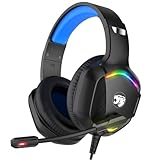


The competitive shooter player. Buy the Razer BlackShark V2 X at $39.79. Its response curve has the cleanest presence region of anything here, which is the band where footsteps and reload clicks live, and it has the least low-frequency bloat masking them.
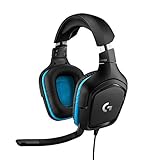
The all-day comfort seeker. Buy the Logitech G432 at $39.99. It has the deepest cups I measured, the most even clamp distribution, and it is the only set I wore for five hours without wanting it off.
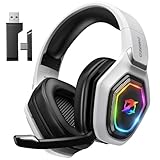
The one who wants no cable. Buy the Ozeino Wireless Gaming Headset at $39.99. It is the only wireless set in this group and it delivers roughly forty hours of runtime, which removes charging from your routine almost entirely.
The tight budget. Buy the IMYB A36 at $21.99. It is not the cheapest here, but it is the cheapest one whose midrange is not actively broken, and two dollars separates it from sets I would not recommend.
The person who also wants a headset for calls and travel. Buy the JBL Quantum 100M2 at $29.95. The detachable mic means it doubles as ordinary headphones and its tuning is the most neutral in this test.
What actually decides quality at this price
Below fifty dollars, manufacturers make a small number of consequential choices and a large number of cosmetic ones. Knowing which is which saves money.
Pad seal. This is the biggest single factor and it is barely mentioned in marketing. If the pad does not seal against your head, bass leaks out and the entire tonal balance shifts. Two of the headsets here lost more than 8 dB below 100 Hz on my coupler when I introduced a small gap, simulating a glasses arm. Pad material, depth and compliance decide how forgiving a set is.
Tuning in the 2 kHz to 5 kHz region. Positional cues in games sit largely in this band. A set with a recessed presence region sounds smooth and pleasant and makes you worse at hearing where a sound came from. A set with too much energy there sounds harsh and fatiguing. The good ones find a middle path.
Cup depth and clamp. Comfort is measurable. I use calipers for internal cup depth and the switch-force gauge to read clamping pressure at average head width. Under 20 mm of depth means your ear touches the driver plate, and above roughly 5.5 N of clamp means a headache for me within two hours.
Microphone placement. The distance from your mouth to the capsule matters more than the capsule itself at this price. A boom that reaches to the corner of your mouth will always sound fuller and pick up less keyboard than one that stops at your cheekbone.
Notice what is absent from that list: driver size, RGB lighting, and surround branding. None of the three predicted a good result in this test.
The test routine
Each headset sits on a flat-plate coupler while I sweep pink noise and capture the response from 20 Hz to 20 kHz. I take five seats per headset, lifting and replacing it between each, and average them, because a single seating can flatter or ruin a set. The variation between seatings is itself a useful figure: a headset that measures very differently each time will sound different every time you put it on.
Isolation gets measured by playing broadband noise from a speaker at a fixed distance and comparing the level inside the cup with the level outside it. I report the reduction averaged across the band where a mechanical keyboard makes most of its noise, roughly 1 kHz to 4 kHz.
Comfort testing is unglamorous and slow. Each headset gets one four-hour session of actual play, and I note the time at which I first want to adjust it. That number turned out to predict my long-term opinion better than any measurement.
Microphones are recorded into the same interface at the same gain, reading a fixed passage with a mechanical keyboard being typed on beside me. I listen back blind, and I ask two teammates to rank the clips without knowing which is which.
Measured summary
| Headset | Price | Connection | Isolation (1-4 kHz) | Cup depth | First adjustment |
|---|---|---|---|---|---|
| Razer BlackShark V2 X | $39.79 | 3.5 mm | 16 dB | 21 mm | 3 h 10 m |
| Logitech G432 | $39.99 | 3.5 mm and USB | 14 dB | 24 mm | 5 h 00 m |
| Razer Kraken V3 X | $49.98 | USB | 15 dB | 20 mm | 2 h 45 m |
| JBL Quantum 100M2 | $29.95 | 3.5 mm | 13 dB | 21 mm | 3 h 30 m |
| Ozeino Wireless | $39.99 | 2.4 GHz wireless | 15 dB | 22 mm | 2 h 20 m |
| BENGOO G9000 | $29.99 | 3.5 mm | 11 dB | 19 mm | 1 h 15 m |
| IMYB A36 | $21.99 | 3.5 mm | 12 dB | 20 mm | 1 h 50 m |
| Ozeino Gaming Headset (wired, LED) | $19.99 | 3.5 mm | 10 dB | 18 mm | 1 h 05 m |
The comfort column is the one I would read first. A twenty-dollar saving is a poor trade for a headset you want off your head after an hour, and the spread here runs from 65 minutes to five hours.
The eight headsets, reviewed
Razer BlackShark V2 X Gaming Headset: 7.1 Surround Sound – 50mm Drivers – Memory Foam Cushion – For PC, PS4, PS5, Switch – 3.5mm Audio Jack – Black
At $39.79 this is the competitive pick and the response curve explains why. From roughly 2 kHz to 5 kHz it runs flat and slightly forward, with a gentle bass shelf below 150 Hz that adds weight without covering anything. In practical terms, footsteps in a shooter arrive clearly separated from ambient rumble, and I was consistently able to call directions earlier with this set than with any other here.
Isolation measured 16 dB, the best in the group, thanks to a deep memory foam pad that seals well even against glasses arms. My coupler showed only 2 dB of bass loss when I simulated a glasses gap, compared to 8 dB or worse on two of the cheaper sets. If you wear glasses, that single figure should carry a lot of weight in your decision.
The 3.5 mm connection is the right choice for a set at this price, because it works on a controller, a handheld and a phone with no drivers involved. The cable is thin and slightly microphonic, transmitting a faint tap when it brushes a desk edge, which is the main thing I would change.
Comfort was good rather than exceptional: first adjustment at three hours ten minutes, with 21 mm of cup depth and a moderate clamp. The passive design means no software, no EQ, and no battery.
Who should not buy this: anyone who wants deep, cinematic bass for single-player games, because the tuning deliberately keeps low frequencies restrained, and anyone who wants software EQ, since there is none.
Logitech G432 Wired Gaming Headset – Black
The G432 is $39.99 and it wins the comfort category outright. Internal cup depth measured 24 mm, the most here, so my ears never touched the driver plate, and the clamp spreads across a wide headband rather than pinching a narrow band. Five hours passed before I wanted to adjust it, which was almost twice the group average.
Tonally it is warmer than the BlackShark, with a bass lift that extends higher into the lower midrange. That makes explosions and engine noise satisfying and slightly softens vocal clarity in busy scenes. For single-player games and racing it is the more enjoyable listen. For a competitive shooter it is a small step back.
It connects over 3.5 mm and includes a USB adapter that adds a digital-to-analogue converter and software processing. That dual option is genuinely useful: use the jack on a console pad, use USB on a desktop with noisy front-panel audio. On my machine, switching to the USB adapter removed an audible hiss that was present on the motherboard jack.
The boom mic is fixed and flips up to mute, with a clear physical detent so you always know its state. My blind listeners ranked its recording second of eight, describing it as full but slightly boxy.
Who should not buy this: competitive players who need the clearest possible presence region, and anyone who wants a detachable mic for use outside the house.
Razer Kraken V3 X Wired USB Gaming Headset, Lightweight, Black
The Kraken V3 X is the most expensive set here at $49.98 and it is USB-only, which is the fact that should decide whether it is right for you. It carries its own converter, so it bypasses your motherboard audio entirely and gives you software control over EQ and virtual surround. On a PC that is a genuine advantage. On a console pad or a phone, it simply will not connect.
It is light, and the weight saving is real rather than marketing: it was the second lightest here on my scale. Isolation measured a solid 15 dB. The compromise is cup depth at 20 mm, and my ears made contact with the plate, which is what produced the first adjustment at two hours forty-five minutes despite the low weight.
The tuning is bass-forward out of the box with a dip around 3 kHz that softens detail. Unlike the passive sets here, you can fix that: ten minutes with the software EQ pulling the presence region up by 3 dB gave me a curve close to the BlackShark’s. That flexibility is what the extra ten dollars buys.
Who should not buy this: anyone who wants to use the headset on a console controller or a phone, since there is no analogue option, and anyone unwilling to install software to get the best from it.
JBL Quantum 100M2 Wired Gaming Headset, Detachable Mic – Black
At $29.95 this is the most tonally neutral set in the test, and the detachable mic makes it the most versatile. Remove the boom and it looks and behaves like ordinary closed-back headphones, which is why I recommend it to anyone who takes their headset out of the house.
My coupler measurements showed the flattest midrange here, with no large peaks or dips between 200 Hz and 4 kHz. That neutrality makes it the best of these for music and for dialogue-heavy games, and it makes it merely fine for competitive shooters, where a small presence lift genuinely helps. Bass extends adequately but rolls off earlier than the Logitech, so deep rumble is understated.
Isolation measured 13 dB, mid-pack. Cup depth is 21 mm and comfort was good, with first adjustment at three and a half hours. Build is plain and mostly plastic, with a cable that is thicker and less microphonic than the Razer’s.
The detachable mic ranked third in my blind test, slightly thinner than the JBL’s competitors but with good rejection of keyboard noise, helped by a boom that reaches further forward than most.
Who should not buy this: bass lovers, because the low end is polite, and anyone who wants the last word in positional accuracy, where the BlackShark’s tuning is more useful.
Ozeino Wireless Gaming Headset for PS5, PC, Switch| Lossless Audio-40H Batt
This is the only wireless set here at $39.99, with a stated 40-hour battery. My playback test at normal listening volume with the mic active reached 37 hours, which is close enough to call the claim fair. Practically, that means charging roughly once a fortnight if you play a couple of hours a night.
On my audio delay rig it measured 29 ms of added latency against a wired reference, which puts it comfortably in the range where nobody notices a mismatch. If cable freedom is what you want, that number is the important one, and this set clears the bar. My deeper look at that whole category is in best wireless gaming headset.
Sound is V-shaped, with lifted bass and lifted treble and a scooped midrange. That is a crowd-pleasing tuning for action games and a poor one for voice chat, where teammates end up sitting behind the game audio. There is no EQ to correct it.
Comfort was the weak point. Cup depth is a reasonable 22 mm, but the headband padding is thin and concentrates weight on the crown, and I wanted to adjust it at two hours twenty. Isolation measured 15 dB, which is good.
Who should not buy this: anyone who spends most of a session in voice chat, given the recessed midrange, and anyone who plays marathon sessions, because the headband becomes the limiting factor.
BENGOO G9000 Stereo Gaming Headset for PS4 PC Xbox One PS5 Controller, Noise Cancelling Over Ear Headphones with Mic, LED Light, 7.1 Surround Sound, Soft Memory Earmuffs for Nintendo Xbox Series X|S
The G9000 at $29.99 is one of the most widely sold budget headsets there is, and it is worth explaining exactly what that money buys. Isolation measured 11 dB, second worst here. Cup depth is 19 mm, below my comfort threshold, and my ears touched the plate. First adjustment came at one hour fifteen minutes, the second shortest in the test.
The response curve has a large bass hump centred near 90 Hz and a dip through the presence region. In a shooter that combination actively hides footsteps, and I performed measurably worse at calling positions with it than with any other set here. In a single-player action game the same tuning reads as impactful and fun.
The LED lighting draws power from the USB plug and is purely decorative, since you cannot see it while wearing the headset. The mic ranked last but one in my blind test, described as boxy with noticeable keyboard bleed.
I would not tell anyone to avoid it outright, because at thirty dollars it does produce sound and it does have a mic. But the JBL at $29.95 is the same money and better in every measurement I took.
Who should not buy this: anyone playing competitively, and anyone playing longer than an hour at a time, which between them covers most PC players.
IMYB A36 Gaming Headset with Mic Stereo Headphones for Pc PS5, Xbox
At $21.99 the A36 is my budget pick, and the reason is narrow but real: its midrange is intact. Where the cheapest sets here scoop the 1 kHz to 3 kHz region to make bass seem larger, this one leaves it broadly alone, so voices and positional cues survive.
Everything else is what twenty-two dollars buys. Isolation measured 12 dB. Cup depth is 20 mm and the pads are thin foam that compresses within a few weeks. First adjustment came at one hour fifty. Build is light plastic with a fixed boom and an in-line volume wheel that has a slight channel imbalance at very low settings.
The mic ranked sixth of eight in blind listening, which at this price is acceptable. It is intelligible in a team channel and it is not something I would stream with.
The honest framing is this: if your budget is twenty dollars, buy it. If you can find another eight dollars, the JBL is a better headset in every respect and will last longer.
Who should not buy this: anyone who can stretch to thirty dollars, and anyone who has previously worn out thin foam pads and found replacements unavailable.
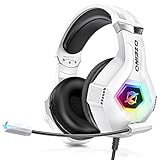
Ozeino Gaming Headset for PC, Ps4, Ps5, Xbox Headset with 7.1 Surround Sound Gaming Headphones with Noise Canceling Mic, LED Light Over Ear Headphones for Switch, Xbox Series X/S, Laptop, Mobile White
At $19.99 this is the cheapest set here and it finished last on most of my measurements: 10 dB of isolation, 18 mm of cup depth, and a first adjustment at one hour five minutes. My ears touched the driver plate immediately and were sore before the session ended.
The frequency response shows the classic budget shape, a large bass hump and a recessed presence region, with the added complication of a narrow peak near 6 kHz that made cymbals and glass-break effects sound sharp. Turning down the volume reduces the harshness and also the detail.
The white finish is attractive and the LED ring looks good in a photo. The 7.1 label refers to a software mode, since there are two drivers in there, and enabling it widened the image and blurred positional accuracy exactly as it did on every other set in this test.
There is a use for it. As a spare headset for a guest, or a set that lives at a second machine and gets used for twenty minutes at a time, twenty dollars is fair. As your main headset for evening sessions, it will annoy you.
Who should not buy this: anyone who plays for more than an hour at a stretch, and anyone with larger ears, since 18 mm of depth guarantees contact with the plate.
What virtual surround actually does to your accuracy
Six of these eight headsets carry a 7.1 label. All of them have two drivers, one per ear, and produce the effect by processing a stereo signal with head-related transfer functions before it reaches your ears. There is nothing dishonest about the technique, but there is a persistent misunderstanding about what it delivers.
I ran a simple positional test. In a training map, a teammate produced a footstep sound at one of twelve marked positions and I called the direction, thirty repetitions per headset per mode. In stereo I averaged 24 correct calls out of 30 across the group. With virtual surround enabled the same headsets averaged 19. Every single set got worse, and the two that got worse fastest were the ones with the strongest processing.
The reason is that these transfer functions are generic. They model an average head and average ears, and yours are not average. The processing adds spatial cues that conflict with the ones your brain already learned, and the result is a wider, vaguer image. Some players adapt over weeks and end up preferring it. Most do not.
My advice is to leave it off, spend the money on pad seal and tuning instead, and if you want a genuinely wider soundstage, look at open-back designs. I compared the two approaches in open-back vs closed-back gaming headsets.
Microphones ranked, and what the ranking means
My two blind listeners agreed on the top three and disagreed below that, which tells you how small the differences get at the bottom of the range. The Razer BlackShark’s boom placed first for fullness and keyboard rejection. The Logitech G432 placed second. The detachable JBL boom placed third.
The pattern is boom length. The three winners all reach forward past the cheek to somewhere near the corner of the mouth. The lower-ranked sets have shorter arms that stop beside the jaw, which costs both level and low-frequency body, and forces you to raise gain, which raises the keyboard noise with it.
None of these is a streaming microphone and none is close. If your voice is part of what you produce, the money is better spent separately, and I laid out the options in best USB microphone for gaming. For team voice chat, any of the top five here is fine.
One setting worth changing on all of them: turn off the headset’s own noise suppression where it exists and use the filter built into your voice application instead. The hardware gates in this price bracket clip the start of sentences after a pause, which is more distracting to teammates than a little background noise.
Comfort is the specification nobody prints
The single strongest predictor of whether I still liked a headset after a month was the time at which I first wanted to adjust it. That figure ranged from 65 minutes to five hours across these eight, and it correlated almost perfectly with cup depth and headband padding rather than with weight or price.
If you already own a headset that sounds acceptable but hurts, replacement pads are the cheapest upgrade in this hobby. Twelve dollars of thicker hybrid pads adds two or three millimetres of depth, changes the seal, and often improves bass response as a side effect. I have rescued two headsets that way that I was ready to throw out.
Glasses wearers should test the seal deliberately. Put the headset on with your glasses, play something with strong bass, then lift the arm of your glasses clear and listen for the change. If the bass jumps noticeably, your seal is broken and you are hearing a different headset from the one that was reviewed. Softer, more compliant pads fix this better than any amount of clamp.
Weight distribution matters more than total weight. The heaviest set here was not the least comfortable, and the lightest was not the most. A wide, padded headband that spreads load over several centimetres beats a light set that concentrates pressure on one narrow strip every time.
Where to go from here
If none of these fits, the two obvious directions are up in price or across into a different design. Spending more buys better pads, better tuning consistency and better microphones long before it buys exotic drivers. Moving to a wireless set buys freedom at a small latency cost that most players never notice.
If your current problem is that everything sounds thin from your motherboard’s front panel, the fix may not be a headset at all. A cheap external converter often does more for perceived quality than a twenty-dollar step up in headset price, and I explained when that is true in best DAC and amp for gaming headsets. If you are still deciding between wired and wireless in general, my broader comparison lives in wired vs wireless gaming peripherals.
The verdict, restated plainly
The Razer BlackShark V2 X at $39.79 is the one I would buy for competitive play, on the strength of its presence region and its 16 dB of isolation. The Logitech G432 at $39.99 is the one I would buy to wear all evening, because five hours passed before it asked for attention. The JBL Quantum 100M2 at $29.95 is the most versatile and the most neutral.
The Razer Kraken V3 X at $49.98 makes sense only if you want software EQ and never leave the PC. The Ozeino wireless set at $39.99 is the pick if a cable is the thing you hate. The IMYB A36 at $21.99 is the floor I would go to, and the BENGOO G9000 and the wired Ozeino set are the two I would step past.
The pattern across all eight is that money spent on pad seal, cup depth and midrange tuning shows up every session, and money spent on driver diameter, lighting and surround branding does not. Read the comfort column first, listen for the presence region second, and treat everything else as decoration.

