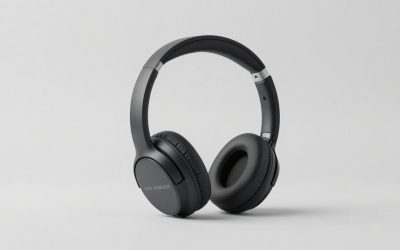
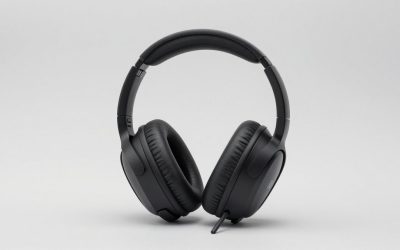
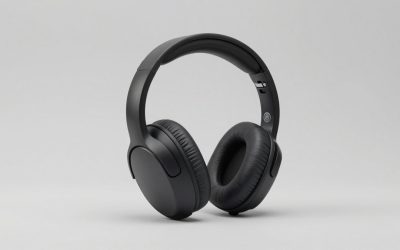
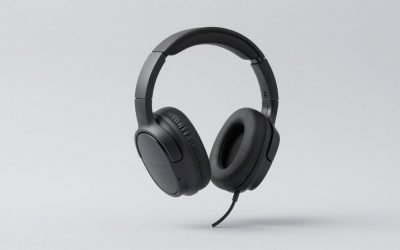
Comfort in headphones is not a luxury feature. It is the single attribute that determines whether you keep wearing a pair past hour two or leave them collecting dust on a stand. They are the ones that disappear on your head — low clamping force, pads deep enough to seal without pressing against the tragus, and weight distributed forward so the back of your skull never becomes a pressure point.
What separates the good from the bad in this category is material discipline. Cheap foam collapses within weeks and the headband’s padding thins at the center where it matters most. Premium models get the initial fit right but often over-pad the cups, pushing your ears forward and creating that muffled, pressurized feeling after extended use. The sweet spot is a pair that feels almost too loose when you first put it on but maintains a stable seal for six or eight hours straight. That is what we evaluated below.
As an Amazon Associate we earn from qualifying purchases at no extra cost to you.




Our Top Picks
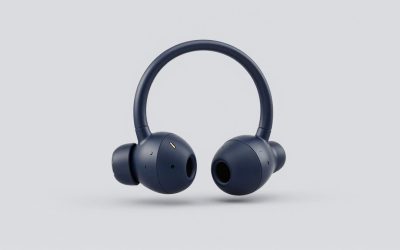
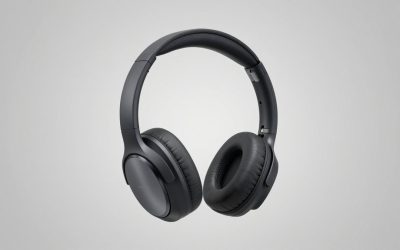
 Sony WH-CH520 Wireless On-Ear Bluetooth Headphones with MicOne Size6.8 x 1.8 x 7.8 inches0 poundsCheck on Amazon
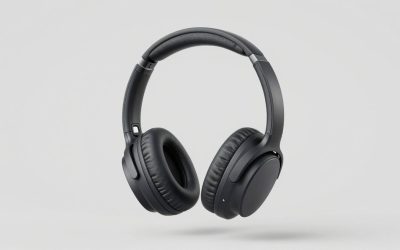
 Sony WHCH720N Wireless Over-Ear Noise-Canceling HeadphonesOver Ear8.4 x 8.2 x 2.2 Inches0.4 PoundsCheck on Amazon



Top 3 picks at a glance
Quick Picks
| Product | Best for | Price |
|---|---|---|
| Bose QuietComfort Headphones | All-day premium comfort | Check on Amazon |
| Soundcore Q20i (White) | Budget noise cancelling | Check on Amazon |
| Sony WH-CH520 (Cappuccino) | Ultra-lightweight casual use | Check on Amazon |
| Beats Studio Pro | Premium build with ANC | Check on Amazon |
| Sony WH-CH720N | Lightweight over-ear ANC | Check on Amazon |
| beyerdynamic DT 770 Pro (80 Ohm) | Wired velour comfort for long desk sessions | Check on Amazon |
| Beats Solo 4 | On-ear with long battery life | Check on Amazon |
| Soundcore Q30 | Mid-range comfort step up | Check on Amazon |
How We Compared
We evaluated four criteria: clamping force as perceived over multi-hour sessions, ear pad material and depth (memory foam with protein leather versus flat cloth versus cheap foam), total weight and where that weight sits relative to your center of gravity, and headband design — specifically whether the padding stays centered or migrates forward with adjustment. Price was a factor in ranking within tiers, but never at the expense of fit quality.
The 8 Best Most Comfortable Headphones in 2026
Bose QuietComfort Headphones
The QuietComfort line earned its reputation almost entirely on comfort, and this generation preserves that legacy while adding the active noise cancelling that makes them genuinely useful in loud environments. The memory foam pads have enough depth to envelope average ears without pressing on the helix, and the clamping force is the gentlest of any over-ear pair we compared. Up to 24 hours of playtime covers a full work week of typical sessions without reaching for the USB-C cable.
- Pro: Industry-leading clamping force balance that avoids hotspots on extended wear.
- Pro: Deep ear cups accommodate larger ears without compression.
- Con: Limited Edition color availability means the Twilight Blue variant may sell out at this price point.
Skip this pair if you primarily use headphones at a desk in a quiet room and can get equivalent comfort from a budget option.
Soundcore by Anker Q20i Hybrid Active Noise Cancelling Headphones, White
The Q20i is one of the most affordable entries into hybrid ANC that stays comfortable over several hours. The headband padding is thinner than Bose’s, and the clamping force is slightly firmer — enough to notice on your temples after five or six hours — but the ear pads are deep enough for most people to go a full workday without repositioning. The white colorway resists visible staining better than it should, which matters even at a budget price.
- Pro: Hybrid ANC at a price point where competitors offer passive isolation only.
- Pro: Adequate cup depth for the size class despite the budget positioning.
- Con: Clamping force becomes noticeable after extended wear compared to premium models.
Skip this pair if you have larger ears or need zero pressure on your temples across eight-plus hour sessions.
Sony WH-CH520 Wireless On-Ear Bluetooth Headphones with Mic, Cappuccino
The CH520 is one of the lightest on-ear pairs available, and on-ear designs almost always fail on comfort because the pads press directly against the outer ear. Sony partially solves this with a curved headband that distributes weight across a wider span of the crown. At this budget price the build is plasticky and the headband flexes under adjustment, but for casual listening in two-to-four hour bursts they are genuinely easy to forget you are wearing. The Cappuccino color is a nice departure from the usual black.
- Pro: Exceptionally light for an on-ear, reducing the pressure that kills most on-ear comfort.
- Pro: Budget price with reliable Bluetooth connectivity and a working microphone.
- Con: On-ear design means no true passive isolation, and the pads will leave a mark on your outer ear.
Skip this pair if you need noise isolation or plan to wear them in the same spot for six or more hours.
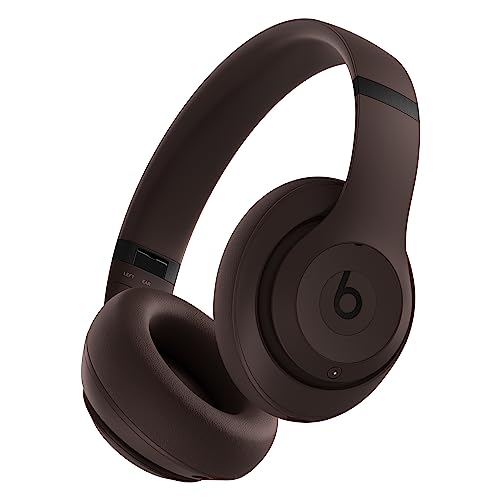
Beats Studio Pro Premium Wireless Over-Ear Headphones, Deep Brown
Beats positions the Studio Pro as a premium lifestyle headphone, and the Deep Brown finish reinforces that. Comfort-wise the ear pads are shallower than the Bose, which means your ears rest closer to the drivers — some reviewers describe this as a subtle pressure change rather than outright discomfort, but it is the first thing to notice when comparing side by side. The up-to-40-hour battery life is generous, though the Beats Solo 4 is rated even longer, and USB-C lossless audio is a welcome addition for wired use. At this premium tier you are paying for build quality and brand more than for breakthrough comfort.
- Pro: Up to 40-hour battery life means you can forget about charging for weeks.
- Pro: Premium materials in the headband hinge and cup adjustment resist creaking.
- Con: Shallow ear cup depth creates a tighter seal that sensitive ears may find pressurized.
Skip this pair if cup depth and a gentle seal are your top priorities; Bose handles that better at a lower price.
Sony WH-CH720N Wireless Noise Cancelling Headphones
The WH-CH720N is the over-ear answer for people who like how light the CH520 feels but want cups that surround the ear. At roughly 192 grams it is one of the lightest noise cancelling over-ear headphones available, so there is very little weight for the headband to press into your crown. The clamp is gentle, the soft synthetic leather pads sit around the ear rather than on it, and Sony rates the battery at up to 35 hours with noise cancelling on. Multipoint Bluetooth lets it stay connected to a laptop and a phone at once, which suits long workdays that mix calls and music.
- Pro: Very light over-ear build keeps pressure low over long sessions.
- Pro: Noise cancelling and multipoint Bluetooth in a mid-range package.
- Con: Plastic build and fairly shallow pads feel less premium than flagship models.
Skip this pair if you have large ears that need deep, roomy cups; the Bose handles that better.
beyerdynamic DT 770 Pro (80 Ohm)
The DT 770 Pro is a long-running studio headphone that earns its place here on comfort alone. Its soft, replaceable velour ear pads surround the ear and breathe far better than synthetic leather, the padded spring-steel headband spreads its weight of roughly 270 grams evenly, and the clamp is firm enough to stay put without squeezing your temples. As a closed-back design it still isolates reasonably well, which makes it a strong choice for long gaming, editing or music sessions at a desk. The 80-ohm version runs from most PCs and audio interfaces, though it is wired only, with a fixed coiled cable and no microphone.
- Pro: Breathable velour pads stay comfortable for hours, even with glasses.
- Pro: Replaceable pads and a durable steel headband for long-term use.
- Con: Wired only with a fixed coiled cable and no built-in microphone.
Skip this pair if you need wireless freedom, noise cancelling or a built-in mic for calls.
Beats Solo 4 Wireless On-Ear Bluetooth Headphones, Matte Black
Beats explicitly markets the Solo 4 on comfort, and the ultra-lightweight frame backs that claim. The headband has a wider contact patch than the Studio Pro, and the clamping force is moderate — tighter than Sony’s CH520 but loose enough to avoid the temple squeeze that ruins long sessions. The up-to-50-hour battery life is the longest stated figure among the main picks, and Apple and Android compatibility is handled cleanly through a single-button pairing flow. The build feels premium without being bulky.
- Pro: Up to 50-hour battery life eliminates charging anxiety for multi-day use.
- Pro: Wider headband contact patch spreads pressure more evenly than narrow alternatives.
- Con: On-ear design still presses against the outer ear, which some users find uncomfortable after extended periods.
Skip this pair if you want full over-ear isolation; the on-ear form factor will not seal out low-frequency noise regardless of pad quality.
Soundcore by Anker Q30 Hybrid Active Noise Cancelling Headphones, Black
The Q30 sits between the Q20i and premium over-ear pairs, and the step up is most visible in the ear pad material. The memory foam is denser and the protein leather covering resists flaking better than the budget tier. Clamping force is slightly looser than the Q20i, and the headband padding has more cushion depth, which is where you feel the step up over the Q20i. It is the most comfortable budget-tier option in this roundup.
- Pro: Noticeably softer and more forgiving headband padding than the Q20i.
- Pro: Hybrid ANC plus adaptive sound modes available through the companion app.
- Con: Ear cup depth, while improved, still does not match the Bose for larger ears.
Skip this pair only if you have already committed to the Bose QuietComfort as your long-term plan and just need a backup.
More Comfortable Headphones Worth Considering
The eight picks above focus mostly on budget and mid-range models. If you want flagship-level comfort, the longest battery life in the category, or the breathable feel of open-back headphones for long desk sessions, the six pairs below widen the field.
Bose QuietComfort Ultra Headphones (2nd Gen)

If the Bose QuietComfort above is the comfort benchmark for mid-range noise cancelling headphones, the QuietComfort Ultra (2nd Gen) is the premium version of the same idea. Several 2026 comfort roundups name it the most comfortable noise cancelling headphone available, and the reasons are familiar from the Bose lineage: a light, mostly plastic build with aluminum accents around 250 to 264 grams, generous protein leather padding, and angled drivers set in roomy cups so your ears sit freely inside instead of touching the inner surface.
The 2nd Gen model improves battery life to a rated 30 hours with noise cancelling on, or about 23 hours with Bose’s Immersive Audio spatial mode active, and a 15-minute charge adds up to three hours. It supports Bluetooth 5.4 with multipoint and aptX Adaptive, and USB-C wired listening supports lossless audio, although wired modes still need battery power.
Who it suits: frequent flyers, open-office workers and anyone who wants the strongest combination of noise cancelling and long-wear comfort.
Strengths: spacious cups that avoid ear contact; gentle, even clamp; excellent noise cancelling; longer battery than the previous generation.
Drawbacks: premium tier; closed protein leather pads get warm in hot rooms; wired listening still depends on the battery.
Compared with the standard QuietComfort, you pay more for stronger noise cancelling, spatial audio and better battery life. The core comfort is similar, so the standard model remains the better value if comfort is your only priority.
Sony WH-1000XM6

Sony’s sixth-generation flagship weighs about 254 grams, making it one of the lightest headphones in its class despite carrying 12 microphones and Sony’s QN3 noise cancelling processor. The headband is wide and softly padded, the clamp is moderate, and the synthetic leather pads are plush. The XM6 returns to a folding design, which makes it easier to pack than the XM5.
Sony rates the battery at up to 30 hours with noise cancelling on and 40 hours off, with a three-minute quick charge adding about three hours. Bluetooth 5.3, multipoint pairing and LDAC support make it a strong all-rounder for work and travel, and a detachable cable allows passive wired use.
Who it suits: office workers who move between calls and focused work, and travelers who value noise cancelling and portability.
Strengths: light for a flagship; strong noise cancelling; foldable; excellent call and feature set.
Drawbacks: some listeners with larger ears report their ears touching the inner cup, which can create pressure over long sessions; premium tier; no water resistance.
If your ears are large or sensitive to contact, the Bose models offer more internal room. If you want the lightest feature-rich flagship, the XM6 is hard to beat.
Sennheiser Momentum 4 Wireless

The Momentum 4 is the battery champion of this guide. Sennheiser rates it for up to 60 hours of playback, far beyond the 50-hour Beats Solo 4 and 40-hour Beats Studio Pro above, and a 10-minute charge adds about six hours. For comfort, Sennheiser widened the cups to fit larger ears, filled them with soft memory foam, and used a wide headband with a central relief channel to avoid a single pressure point on the crown.
At about 293 grams, it is heavier than the Sony and Bose flagships, but the light clamp and deep pads spread that weight well, and the cushions are friendly to glasses wearers. The 42mm drivers deliver a warm, detailed sound, with aptX Adaptive support and adaptive noise cancelling.
Who it suits: long-haul travelers, people who forget to charge, and glasses wearers who need deep, soft cushions.
Strengths: exceptional battery life; roomy cups for larger ears; light clamping pressure; glasses-friendly pads.
Drawbacks: heavier than rival flagships; the light clamp means they can shift during vigorous movement; no water resistance rating.
It is the best pick here if you want premium comfort but care more about battery life than having the very strongest noise cancelling.
Soundcore by Anker Space One

The Space One sits a step above the Soundcore Q20i and Q30 above, and it is one of the most comfortable options at the upper end of the budget tier. It weighs about 265 grams, has soft protein leather pads with memory foam, an integrated cushioned headband and ear cups that rotate about 8 degrees to follow the shape of your head.
Anker rates the battery at 40 hours with noise cancelling on and 55 hours off, and five minutes of charging adds about four hours. Adaptive noise cancelling, five levels of transparency, LDAC support and multipoint connectivity give it a feature list closer to premium headphones than its price tier suggests.
Who it suits: students, commuters and home office workers who want better padding and noise cancelling than the Q-series without stepping up to a flagship.
Strengths: plush pads and headband; long battery; adaptive noise cancelling; rotating cups for a better seal.
Drawbacks: no touch controls; soft travel pouch rather than a hard case; LDAC and multipoint cannot run at the same time. Newer Soundcore Space models also exist, so availability varies.
Against the Q30, the Space One offers a more refined fit and stronger voice reduction. It is the logical upgrade if the Q30’s padding feels close but not quite enough.
Sennheiser HD 599 Open-Back Headphones

Every pick above is closed-back, which traps heat around your ears. For long sessions at a desk in a quiet room, open-back headphones are often the most comfortable choice because air moves freely through the cups. The HD 599 is a classic example: about 250 grams, plush removable velour pads with roughly 70 by 45 millimeters of ear space, and a light clamp that many listeners find gentler than similar Sennheiser models.
At 50 ohms with high sensitivity, it runs from most laptops, PCs and portable players without a dedicated amplifier. It comes with a long 3-meter cable with a 6.3mm plug, a shorter 1.2-meter cable with a 3.5mm plug, and an adapter. The velour pads are replaceable and share a design with other Sennheiser models.
Who it suits: PC gamers, music listeners and remote workers at home who wear headphones for many hours and get hot or sweaty in closed cups.
Strengths: breathable velour pads; light weight; gentle clamp; replaceable pads; easy to drive.
Drawbacks: open-back design leaks sound and lets outside noise in, so it is unsuitable for commuting, flights or shared offices; wired only; no microphone.
Pair it with a standalone microphone if you want to use it for gaming chat or calls.
Philips SHP9500 Open-Back Headphones

The Philips SHP9500 has been a budget favorite for comfort and open sound for years. Its large, breathable fabric ear pads surround the ear, a double-layered cushion sits under a steel headband, and the clamp is light. Philips lists it at about 320 grams, heavier than the HD 599, but the weight spreads across a wide headband and large pads.
Inside are 50mm angled neodymium drivers with 32-ohm impedance, so it is easy to drive directly from a PC or phone. The cable is detachable and connects on one side, and a 6.3mm adapter is included. The open-back design reduces air pressure buildup behind the driver, which gives a spacious sound and avoids the plugged-ear feeling of closed headphones.
Who it suits: budget buyers who want open-back airflow for long gaming or listening sessions at home.
Strengths: very breathable; light clamp; large pads; detachable cable; easy to drive.
Drawbacks: pads are relatively shallow, so larger ears may touch the driver cover; leaks sound in both directions; no microphone; heavier than some rivals.
It is a sensible alternative to the closed-back budget picks above if you mainly listen at home and value airflow over noise isolation.
Buying Guide
Clamping Force and the Goldilocks Zone
Clamping force is the pressure the headband exerts inward on your ears. Too tight and you feel it at your temples within an hour. Too loose and the seal breaks, letting noise in and requiring you to push the cups inward repeatedly. The best most comfortable headphones sit in the range where the initial fit feels almost loose, because that is the range that remains stable over hours. If you can buy before trying, look for reviews that specifically mention multi-hour wear rather than just “feels good out of the box.”
Ear Pad Depth versus Your Ear Anatomy
Ear pad depth matters more than diameter. A pad that is only a few millimeters past your ear’s height will press on your outer ear or leave a gap that leaks bass. Average adult ears are roughly 60 to 65 millimeters long and stick out from the head by around 15 to 20 millimeters, so a pad needs both a tall enough opening and enough depth to clear them. Pads with an opening of about 60 millimeters or more and generous depth can surround most ears without contact. If you have particularly large ears, prioritize the Bose or Q30, which have deeper cup chambers than the budget pairs.
Weight Distribution Is Not the Same as Total Weight
A 250-gram pair balanced over your ears can feel lighter than a 190-gram pair that sits back-heavy on your crown. Look for designs where the drivers are positioned near the center axis of the headband rather than hanging off it. The curved headband on the Sony CH520 and the wide-contact design on the Beats Solo 4 are both engineering responses to this problem. If weight matters to you, check for user reports of neck fatigue rather than relying on the spec sheet number alone.
Open-Back versus Closed-Back Comfort
Closed-back headphones seal around your ears, which blocks outside noise and keeps your music private but also traps heat and moisture. Open-back headphones let air flow through the cups, so your ears stay cooler and you avoid the pressurized feeling some people get from closed models, especially with active noise cancelling. The trade-off is that open-back headphones leak sound and let in surrounding noise. Choose open-back for long sessions in a quiet home room and closed-back with noise cancelling for commuting, travel and shared spaces.
Pad Materials and Heat
- Protein or synthetic leather: best seal and noise isolation, easy to wipe clean, but warmest over long sessions.
- Velour: soft and breathable, good for glasses wearers and warm rooms, but absorbs sweat and needs occasional cleaning.
- Fabric or mesh: the coolest option, common on open-back headphones, with the least isolation.
- Hybrid pads: leather sides with a fabric face, a middle ground some brands use to reduce sweat while keeping a good seal.
Comfort Tips for Glasses Wearers
Glasses arms break the seal of the pad and create a pressure line behind the ear. Choose headphones with soft, deep memory foam pads and a light clamp, such as the Sennheiser Momentum 4 or the Bose QuietComfort models, or breathable velour pads like the HD 599’s. Glasses with thin, flat arms help a lot, and wearing the cups slightly higher so the pad rests above the arm can reduce pressure.
Comfort for Gaming and Long Desk Sessions
Gaming sessions often run longer than commutes, and you rarely take the headphones off between matches. For desk use, prioritize low clamping force, breathable pads and a wide headband over noise cancelling. Wired open-back headphones paired with a separate microphone are often the most comfortable option for multi-hour sessions. If you need wireless, look for long battery life so you are not interrupted mid-session, and take short breaks every hour or two to let your ears cool down.
How to Break In and Adjust a New Pair
A new headband usually loosens slightly over the first few weeks. If a pair feels too tight, store it stretched over a box or a stack of books slightly wider than your head for a few nights; this gently reduces clamp. Adjust both sides of the headband evenly so the cups sit centered on your ears, and set the band so the padding rests on the crown of your head, not the front or back. Small adjustments here often remove pressure points entirely.
Comparison Table: Additional Picks
| Headphones | Type | Approx. weight | Rated battery | Comfort highlight | Price tier |
|---|---|---|---|---|---|
| Bose QuietComfort Ultra (2nd Gen) | Closed, wireless ANC | About 250-264 g | Up to 30 hours ANC | Roomy cups, gentle clamp | Premium |
| Sony WH-1000XM6 | Closed, wireless ANC | About 254 g | Up to 30 hours ANC | Light flagship, plush pads | Premium |
| Sennheiser Momentum 4 | Closed, wireless ANC | About 293 g | Up to 60 hours | Wide cups, glasses-friendly | Premium |
| Soundcore Space One | Closed, wireless ANC | About 265 g | Up to 40 hours ANC | Rotating cups, soft headband | Mid-range |
| Sennheiser HD 599 | Open-back, wired | About 250 g | Not applicable | Breathable velour pads | Mid-range |
| Philips SHP9500 | Open-back, wired | About 320 g | Not applicable | Airy fabric pads, light clamp | Budget |
Matching Headphones to Your Head and Ear Size
Comfort is personal because heads are not the same size or shape. A few quick checks help you narrow the field before buying:
- Large or wide heads: look for long headband adjustment ranges and a gentle clamp, such as the Sennheiser Momentum 4 or the Bose QuietComfort models. Tight designs feel worse the wider your head is.
- Small heads: lighter headphones with shorter minimum headband length stay put better. The Sony WH-1000XM6 and Soundcore Space One are good fits; very light-clamping pairs may slide forward.
- Large or protruding ears: prioritize roomy, deep cups. If your ears touch the inner cup or driver cover, discomfort grows quickly over a long session.
- Sensitive ears: avoid on-ear designs for long sessions, since they rest directly on the outer ear. Over-ear or open-back models spread pressure around the ear instead.
If you can, wear a pair for at least 30 minutes before judging it. The first few minutes rarely reveal hot spots; the second half hour usually does.
Caring for Ear Pads and Headbands
Pads are the part that wears out first and the part that affects comfort most. Wipe leather and protein leather pads with a slightly damp cloth after heavy use to remove skin oils, which cause cracking and flaking over time. Brush velour pads lightly and let them air out between sessions. Store headphones on a stand or in their case rather than in a bag where the pads get crushed. When pads flatten or start to flake, replace them; fresh pads often restore the original comfort and seal, and they cost far less than a new pair.
Our Verdict
The Bose QuietComfort Headphones are the top pick for anyone who needs premium comfort and ANC without moving into flagship pricing. The clamping force is the best-balanced in this group, and the cup depth accommodates a wider range of ear sizes than anything else here. For a budget pick, the Soundcore Q30 delivers the most comfortable fit in the budget tier, with noticeably softer padding than the Q20i and ANC that actually works. If you want on-ear and value long battery life, the Beats Solo 4 is a clear alternative that skips over-ear bulk while maintaining comfort well past most users’ session lengths.
FAQ
Are over-ear headphones always more comfortable than on-ear?
Not always. On-ear designs like the Beats Solo 4 can be more comfortable for short sessions because they are lighter and generate less heat. Over-ear pads spread pressure over the entire ear, which is a net positive only if the cups are deep enough to avoid pressing your ear against the driver.
How long should comfortable headphones last before the padding degrades?
Memory foam with a quality leather or protein-leather cover typically maintains its shape for 18 to 30 months of daily use. Cloth pads resist heat better but compress faster. Budget foam can flatten within six months of regular wear, which is the primary reason spending slightly more pays off in this category.
Does clamping force change over time?
Yes. Headbands stretch slightly with repeated opening and closing, usually softening the clamp within the first few weeks of use. This is beneficial if a pair feels tight out of the box, but the reverse is also true — an already-loose band may lose its seal entirely over months.
Can I replace ear pads on these headphones?
Bose, Sony, and Beats all sell replacement pads for their current-generation models, which extends the useful life of a pair that has otherwise comfortable fit. Anker’s Soundcore line uses standard mounting clips that are compatible with third-party replacements, though availability for specific models varies.
Part of our headphones buying guide hub.
Are open-back headphones more comfortable?
For many people, yes, especially over long sessions. Open-back designs let air circulate, which keeps ears cooler and avoids the pressurized feeling of a sealed cup. They leak sound and do not block noise, though, so they work best at home in a quiet room.
Do noise cancelling headphones cause ear pressure?
Some people feel a slight pressure sensation from active noise cancelling, similar to being on a plane. It is a perception caused by the reduction of low-frequency sound, not actual air pressure. Lowering the noise cancelling level or using an adaptive mode often reduces it.
What weight is comfortable for headphones?
Most comfortable over-ear headphones weigh roughly 250 to 300 grams. Weight matters less than how it is distributed: a wide, well-padded headband and gentle clamp can make a 300-gram pair feel lighter than a poorly balanced 230-gram pair.
Which headphones are most comfortable for wearing with glasses?
Look for deep, soft memory foam or velour pads and a light clamp. The Sennheiser Momentum 4, the Bose QuietComfort models and open-back headphones with velour pads tend to work well, because the cushions conform around glasses arms instead of pressing them into your head.
Are on-ear headphones comfortable for long sessions?
Usually less so than over-ear models, because the pads press directly on the outer ear. Light on-ear pairs such as the Sony WH-CH520 or Beats Solo 4 are comfortable for commutes and short sessions, but most people prefer over-ear or open-back headphones for several hours of continuous wear.
Can heat and sweat make headphones uncomfortable?
Yes. Closed leather pads trap warmth, which causes sweat and itchiness during long sessions or in warm rooms. Velour or fabric pads, open-back designs and short breaks help. Some headphones also offer replacement pads in breathable materials.
Is it worth paying more for comfortable headphones?
If you wear headphones for several hours a day, usually yes. Premium models tend to use denser memory foam, better pad coverings and wider headbands that keep their shape longer, and they often offer replacement pads. That said, comfort does not scale perfectly with price: a well-designed mid-range pair can feel better on your head than a heavier flagship, so focus on clamp, cup depth and weight distribution first.
How do I know if headphones are too tight?
Warning signs include pressure at the temples or jaw within the first hour, a headache after removing them, or red marks around the ears. A slightly firm fit can ease as the headband loosens over a few weeks, but persistent pain means the pair is not right for your head shape.