Planar magnetic headphones used to occupy a strange middle ground: technically superior to dynamic drivers in most measurable ways, but so demanding of amplification and so inconsistently built that most people bounced off them. That’s changed. The current lineup runs from a hundred-dollar HIFIMAN that needs nothing more than a phone dongle to nearly eight-hundred-dollar reference monitors that demand a proper desktop amp and a quiet room. The real problem a buyer faces isn’t finding a planar that sounds good in isolation; it’s finding one that sounds good with your actual source, fits your actual head, and doesn’t make you question whether the step up from your previous headphones was worth the price difference.
What separates a genuinely great planar from a mediocre one comes down to three things: diaphragm tension uniformity (which determines whether the treble is resolving or fatiguing), magnet geometry (stealth magnets and nanometer-thin membranes are marketing shorthand that translates into very real differences in imaging), and clamp force distribution. A headphone can have a flawless planar driver and still be unlistenable if the headband rests on one pressure point after forty minutes. In 2026 the gap between budget and flagship is narrower than it has ever been, but the reasons to pay more are still very specific. You just need to know which reasons apply to you.
As an Amazon Associate we earn from qualifying purchases at no extra cost to you.






Our Top Picks
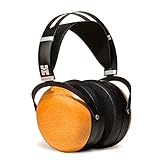
 ASUS ROG Kithara Hifiman Gaming/Audiophile Open Wired Headphones6.7 x 10.2 x 4.3 inches0.7 PoundsCheck on Amazon
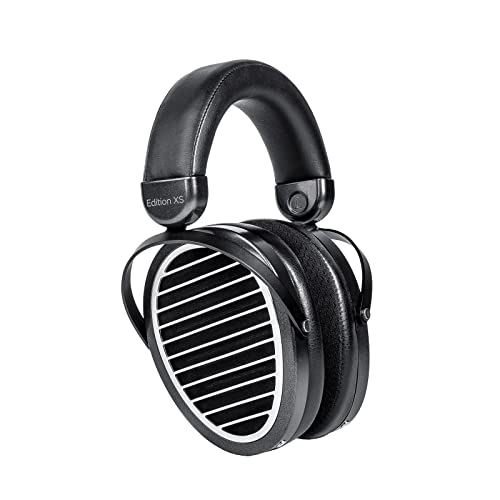 HIFIMAN Edition XS Full-Size Over-Ear Open-Back Planar Magnetic3.1 x 0.1 x 6.3 inches0.9 PoundsCheck on Amazon



Top 3 picks at a glance
Quick Picks
| Product | Best for | Price |
|---|---|---|
| ASUS ROG Kithara | Gaming and audiophile crossover | Check on Amazon |
| HIFIMAN Edition XS | Overall value | $209 |
| HIFIMAN Arya Stealth Magnet | Reference-grade studio work | $599 |
| Fosi Audio i5 | Premium build on a budget | Check on Amazon |
| HIFIMAN HE400SE | Entry-level without compromise | $109 |
| FiiO FT1 Pro | Home listening under $250 | Check on Amazon |
| HIFIMAN SUNDARA | Closed-back isolation | $129 |
| HIFIMAN Arya Organic | Endgame music listening | $769 |
How We Compared
We evaluated each pair on four criteria: driver technology and measurable performance (diaphragm size, magnet design, impedance, sensitivity), long-session comfort (weight, clamp distribution, pad material), real-world amplification requirements (does it hit reference volume on a DAP, or does it need a dedicated desktop amp), and value relative to direct competitors. A headphone that sounds incredible but needs a $300 amplifier to reach that potential is less practical than one that gets close on a $40 dongle, and we weighted accordingly.
The 8 Best Planar Magnetic Headphones in 2026
ASUS ROG Kithara
The ROG Kithara solves a problem nobody else addresses: a planar magnetic headphone that genuinely works in a gaming context without sounding like a compromise for critical listening. The ROG-tuned HIFIMAN drivers give you imaging precision that makes footsteps directional and spatial, while the detachable mic and included DAC compatibility mean it slots into a PC setup or a console without adapter gymnastics. The extra ear pads are a thoughtful touch that extends usable life.
- Pro: Tuned for both competitive spatial awareness and music enjoyment without either feeling sacrificed.
- Pro: Broad source compatibility across PC, console, and mobile without external hardware.
- Con: Open-back design leaks sound and picks up ambient noise, which limits where you can use it.
Skip it if you need isolation in a shared room or office environment.
HIFIMAN Edition XS
The Edition XS remains the benchmark for what a planar should sound like at this price. The Stealth Magnets design delivers a wide, holographic soundstage with a smooth treble extension that doesn’t sibilate on poorly mastered recordings. For most listeners, this is the first pair where the planar advantage over dynamics becomes undeniable rather than academic. The detachable cable and adjustable headband make it a practical daily driver for dedicated listening sessions.
- Pro: Soundstage presentation that rivals pairs costing twice as much.
- Pro: Forgiving treble tuning that handles varied source quality without fatigue.
- Con: Plastic construction feels less premium than the sound quality deserves.
Skip it if build quality and long-term durability are your top priority at this price.
HIFIMAN Arya Stealth Magnet Version
The Arya sits in the territory where planar magnetic headphones stop being consumer audio products and start being measurement instruments you wear on your head. For mixing engineers and mastering work, the frequency response accuracy and transient speed are in a different tier. The Stealth Magnets reduce diffraction effects that smear imaging on older planar designs, making this a true upgrade over the Edition XS rather than just a more expensive version of the same idea. It demands a proper desktop amplifier to show its full potential.
- Pro: Reference-level accuracy that reveals mixing decisions without editorializing.
- Pro: Significant measurable improvement over the Edition XS in distortion and timing.
- Con: Requires a dedicated amplifier to reach its rated performance; underpowered sources make it sound thin.
Skip it if you do not already own or plan to purchase a desktop amp.
Fosi Audio i5
The Fosi Audio i5 is what happens when a company known for amplification hardware applies that engineering discipline to transducer design. Multi-source compatibility is a practical feature that means less adapter clutter.
- Pro: The largest diaphragm in this roundup delivers bass authority that smaller planars cannot match.
- Pro: Premium build materials and finishing that feel worth the price.
- Con: Size and weight make it less comfortable for sessions past two hours on larger heads.
Skip it if you have a smaller head or prioritize weight savings over bass extension.
HIFIMAN HE400SE
The HE400SE exists because not everyone wants to spend two hundred dollars to discover they like planar magnetic sound. This pair proves the concept at the lowest viable price, and the Stealth Magnets update closes the gap with its more expensive siblings. High sensitivity means it reaches usable volume from a laptop headphone jack or a small USB dongle without distortion, which removes the amplifier barrier that used to make budget planars impractical. It sounds like a planar, and that is enough at this price.
- Pro: Accessible enough to work without dedicated amplification, making it a true entry point.
- Pro: Planar sound characteristics (speed, imaging, treble extension) are present without the usual compromises at this price.
- Con: Soundstage depth and bass texture fall noticeably short of the Edition XS for only a modest price increase.
Skip it if you can stretch to the Edition XS, which is the more logical purchase for most people.
FiiO FT1 Pro
FiiO has built its reputation on portable sources and IEMs, so the FT1 Pro carries forward the company’s obsession with impedance and sensitivity compatibility. This is a planar you can drive from a high-quality DAP and still hear proper bass weight and detail retrieval. The open-back tuning is slightly warmer than the HIFIMAN equivalents, which makes it more forgiving on the types of compressed and heavily processed sources that dominate casual listening. For home and studio recording on a budget, it is a sensible choice.
- Pro: Easy to drive from portable sources without sacrificing the planar character.
- Pro: Warm-leaning tuning that flatters lower-quality recordings and streaming sources.
- Con: Treble resolution is a step behind similarly priced HIFIMAN models on well-mastered material.
Skip it if your library is mostly high-resolution and you prioritize top-end air and detail.
HIFIMAN SUNDARA
The SUNDARA answers the most common objection to planar magnetic headphones: you cannot use them anywhere except a quiet room. Closed-back and with wooden ear cups that damp resonance, it trades some soundstage width for the ability to hear your music without disturbing a roommate. The Stealth Magnet design preserves the transient speed and detail retrieval that make planars worth buying even with the enclosure. Detachable cables and solid build make it the one in this list you would not mind carrying in a bag.
- Pro: Genuine closed-back isolation without the veiled, muddy sound that older closed planars produced.
- Pro: Portable-friendly build and detachable cable that survives real-world use.
- Con: Bass response is less extended than open-back competitors at this price due to sealed-enclosure constraints.
Skip it if you have a dedicated quiet listening space and do not need isolation.
HIFIMAN Arya Organic
The Organic is HIFIMAN’s statement that the Arya platform can be refined further, and on well-driven sources it does exactly that. The updated diaphragm material reduces mass without losing rigidity, which tightens midrange textures and improves micro-detail retrieval in ways that only matter on high-resolution recordings and properly implemented amplification chains. This is not an upgrade you will hear from a laptop headphone jack. Paired with a quality desktop setup, it is the most resolving headphone in this roundup and the easiest to justify if you listen to music critically and daily.
- Pro: The finest midrange and treble detail retrieval available at any price in this list.
- Pro: Comfortable enough for multi-hour critical listening sessions.
- Con: The price premium over the Stealth Magnet Arya is difficult to justify if your chain includes a single DAC/amp stage.
Skip it if you are early in your planar journey; the Edition XS or Arya Stealth will take you much further before you hit a ceiling.
Buying Guide
Open-Back vs Closed-Back
Seven of the eight headphones in this roundup are open-back, and that is not an accident. Open-back designs let air move freely around the diaphragm, which eliminates internal reflections that smear imaging and create a narrower, less holographic soundstage. If you listen in a quiet space and want the full planar magnetic advantage, open-back is the correct choice. The SUNDARA is the exception: it sacrifices some of that spatial presentation to give you isolation, which matters if you share a room or listen in an office. Decide based on your environment before anything else.
Amplification and Source Compatibility
This is the single most underestimating factor for first-time planar buyers. HIFIMAN headphones with low impedance and high sensitivity like the HE400SE are designed to work from minimal sources, while the Arya variants have a performance ceiling that only opens up with a dedicated desktop amplifier. Check the impedance and sensitivity specs for each model against what you actually own. A $200 headphone driven poorly will sound worse than a $109 headphone driven well. If you do not want to buy an amp, prioritize the easier-to-drive options.
Comfort and Build Over Time
Planar magnetic drivers are heavier than dynamic drivers because of the magnet structure required to drive the flat diaphragm. That weight sits on your head for hours. Look for adjustable headbands with pressure distribution rather than a single contact point, replaceable ear pads, and total weight under about four hundred grams if you have any tolerance concerns. The Edition XS, HE400SE, and SUNDARA all handle this well. The Arya Organic is comfortable but heavy; the Fosi Audio i5 is the heaviest pair here and the one where build quality trades against long-session ease.
Our Verdict
Our top pick is the HIFIMAN Edition XS. It is the headphone that makes the planar magnetic case most completely at a price that does not require you to justify it to anyone else. Soundstage, treble extension, and imaging all exceed their price point by a comfortable margin, and it drives well enough on mid-range sources that you can upgrade your amplifier later without being bottlenecked immediately.
The budget pick is the HIFIMAN HE400SE. It is not the best-sounding pair in this list, but it is the best-sounding pair that removes the amplification barrier, which is what actually stops most people from buying their first planar.
If you already own a quality desktop amplifier and your primary use is critical music listening rather than gaming or casual streaming, the Fosi Audio i5 deserves a hard look at around $590. Its 97mm diaphragm gives you bass weight and macrodynamic impact that the Arya Stealth cannot match at a similar price, and the build is in a different category from anything else on this list. It wins when your source chain is already strong and you care more about physical presence than technical accuracy.
FAQ
Do planar magnetic headphones need a special amplifier?
Not all of them. Models like the HE400SE and SUNDARA are designed with high sensitivity and low impedance specifically to work from phone dongles and laptop jacks. The Arya variants benefit noticeably from a dedicated desktop amp but will still function at reduced volume without one. Check sensitivity specs above one hundred decibels per milliwatt if you want to drive from minimal sources.
Are open-back headphones worse for gaming?
Open-back is not inherently worse for gaming, but it is worse for your environment. The lack of isolation means your teammates hear your game audio and your roommate hears everything. Spatial imaging precision is actually a gaming advantage because planar drivers render positional audio more accurately than most dynamics. If noise isolation matters, the closed-back SUNDARA is the better fit.
How do I know if a planar will sound better than my current headphones?
The easiest test is whether your current headphones feel muddy or smeared on complex passages, or if the treble sounds harsh rather than detailed. Planar diaphragms move faster and more uniformly than dynamic cones, which fixes both problems simultaneously. If your current pair already sounds clean and detailed in the treble and tight in the bass, you may not hear a dramatic improvement until you go significantly upmarket.
Can planar magnetic headphones damage hearing differently than dynamic drivers?
They are not inherently safer or more dangerous. The relevant risk is that a planar with extended high-frequency response can mask volume discomfort differently, making it easier to listen louder than you realize without fatigue. Use a SPL meter app or start at lower volumes than you think you need and increase slowly, just as you would with any headphone.
Part of our headphones buying guide hub.