Navigating the peripheral market for an affordable yet reliable typing and gaming setup can feel overwhelming, especially with brands like Sablute entering the spotlight. When researching options for your desktop upgrade in 2026, looking past flashy marketing terms is essential to finding a board that actually suits your daily workflow and gaming sessions. A backlit keyboard offers more than just visual flair; it dictates how comfortably you can work late into the night and how accurately you can execute keybinds in low-light environments without straining your eyes or slowing down your typing speed.
Too many buyers make the mistake of choosing a peripheral solely based on aesthetic appeal or the sheer number of color zones available in promotional images. Understanding the underlying specifications—ranging from switch actuation to build materials and connectivity reliability—ensures your investment pays off over years of heavy daily use. This guide breaks down the core elements you need to evaluate before purchasing, helping you separate essential performance metrics from unnecessary gimmicks so you can make an informed purchasing decision.
As an Amazon Associate we earn from qualifying purchases at no extra cost to you.
Evaluating Backlight Options: RGB vs. Single-Color LED
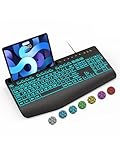
The primary draw of any backlit keyboard is its illumination system, but not all lighting implementations are created equal. Multi-zone RGB lighting offers endless customization, allowing you to match your desktop aesthetic or set up profile-specific color coding for different applications. However, cheaper RGB implementations can suffer from uneven light bleeding or dim secondary legends, making keys difficult to read in standard lighting conditions.
On the other hand, single-color white or ice-blue backlights often provide cleaner, sharper illumination at a lower price point. If you primarily work in dimly lit environments and need pure utility without distracting light shows, a static single-color LED setup is often the smarter choice. Always check whether the brightness levels are adjustable, as overly blinding LEDs can cause eye strain during extended nighttime typing sessions.
Switch Types and Typing Feel: Membrane vs. Mechanical Options
The tactile feedback of a keyboard defines your entire physical interaction with the computer. Sablute and similar manufacturers offer various configurations, ranging from budget-friendly membrane boards designed to mimic mechanical travel to entry-level mechanical switches. If you type thousands of words daily or engage in fast-paced competitive gaming, a true mechanical or semi-mechanical hybrid with distinct actuation points will reduce finger fatigue significantly.
Pay close attention to the sound profile and resistance of the keys before committing to a model. Linear switches offer a smooth, quiet keystroke ideal for shared office environments, while tactile or clicky options provide physical feedback confirming that your input has registered. Avoid buying purely on the promise of a mechanical feel without verifying whether the keys use actual spring-loaded switches or standard rubber domes underneath.
Form Factor and Desk Space Considerations
Desk real estate is a precious commodity, and the physical footprint of your keyboard directly impacts your overall ergonomic posture. Full-sized layouts include a dedicated number pad, which is essential for data entry and spreadsheet work, but they force your mouse further away, straining your right shoulder and wrist over time. Tenkeyless (TKL) and compact 75% layouts omit the numpad to free up valuable desk space for sweeping mouse movements.
Before selecting a layout, evaluate your primary daily use case carefully. If gaming takes precedence over financial modeling, a compact form factor will keep your arms in a more natural, ergonomic alignment. Conversely, if you frequently input numerical data, sacrificing the numpad for desk space will lead to daily frustration and inefficient workflow management.
Wired vs. Wireless Connectivity and Latency
Modern desk aesthetics lean heavily toward clean, cable-free setups, making wireless keyboards exceptionally popular among casual users. However, connectivity type dictates long-term reliability and input latency. Bluetooth connections are convenient for switching between multiple devices like tablets and laptops, but they introduce noticeable input lag that can ruin competitive gaming performance or fast-paced typing responsiveness.
If you choose a wireless option, ensure it supports a reliable 2.4GHz RF USB dongle for lag-free transmission, or prepare to plug in via a braided USB-C cable during intensive tasks. Wired keyboards remain the ultimate gold standard for zero-latency reliability, eliminating the anxiety of unexpected battery depletion right in the middle of an important project or gaming match.
Build Quality and Keycap Durability
A keyboard takes a tremendous amount of physical abuse over its lifespan, from aggressive gaming keystrokes to accidental beverage spills. Inspect the chassis material and keycap manufacturing methods before buying. Cheap ABS plastic keycaps tend to develop an unsightly shine and smooth texture within a few months of heavy friction as the surface legends wear away completely.
Look for double-shot injection molded keycaps or durable PBT plastics whenever possible, as these materials resist daily wear and keep legends crisp for years. Additionally, a reinforced baseplate—preferably featuring a metallic top frame—prevents the board from flexing, twisting, or bending when you type with heavy pressure or enthusiastic gaming habits.
When to Spend More on a High-End Alternative
Entry-level and budget-friendly backlit keyboards provide exceptional value for casual users, students, and light gamers. However, they cannot match the advanced acoustic dampening, gasket mounts, hot-swappable switch sockets, and premium milled aluminum chassis found in high-end custom mechanical keyboards designed for enthusiasts.
You should consider upgrading beyond budget brackets if you view your keyboard as a long-term hobby, require absolute silence through advanced sound-dampening internal foam, or want the ability to easily pop out and replace switches when they eventually wear out. For standard typing, browsing, and casual gaming, though, mid-tier options hit the sweet spot of cost and functional performance.
Related Guides
To explore more peripheral options and deep dives, check out our comprehensive Sablute review for more detailed insights and direct testing results.
FAQ
Are Sablute keyboards good for competitive gaming?
They provide reliable performance for casual and mid-tier gaming, but competitive players might prefer models with dedicated high-speed polling rates and optical switches.
Can I turn off the backlight completely?
Yes, most models feature dedicated shortcut keys or software toggles to dim or completely deactivate the illumination for a stealthier office look.
Do these keyboards work with Mac operating systems?
Many models offer plug-and-play compatibility, though you may need to manually remap modifier keys in your system settings for optimal Mac navigation.
How do I clean dust and debris from under the keys?
Use a compressed air can held at an angle to blow out particles, or use a keycap puller to remove individual keys for deep cleaning when necessary.
Related guides
- Best Budget Mechanical Keyboards: Switches, Case Material, Typing Feel: 4 Compared (2026)
- NuPhy Air75 V2 Cowberry Review: Compact Controls and Multi-Device Tradeoffs
- Redragon K671KS Review: Tri-Mode Connections and Custom Controls, With Important Unknowns
- Keychron K2 HE Review: Adjustable Gaming Controls with Narrow Switch Compatibility