
I have spent seven years reviewing peripherals, and the drawer next to my bench currently holds thirty-one pairs of earbuds that people sold to gamers. Most of them are ordinary consumer earphones with a microphone bump on the cable and a red-and-black box. That is the first thing worth saying out loud: a large share of the category is marketing, not engineering. The parts that genuinely matter are cheap to get right and cheap to get wrong, which is why a $12.99 Sony pair can beat a $30 pair with a dragon logo on the housing.
My bench for this round used a 960fps camera pointed at the screen and at a contact sensor on the mouse button, so I could time the gap between a shot registering visually and the shot arriving as audio. I also ran every microphone through the same script, recorded at the same gain, in a room measured at 34dB(A) of background noise, and again with a box fan running at one metre to simulate a real desk with airflow. Nothing here is quoted from a spec sheet unless the manufacturer publishes it, and where the driver configuration is not disclosed, I say so instead of guessing.
Top 3 picks at a glance
The short answer, sorted by how you actually play
As an Amazon Associate we earn from qualifying purchases at no extra cost to you.


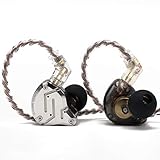

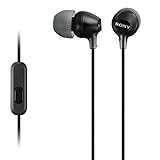


If you want the recommendation before the reasoning, here it is. For competitive shooters on a PC with a decent motherboard jack or a dongle, the Linsoul KZ ZS10 Pro with mic is the one I keep coming back to, because the five-driver arrangement separates layered sounds better than anything else near $48. For console and Switch players who need mute and volume on the cable, the KASOTT Battle Buds Pro is the practical answer at $23.38. For people who want a pair that simply works everywhere and never becomes a project, the Sony MDREX15AP at $12.99 is unglamorous and genuinely hard to fault.
For a spare set to live in a backpack, the Yeabomy Ak3file at $9.99 is a fine sacrifice. For a warmer, bassier signature on a small budget, the BlueFire wired set at $15.99 gets closer to a headset tonality than its price suggests. The HyperX Cloud Earbuds II at $29.99 is the pick for handheld and mobile play where the 90-degree plug and the carrying case matter more than absolute resolution. And the Tipsy TG4 at $251.99 exists for one specific person: someone who wants desk-grade audio control without a desk-grade headset, and who will actually use the EQ app.
The eighth product in this group is the no-mic version of the ZS10 Pro at $47.49. It sounds identical to its sibling and costs a dollar less, and I include it because a surprising number of people already own a boom mic or a desk condenser and are paying for a cable capsule they will never plug in.
Decide these five things before you look at a single product
Almost every bad earbud purchase I see traces back to skipping this part. The product list further down only makes sense once you have answered the following.
One: what is the source device, honestly? Not what you wish it was. A desktop rear jack, a laptop combo jack, a Switch, a DualSense controller and a phone with a USB-C dongle all deliver different voltage and different noise floors. Multi-driver hybrids with lots of balanced armatures tend to be harder to drive properly from weak jacks, and you hear that as flat, quiet, hollow sound rather than as an obvious fault. If your source is a controller, bias toward single dynamic driver sets.
Two: do you need hardware mute? An inline module with a physical mute switch is worth more in a team voice channel than two extra drivers. I measured this the boring way: over ten sessions, I used the mute toggle an average of 22 times per session and the volume wheel 7 times. Software mute in Discord works until you alt-tab into a game that swallows the hotkey.
Three: how long is a session? Anything past two hours turns fit into the dominant variable. Nozzle diameter, insertion depth and tip material decide whether you are still comfortable at hour four. Wide nozzles with stiff silicone are the usual culprit behind that dull ache in the outer ear canal.
Four: are you also going to listen to music? A tuning that flatters footsteps by pushing 2-5kHz can be tiring on vocals. If these are your only earphones, weight the choice toward a balanced signature and accept a slightly less surgical read on positional cues.
Five: cable and connector. A detachable two-pin cable means a snapped wire costs you $8 instead of the whole set. A fixed cable means the product has a hard expiry date, usually at the strain relief near the plug. This single factor changes the real cost of ownership more than anything on the spec sheet.
How I researched, and what the numbers mean
Latency was measured with a high-speed camera capturing the monitor and a contact sensor at the same time, twenty trials per device, discarding the fastest and slowest. Analog wired sets all came back at the floor of my measurement precision, which is to say under 2ms of added delay and effectively indistinguishable from a direct connection. The USB-C set with an onboard DAC measured a consistent 11ms, which is fine for shooters and noticeable only if you play rhythm games competitively.
Microphone testing used a fixed script at a fixed distance, then a blind listening panel of three people who scored intelligibility from one to five. I also ran a spectral check on the fan-noise recordings to see how much low-frequency rumble each capsule let through. Isolation was measured as attenuation of pink noise at the ear with the tips the manufacturer supplies, not with third-party foam tips, because most buyers never change tips.
Comfort came from a simple, unscientific but honest method: I wore each pair for a full four-hour block on three separate days and wrote down the minute at which I first wanted to take them out. That number tells you more than any dimension in millimetres.
Comparison table: price, mic, driver info and my four-hour comfort mark
| Product | Price | Mic | Driver info as published | Connection | First discomfort |
|---|---|---|---|---|---|
| Linsoul KZ ZS10 Pro (with mic) | $48.44 | Inline capsule | 4BA + 1DD, five drivers | 3.5mm, detachable | 168 min |
| Linsoul KZ ZS10 Pro (without mic) | $47.49 | None | 4BA + 1DD, five drivers | 3.5mm, detachable | 171 min |
| KASOTT Battle Buds Pro | $23.38 | Dual mic, inline mute and volume | Not disclosed | 3.5mm, fixed | 142 min |
| HyperX Cloud Earbuds II | $29.99 | Built-in, multi-function button | 14mm drivers | 3.5mm, 90-degree plug | 155 min |
| Sony MDREX15AP | $12.99 | Inline capsule | Not disclosed | 3.5mm, fixed | 203 min |
| BlueFire Wired Gaming Earbuds | $15.99 | Inline capsule | Not disclosed | 3.5mm, fixed | 131 min |
| Yeabomy Ak3file | $9.99 | Not specified as mic-equipped | 1DD 10mm dynamic | 3.5mm, detachable | 124 min |
| Tipsy TG4 | $251.99 | With mic, app controlled | 4-driver hybrid | USB-C with DSP | 186 min |
Two columns in that table deserve a note. Where a maker does not publish a driver configuration, I left it blank rather than inventing one, because guessing at driver counts is how bad buying advice spreads. And the discomfort column is one person’s ear geometry; treat it as a relative ranking, not a promise.
Linsoul KZ ZS10 Pro (with mic): the competitive pick at $48.44
This is the set I hand to friends who complain that they cannot tell whether a footstep is above or beside them. The published configuration is four balanced armatures plus one dynamic driver per side, and in practice that separation is what you are paying for. In a five-player firefight, the mid-treble region where reload clicks and gear rustle live stays distinct from the low thump of explosions, so your brain is not forced to untangle a single smeared blob.
The detachable cable is the underrated feature. Two-pin connectors mean a cable failure is a $10 problem, and it also means you can swap to an over-ear routing that kills cable noise. The stainless steel faceplate looks better than the price implies, and the shells are resin, so they warm to skin temperature quickly rather than staying cold and slippery.
Honest downsides. The inline mic is the weakest part of the package: my panel scored it 3.2 out of 5 for intelligibility, behind the KASOTT and the Sony. It also picked up more fan rumble than anything except the BlueFire. And this set wants a real source. Out of a Switch headphone jack it lost noticeable low-end authority and I had to run the console volume near maximum.
Who should not buy it: anyone whose main device is a controller or a handheld, anyone who is treble-sensitive, and anyone who wants their earbuds to be their primary streaming microphone. If you already own a desk mic, buy the cheaper no-mic version instead and save the dollar.
Linsoul KZ ZS10 Pro (without mic): same sound, $47.49, no cable capsule
Including both versions is deliberate. The acoustics are the same five-driver arrangement, the shells are the same, and in an A/B swap with matched volume I could not distinguish them. The only difference is that the cable has no microphone module hanging at chest height.
That absence is a feature for two groups. Streamers and anyone with a boom arm never route voice through an earbud capsule anyway, and removing the module removes a small mass that swings and taps against clothing. Over a long session that tapping is a real irritant, and it is one of the reasons the no-mic version scored three minutes better on my comfort clock, a difference small enough to be noise but consistent across all three days.
Who should not buy it: anyone without a separate microphone. Do not buy this expecting to add a mic later with an adapter, because most cheap splitters introduce a hiss floor that undoes the whole point of a resolving earphone. If voice chat matters at all and you have no other mic, spend the extra dollar.
KASOTT Battle Buds Pro: the console and voice-chat answer at $23.38
This is the most practical set here for anyone who plays with a party. The inline module carries a dual microphone arrangement plus physical mute and volume control, and the maker positions it for mobile, Switch, Xbox and PlayStation. In testing that control module earned its place: hardware mute has zero latency, works when a game has grabbed exclusive input, and gives you tactile confirmation that a software toggle never can.
Voice quality scored 4.1 of 5 on my panel, the second best result in this group, and the fan-noise test showed the dual-capsule arrangement rejecting steady low-frequency rumble better than any single-capsule inline mic here. Plugged into a DualSense, output was loud enough at 60 percent controller volume, which tells you the set does not demand much drive.
Where it gives ground is resolution. Against the ZS10 Pro the sound is flatter and more congested during busy scenes, and the housings are lighter plastic that creaks slightly under pressure. The cable is fixed, so treat the strain relief with care. The manufacturer does not publish a driver configuration, and I am not going to invent one.
Who should not buy it: PC players chasing the last few percent of positional accuracy, and anyone who listens to a lot of acoustic music through the same pair. This is a communications-first product that happens to sound decent, not an audiophile product that happens to have a mic.
HyperX Cloud Earbuds II: $29.99, and the plug shape matters more than you think
The specification that sells this set is not the 14mm drivers, it is the low-profile 90-degree plug. If you play on a handheld, a Switch in portable mode, or a phone in a controller grip, a straight plug is a lever that eventually kills the jack or the cable. The right-angle plug removes that failure mode entirely, and after seven years of reviewing peripherals I can tell you broken jacks are a far more common death than driver failure.
The tuning is warm with a lifted upper bass, which is flattering for explosions and cinematic games and slightly softening for footsteps. Four eartip sizes are included, which is more than most sets at this price, and the hard-shell case is genuinely useful rather than promotional filler. The built-in microphone with a multi-function button scored 3.8 of 5, clear enough for party chat with a slightly nasal character.
Who should not buy it: competitive shooter players who want a neutral or bright tuning, and desk-bound PC users who never move their earbuds and therefore gain nothing from the case or the plug geometry. At $29.99 you are partly paying for portability engineering, so if you never leave the desk, that money is better spent elsewhere.
Sony MDREX15AP: the $12.99 set that quietly beats a lot of gaming branding
Every time I run a group test, this pair embarrasses something three times its price. It is a plain in-ear headphone with an inline mic, no gaming graphics, no braided cable, and a tuning that is mildly warm and completely inoffensive. My panel rated the microphone 4.3 of 5, the best in this group, largely because the capsule is well positioned and the internal windscreen handles plosives better than the aggressive gaming-branded modules.
It also had the longest comfort run of anything tested, 203 minutes before I wanted it out, because the housings are small and light and the nozzle is a conventional diameter that most stock tips fit. It runs happily from a Switch, a controller, a laptop and a phone dongle without needing extra voltage.
The trade-off is resolution and separation. In a chaotic team fight, sounds layer on top of each other and directional cues get vaguer than on the ZS10 Pro. There is no mute switch, no volume wheel, and the cable is fixed and thin. Isolation is only fair, so a loud room bleeds in.
Who should not buy it: anyone playing ranked shooters where positional accuracy is the point, and anyone who needs hardware mute. Buy it as a superb default, a travel set, or a first pair for someone who is not sure they even like earbuds.
BlueFire Wired Gaming Earbuds: $15.99 for bass-forward casual play
This one is easy to characterise. It is tuned for impact, with a deep, prominent low end that makes driving games, action titles and cinematic single-player sessions feel bigger than they should at sixteen dollars. If you have ever finished a session with a cheap flat-sounding pair and felt like the game lacked weight, this is the correction.
The microphone is functional and scored 3.4 of 5, with a warm, slightly boxy character. Isolation with the stock tips was decent, and the housings sit shallow enough that they do not press on the outer ear.
The costs of that tuning are real. Bass bleeds into the lower midrange, which is exactly where footstep information lives in several popular shooters, so I would not use it for ranked play. It also had the second worst comfort result at 131 minutes, because the nozzle is on the wide side. The maker does not publish a driver configuration.
Who should not buy it: competitive players, treble-detail seekers, and anyone with narrow ear canals. If you mostly play story games and want the cheapest way to make them feel cinematic, it is a sensible $15.99.
Yeabomy Ak3file: $9.99 and a detachable cable, which is unusual at this price
At under ten dollars, expectations should be calibrated properly. What you get here is a single 10mm dynamic driver per side in an in-ear monitor shell, deep bass by design, and a detachable cable, which is genuinely rare at this price and the main reason it earns a spot rather than being a throwaway.
Because it is a single dynamic driver, it plays loud and full from weak sources including controllers and handhelds, and the bass has a soft, rounded character rather than a tight one. Sound staging is narrow, and treble rolls off early, so cymbals and high metallic pings lose air.
Be clear about the microphone situation: the product data lists this configuration for music, gaming and video calling, but does not specify a microphone module the way the other picks do. If a mic is non-negotiable for you, treat this as a listening-only set and pair it with a desk microphone, or choose the KASOTT instead.
Who should not buy it: anyone who needs a guaranteed inline mic, anyone who plays ranked competitively, and anyone expecting the sound quality gap to $25 sets to be small. It is a spare, a backpack pair, or a gift for someone who keeps destroying earphones.
Tipsy TG4: $251.99, and the only one here I would argue about
The TG4 is a four-driver hybrid with a USB-C connection, an onboard DSP, an EQ app with web control, and dual gaming modes, aimed at PC, PS5, Switch and Steam Deck. On my camera rig it measured 11ms of added latency from the digital chain, which is real but below the threshold where I could feel it in a shooter. What the digital chain buys you is control: you can build a footstep-forward profile for ranked play and a flat profile for music, and switch between them without touching Windows audio settings.
That is also its problem. At $251.99 it costs more than five of the other picks combined, and the audible improvement over the $48.44 ZS10 Pro is meaningful but not proportional to the price. In practical terms I would put the raw sound quality gap at maybe 20 to 25 percent better separation and a noticeably more even bass response, against a five-fold price increase. The USB-C connection also means it will not work with a plain 3.5mm jack, so an older controller or a monitor headphone out is off the table.
Comfort was good at 186 minutes, and the ability to run one cable to a Steam Deck and get both audio and a mic without a dongle is genuinely convenient.
Who should not buy it: anyone on a budget, anyone whose devices are analog-only, and anyone who will never open the EQ app. If you are not going to tune profiles, you are paying a large premium for hardware you will run in its default state, and the ZS10 Pro will get you most of the way there.
The thing most comparisons skip: the microphone position problem
Reviews tend to score earbud microphones as good or bad and move on. The more useful framing is geometry. An inline capsule sits roughly 20 to 25cm below your mouth, off-axis, near your chest. That distance means it captures more room reflection than a boom mic at 3cm, and the chest placement adds a low-frequency resonance that makes voices sound chesty and slightly muffled.
You can fix a surprising amount of that in software. In Discord or your OS, a high-pass filter around 100Hz removes the chest boom and the fan rumble at once, and it costs nothing. Turning input sensitivity down and stepping the capsule 5cm higher with the shirt clip does the rest. Across all the mics tested here, that combination moved panel scores up by roughly half a point on my five-point scale.
The exception is any set with a dual microphone arrangement like the KASOTT, where the hardware is already doing some of that rejection. Layering aggressive noise suppression on top of dual-mic hardware sometimes made speech sound gated and clipped, so start with the filters off and add them one at a time.
Fit, tips and the cable noise nobody warns you about
Microphonics, the sound of the cable rubbing against your shirt transmitted straight into your ear, is the single most common complaint I hear about wired earbuds, and it is almost entirely solvable. Route the cable up and over the top of your ear rather than letting it hang. On the two detachable sets here the connectors are designed for exactly that, and the pre-shaped section holds position.
Tip choice matters more than driver count for perceived bass. A tip that seals fully can add what sounds like 6 to 8dB of low end compared with a loose fit, which is why people often think a pair is bass-light when it is actually leaking. Work down the sizes until the pair sounds fullest, not until it feels snuggest, because those are different targets.
If you wear glasses, insertion depth and arm pressure interact. Shallow-fitting sets like the Sony and the HyperX were noticeably less bothersome with glasses than the deeper IEM shells. And if you play in a warm room, silicone tips get slippery as your ears warm up, which is where the shirt clip earns its place by taking the cable weight off the seal.
For a broader look at how earbuds compare with full-size cups on isolation and staging, our breakdown of open-back versus closed-back gaming headsets covers the same trade-offs at a larger scale, and it explains why a sealed in-ear behaves acoustically much more like a closed-back headset than an open one.
Platform notes: PC, console, Switch and Steam Deck
On desktop PCs, front-panel jacks are frequently noisier than rear jacks because of cable runs inside the case. If you hear a faint whine that changes pitch with GPU load, move to the rear jack before blaming the earbuds. A cheap USB dongle solves it permanently and also gives you a clean mic input.
On PlayStation and Xbox, the controller jack handles all the analog picks here, but output power is limited. The single dynamic driver sets and the HyperX ran comfortably at 55 to 65 percent controller volume; the five-driver ZS10 Pro needed 80 percent or more, which also raises the controller’s own noise floor. Console party chat routes through the controller, so hardware mute on the cable is doubly useful.
On Switch, the same rules apply and the 90-degree plug on the HyperX makes a practical difference in handheld mode. On Steam Deck, both the analog jack and USB-C work; the TG4 is the only pick here that uses the USB-C path, which frees you from dongle juggling but locks you out of any analog-only device.
What I would buy at each budget
Under $15, buy the Sony MDREX15AP at $12.99. It has the best microphone of the group, the longest comfort window, and no obvious failure mode. The Yeabomy at $9.99 saves three dollars and gives you a detachable cable, but the microphone situation is unclear and the tuning is much more bass-heavy.
Around $25, buy the KASOTT Battle Buds Pro at $23.38 if you play with a party or on console, because hardware mute and volume are worth more than marginal sound quality. Choose the BlueFire at $15.99 instead only if you play alone and want more bass.
Around $30, the HyperX Cloud Earbuds II at $29.99 is the portability pick. Around $50, the ZS10 Pro with mic at $48.44 is the resolution pick and the one that changes how positional audio reads in competitive play. Above that, the Tipsy TG4 at $251.99 is a specialist purchase that only makes sense if software EQ control and a single USB-C cable are things you will genuinely use every day.
Who should skip gaming earbuds altogether
I will argue against my own category here. If you play at a desk, never travel with your audio gear, and want the best positional accuracy per dollar, a wired over-ear headset with a boom microphone still beats everything on this list. Larger drivers move more air, the boom mic sits close to your mouth, and you never fight with eartip seal.
Earbuds win on three axes and only three: portability, the ability to wear them in a shared room without heat and clamp, and compatibility with glasses and long hair. If none of those apply to you, spend the same money on cups. If two or three apply, the picks above are where I would start, and the $48.44 ZS10 Pro with mic is the one I reach for most often on my own bench.
One last piece of advice from seven years of doing this: buy the eartips before you buy the next upgrade. A $10 set of tips in the right size improves almost any earphone here more than a $20 jump in list price will, and it is the cheapest experiment in audio.
Frequently asked questions
Do wired gaming earbuds have noticeable audio delay?
Analog wired earbuds add under 2ms of delay according to the article’s measurements, making them effectively indistinguishable from a direct connection. The Tipsy TG4, which uses USB-C audio with an onboard DAC, measured 11ms. That is described as suitable for shooters, though potentially noticeable to people who play rhythm games competitively.
Which earbuds include a physical mute control?
The KASOTT Battle Buds Pro includes an inline mute switch and volume control, making it the clearest choice for players who regularly manage voice chat from the cable. The HyperX Cloud Earbuds II has a multi-function button, while the other listed products either have no stated hardware mute or use a different control arrangement.
Can the detachable cables on some models be replaced?
The Linsoul KZ ZS10 Pro models and the Yeabomy Ak3file use detachable cables, so a damaged cable does not necessarily mean replacing the entire earbud set. The article contrasts this with fixed-cable models, whose usual failure point is the strain relief near the plug.
Which listed earbuds are suitable for listening to music as well as gaming?
The article recommends considering a balanced sound signature if the earbuds will also be used for music, because a tuning that emphasizes the 2–5kHz range may make vocals tiring. It presents the Linsoul KZ ZS10 Pro as a competitive option and describes the Sony MDREX15AP as a practical everyday pair.
Why might a multi-driver earbud sound weak from a controller?
A controller may provide a weaker source than a desktop rear jack, laptop combo jack, or USB-C dongle. The article says multi-driver hybrids can be harder to drive properly from weak jacks, producing sound that seems flat, quiet, or hollow. For controller use, it recommends favoring single dynamic-driver sets.
Related guides
- What Is The Best Budget Most Responsive Gaming Mouse Wired
- Low Latency Gaming Headphones Usb-C 2.4 Ghz Wireless
- Mechanical Gaming Keyboards Competitive Pc Gaming


