Swimming headphones solve a problem most people discover mid-lap: water kills your earbuds in seconds. Regular waterproof ratings do not cut it here. You need something rated for sustained submersion, not just rain splashes, and you need it to actually deliver audible sound through water and a silicone cap. The best swimming headphones in 2026 almost universally use bone conduction or open-ear designs because they leave the ears open and do not depend on a perfect in-ear seal. The tradeoff is isolation, which means pool lane awareness is built in by default.
What separates a good pair from a bad one comes down to three things: whether the seal survives repeated dives, whether built-in storage actually works since Bluetooth cannot pair underwater, and whether the clamp force stays comfortable through a full hour of back-to-back laps. Price alone is not a reliable signal here. Some of the cheapest options on the market deliver passable audio, while a few expensive pairs are overbuilt for what a pool actually demands. This guide weighs specs and owner feedback to find the right balance.
As an Amazon Associate we earn from qualifying purchases at no extra cost to you.


Our Top Picks


Top 3 picks at a glance
Quick Picks
| Product | Best for | Price |
|---|---|---|
| PSIER Bone Conduction | Reliable lap swimming on a mid-range budget | Check on Amazon |
| Budget Bone Conduction Swim | First-time buyers testing the category | Check on Amazon |
| Open Ear Bluetooth 6.0 | Modern wireless use poolside | Check on Amazon |
| CXK Bone Conduction | Runners who also swim | Check on Amazon |
| 32G MP3 Bone Conduction | Lowest-cost built-in storage | Check on Amazon |
| SHOKZ OpenSwim Pro | Premium build and proven waterproofing | Check on Amazon |
| Open Ear Swim | Budget open-ear alternative | Check on Amazon |
| SAMVEK IP68 | Multi-sport athletes cycling between sessions | Check on Amazon |
How We Compared
We evaluated each pair on four criteria: waterproof certification and stated submersion rating, whether it has onboard storage (mandatory since Bluetooth does not function underwater), comfort under a silicone swim cap across extended sessions, and real-world build quality at its specific price point. We also weighted pool-specific factors like chlorine resistance and whether the transducer placement creates hot spots behind the ear when a tight cap adds additional clamping pressure over thirty to sixty minutes.
The 8 Best Swimming Headphones in 2026
PSIER Bone Conduction
A dependable middle-ground option for swimmers who want no surprises. The IPX8 rating handles sustained submersion through an entire pool session without concern. It sits light enough to disappear under a silicone cap, which matters during long freestyle sets where any extra bulk becomes a distraction after ten minutes.
- IPX8 handles prolonged underwater exposure
- Lightweight profile stays comfortable under tight caps
- Sound quality is functional but lacks depth in the bass range
Skip it if you prioritize deep bass, since its tuning favors clarity for podcasts and steady-tempo music.
Budget Bone Conduction Swim
For first-time buyers curious whether bone conduction is the right fit before committing to a pricier pair. At a budget price it clears the most important hurdle: it actually works underwater with audible output. Sound clarity is adequate for podcasts and moderate-tempo music during steady-state laps, though the housing feels less robust than models twice its price.
- Affordable entry point to test the form factor
- Decent mid-range clarity for spoken content
- Build quality suggests a shorter lifespan under daily use
Skip it if you swim four or more times per week and want something that survives a full season without the band loosening or the seal degrading.
Open Ear Bluetooth 6.0
Designed for swimmers who also want a capable wireless pair for poolside warmups and post-swim cooldowns. The Bluetooth 6.0 connection is stable enough for streaming a playlist between sets without dropouts. Open-ear design keeps you fully aware of lane traffic and pool sounds without any in-ear pressure.
- Bluetooth 6.0 delivers a stable above-water connection
- Open-ear profile preserves full ambient awareness
- Costs more than comparable bone conduction options that skip wireless
Skip it if you only ever listen underwater and will never pair to a phone outside the pool, because you are paying for a feature you will not use.
CXK Bone Conduction
Built with dual use in mind: running outdoors and swimming in a pool. The IPX8 rating handles pool sessions, while the overall design tolerates sweat and impact from land-based training. It works as a single solution for athletes who split their week between the track and the pool without wanting two separate pairs.
- IPX8 waterproofing handles full submersion during swim sets
- Dual-sport design eliminates the need for a second pair
- Bulkier than pure-swim competitors due to its running-oriented housing
Skip it if you want the lightest possible profile under a cap and do not run, because the extra structure adds unnecessary weight for pool-only use.
32G MP3 Bone Conduction
One of the lowest-priced options on this list with built-in storage, making it a practical pick for swimmers who just want a functioning MP3 player that survives submersion. With its onboard storage it removes the need to carry a phone poolside entirely. Audio quality is its weakest link, but for spoken podcasts and light background music during technique drills, it clears the bar.
- 32GB onboard storage means no phone required in the pool
- Budget price with genuine swim-ready waterproofing
- Noticeably thinner sound signature than mid-tier competitors
Skip it if you care about audio fidelity or listen to bass-heavy genres during your sets, since the drivers are tuned for clarity over richness.
SHOKZ OpenSwim Pro
The premium benchmark in this category. Shokz has years of bone conduction refinement behind its transducer design, and the OpenSwim Pro reflects that engineering maturity. The IP68 rating with 32GB of onboard storage makes it equally capable underwater and in dusty outdoor environments. Fit and finish are visibly better than every other option here.
- Established brand reputation for bone conduction quality and durability
- IP68 rating with 32GB storage covers both pool and outdoor use
- Priced at several multiples of every other option on this list
Skip it if you are a casual swimmer who will not justify the cost per session, because budget alternatives deliver eighty percent of the performance at a fraction of the price.
Open Ear Swim
Another open-ear bone conduction option, listed for swimming. Like the other bone conduction picks, it rests in front of the ear rather than inside the canal, so the ear stays open under a silicone cap. It is a budget pick that suits swimmers who want an alternative band design without paying premium prices.
- Open-ear fit leaves the ear canal free
- Competitive price with genuine waterproof swim capability
- Bass response is modest, as with most budget bone conduction pairs
Skip it if you swim in noisy environments or need maximum sound clarity through water, because the open design lets more ambient pool noise in.
SAMVEK IP68
A multi-sport option for athletes who cycle, run, and swim during the same training week. Bluetooth 6.1 provides a current-generation wireless connection above water, while the built-in 32GB memory handles underwater playback without a phone. The IP68 rating covers submersion and dust, making it versatile across training environments.
- Bluetooth 6.1 with 32GB onboard memory covers both streaming and offline playback
- IP68 handles pool submersion and outdoor dust exposure
- The all-in-one design means no single feature outperforms dedicated competitors
Skip it if you want a streamlined pool-only tool without the complexity of managing wireless pairing and storage modes between sessions.
6 More Swimming Headphones Worth Considering
Editorial swim-gear guides in 2026 keep returning to a short list of established names beyond Shokz: H2O Audio for triathletes, NANK for storage and depth rating, and Mojawa for multi-sport value. Below are six additional options, including a newer Suunto model with swim analytics, and one that takes a completely different approach with a clip-on player and waterproof earbuds.
H2O Audio TRI 2 Multi-Sport

H2O Audio has built waterproof audio gear for swimmers for years, and the TRI 2 is its mainstream multi-sport bone conduction model. The pitch is simple: one pair for the pool, the bike, and the run. Above water it streams over Bluetooth 5.3; in the pool you switch to MP3 mode and play files from 8GB of onboard memory, which H2O Audio says holds around 2,000 songs or 130 hours of audio.
Waterproofing is where the TRI 2 stands out. It carries an IPX8 rating, and H2O Audio states it can stay submerged at depths up to 12 feet (about 3.6 meters) for an unlimited time, a more generous depth claim than many swim headphones that list 2 meters. It supports MP3, FLAC, AAC, and M4A files, and battery life is listed at roughly 8.5 to 9 hours in Bluetooth mode and about 6 hours in MP3 mode, enough for several pool sessions between charges.
At around 32 grams, it sits comfortably under a silicone cap. Reviews from triathlon and running publications highlight a relatively full, bass-rich sound for a bone conduction design. An optional charging case is sold separately for athletes who travel to races.
- Strength: Generous stated depth rating with no time limit, plus Bluetooth for land training.
- Strength: Broad file-format support and a strong brand track record in swim audio.
- Drawback: 8GB storage is a quarter of what the Shokz OpenSwim Pro, NANK, and Mojawa offer.
- Drawback: Priced in the upper-mid tier, well above the generic bone conduction picks.
Compared with the SHOKZ OpenSwim Pro, the TRI 2 offers a deeper stated submersion rating and costs less, but holds less music. It is a strong pick for triathletes and open-water swimmers who want depth headroom more than storage.
NANK Runner Diver2 Pro

NANK (also sold as Naenka) has become one of the most recommended alternatives to Shokz, and the Runner Diver2 Pro is its flagship swim model. The headline specification is an IP69 rating, with NANK stating the headphones are safe underwater down to 10 meters for up to 5 hours. That is a far higher depth claim than most competitors, which makes it appealing for open-water swimmers and snorkelers as well as pool users.
It combines 32GB of onboard MP3 storage with Bluetooth 5.4 and multipoint pairing, so it connects to two devices at once on land. Battery life is listed at up to 10 hours, and a 10-minute quick charge provides around 2 hours of playback. A distinctive feature is the adjustable ear hook, which lets the transducers sit in a standard open-ear position or rotate slightly closer to the ear for a more isolated sound, an attempt to boost volume and bass in noisy pools.
At about 32 grams, it is light enough for long swims, and tech publications that covered it praised its value relative to the OpenSwim Pro.
- Strength: IP69 rating with a 10-meter, 5-hour stated depth limit.
- Strength: 32GB storage, Bluetooth 5.4 multipoint, and quick charging.
- Drawback: The adjustable hook takes some experimentation to find a comfortable position under a cap.
- Drawback: Bone conduction still sounds thinner than sealed earbuds, as with every pair here.
The Diver2 Pro competes most directly with the SHOKZ OpenSwim Pro. It matches the Shokz on storage and goes further on stated depth, usually at a lower price tier, while Shokz retains the stronger brand reputation and support network.
mojawa Run Plus

The mojawa Run Plus targets runners first, but its IP68 rating and 32GB of storage make it a capable swim headphone too. Mojawa states it is suitable for normal swimming at depths up to 2 meters for about 2 hours, which covers lap swimming but not deep diving. It supports MP3, WAV, AAC, FLAC, M4A, and APE files, loaded by connecting the proprietary cable to a computer and dragging files across.
A titanium alloy frame keeps weight around 29 grams, one of the lightest in this guide, and Bluetooth 5.2 supports two connected devices for land training. Battery life is listed at around 8 hours, with a quick charge giving about 1.5 hours of playback. The four EQ modes, including a dedicated swim mode, let you compensate for the loss of clarity underwater.
- Strength: Light titanium frame and 32GB storage with wide format support.
- Strength: Dedicated swim EQ mode helps clarity underwater.
- Drawback: 2-meter, 2-hour stated limit is less generous than NANK or H2O Audio.
- Drawback: Proprietary charging cable is easy to lose and hard to replace on the road.
Choose the Run Plus over the CXK or SAMVEK if you want an established multi-sport model with a swim EQ. Choose the NANK instead if you swim in open water or want a larger depth margin.
AfterShokz Xtrainerz
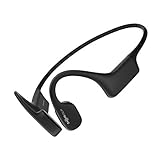
The Xtrainerz is the predecessor to the Shokz OpenSwim line, released under the brand’s earlier AfterShokz name. Unlike most newer pairs, it is a dedicated MP3 player with no Bluetooth at all. That simplicity is its appeal: there is no pairing, no mode switching, and nothing to configure between sessions. Load your files over the charging cradle, put them on, and swim.
It has 4GB of built-in storage, which Shokz lists as up to 1,200 songs, and supports MP3, WAV, WMA, AAC, and FLAC. The IP68 rating allows submersion to 2 meters for up to 2 hours, and battery life is listed at 8 hours. The full titanium frame weighs about 30 grams and sits under a cap without hot spots for most head shapes.
- Strength: Simple MP3-only operation with no pairing or mode menus.
- Strength: Proven Shokz bone conduction design and titanium frame.
- Drawback: No Bluetooth, so it cannot double as a running or gym headphone with your phone.
- Drawback: Older model with only 4GB of storage; availability and pricing vary.
Compared with the 32G MP3 Bone Conduction pick above, the Xtrainerz trades storage and Bluetooth for a proven brand. Compared with the OpenSwim Pro, it is simpler and less capable on land.
AGPTEK S07 Waterproof MP3 Player

The AGPTEK S07 takes a different route from every other product in this guide. Instead of bone conduction, it is a small clip-on MP3 player that attaches to your goggle strap or cap and connects to included waterproof in-ear earbuds via a short cable. Swimmers who find bone conduction too quiet or too thin often prefer this approach, because sealed earbuds deliver louder, fuller sound underwater.
The player is IPX8 rated, has 8GB of storage, a small color screen, and FM radio, and supports MP3, WMA, APE, and FLAC. AGPTEK lists up to 18 hours of playback at medium volume with the screen off. The kit includes short earbud cables designed to reduce tangling and drag, an extension cable, and ear tips in three sizes. AGPTEK advises charging from a computer USB port or a low-output 5V/500mA adapter rather than a fast phone charger.
- Strength: Sealed earbuds deliver louder, bassier sound underwater than bone conduction.
- Strength: Long listed battery life and a screen for browsing tracks.
- Drawback: Earbuds must seal perfectly; a poor fit lets water in and the sound collapses.
- Drawback: No Bluetooth and a cable between player and earbuds, which some swimmers find fiddly.
The S07 is the pick for swimmers who prioritize sound quality over open-ear awareness and are comfortable with in-ear tips. Lap swimmers in busy public lanes may still prefer bone conduction for situational awareness.
SUUNTO Aqua

Suunto is best known for sports watches, and the Aqua, launched in January 2025, brings that training focus to swim headphones. It is an open-ear bone conduction design with 32GB of onboard storage, which Suunto lists as up to 8,000 songs, plus Bluetooth 5.3 for phone streaming on land. Unlike most swim headphones, playlists are managed through the Suunto mobile app rather than by dragging files from a computer, which removes one of the most common frustrations in this category.
Suunto rates it IP68 with a stated limit of 5 meters for 2 hours, comfortably beyond lap-swimming needs. Battery life is listed at 10 hours of playback, and the included charging pod doubles as a power bank for a total of around 30 hours; a 10-minute top-up is listed at about 3 hours of playback. The titanium alloy and silicone frame weighs about 35 grams.
The feature that sets it apart is motion sensing. Head Movement Control lets you skip tracks or answer calls with a nod or shake on land, and in the pool the Suunto app can analyze swim metrics such as head pitch angle, breathing frequency, and glide time. Swimmers who already track sessions on a watch will find this a useful complement rather than a replacement.
- Strength: 32GB storage managed from a phone app, with a power-bank charging pod.
- Strength: Swim technique insights and hands-free head-movement controls.
- Drawback: Slightly heavier than the Mojawa and NANK pairs.
- Drawback: The motion features depend on the Suunto app, which adds setup for swimmers who just want music.
Compared with the SHOKZ OpenSwim Pro, the Aqua offers the same storage, a longer total battery life with its pod, and training analytics, typically in a lower price tier. The Shokz remains the simpler choice if you do not want another app.
Buying Guide
Understand the Waterproof Rating
IPX8 means the device is rated for prolonged submersion in water, though the exact depth and duration are manufacturer-defined. IP68 adds a dust-tight rating on top of submersion protection. For pool use, either rating works because you are not exposing the device to sand or particulate matter. However, IP68 is more versatile if you also take the headphones outdoors for trail running or beach training. The number that matters is the stated submersion depth and duration in the product specification, not the rating alone.
Built-in Storage is Non-Negotiable
Bluetooth radio signals cannot propagate through water. If your headphones rely solely on a wireless connection, they will go silent the moment your head goes under. Every swimming headphone must include onboard MP3 storage, typically between 8GB and 32GB. Load your playlists, podcasts, or audiobooks onto the device before you hit the pool. A 32GB capacity holds several thousand songs or hundreds of podcast hours, which is more than enough for most swimmers between charging cycles.
Comfort Under a Swim Cap
Silicone caps add significant clamping force to the skull. Bone conduction transducers rest against the cheekbone just in front of the ear, and an overly tight band combined with a cap can create painful hot spots within twenty minutes. Look for a flexible band that distributes pressure evenly rather than concentrating it at two points. If possible, try the headphones on with a cap for at least thirty minutes before committing to a purchase for long training sessions.
Comparison Table: The Additional Swim Picks
| Model | Type | Rating and stated depth | Storage | Bluetooth | Price tier |
|---|---|---|---|---|---|
| H2O Audio TRI 2 | Bone conduction | IPX8, up to 3.6 m, no time limit | 8GB | Yes, 5.3 | Premium |
| NANK Runner Diver2 Pro | Bone conduction, adjustable hook | IP69, up to 10 m for 5 hours | 32GB | Yes, 5.4 multipoint | Premium |
| mojawa Run Plus | Bone conduction | IP68, up to 2 m for about 2 hours | 32GB | Yes, 5.2 | Mid-range |
| AfterShokz Xtrainerz | Bone conduction | IP68, up to 2 m for 2 hours | 4GB | No | Premium |
| AGPTEK S07 | Clip-on player with waterproof earbuds | IPX8 | 8GB | No | Budget |
| SUUNTO Aqua | Bone conduction, motion sensing | IP68, up to 5 m for 2 hours | 32GB | Yes, 5.3 | Premium |
More Buying Criteria Competitor Guides Emphasize
Check the Stated Depth and Time, Not Just the IP Code
IP68 and IPX8 only say a device survives continuous submersion under conditions the manufacturer defines. The useful numbers sit in the specification: 2 meters for 2 hours (Xtrainerz, Mojawa), 3.6 meters with no stated time limit (H2O Audio TRI 2), or 10 meters for 5 hours (NANK). Lap swimmers rarely go deeper than 2 meters, but flip turns, deep-end drills, and open-water swimming push closer to the limit, so extra margin is worth having if you swim several times a week.
Bone Conduction vs. Waterproof Earbuds
Bone conduction headphones leave your ears open, so you hear coaches, lane mates, and lifeguards, and they do not need a perfect seal. The trade-off is a thinner, quieter sound, particularly when your ears are underwater. Waterproof earbuds, like those bundled with the AGPTEK S07, seal the ear canal and sound fuller and louder, but they depend on a perfect fit; a poor seal lets water in and the sound fades. Many swimmers use bone conduction with foam earplugs, which blocks water noise and makes bone conduction audio sound noticeably louder and richer.
Format Support and How You Load Music
Every swim headphone depends on files you load in advance, so check how that works. Most connect to a computer via their charging cable and appear as a USB drive; you drag MP3 or FLAC files into a folder. Streaming-service downloads are usually protected and will not play, so you need music files you own, podcast MP3s, or audiobooks in an unprotected format. Shuffle and folder navigation vary widely, and few models let you browse tracks underwater.
Charging Design and Cable Availability
Swim headphones use sealed magnetic or cradle chargers rather than open USB ports, because an open port would let water in. That makes the cable proprietary. Before you buy, check whether spare cables are available, and consider buying one up front so a lost cable does not sideline your headphones for a week.
Bluetooth Is Only for Dry Land
Bluetooth support is useful only above water: for running, cycling, gym sessions, or listening on the pool deck. If you only swim, an MP3-only model like the Xtrainerz or a clip-on player like the AGPTEK S07 avoids paying for a radio you will never use.
Pool-Side Tips for Better Sound and Longer Life
- Wear earplugs with bone conduction. Most brands include a pair, and they are the single biggest improvement to volume and bass underwater.
- Put the cap on after the headphones. Position the transducers just in front of your ears, then pull the cap over the band. The cap holds everything in place during flip turns. Goggle straps should sit above or below the band, not on top of the transducers.
- Rinse in fresh water after every swim. Chlorine and salt degrade seals, buttons, and charging contacts. Rinse, shake off water, and let the headphones dry fully before charging.
- Dry the charging contacts before plugging in. Wet magnetic contacts can corrode or fail to charge. Wipe them with a dry cloth first.
- Organize files into short folders. Underwater you cannot see the track list, so build session-length playlists or folders and use the previous and next buttons to move between them.
- Store away from heat. Do not leave headphones in a hot car or near a sauna, which can weaken adhesives and battery health.
Which Swimming Headphones Fit Your Training?
Casual Lap Swimmer, Two or Three Times a Week
You need reliable waterproofing, enough storage for a few playlists or podcasts, and comfort under a cap. The 32G MP3 Bone Conduction, Budget Bone Conduction Swim, and mojawa Run Plus cover this well without stepping into premium pricing. If you never run or cycle with headphones, an MP3-only model avoids paying for Bluetooth.
Serious Pool Swimmer or Masters Squad
Frequent swimmers put far more wear on seals and batteries, so build quality and brand support matter more. The SHOKZ OpenSwim Pro and NANK Runner Diver2 Pro are the strongest choices here, both offering 32GB storage and Bluetooth for land training. Use earplugs to make bone conduction audio stand out over splash noise during hard sets.
Triathlete or Multi-Sport Athlete
One pair for swim, bike, and run simplifies race prep. The H2O Audio TRI 2 was designed for exactly that, with a generous stated depth rating and Bluetooth on land. The NANK and SAMVEK models also handle all three disciplines. Check local race rules, since many triathlons prohibit headphones during the event itself; these are training tools.
Open-Water and Ocean Swimmers
Waves, deeper water, and salt make stated depth limits and rinse routines more important. Favor the models with the biggest margins, the NANK Runner Diver2 Pro and H2O Audio TRI 2, and always swim with awareness of boats, currents, and other swimmers. Bone conduction keeps your ears open, which is a safety advantage outdoors.
Swimmers Who Prioritize Sound Quality
If bone conduction sounds too thin to you, try the AGPTEK S07 with its sealed waterproof earbuds. Expect fuller bass and louder playback, at the cost of in-ear fit fiddling and less awareness of your surroundings.
Common Mistakes When Buying Swimming Headphones
- Buying “waterproof” earbuds meant for running. IPX4 to IPX7 sweat and splash ratings are not designed for repeated lap swimming. Look specifically for IPX8 or IP68 with a stated depth and time.
- Expecting Bluetooth to work underwater. Radio signals do not travel through water in any useful way, so a phone on the pool deck will drop out the moment your head goes under. Onboard storage is essential.
- Ignoring the loading process. Some models need a computer and unprotected music files, while others such as the SUUNTO Aqua manage playlists through an app. If you do not own a computer, check this before buying.
- Skipping earplugs. Many disappointed bone conduction buyers never tried the included earplugs, which make a dramatic difference to volume and bass underwater.
- Charging while wet. Plugging in damp headphones is one of the most common causes of corroded contacts and charging faults. Dry first, then charge.
Our Verdict
The PSIER Bone Conduction is our top pick for most swimmers, with IPX8 waterproofing and a light profile that disappears under a silicone cap. The SHOKZ OpenSwim Pro is the upgrade pick for serious swimmers who want the best combination of build quality, storage, and proven waterproofing. The 32G MP3 Bone Conduction is the budget pick that handles every practical requirement without overpaying. If you need a single pair that works across cycling, running, and swimming without buying three devices, the SAMVEK IP68 wins that specific multi-sport condition despite not leading in any individual category.
FAQ
Can I use Bluetooth to stream music while swimming?
No. Bluetooth radio waves do not travel through water, so the connection drops the instant your head submerges. Every swimming headphone requires built-in storage loaded with your content before you enter the pool.
Are bone conduction headphones safe for my hearing?
Generally yes at moderate volume. They leave the ear canal open and avoid a sealed in-ear fit, but sound still reaches the inner ear, so loud playback over long sessions can still harm hearing. Keep the volume moderate and use earplugs to improve perceived loudness instead.
Why do swimming headphones sound quieter than regular earbuds?
Bone conduction and open-ear designs inherently deliver less perceived loudness than sealed in-ear drivers. Water also dampens high frequencies, so audio loses clarity at depth. Foam earplugs are the safer way to compensate, since turning the volume up can harm hearing with any headphone design.
How long should swimming headphones last with regular use?
Premium pairs from established manufacturers can last multiple seasons of daily use. Budget options may show seal degradation or band fatigue within a few months of frequent submersion, particularly if not rinsed with fresh water after each chlorinated pool session.
Part of our headphones buying guide hub.
Can I use swimming headphones in the ocean?
Many models work in salt water, but check the stated depth and time limits and rinse thoroughly in fresh water afterward, since salt is harder on seals and charging contacts than pool water. Models with deeper stated ratings, such as the NANK Runner Diver2 Pro or H2O Audio TRI 2, give more margin for open-water swimming.
Do I need earplugs with bone conduction swimming headphones?
You do not need them, but most swimmers find they help. Earplugs block water noise and make bone conduction audio sound louder and fuller. Most swim-focused bone conduction headphones include a pair in the box.
Can I play Spotify or Apple Music downloads on swimming headphones?
Usually not. Downloads from streaming services are protected and only play inside their own apps. Swim headphones with onboard storage need unprotected files such as MP3, AAC, or FLAC that you own or that come from free podcast feeds.
Bone conduction or waterproof earbuds: which sounds better underwater?
Waterproof earbuds with a good seal generally sound louder and bassier. Bone conduction is more comfortable for many swimmers, keeps your ears open, and is less affected by fit. If sound quality is your top priority and you tolerate in-ear tips, earbud-based systems like the AGPTEK S07 are worth trying.