Clip-on headphones solve a problem that neither over-ear cans nor in-ear buds handle well: you need to hear the world without taking anything off. Runners get ambushed by cyclists. Office workers need to hear a colleague call their name. Commuters on a platform cannot afford to miss an announcement. Every one of these scenarios demands open-ear audio that stays put without pressing into your ear canal.
The category separates fast over a full session of wear. Cheap clips lose bass within an hour and slide off a sweaty neck. Good ones use air conduction or open acoustic chambers that project sound without blocking your ear, and they hold their tuning whether you are jogging or sitting still. Here is how eight popular models compare.
As an Amazon Associate we earn from qualifying purchases at no extra cost to you.





Our Top Picks
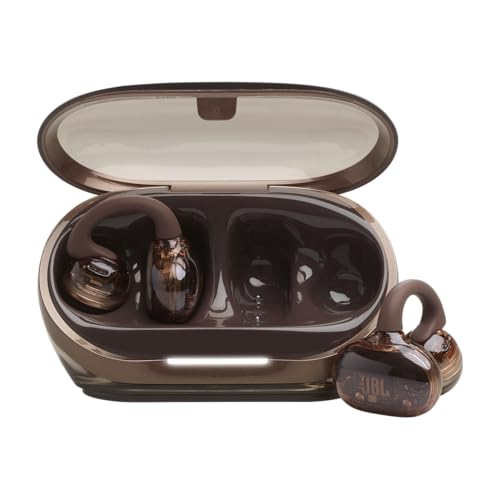 JBL Soundgear Clips -Open Ear Headphones for Situational3.94 x 1.26 x 6.3 Inches0.1 PoundsCheck on Amazon

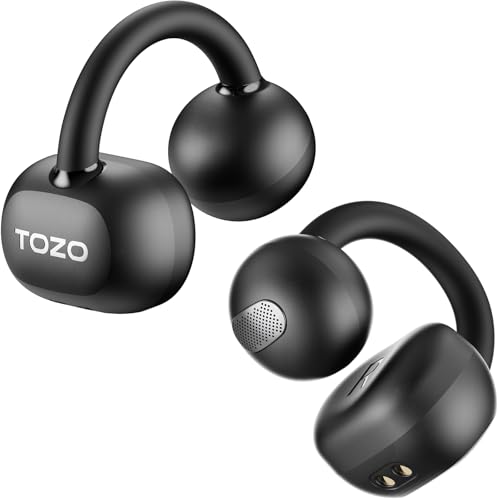


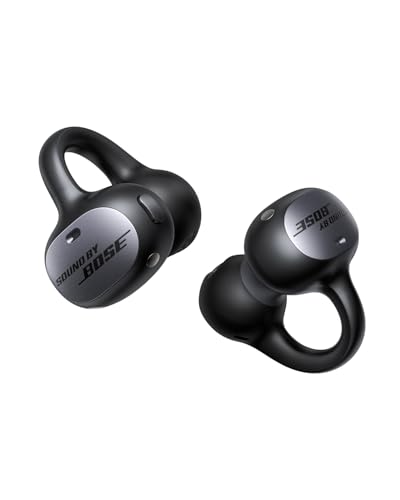
Top 3 picks at a glance
Quick Picks
| Product | Best for | Price |
|---|---|---|
| Soundcore C50i | All-around value | Check on Amazon |
| TOZO OpenEarRing | Longest battery at minimum cost | Check on Amazon |
| Panasonic RP-HZ47-A | Lowest entry price | Check on Amazon |
| King Lucky Gen 3 | Small ears and glasses wearers | Check on Amazon |
| Baseus Inspire XC1 | Sound quality in the clip category | Check on Amazon |
| JBL Soundgear Clips | Situational awareness with premium build | Check on Amazon |
| Soundcore C50i (alternate listing) | Daily commuting without ear fatigue | Check on Amazon |
| Kinglucky Upgraded | Budget Bluetooth 6.0 connectivity | Check on Amazon |
How We Compared
Fit stability came first, because a clip that slides during movement fails at its core purpose regardless of how good it sounds. Second came acoustic leakage: the quieter your neighbor hears your podcast, the better the driver design. Third was comfort over multi-hour sessions, specifically whether the clamping force caused any pressure points behind the ear or on the cartilage. Finally, we weighed owner-reported battery life against manufacturer claims and whether call quality held up outdoors with wind present.
The 8 Best Clip On Headphones in 2026
Soundcore C50i by Anker
Anker’s C50i is the safe default for most buyers. The open-ear driver produces enough low-end punch to enjoy music without the hollow tin-cup sound that plagues cheaper clips. At a budget price, it undercuts every mid-tier competitor while matching them on feature completeness. The IP rating means you can take these on a rainy run without panic.
- Pro: Strong bass response for the open-ear format
- Pro: Reliable multipoint pairing across devices
- Con: Plastic hinge feels less durable than metal-core alternatives
Skip if you need the absolute lowest profile for sleeping on your side or if you prioritize call clarity in noisy environments over music quality.
TOZO OpenEarRing
TOZO delivers forty hours of total playtime in a ring-shaped design that sits around the outer ear rather than clamping it. That distinction matters: you get genuinely zero pressure on the ear canal or cartilage, which makes these the most comfortable option for eight-hour office days. The Bluetooth 5.4 connection is stable through walls and across a crowded gym floor.
- Pro: Forty hours combined battery with no wear point
- Pro: Extremely lightweight construction
- Con: Bass extension noticeably weaker than clamp-style designs
Skip if you listen to bass-heavy genres and want full-range music reproduction during workouts.
Panasonic RP-HZ47-A
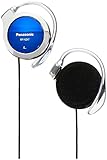
This wired, Japan-import clip headphone is the cheapest functional entry here. At its rock-bottom price it is essentially a proof-of-concept: you get open-ear audio and a secure clip for less than the cost of most single-ear Bluetooth headsets. The blue finish is distinctive, though it reads more functional than stylish. Sound quality is adequate for podcasts and talk radio but not for critical music listening.
- Pro: Unbeatable price for the format
- Pro: Compact and genuinely lightweight
- Con: Limited frequency response and low maximum volume
Skip if you plan to use these outdoors in noisy environments where you need volume headroom.
King Lucky Clip-On Earbuds Gen 3
King Lucky specifically designed this generation for people who wear glasses or have smaller ears, and it shows in the geometry. The clip angle avoids contact with temples, and the shorter arm reduces clamping on smaller cartilage. Fifty hours of playtime, ENC microphone processing for calls, and IPX5 water resistance round out a feature list that embarrasses products twice the price.
- Pro: Best-in-class fit for glasses wearers
- Pro: Fifty hours battery with ENC on the mic
- Con: Purple colorway is the only option shown at this price
Skip if you prefer neutral colors or need a design with a metal core for long-term hinge durability.
Baseus Inspire XC1
This is the closest any clip-on earbud comes to a dedicated music experience. The hybrid two-way driver tuned by Bose delivers a fuller tonal balance than most open-ear clips, and the adaptive tuning adjusts to fit variations between ears. Zero-sense air cushioning keeps pressure minimal even during extended sessions. IP66 means dust and heavy spray are irrelevant concerns.
- Pro: Bose-tuned sound with real stereo imaging
- Pro: IP66 rating exceeds most sport-oriented competitors
- Con: Price is nearly triple the category median
Skip if you need these for calls in loud environments; the four-mic array helps but does not eliminate background noise the way a boom mic would.
JBL Soundgear Clips
JBL entered this category with the same open-ear philosophy behind its Soundgear Sense earbuds, now in a clip format. The copper finish and build quality immediately signal a premium product. Sound is balanced with a slight treble lift that keeps vocals forward, ideal for podcasts and audiobooks where intelligibility matters more than sub-bass rumble.
- Pro: Premium materials and finish at the top of the range
- Pro: Excellent passive comfort with no pressure points
- Con: Sits at the top of the main list’s price range
Skip if your primary use is bass-heavy music or gym workouts where sweat and impact stress the hinge repeatedly.
Soundcore C50i by Anker
This is an alternate listing of the same C50i model, included for a second reason: commuting. In a crowded train, you want to hear your music but stay alert to station announcements. The open-ear design lets ambient sound mix with your audio naturally, and the compact case fits in a jacket pocket without adding bulk. Battery lasts a full work week of daily commutes on a single charge.
- Pro: Natural ambient sound blending for urban transit
- Pro: Pocketable case with solid build
- Con: Sound leakage at high volumes in quiet spaces
Skip if you take calls frequently in open offices; the mic picks up more room noise than competitors with dedicated beamforming.
Kinglucky Upgraded Clip-On Earbuds
The upgraded Kinglucky pairs Bluetooth 6.0 with the same secure-fit philosophy at a budget price. The newer radio standard promises better latency for video watching and more stable connections in dense signal environments. For anyone who primarily uses clips for YouTube, streaming, or calls rather than high-fidelity music, this represents the most feature-forward budget option available.
- Pro: Bluetooth 6.0 at a budget price point
- Pro: Stable low-latency for video content
- Con: Driver tuning is serviceable but not engaging
Skip if you want the widest possible soundstage or plan to use these for critical music listening.
More Clip-On Earbuds Worth Considering
The clip-on category has grown quickly through 2025 and 2026, and several major brands now sell models that did not exist when many of the picks above launched. The six additions below fill specific gaps in the main list: privacy-focused leak reduction, sport-grade water resistance, high-resolution codecs on a budget, physical controls and best-in-class call quality. They range from the budget tier up to premium pricing.
Sony LinkBuds Clip

Sony’s LinkBuds Clip (model WF-LC900) tackles the biggest complaint about open earbuds: the people around you can hear what you are playing. Alongside a Standard mode and a Voice Boost mode for calls and podcasts, it offers a dedicated Sound Leakage Reduction mode that reshapes output to keep more of the sound at your ear. For anyone who wants clip-ons for an open office, a library or a quiet commute, that single feature is the reason to look here.
Sony rates battery life at up to 9 hours in the buds and up to 37 hours with the case, and a three-minute quick charge adds about an hour of playback. Each earbud weighs roughly 6.4 g, the 10 mm drivers are tuned for a balanced sound, and the Sound Connect app adds a 10-band EQ. Calls use a bone-conduction sensor plus AI noise reduction, and multipoint lets you stay connected to a laptop and phone at once.
Strengths: Leak-reduction mode for shared spaces; long total battery; multipoint and a detailed EQ; light, unobtrusive clip.
Drawbacks: Codec support is limited to SBC and AAC, the IPX4 rating covers sweat and splashes but not heavy rain or rinsing, and the case charges by USB-C only with no wireless charging. It sits in the premium tier, well above the main list’s budget options.
How it compares: Against the Baseus Inspire XC1, the Sony focuses on privacy and everyday versatility rather than maximum bass. If you mostly listen at a desk or on public transport and worry about bothering others, the LinkBuds Clip is the stronger choice.
Shokz OpenDots 2

Shokz built its name on bone-conduction headphones for runners, and the OpenDots 2 brings that sports focus to a clip-on design. The headline is durability: the earbuds are rated IP57, meaning they can survive temporary submersion and heavy sweat, and the charging case itself carries an IP54 rating, which is rare in this category.
Each earbud uses dual 11.8 mm drivers with Shokz’s Bassphere 2.0 tuning and an upgraded Dolby Audio mode, aimed at the thin low end that open designs often suffer from. Battery life is rated at 10 hours per charge and up to 40 hours with the case, a five-minute quick charge adds about two hours, and the case supports Qi wireless charging. Each bud has two air-conduction mics and one bone-conduction mic for calls, and the earbuds are interchangeable between left and right ears, so you never have to check which is which. Bluetooth 6.1, multipoint and Google Fast Pair round out the spec sheet.
Strengths: IP57 water resistance; water-resistant case; wireless charging; ambidextrous earbuds; strong battery life.
Drawbacks: SBC and AAC only, no high-resolution codecs, and pricing sits in the premium tier.
How it compares: If the King Lucky Gen 3 or Soundcore C50i in the main list is your gym pair, the OpenDots 2 is the upgrade for outdoor runners and cyclists who train in all weather and want a brand with a long sports track record.
EarFun Clip 2

EarFun’s Clip 2 packs features normally found at two or three times its price into a budget clip-on. It is certified for Hi-Res Audio Wireless with LDAC support, runs on Bluetooth 6.0, and uses a 12 mm titanium-composite driver with EarFun’s BassSurge processing. For Android users who stream lossless or high-bitrate music, it is one of the cheapest ways to get LDAC in an open-ear format.
EarFun rates battery life at up to 11 hours per charge and 40 hours total with LDAC off, dropping to about 6 and 22 hours with LDAC on. The case supports wireless charging, a ten-minute quick charge adds roughly 2.5 hours, and the earbuds carry an IP55 rating for rain and sweat. At about 5.5 g per bud, they are among the lighter options here. Extras include four microphones for calls, spatial audio, app EQ and an AI translation feature.
Strengths: LDAC and wireless charging at a budget-to-midrange price; long battery with LDAC off; light weight; IP55.
Drawbacks: You must choose between LDAC and multipoint, since both cannot run simultaneously, and like most open designs the bass is limited for complex, bass-heavy tracks. It sits in the budget tier.
How it compares: The Clip 2 is the logical step up from the Kinglucky Upgraded and TOZO picks if you want better codec support and wireless case charging without jumping to Sony or Shokz pricing.
CMF Clip Pro

The CMF Clip Pro is the first open-ear model from Nothing’s budget sub-brand, and it brings back one of CMF’s most distinctive ideas: the Smart Dial on the charging case. Turning or pressing the dial adjusts volume, controls playback, answers calls or starts pairing, which is handy when your phone is in a bag or you are wearing gloves. The earbuds themselves use physical buttons rather than touch controls, so accidental taps while adjusting the fit are much less likely.
Audio comes from 10.8 mm dual-magnet drivers with Hi-Res certification and LDAC, AAC and SBC support, plus static spatial audio and EQ presets in the Nothing X app. A Sound Seal feature aims to cut leakage, and four mics with a voice pickup sensor handle calls. CMF rates battery life at up to 10 hours per charge and 32.5 hours with the case, with a ten-minute charge giving up to four hours. The earbuds are rated IP54, although the case is only IPX2. Bluetooth 5.4, multipoint and a low-latency mode are included.
Strengths: Smart Dial and physical buttons; LDAC support; low-latency mode for video; strong value in the budget tier.
Drawbacks: IP54 is fine for sweat but below the Shokz and Baseus sport options, and the case has only minimal splash protection.
How it compares: If touch controls on the Baseus Inspire XC1 or JBL Soundgear Clips frustrate you, the Clip Pro’s buttons and dial are the main reason to switch.
Soundcore AeroClip 2

Anker’s Soundcore C50i in the main list is a budget all-rounder; the AeroClip 2 is the same brand’s flagship clip-on, and it is built around calls. It pairs four beamforming MEMS microphones with two voice pickup units and Anker’s Thus AI chip to isolate your voice rather than simply filter noise. A Whisper Mode keeps quiet speech intelligible for the other person, which is useful in shared offices or on late-night calls.
For music, a 12 mm dual-magnet driver supports LDAC, AAC and SBC over Bluetooth 6.0 with dual-device connection. Anker rates battery life at about 8 hours per charge and 32 hours with the case, a ten-minute charge adds roughly four hours, and the case charges by USB-C or wirelessly. The earbuds carry an IP57 rating and weigh about 6.2 g each. Physical buttons, MFi certification and Google Fast Pair are also included.
Strengths: Best call-focused microphone system in this guide; IP57; LDAC; wireless case charging; physical controls.
Drawbacks: No wear sensor, so playback does not pause when you remove a bud, and per-charge battery is shorter than the EarFun or Baseus options. It sits in the upper mid-range tier.
How it compares: The main list notes that the C50i’s mic struggles in open offices. If calls are a big part of your day, the AeroClip 2 is the direct fix within the same brand.
Baseus Bowie MC2

The Bowie MC2 is Baseus’s budget clip-on, sitting well below the Inspire XC1 from the main list in price while matching or beating it on several specs. It uses 11 mm tri-magnet drivers with SuperBass processing and supports LDAC, AAC and SBC over Bluetooth 6.0 with multipoint. Baseus quotes a 38 ms low-latency mode for video and gaming.
Battery life is the standout: up to about 11.5 hours per charge with bass boost on and 55 hours total with the case, and around 13 hours per charge with bass boost off. The earbuds are rated IP67, among the highest in the category, and each weighs about 5.1 g. Fit relies on a memory titanium alloy C-ring with interchangeable air cushions in three sizes, which helps it suit a wider range of ear shapes than one-size clips. Four beamforming mics handle calls, and the app offers an eight-band EQ.
Strengths: Longest total battery in this guide; IP67; interchangeable cushions for fit; LDAC on a budget.
Drawbacks: LDAC and bass boost cannot be used together, and the case charges by USB-C only. It sits in the budget tier.
How it compares: If the Inspire XC1’s price is too steep, the MC2 keeps much of the Baseus feel with better battery and water resistance, trading away the Bose-tuned hybrid driver.
Buying Guide
Clamping Force and Fit Geometry
The single failure point in this category is comfort over time. Look for a clip that distributes pressure across a wider contact surface rather than pinching at a single point behind the ear. If you wear glasses, check whether the clip arm interferes with your temples. Metal-core hinges outlast all-plastic designs by a wide margin over two or three years of daily use.
Driver Design and Sound Leakage
Open-ear formats use either air conduction (the driver projects sound into the open canal) or bone-conduction hybrids. Air conduction generally delivers fuller bass, but it leaks more at high volumes. If you use clips in quiet libraries or shared offices, prioritize models with directional driver housings that reduce leakage, even at the cost of a slight bass reduction.
Waterproofing and Battery Claims
Sweat is the main hazard for clip headphones. IPX5 handles rain and heavy perspiration; IP66 adds full dust protection and resistance to powerful water jets. Battery claims are usually based on moderate volume, so expect noticeably less real-world runtime if you listen loud.
Codecs: When LDAC Is Worth Paying For
Every wireless clip-on here supports SBC, and most add AAC, which is what iPhones use. LDAC is a higher-bitrate codec available on most Android phones, and it is now common even in the budget tier, as the EarFun Clip 2, CMF Clip Pro and Baseus Bowie MC2 show. The honest trade-off is that open-ear designs leak bass and mix with outside noise, so the audible gain from LDAC is smaller than on sealed in-ear buds. LDAC also shortens battery life and, on some models, disables multipoint or bass processing. Choose it if you are on Android and listen in quieter places; ignore it if you use an iPhone, since iPhones do not support LDAC.
Controls: Buttons, Touch and Pinch
Controls matter more on clip-ons than on regular earbuds, because you touch the bud every time you adjust its position on your ear. Touch panels can register accidental taps that pause music or end calls. Physical buttons, found on the CMF Clip Pro and Soundcore AeroClip 2, avoid that problem and work with gloves. Pinch or force-sensor controls, like those on the Shokz OpenDots 2, are a middle ground. If you run or cycle in cold weather, buttons are worth prioritizing.
Multipoint and Everyday Device Switching
Multipoint lets the earbuds stay connected to two devices at once, such as a work laptop and a phone, and switch automatically when a call comes in. It is one of the most useful features for office use and is now standard on most mid-range models. Check whether multipoint works alongside high-resolution codecs; on several models, enabling LDAC turns multipoint off.
Leak Reduction and Privacy
Sound leakage is the trade-off for open-ear comfort. A few models now include features designed to reduce it, such as Sony’s Sound Leakage Reduction mode and CMF’s Sound Seal. Even without those, you can cut leakage noticeably by keeping volume moderate and positioning the speaker end of the bud as close to the ear canal opening as the clip allows. If you work in a silent office, pair a leak-reduction model with modest volume levels.
Safety for Runners and Cyclists
Clip-ons are popular with outdoor athletes precisely because they leave the ear canal open, but awareness still depends on volume. Keep levels low enough that you can hear traffic, bells and voices clearly, especially near roads. Choose IP55 or higher for sweat and rain, and IP57 or IP67 if you train in heavy downpours or rinse your earbuds after workouts. Check local rules too, as some races and regions restrict any form of headphones while cycling.
Fitting Tips for a Secure Clip
- Slide the clip onto the middle of the outer ear rather than the thin upper edge, where it is more likely to slip.
- Rotate the speaker end so it points toward the ear canal; small angle changes affect volume and bass noticeably.
- If the model includes cushions or sleeves, try each size before deciding the fit is wrong.
- Glasses wearers should put on their glasses first, then position the clip below the temple arm.
- Wipe the clip and contacts after sweaty sessions to keep charging reliable.
Added Picks at a Glance
| Model | Rated battery (buds / with case) | Water rating | Hi-res codec | Best for | Price tier |
|---|---|---|---|---|---|
| Sony LinkBuds Clip | 9 h / 37 h | IPX4 | No (SBC, AAC) | Quiet offices and privacy | Premium |
| Shokz OpenDots 2 | 10 h / 40 h | IP57 (case IP54) | No (SBC, AAC) | All-weather running | Premium |
| EarFun Clip 2 | 11 h / 40 h | IP55 | LDAC | Budget hi-res and wireless charging | Budget |
| CMF Clip Pro | 10 h / 32.5 h | IP54 | LDAC | Physical controls and Smart Dial | Budget |
| Soundcore AeroClip 2 | 8 h / 32 h | IP57 | LDAC | Frequent calls | Upper mid-range |
| Baseus Bowie MC2 | 11.5 h / 55 h | IP67 | LDAC | Battery life on a budget | Budget |
Clip-On vs. Ear-Hook vs. Bone Conduction vs. Regular Earbuds
Clip-ons are one of four ways to listen without fully blocking your ears, and choosing the right format matters more than choosing the right brand.
| Format | How it sits | Strengths | Weaknesses | Best for |
|---|---|---|---|---|
| Clip-on (cuff) | Grips the middle of the outer ear | Small, discreet, comfortable with glasses, easy to wear for hours | Fit varies by ear shape; limited bass | Office, commuting, walking, light gym work |
| Ear-hook open-ear | Hook wraps over the top of the ear | Most secure open design; larger drivers for fuller sound | Bulkier; can clash with glasses and helmets | Running, cycling, high-impact training |
| Bone conduction | Pads rest on the cheekbones, band behind the head | Ear canal and outer ear completely free; some models swim-rated | Thinner sound; band can bump headrests and hoods | Swimming, triathlon, situational awareness above all |
| Sealed in-ear earbuds | Tips seal inside the ear canal | Best bass and isolation; noise cancelling available | Blocks surroundings; pressure and fatigue for some | Flights, noisy commutes, focused listening |
If you already own sealed earbuds with noise cancelling, a clip-on is best seen as a second pair for situations where you need to hear the world: walking in traffic, staying available to colleagues or keeping an ear on children at home.
Battery Life and Charging in Practice
Clip-on batteries are small, so per-charge figures between 8 and 13 hours are close to the practical limit in 2026. Total figures with the case, which range from about 32 to 55 hours in this guide, tell you how often you will need to plug the case in. Two features make ownership easier. Quick charging, now common at ten minutes for two to four hours of playback, rescues you when you forget to charge. Wireless case charging, offered on the Shokz OpenDots 2, EarFun Clip 2 and Soundcore AeroClip 2, lets the case live on the same pad as your phone. Note that high-resolution codecs, bass boost and loud volumes all shorten battery life, so expect real-world numbers below the headline claims if you use those features.
Call Quality: What the Spec Sheet Tells You
Because the microphones sit on the outside of your ear rather than near your mouth, open-ear earbuds face a harder job on calls than sealed buds. Look for three things: a microphone count of three or more per bud, a voice pickup unit or bone-conduction sensor that detects your jaw vibration, and an AI or ENC noise-reduction system. Models that combine all three, such as the Soundcore AeroClip 2 and Shokz OpenDots 2, are better suited to frequent calls outdoors. Wind remains the hardest test for any clip-on, so turning your head away from gusts helps more than any feature.
Who Should Buy Which Clip-On
- Tight budget, casual listening: The Panasonic RP-HZ47 or Kinglucky models from the main list.
- Best value with modern features: The EarFun Clip 2, CMF Clip Pro or Baseus Bowie MC2.
- Shared office or quiet commute: The Sony LinkBuds Clip with its leak-reduction mode.
- Outdoor training in any weather: The Shokz OpenDots 2 or Baseus Bowie MC2 for their high water ratings.
- Work calls all day: The Soundcore AeroClip 2.
- Music quality first: The Baseus Inspire XC1 from the main list.
Our Verdict
Our top pick is the Soundcore C50i: it balances bass, multipoint pairing, water resistance and comfort at a budget price, which makes it the safe default for most buyers. The Baseus Inspire XC1 is the upgrade pick for anyone who refuses to compromise on sound quality while keeping the open-ear format. It sits near the top of the price range here, but the hybrid driver tuning is a clear step up. For tight budgets, the King Lucky Gen 3 delivers the most complete feature set at its low price. And if you wear glasses, the King Lucky or the TOZO ring design will save you from the pressure-point headaches that standard clips cause.
FAQ
Do clip-on headphones cause ear fatigue?
Far less than in-ear buds because nothing enters the canal. However, the clamp itself can cause discomfort if the contact area is small or the force is too high. Look for models with a widened or padded contact surface, and never buy one that pinches a single point behind the ear.
Can you use clip-on headphones for calls?
Yes, though call quality varies more than music quality in this category. Open-ear designs expose the microphone to ambient noise, so models with ENC or multi-mic beamforming perform significantly better outdoors. If calls matter, prioritize specs over sound tuning.
Are clip headphones better than bone conduction?
They serve overlapping but distinct needs. Clip headphones provide better bass and a more natural listening position because sound enters through the open ear rather than vibrating through the skull. Bone conduction excels in situations where you need total canal openness, such as swimming or wearing safety glasses.
How long do clip-on headphones typically last?
Plastic-hinge models often develop wobble or cracking within a year of daily use. Metal-core designs last two to three years comfortably. Battery degradation in small-cell earbuds follows the same pattern as any Bluetooth device, with capacity dropping noticeably after two full charge cycles per week over eighteen months.
Part of our headphones buying guide hub.
Do clip-on earbuds stay on during running?
Most stay put for jogging and gym work because the clip grips the outer ear rather than balancing in the canal. Fit varies with ear shape, so models with interchangeable cushions, such as the Baseus Bowie MC2, are easier to dial in. For sprinting, trail running or high-impact sports, an ear-hook open design is usually more secure than any clip.
Can people nearby hear my music?
At moderate volume in a normal room, people right beside you may hear a faint tinny sound; in a quiet library or office, leakage becomes more noticeable as volume rises. Models with leak-reduction modes, such as the Sony LinkBuds Clip, help. Keeping volume around half and angling the speaker toward the ear canal reduces leakage on any model.
Do clip-on earbuds work with an iPhone?
Yes. All the wireless clip-ons in this guide pair with iPhones over standard Bluetooth and use the AAC codec where supported. LDAC features are Android-only, so iPhone users should weigh comfort, battery, calls and water resistance rather than codec support. Some models, such as the Soundcore AeroClip 2, are also MFi certified.
Are clip-on earbuds good for gaming or watching videos?
For video they work well, especially on models with a low-latency mode such as the CMF Clip Pro and Baseus Bowie MC2. For competitive gaming, Bluetooth delay and the lack of positional precision make a wired or 2.4 GHz gaming headset a better choice. Clip-ons suit casual mobile games and streaming while staying aware of your surroundings.