Most people searching for the best ASMR headphones have already tried their phone’s built-in earbuds and found them completely inadequate. ASMR triggers—whispers, light tapping, scalp scratching—are among the lowest-amplitude sounds in everyday listening. A generic pair of earbuds raises the noise floor just enough to smear those micro-details into mush, and a cheap headband pillow speaker buries them under rattling plastic. The category demands either a driver with genuinely tight low-level resolution or a form factor that isolates ambient noise so quiet sounds survive without being cranked to painful volume.
Comfort is the second filter nobody advertises well. If you watch ASMR to fall asleep, you will be lying on your side, and a standard over-ear cup digs into your auricle after ten minutes. Headband formats solve the pressure problem but introduce a different trade-off: tiny flat speakers that can reproduce a whisper without sounding like a tin can. This guide separates the options that actually preserve binaural panning and transient detail from those that merely vibrate pleasantly against your temples.
As an Amazon Associate we earn from qualifying purchases at no extra cost to you.




Our Top Picks


Top 3 picks at a glance
Quick Picks
| Product | Best for | Price tier |
|---|---|---|
| MUSICOZY Sleep Headphones Headband | Budget side sleepers | Budget |
| Perytong Wireless Headband | Lowest entry price | Budget |
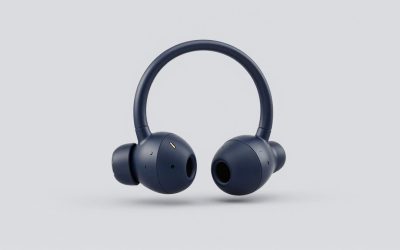
| Final Audio ZE500 ASMR Earbuds (Cream) | Serious ASMR listening | Mid-range |
| MUSICOZY Bluetooth 5.4 Headband | Updated headband features | Budget |
| TOPOINT 3D Eye Mask Headphones | Complete sleep bundle | Budget |
| Mixiba 2-Pack Headband | Backups or sharing | Budget |
| Soundcore Sleep A20 with Eye Mask | Long-battery sleep earbuds | Premium |
| Audio-Technica ATH-M20x | Awake critical listening | Budget |
How We Compared
Each pair was judged against four criteria that matter specifically for ASMR: low-level detail retrieval, meaning the driver can reproduce a whispered “thank you” without losing consonant edges; binaural imaging, because the entire appeal of binaural recordings collapses when left and right channels bleed together; side-sleeper comfort, judged by how well the form factor tolerates head pressure; and whether the product delivers a genuinely usable audio experience at sleep-safe volume levels rather than requiring you to crank gain until distortion arrives.
The 8 Best Asmr Headphones in 2026
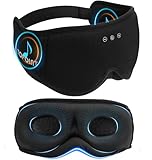
MUSICOZY Sleep Headphones Bluetooth Headband
One of the best-known budget headbands for side-sleeper ASMR. Its flat speakers sit inside a soft cotton band, so you press them against your ears without a hard surface fighting your pillow. For pure whisper content at low volume the sound is acceptably soft, and the Bluetooth connection holds up across a bedroom. It is not a reference tool, but at its budget price it removes the biggest barrier—physical discomfort—so beginners can explore the genre without committing to earbuds.
- Pros: Extremely low cost; comfortable for full-night side sleeping
- Con: Bass roll-off makes finger-tap triggers feel thin
Skip it if you care about spatial precision or plan to listen while awake at moderate volume.
Perytong Sleep Headphones Wireless Headband
A near-identical concept to the MUSICOZY at a slightly lower entry price. The Perytong band uses a thinner speaker module and a stretchier fabric, which helps it disappear under a fitted pillowcase during the night. For guided meditation loops or soft spoken word, the audio is pleasant enough.
- Pros: Lowest price in the roundup; very soft fabric blend
- Con: Speaker cavity rattles at higher volume, limiting headroom
Skip it if you watch ASMR videos with music-heavy triggers like drumming or glass tapping.
Final Audio ZE500 True Wireless ASMR Earbuds (Cream)
Final Audio designed this specifically for ASMR, and it shows in the tuning. The ultra-compact housing sits entirely inside the concha, so there is zero pinna pressure for side sleepers, and the custom voicing focuses on the delicate upper-midrange detail where whispers, breaths, and fabric rustles live. Binaural panning is remarkably precise for earbuds this small, with left-right separation that most headband formats simply cannot achieve. Battery life is rated at about 4.5 hours per charge, so it works best with a sleep timer rather than all-night streaming.
- Pros: Purpose-built ASMR tuning; true zero-pressure side-sleeper fit
- Con: Costs several times as much as a headband, and the battery will not last a full night of streaming
Skip it only if budget is your primary constraint or you dislike any in-ear object overnight.
MUSICOZY Bluetooth 5.4 Sleep Headphones Headband
An iterative refresh of the first MUSICOZY, moving to Bluetooth 5.4 for a more stable connection. The headband profile is nearly identical in comfort, and the newer Bluetooth version can help the connection hold steady in a crowded wireless environment. If you already own the first-generation model the upgrade is marginal, but for a new purchase the connection stability is worth considering.
- Pros: Improved pairing reliability; same proven comfort design
- Con: Audio quality remains unchanged from the original—still thin in the low-mids
Skip it if you have any Bluetooth 5.4 headband already; the sonic difference versus the original is negligible.
TOPOINT 3D Eye Mask Headphones
This hybrid combines a blackout eye mask with integrated flat speakers, targeting people who want one product that handles both light and sound. The mask uses bamboo cotton for a softer feel against skin, and the 3D cavity prevents fabric from pressing on eyelids. For ASMR, the audio is comparable to a standalone headband—adequate for whisper content—while the added blackout benefit means fewer ambient interruptions during the trigger itself.
- Pros: Solves two sleep problems in one device; breathable bamboo lining
- Con: Bulkier than a slim headband, which can shift during restless sleep
Skip it if you already own a dedicated sleep mask; the integrated one is good but not noticeably better than a basic standalone mask.
Mixiba 2-Pack Sleeping Headphones
The value here is the quantity: two complete headbands for the price of a single premium earbud. Couples who share a bed and both listen to ASMR before sleep can each get a dedicated pair without tripling the budget. Individually, each headband performs like a mid-tier budget option—thin speakers, decent Bluetooth range. The 2-pack also serves as a built-in backup, so a lost or washed-out band does not strand you.
- Pros: Two-for-one economy; good as a travel spare
- Con: Speaker quality matches single-pack budget headbands, not better
Skip it if you are a solo listener; a single-unit model with better comfort padding exists for the same per-unit cost.
Soundcore Sleep A20 with Eye Mask
The Sleep A20 is a small, flat sleep earbud built for side sleepers, and this bundle adds an eye mask. It has no active noise cancelling; instead it relies on sealed ear tips for passive noise blocking plus masking sounds. Soundcore rates it at about 10 hours of Bluetooth playback, or about 14 hours in sleep mode, where the buds play stored sleep sounds without a Bluetooth stream. That makes it a better fit than the ZE500 if you want to stream ASMR for a long stretch before switching to sleep sounds.
- Pros: Low-profile side-sleeper fit; long battery life for sleep earbuds
- Con: Sound quality is tuned for sleep rather than fine ASMR detail, and there is no ANC
Skip it if detail and binaural imaging matter more to you than battery life; the ZE500 is the better listening tool.
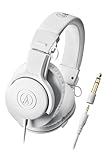
Audio-Technica ATH-M20x Professional Studio Monitor Headphones
Not a sleep device, and not a headband, but it belongs in an ASMR roundup for one reason: when you are awake and evaluating content critically, it exposes binaural detail clearly for a budget studio headphone. The flat studio voicing reveals room-tone hiss in recordings, captures the full texture of a brush trigger, and separates channels with a precision that wireless sleep formats struggle to match. Wired only, so comfort overnight is irrelevant—you use these sitting up.
- Pros: Clear, detailed sound for the price; accurate closed-back stereo imaging
- Con: Wired and over-ear, so completely unsuitable for lying down
Skip it if your primary use case is falling asleep; keep it if you create or analyze ASMR content while awake.
More ASMR Headphones Worth Considering
The picks above cover budget headbands, the Final ZE500, the Soundcore Sleep A20 and one studio headphone. Other ASMR and sleep-audio guides also feature a premium headband, active noise cancelling sleep earbuds, wired in-ear monitors with strong isolation, and open-back headphones for spacious awake listening. The six picks below fill those gaps. Two are made for bed, and four are better suited to listening while you are awake.
Soundcore Sleep A30 by Anker

The Sleep A30 is one of the few sleep earbuds that combines a low-profile, side-sleeper shape with active noise cancellation. Each bud weighs about 3 grams and uses soft silicone shaped to sit flush in the ear, so it causes much less pressure on a pillow than a standard true wireless earbud. Inside are 4.6mm drivers, Bluetooth 5.4 and an IPX4 rating. Soundcore designed the ANC specifically for sleep, aiming at low, steady noise such as traffic, fans and HVAC hum.
Its signature feature is snore masking. The charging case listens for snoring nearby and the earbuds play adaptive masking sounds to cover it. The app also includes white noise, nature sounds and sleep tracking. For ASMR, you can stream videos or audio over Bluetooth with ANC on while you fall asleep. In the default mode the buds then switch to locally stored sounds once they detect sleep, which is how Soundcore reaches about 8 to 10 hours of runtime. Streaming with ANC all night shortens that a lot, to around six hours at higher volume.
Strengths: real ANC in a sleep-friendly shape, very light buds and useful extras for light sleepers who share a bed with a snorer.
Drawbacks: it sits in the premium tier, and battery life depends heavily on settings. Streaming ASMR all night with ANC is the most power-hungry way to use it.
Who it is for: side sleepers who want ASMR at bedtime plus serious noise blocking. Compared with the Final ZE500 above, it focuses more on noise control and sleep features, while the ZE500 focuses more on ASMR tuning.
SleepPhones Wireless by AcousticSheep

SleepPhones is the headband that many sleep-audio guides treat as the original of the category, and this wireless V8 version is the premium answer to the budget headbands above. Ultra-thin flat speakers are sewn into a soft fabric band rather than glued. The Bluetooth module sits in a pocket at the back of the head, away from the side you sleep on. AcousticSheep markets the V8 with a 24-hour battery, so one charge can cover more than one night. It streams over Bluetooth with AAC support.
The headband comes in several sizes and fabrics, including fleece and a lighter “breeze” material for warm sleepers. All electronics can be removed so the band can be washed, which matters for something you wear every night. Simple three-button controls handle power, play and volume.
Strengths: excellent side-sleeper comfort, long battery life, sized fits and a washable band. It is also a good fit for people who cannot tolerate anything inside the ear canal.
Drawbacks: like all headbands, its flat speakers cannot match an in-ear driver for fine detail or bass. Isolation is also limited, so it will not block a loud room. It costs several times as much as the MUSICOZY and Perytong bands.
Who it is for: nightly ASMR listeners who prefer a headband and want better build quality, sizing and battery life than budget bands offer. It sits in the mid-range tier.
Final Audio E3000

Final Audio also makes the ZE500, and its wired E3000 is a long-time favorite among people who listen to binaural recordings while awake. It uses a single 6.4mm dynamic driver in a machined stainless steel shell. Final lists 16 ohms impedance and 100dB/mW sensitivity. The rear of the housing is vented, which helps it sound more open and spacious than many sealed earbuds. That suits ASMR content where sounds move around your head.
The tuning is warm and smooth rather than bright, so whispers and soft tapping come through without harsh sibilance. That is a common complaint about cheaper earbuds at higher volume. Because it is wired, there is no Bluetooth compression or battery to manage. The cable is fixed rather than detachable, and this version has no microphone. A separate E3000C adds one.
Strengths: a natural, spacious sound for binaural content, smooth treble that avoids harsh “s” sounds, and solid metal build.
Drawbacks: several reviewers find it needs more power than a phone provides to sound its best, so a small USB DAC or amp helps. The vented design also lets in more outside noise than the Shure SE215 below, and it is not shaped for sleeping on your side.
Who it is for: awake listeners who want an affordable, detailed in-ear option for headphone-only binaural audio. It sits in the budget to mid-range tier. Compared with the ATH-M20x above, it is far more portable.
Shure SE215

The SE215 is a stage monitor earphone that many ASMR fans use because it blocks so much outside noise. Shure rates its passive Sound Isolating design at up to 37dB of noise reduction with a good seal from the included foam or flexible sleeves. Lower background noise means you can hear quiet triggers at lower volume, which is easier on your hearing over long sessions. It uses a single dynamic driver, 17 ohms impedance and 107dB SPL/mW sensitivity, so it is easy to drive from a phone or laptop.
The cable goes over the ear and detaches. Shure also sells Bluetooth cables, so the same earphones can go wireless later. The over-ear cable routing also reduces cable noise when you move, which helps during quiet content.
Strengths: excellent passive isolation, a durable design with a replaceable cable, and an easy load for any device.
Drawbacks: the shells stick out more than the ZE500 or sleep earbuds, so side sleeping is uncomfortable. The tuning is warm and bass-forward rather than the airiest choice for spatial detail.
Who it is for: listeners in noisy homes, dorms or on commutes who want quiet triggers to stay clear without turning up the volume. It sits in the mid-range tier.
Sennheiser HD 599

Open-back headphones are often recommended for awake ASMR because they create a wide, natural sense of space. The HD 599 is one of the most approachable ways to get that sound. It is an over-ear, open-back design with 38mm dynamic drivers angled toward the ears. Sennheiser lists 50 ohms impedance and a 12Hz to 38.5kHz frequency response. It is light at roughly 250 grams and has large velour pads, which makes long evening sessions comfortable.
For binaural content, the open design helps sounds feel like they are around you rather than inside your head. It ships with two cables, a short 3.5mm cable and a long 6.3mm cable, so it works with a laptop or a desktop amp. Most phones and computers can drive it to a comfortable ASMR volume.
Strengths: wide, airy sound that suits spatial triggers, all-evening comfort and an easy load to drive.
Drawbacks: open-back means almost no isolation, and people nearby will hear what you are listening to. That makes it a poor choice for noisy rooms or shared bedrooms. It is also impossible to wear while lying on your side.
Who it is for: listeners in a quiet room who want the most spacious awake ASMR experience in this guide. It sits in the mid-range to premium tier. Compared with the closed-back ATH-M20x above, it trades isolation for a much more open soundstage.
Sony WH-1000XM6

The WH-1000XM6 is Sony’s flagship noise cancelling headphone, and it fits ASMR listening in loud places such as planes, trains and busy apartments. Sony uses its QN3 processor with a 12-microphone array for noise cancellation. It is rated at around 30 hours of battery life with ANC on and supports high-resolution LDAC streaming on compatible Android phones, as well as AAC and SBC. Unlike the previous XM5, the XM6 folds again, which makes it easier to pack.
Strong ANC removes low, steady background noise, so quiet triggers come through at low volume, which helps with listening comfort and hearing safety. The Sony app also offers EQ, so you can soften harsh treble or reduce bass on recordings that are mixed too heavy. Turn off spatial or virtual surround effects when listening to true binaural recordings, since those recordings already contain their own spatial cues.
Strengths: top-tier noise cancelling, long battery life, comfortable over-ear fit and a full app.
Drawbacks: it is the most expensive option added here and is not suitable for sleeping. ANC can also cause a slight pressure sensation that some people notice in very quiet content.
Who it is for: travelers and commuters who want ASMR to stay quiet and clear in noisy places. It sits in the premium tier. Compared with the Shure SE215, it blocks noise actively and is wireless, but it is far bulkier.
Buying Guide
Driver Type and Low-Level Resolution
ASMR triggers occupy the quietest region of any audio signal, far below typical music levels. The thin speakers in budget headbands sit behind fabric and away from the ear canal, which softens transient micro-detail before it reaches you. In-ear designs like the Final Audio ZE500 sit close to the ear canal and seal out more noise, preserving the crisp consonant attack in a whispered phrase. If you care about trigger texture, favor compact in-ear designs over headband speakers.
Side-Sleeper Pressure Geometry
A headband distributes force across the side and back of the head, but the flat speaker module still creates a focal pressure point directly over the ear. Over a long night, that can cause mild tenderness for some side sleepers. Earbuds that sit fully within the concha bowl eliminate this entirely because nothing contacts the outer pinna surface. If you are a heavy side sleeper who wakes with ear ache, a zero-pressure in-ear geometry is not a luxury but a requirement for nightly use.
Bluetooth Stability and Codec Support
ASMR listening is often continuous—no skipping tracks, no volume changes—so the one failure mode that ruins the experience is a dropout. Newer Bluetooth versions such as 5.3 and 5.4 tend to hold a connection better in crowded 2.4 GHz environments. If your phone supports AAC or LC3, confirm the headphones do too; a codec mismatch can introduce subtle compression artifacts that mask the very frequencies ASMR depends on.
Additional Picks Compared
| Model | Type | Sleep-friendly | Noise control | Connection | Best use | Price tier |
|---|---|---|---|---|---|---|
| Soundcore Sleep A30 | Sleep earbuds | Yes, side sleepers | ANC plus snore masking | Bluetooth 5.4 | Bedtime ASMR in a noisy bedroom | Premium |
| SleepPhones Wireless | Fabric headband | Yes | Minimal | Bluetooth, AAC | Nightly listening without anything in the ear | Mid-range |
| Final Audio E3000 | Wired in-ear | No | Moderate passive | 3.5mm wired | Detailed awake binaural listening | Budget to mid-range |
| Shure SE215 | Wired in-ear monitor | No | Strong passive, up to 37dB | Wired, detachable cable | Quiet triggers in noisy places | Mid-range |
| Sennheiser HD 599 | Open-back over-ear | No | None | Wired | Spacious listening in a quiet room | Mid-range to premium |
| Sony WH-1000XM6 | ANC over-ear | No | Strong ANC | Bluetooth, LDAC | Travel and commuting | Premium |
More Factors That Matter for ASMR Listening
Awake Listening Versus Falling Asleep
The single most important question is whether you listen in bed. Sleep listening rules out almost every conventional headphone, so your choice comes down to headbands, eye-mask speakers and low-profile sleep earbuds. Awake listening opens up wired in-ear monitors, open-back headphones and ANC headphones, all of which reproduce detail and space far better. Many regular ASMR listeners end up with two products: a comfortable sleep option and a higher-fidelity pair for focused listening.
Passive Isolation, ANC or Open-Back
ASMR is quiet by design, so background noise is the enemy. Passive isolation from a deep-sealing earphone such as the Shure SE215 blocks noise without electronics. Active noise cancellation, as on the Sony WH-1000XM6 and Soundcore Sleep A30, works best on steady low-frequency noise such as engines and fans. Open-back headphones such as the HD 599 block nothing but give the most natural sense of space. Choose isolation or ANC for noisy rooms and open-back for quiet ones.
Stereo Accuracy for Binaural Content
Binaural ASMR is recorded with microphones placed like human ears, and it only works on headphones with clean left and right separation. Make sure your phone or computer is not set to mono audio, which is sometimes turned on in accessibility settings and merges both channels. Also turn off virtual surround or spatial audio effects for binaural recordings, since they add a second layer of processing on top of cues that are already in the recording.
Battery Life Versus Your Routine
Check battery claims against how you actually listen. A pair rated for four to five hours may stop before morning if you play audio all night, while long-life headbands can last more than one night. Sleep timers in YouTube, Spotify and most podcast apps let you stop playback after you fall asleep, which saves battery and reduces how long sound plays at your ears overnight.
Hygiene and Materials
Anything you wear every night needs to be easy to clean. Headbands with removable electronics can be washed. Silicone ear tips can be wiped and replaced. Foam tips wear out faster and should be replaced regularly. If you have sensitive skin, look for breathable fabrics on headbands and avoid tips that cause irritation after long wear.
Tips for Safer, Better ASMR Listening
- Keep the volume low. ASMR does not need to be loud to work. Set a comfortable level while you are awake and leave it there. Many phones offer a headphone volume limit in their sound or hearing settings.
- Use a sleep timer. Set playback to stop 30 to 60 minutes after you lie down so audio is not playing at your ears all night.
- Download content for offline playback. Downloaded audio avoids buffering, ads and sudden volume jumps that can wake you up.
- Turn off autoplay. Autoplay can switch to a much louder video while you are asleep.
- Try gentle EQ. If whispers sound harsh, slightly lower the treble around the sibilance range in your headphone app. If tapping sounds thin, a small bass lift can help.
- Charge before bed. Make charging the earbuds or headband part of your evening routine, especially if they have short battery life.
- Keep ear tips clean. Wipe silicone tips regularly and replace foam tips as they lose their shape, both for hygiene and to keep a good seal.
Which ASMR Headphones Fit Your Listening Style?
With fourteen options across sleep, travel and home listening, it helps to start from how and where you listen instead of starting from specs.
You Fall Asleep to ASMR Every Night
Start with comfort. If you want nothing in your ears, a headband such as the SleepPhones Wireless or one of the MUSICOZY bands is the easiest choice. If you want better detail and are comfortable with earbuds, the Final ZE500 is tuned for ASMR, and the Soundcore Sleep A30 adds noise cancelling and snore masking. Whichever you choose, pair it with a sleep timer.
You Share a Bed or a Noisy Bedroom
Noise control matters more than fine detail. ANC sleep earbuds such as the Sleep A30 block steady background noise and cover snoring. Headbands also keep sound from leaking to a partner more than speakers do, but they block very little incoming noise. An eye-mask headphone like the TOPOINT model helps if a partner reads with a light on.
You Listen Awake at a Desk or on the Couch
This is where detail and space make the biggest difference. In a quiet room, the open-back Sennheiser HD 599 gives the most natural sense of space. If others are nearby, the closed-back Audio-Technica ATH-M20x or the isolating Final E3000 and Shure SE215 keep sound contained. Wired connections avoid battery worries for long sessions.
You Listen While Traveling
Planes, trains and buses call for strong noise reduction. The Sony WH-1000XM6 is the most capable noise-cancelling pick here. The Shure SE215 offers deep passive isolation in a much smaller package. Both let quiet triggers come through without pushing the volume to unsafe levels to drown out engine noise.
You Create or Edit ASMR Content
Creators need to hear problems such as hiss, mouth clicks and channel imbalance. A neutral closed-back headphone like the ATH-M20x is a sensible monitoring tool because it does not leak into microphones during recording. Check final mixes on a common earbud or sleep headband too, since that is how much of your audience will hear them.
Our Verdict
The top pick for most listeners is the MUSICOZY Sleep Headphones headband: it removes the biggest barrier to bedtime ASMR, side-sleeper discomfort, at a budget price, and its Bluetooth connection holds up across a bedroom. If you take ASMR seriously and want more detail and binaural imaging, the Final Audio ZE500 is purpose-tuned for it, as long as you pair it with a sleep timer. The one condition under which the Audio-Technica ATH-M20x wins: if you are producing, editing, or critically evaluating binaural ASMR recordings while awake, it gives you a neutral, revealing reference that sleep headbands and earbuds cannot match.
FAQ
Do I need special headphones for ASMR, or will any earbuds work?
Any earbud will deliver the sound, but ASMR’s appeal lies in micro-detail—a breath between words, the grain of a finger on foam. Generic earbuds compress that dynamic range and make triggers feel flat. Purpose-designed ASMR headphones preserve those low-amplitude textures so the sensation translates properly.
Can I sleep with the Final Audio ZE500 in?
Yes, for falling asleep. The ultra-compact housing sits inside the concha without contacting the pinna, so there is no pressure point even when you roll onto your side. Battery life is rated at about 4.5 hours, so it will usually stop before morning; use a sleep timer, and note that the absence of an external frame means nothing shifts or digs as you change position.
Are headband headphones worse than earbuds for ASMR?
Not universally. Headbands are less intrusive in terms of foreign-object anxiety and work well for people who cannot tolerate anything in their ear canal. The trade-off is audio fidelity: flat headband speakers cannot match the transient speed of a dedicated in-ear driver, so subtle triggers lose some definition.
Is a wired connection better for binaural ASMR?
Marginally. A wired studio headphone like the ATH-M20x avoids any Bluetooth compression artifacts and delivers a wider frequency response. However, the practical difference is small at typical ASMR listening volumes, and wired options are incompatible with the side-lying position most users need for sleep content.
Part of our headphones buying guide hub.
Are open-back headphones better for ASMR?
For awake listening in a quiet room, many people prefer open-back headphones such as the Sennheiser HD 599 because the sound feels more natural and spacious, which suits binaural triggers. The trade-off is that they block almost no outside noise and leak sound to others nearby. In a noisy home or on the move, closed-back, isolating or ANC headphones keep quiet triggers clearer.
Is it safe to sleep with earbuds in every night?
For most people, occasional or regular use of low-volume sleep earbuds is fine if you keep the volume low, use a sleep timer, and clean the tips regularly to reduce the chance of irritation or infection. If you notice ear pain, itching, ringing or a feeling of blockage, stop using them and talk to a doctor. Headbands are a good alternative if you prefer nothing inside the ear canal.
Does noise cancelling help with ASMR?
Yes, especially in rooms with steady background noise such as fans, traffic or air conditioning. Removing that noise lets quiet triggers come through at lower volume. ANC is less effective against sudden or high-pitched sounds, so a good seal or ear tips still matter. Some people feel a slight pressure sensation from ANC, which they may notice more in very quiet content.
Do I need a DAC or amp for ASMR headphones?
Usually not. Most of the headphones in this guide work well straight from a phone or laptop. A small USB DAC can help with harder-to-drive earphones such as the Final Audio E3000, and it can lower background hiss on some laptops. That hiss is more noticeable with quiet ASMR content than with music.