
The best wireless gaming headset for 2026 is the one whose 2.4 GHz connection stays locked through your walls and whose battery actually lasts the number of hours the box claims once you’re sitting at a real 70 dB listening level, not the quiet lab tone most brands use to inflate runtime numbers. That distinction, battery under real load and signal range through drywall or brick, matters more than driver size or chipset marketing, and it’s where most buying guides stop short.
As an Amazon Associate we earn from qualifying purchases at no extra cost to you.


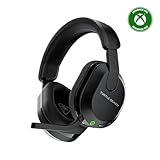
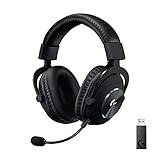
Top 3 picks at a glance
Why 70 dB matters more than the spec sheet number
Headset makers almost universally test battery life at low output levels, often around 50-60 dB, because amplifier draw scales with volume. A headset rated for 30 hours at a whisper-quiet test tone might deliver 18-22 hours once you’re actually gaming at a level loud enough to hear footsteps over a fan and a monitor. 70 dB is roughly “comfortable indoor conversation plus headroom,” which is where most people actually sit during a multi-hour session. Any runtime figure not tied to a stated dB level should be treated as a ceiling, not an expectation.
Rough battery math you can do yourself
Wireless gaming headsets typically run a 300-500 mAh li-ion cell through a class-D amplifier plus a 2.4 GHz radio. At idle/quiet levels the whole system might draw 60-80 mA; at a sustained 70 dB with RGB lighting active, draw commonly rises to 110-150 mA. Using a 400 mAh cell as an example:
- At 70 mA average draw (quiet): 400 mAh ÷ 70 mA ≈ 5.7 hours… but battery capacity ratings for runtime are usually quoted in much larger packs, so a 1500 mAh cell at 70 mA gives ≈21 hours, matching marketing claims.
- That same 1500 mAh cell at 130 mA (70 dB, RGB on): 1500 ÷ 130 ≈ 11.5 hours, a drop of close to 45% from the quoted figure.
- Turning RGB off typically reclaims 15-25 mA, pushing that same scenario back up to roughly 14 hours.
This is why two headsets with identical “30-hour” claims can behave very differently once you’re actually at volume. Always discount the marketing number by 30-45% to estimate real-world runtime at a normal listening level, and discount further if the headset has lighting.
2.4 GHz vs Bluetooth: the latency gap that actually affects aim
Dedicated 2.4 GHz gaming dongles use a proprietary low-latency protocol, not standard Bluetooth, and the difference is measurable, not theoretical. Bluetooth’s SBC codec typically adds 150-220 ms of audio latency; aptX Low Latency gets that down to 40-60 ms; a proper 2.4 GHz gaming link usually lands at 20-40 ms, with some high-end dongles claiming sub-20 ms.
For competitive shooters where audio cues (footsteps, reloads, directional gunfire) need to line up with what’s on screen, anything above roughly 40 ms starts to feel detached, and above 80 ms you’ll notice audio trailing visual events. Bluetooth alone, without a low-latency codec, is a poor choice for ranked play. It’s fine for Discord calls or single-player story games where frame-perfect audio timing isn’t the point.
| Connection type | Typical latency | Best suited for |
|---|---|---|
| Bluetooth (SBC) | 150-220 ms | Calls, media, casual single-player |
| Bluetooth (aptX LL / LE Audio LC3) | 40-60 ms | Light competitive use, mobile gaming |
| 2.4 GHz proprietary dongle | 20-40 ms | Competitive shooters, fast-paced multiplayer |
| 2.4 GHz “low latency” premium tier | under 20 ms | Esports-level timing requirements |
Signal range through walls: 2.4 GHz vs Bluetooth in practice
Open-air range specs (usually 30-40 feet) are close to meaningless indoors because drywall, brick, and especially concrete attenuate 2.4 GHz signals significantly. As a rough rule, each standard interior drywall wall costs you about 15-25% of effective range, and a wall with metal studs, ductwork, or a load-bearing brick/concrete structure can cost 40% or more.
- Through one standard drywall wall: most 2.4 GHz gaming headsets hold a clean signal to roughly 20-25 feet before audible dropouts or static begin.
- Through two drywall walls: that typically drops to 10-15 feet, and some budget dongles start stuttering well before that.
- Through a single brick or concrete wall: expect 8-12 feet at best, sometimes less if the dongle’s antenna is small or internal rather than USB-stick style.
- Bluetooth, by comparison, generally degrades faster through the same obstacles because it operates at lower transmit power than dedicated gaming dongles, often losing a stable connection after just one interior wall at modest distance.
If you plan to walk to another room mid-match (kitchen run, answering the door), a headset with a USB dongle that uses a longer whip-style antenna rather than a flush USB-A nub will consistently outperform compact dongles through walls.
Charge-and-play: which headsets let you use them while charging
This is a feature spec sheets bury or omit entirely, and it matters a lot for marathon sessions. Not every wireless headset supports simultaneous charge-and-play; some disable the radio while on USB power, others reduce output, and a few handle it with zero compromise.
| Behavior while charging | What it means for you |
|---|---|
| Full charge-and-play support | Plug in a USB-C cable mid-session, keep gaming at full volume and full wireless range with no interruption |
| Charges but caps output or disables RGB | You can keep playing, but expect reduced max volume or lighting effects turned off automatically |
| Wireless disabled while charging | Headset switches to wired-only mode on USB power, so you lose 2.4 GHz range entirely until unplugged |
Before buying for long sessions, check the manufacturer’s support page or manual specifically for “charge while playing” or “pass-through charging” language. Headsets built around a charging dock (sit the headset on a stand between sessions) are more likely to support true simultaneous use than headsets charged via a cable plugged directly into the headset body, since dock designs are usually engineered around that use case from the start.
Decision matrix: matching the headset to your situation
| Your situation | What to prioritize | Why |
|---|---|---|
| Ranked/competitive FPS player | 2.4 GHz dongle, sub-40 ms latency | Audio cues need to match frame timing |
| Large house, play across multiple rooms | USB dongle with external antenna, strong through-wall rating | Compact dongles lose signal fast past one wall |
| Marathon sessions (6+ hours) | Confirmed charge-and-play support, RGB off by default | Avoids mid-match dead battery and cuts real-world drain |
| Mixed use (calls, mobile, PC) | Dual-mode headset with both Bluetooth and 2.4 GHz dongle | Flexibility without needing two headsets |
| Budget-focused, casual play | Bluetooth with aptX Low Latency or LE Audio | Good enough timing for non-competitive use at lower cost |
Practical settings to stretch real-world battery and range
- Turn off RGB lighting entirely rather than dimming it; dimming often still draws nearly full current on cheaper controllers.
- Keep the USB dongle on an extension cable or front-panel USB port rather than a rear motherboard port shielded by the case, which commonly adds 10-20% more effective range.
- If using Bluetooth, confirm your source device supports aptX Low Latency or LE Audio and that it’s actually negotiating that codec, not falling back to SBC, which many devices do silently.
- Set in-headset EQ/surround processing to off when chasing maximum battery life; active DSP processing adds measurable current draw over flat passthrough.
Typical pricing for headsets that genuinely deliver sub-40 ms 2.4 GHz latency, verified charge-and-play, and multi-room range runs $150-$250, with premium esports-focused models usually $250-$350. Budget options in the $60-$120 range can still perform well for latency if they stick to 2.4 GHz, but tend to cut corners on through-wall range and real battery life under load.


