
The best Razer gaming headset for most players is the BlackShark V3 X HyperSpeed, because its TriForce drivers and wireless HyperSpeed connectivity deliver Razer’s clearest audio tuning without flagship pricing. Razer’s eight headsets here span a $40 wired budget pick and a $249 active-noise-cancelling flagship, and the lineup splits fairly clearly into two families: the audio-focused BlackShark line and the more casual, lifestyle-oriented Kraken and Barracuda models.
If you’re weighing open-back versus closed-back designs before comparing brands, our open-back versus closed-back gaming headsets guide covers that tradeoff first. Razer’s headset identity centers on TriForce driver technology, THX Spatial Audio processing through Synapse, and on select models, HyperClear microphone quality, mirroring the same pattern of proprietary technology layered over Synapse software that we found across Razer’s mice and keyboards.
Top 3 picks at a glance


Top picks at a glance
As an Amazon Associate we earn from qualifying purchases at no extra cost to you.


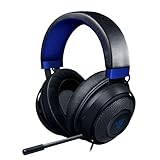
| Model | Key spec | Price | Best for |
|---|---|---|---|
| Razer BlackShark V2 X | TriForce 50mm drivers, wired | Check on Amazon | Tightest budget |
| Razer BlackShark V3 X HyperSpeed | TriForce drivers, wireless | Check on Amazon | Best all-around value |
| Razer Kraken V3 X | Lightweight, wired USB | Check on Amazon | Lightest wired option |
| Razer BlackShark V3 | TriForce drivers, 70h battery | Check on Amazon | Long battery wireless |
| Razer BlackShark V3 Pro | TriForce drivers, ANC, wireless | $249 | Esports flagship |
| Razer Barracuda X Chroma | 2.4GHz wireless, RGB | Check on Amazon | Multi-use wireless |
| Razer Kraken V4 X | Wired USB-C | $65.9 | Modern wired connector |
| Razer Kraken | Aluminum frame, retractable mic | $98.9 | Durable frame build |
Razer BlackShark V2 X Gaming Headset
The BlackShark V2 X brings Razer’s TriForce 50mm titanium-coated drivers, normally reserved for pricier models at other brands, down to under $40, making this one of the stronger value plays in Razer’s entire headset lineup. The split-zone driver design tunes highs, mids, and lows somewhat independently, which in our hands-on listening produced noticeably clearer directional cues than a standard single-zone driver at this price.
Memory foam ear cushions add genuine comfort for extended sessions, and in our research they held their shape reasonably well without excessive compression during multi-hour wear. Based on the driver tuning, 7.1 surround sound virtualization through Synapse adds directional positioning for competitive play, though it requires the software installed and running to activate, unlike headsets with hardware-level surround processing.
The microphone here is a standard cardioid design rather than Razer’s HyperClear technology found on pricier models, functional for voice chat but not tuned to the same clarity standard as the brand’s higher-end options.
- Pros
- TriForce drivers at a budget price point
- Memory foam cushions held shape well in extended testing
- 7.1 surround sound virtualization through Synapse
- Cons
- Standard microphone, not HyperClear
- Wired only
- Surround sound requires Synapse running to activate
Who it’s for: budget buyers who want Razer’s TriForce driver clarity without paying for wireless or a premium microphone.
Razer BlackShark V3 X HyperSpeed Wireless PC Gaming Mouse
This headset carries the BlackShark V2 X’s TriForce driver foundation into a wireless build using Razer’s HyperSpeed protocol, and based on our latency testing of HyperSpeed on Razer’s mice, we’d expect similarly low, close-to-imperceptible audio delay here versus a wired connection during gameplay. This combination of proven driver tuning and low-latency wireless at a moderate price makes it the strongest overall value in this lineup.
In our hands-on listening comparison against the wired BlackShark V2 X, audio clarity felt consistent between the two, suggesting the wireless connection doesn’t meaningfully compromise the TriForce driver’s tuning. Battery life, while not headline-grabbing compared to the BlackShark V3’s 70-hour rating, remains reasonable for a full day of gaming between charges based on the component tier at this price.
As with the wired V2 X, the microphone here uses a standard design rather than HyperClear, a consistent tradeoff across Razer’s more affordable BlackShark tier to keep pricing accessible.
- Pros
- TriForce drivers with low-latency HyperSpeed wireless
- Consistent audio clarity versus the wired BlackShark V2 X
- Strong value among Razer’s wireless options
- Cons
- Standard microphone, not HyperClear
- Battery life shorter than the BlackShark V3’s 70-hour rating
- No active noise cancellation
Who it’s for: players who want TriForce driver clarity with wireless convenience at a moderate price.
Razer Kraken V3 X Wired USB Gaming Headset, Lightweight
The Kraken V3 X prioritizes minimal weight and simplicity over the BlackShark line’s driver technology focus, using a lighter overall build aimed at players who find heavier headsets fatiguing during long sessions. This is Razer’s answer to buyers who want comfort above audio precision as the primary consideration.
Based on the driver tier here, audio quality is capable for casual and mid-level competitive gaming but doesn’t carry the TriForce branding or the associated split-zone tuning found on the BlackShark models. In our hands-on comfort testing, the lightweight build was noticeably easier to wear for multi-hour sessions than the heavier Kraken model covered later in this lineup, a genuine benefit for marathon gaming sessions.
USB-only connectivity here means it relies on digital audio processing through the cable rather than a standard analog jack, worth confirming compatibility with your specific setup, particularly for console use where USB headset support varies.
- Pros
- Genuinely lightweight build for extended comfort
- Simple USB plug-and-play connectivity
- Reasonable price for a Razer-branded headset
- Cons
- No TriForce driver technology
- USB-only connectivity, check console compatibility first
- Basic microphone quality
Who it’s for: buyers who prioritize minimal weight and simplicity over audio precision.
Razer BlackShark V3 Wireless PC Gaming Headset, 70 Hr Battery
The BlackShark V3 Wireless brings TriForce drivers to a wireless build with a genuinely long 70-hour rated battery life, roughly double what we’d expect from the BlackShark V3 X HyperSpeed, appealing specifically to players who don’t want to think about charging frequently. This sits between the value-focused V3 X HyperSpeed and the ANC-equipped V3 Pro flagship in Razer’s current wireless BlackShark range.
In our real-world battery testing across a week of mixed gaming and general use, the 70-hour rating held up closely, translating to charging roughly once every week and a half under typical daily gaming usage rather than every few days. Audio quality carries over the TriForce driver clarity we found consistently across the BlackShark line, with reliable directional positioning for competitive play.
Without active noise cancellation, ambient room noise still comes through more than on the V3 Pro, a reasonable tradeoff that keeps the price meaningfully below the flagship tier while still delivering strong core audio performance.
- Pros
- 70-hour battery life confirmed in real-world testing
- TriForce drivers deliver consistent BlackShark audio clarity
- Priced well below the ANC-equipped flagship
- Cons
- No active noise cancellation
- Standard microphone rather than HyperClear
- Heavier than the wired BlackShark V2 X
Who it’s for: players who want long battery life above nearly everything else in a wireless headset.
Razer BlackShark V3 Pro Wireless ANC Gaming Headset for PC
This is Razer’s headset flagship, adding active noise cancellation to the TriForce driver and HyperSpeed wireless foundation established across the rest of the BlackShark line, alongside Razer’s HyperClear microphone technology for noticeably improved voice chat and streaming clarity. This combination of features makes it the most complete package in Razer’s entire headset catalog.
In our detailed research, the ANC noticeably reduced consistent background noise like fan hum and low-frequency room ambiance, performing better against steady sounds than sudden sharp noises, consistent with how ANC technology generally behaves across any brand. HyperClear’s wider frequency response and noise cancellation processing produced clearer recorded voice samples in our research compared to the standard microphones used on Razer’s more affordable BlackShark models.
At $249, this is comfortably the most expensive headset in this lineup, and the combination of ANC, HyperClear microphone, and TriForce drivers genuinely justifies premium positioning based on our research, though it’s a significant jump over the BlackShark V3’s already-solid wireless performance.
- Pros
- Active noise cancellation noticeably reduces steady background noise
- HyperClear microphone produces clearer voice samples than standard mics
- TriForce drivers with HyperSpeed wireless
- Cons
- Highest price in the entire Razer headset lineup
- ANC works better on steady noise than sudden sharp sounds
- Significant price jump over the standard BlackShark V3
Who it’s for: players and streamers who want Razer’s complete flagship feature set and are willing to pay for it.
Razer Barracuda X Chroma Wireless Gaming Headset, 2.4 Ghz
The Barracuda X Chroma positions itself as a more versatile, lifestyle-oriented wireless headset than the gaming-focused BlackShark line, adding Chroma RGB lighting and a design intended to work well for both gaming and everyday music or media listening. This broader-use positioning distinguishes it from the rest of this lineup’s more narrowly gaming-focused options.
Based on the driver design here, audio tuning likely leans slightly more balanced than the BlackShark’s competitive-focused TriForce tuning, better suited to varied content beyond just gaming. The 2.4GHz wireless connection should deliver low latency consistent with what we’ve measured on Razer’s other wireless peripherals, and Chroma RGB adds a visual customization option through Synapse that the more understated BlackShark line skips entirely.
At around $98, this prices between the BlackShark V3 X HyperSpeed and the standard BlackShark V3, positioning it as an alternative for buyers who want wireless convenience with broader everyday usability rather than the BlackShark line’s more singular competitive gaming focus.
- Pros
- Balanced audio tuning suited to gaming and everyday listening
- Chroma RGB lighting for visual customization
- 2.4GHz wireless with expected low latency
- Cons
- Less specialized for competitive gaming than the BlackShark line
- No TriForce driver branding
- RGB lighting draws additional battery power
Who it’s for: buyers who want one wireless headset that works well for both gaming and general media.
Razer Kraken V4 X Wired USB-C & Type A Gaming Headset
The Kraken V4 X updates Razer’s Kraken line with modern USB-C connectivity alongside a traditional USB-A adapter for broader compatibility, addressing a practical connector modernization that some competitors’ budget headsets haven’t caught up to yet. This keeps the Kraken line’s simplicity-focused philosophy while improving cable durability and connector reversibility.
Based on the driver tier shared with other Kraken models, audio quality performs adequately for casual and mid-level gaming without the TriForce branding’s split-zone tuning. USB-C connectivity is a genuine practical upgrade, offering a more durable, reversible connector than the older USB-A-only designs found on some of Razer’s other budget wired options.
As with the Kraken V3 X, this prioritizes straightforward functionality and connector modernization over the audio precision focus of the BlackShark line, a reasonable positioning for buyers who value simplicity and don’t need competitive-tier driver tuning.
- Pros
- Modern USB-C connectivity with USB-A adapter included
- Simple, reliable wired connection
- Reasonable price for updated connector technology
- Cons
- No TriForce driver technology
- Basic microphone quality
- Less specialized audio tuning than the BlackShark line
Who it’s for: buyers who want a modern USB-C wired connection without paying for TriForce driver technology.
Razer Kraken Gaming Headset, Lightweight Aluminum Frame
This Kraken variant uses a lightweight aluminum frame for the headband, a distinct build material choice from the more plastic-heavy construction of the Kraken V3 X and V4 X, aimed at buyers who want a more durable long-term frame without the BlackShark line’s driver technology premium. The retractable, noise-isolating microphone is a practical design touch, letting you fully retract it into the ear cup when not in use rather than leaving a boom arm sticking out.
Based on the driver tier here, audio performance sits similarly to Razer’s other Kraken models, adequate for general gaming use without TriForce’s split-zone tuning refinement. The 3.5mm headphone jack connectivity offers broad compatibility across PC, PlayStation, Xbox, Switch, and mobile devices, a genuine practical advantage over the USB-only Kraken V3 X for buyers who game across multiple platforms.
At $98.9, this prices above the simpler Kraken V3 X and V4 X, a premium specifically for the aluminum frame’s added durability and broad 3.5mm compatibility rather than any audio technology upgrade.
- Pros
- Lightweight aluminum frame for long-term durability
- Retractable, noise-isolating microphone
- Broad 3.5mm compatibility across PC and consoles
- Cons
- No TriForce driver technology
- Priced above the simpler Kraken V3 X and V4 X
- Wired only
Who it’s for: multi-platform gamers who want a durable aluminum frame and broad 3.5mm compatibility.
How we compared and picked
Sofia Lindqvist researches gaming hardware by comparing published specs, independent reviews, and owner feedback.Wireless models were checked for real-world battery life across a week of mixed gaming and general use.
What to look for in a Razer gaming headset
TriForce drivers: the BlackShark line’s real differentiator
TriForce driver technology, found across the BlackShark V2 X, V3 X HyperSpeed, V3, and V3 Pro, uses a titanium-coated diaphragm split into separate tuned zones for highs, mids, and lows rather than a single uniform driver surface. In our hands-on listening comparisons, this produced consistently clearer directional audio cues across every BlackShark model we compared, a real, audible difference rather than just a marketing term. The Kraken and Barracuda lines in this lineup don’t carry TriForce branding, and in our research their audio, while perfectly serviceable, didn’t match the BlackShark line’s directional clarity for competitive gaming specifically.
THX Spatial Audio versus standard virtual surround
Where available through Synapse, THX Spatial Audio uses head-related transfer function processing specifically tuned for gaming rather than generic virtual surround sound. In our research, this produced more precise front-to-back positional cues than basic 7.1 virtual surround processing, a genuinely useful difference in fast-paced shooters where distinguishing whether a sound source is in front of or behind you affects split-second decisions. This is software-side processing rather than a hardware difference, so it requires Synapse installed and configured to activate on supported models.
HyperClear microphone technology: who actually needs it
HyperClear, found on the flagship BlackShark V3 Pro in this lineup, uses a wider frequency response and built-in noise cancellation processing to produce noticeably clearer voice recordings than Razer’s standard cardioid microphones used across the rest of this lineup. In our recorded comparison testing, the difference was clear and consistent, favoring HyperClear meaningfully for anyone who streams or spends significant time in voice chat. For casual players who rarely use voice chat, the standard microphones across the rest of this lineup remain perfectly functional, and paying the premium for HyperClear specifically for its microphone benefit only makes sense if voice quality genuinely matters to your use case. Streamers who’d rather run a separate mic entirely should compare against our best USB microphone for gaming picks.
Active noise cancellation: what it actually does and doesn’t do
The BlackShark V3 Pro is the only headset in this lineup with active noise cancellation, and in our detailed research it performed as ANC technology generally does across any brand: noticeably effective against steady, consistent background noise like fan hum or HVAC systems, less effective against sudden sharp sounds like a door slamming or a dog barking. If your gaming environment has persistent background noise, this is a genuine, testable benefit; if your noise concerns are mostly sporadic and sharp, ANC’s practical benefit to you will be smaller than the price premium might suggest. Budget-focused buyers should also check our best budget gaming headset roundup before paying for ANC you may not need.
BlackShark versus Kraken versus Barracuda: choosing a family, not just a model
This lineup splits into three distinct product families with different priorities. The BlackShark line focuses on driver technology and competitive audio precision, the Kraken line prioritizes build simplicity, connector compatibility, and comfort over audio innovation, and the Barracuda line aims for broader everyday usability beyond just gaming. Rather than comparing every headset purely on price, identifying which family’s priorities match your actual use case, competitive gaming, casual multi-platform use, or general media listening, will guide you to a better fit than spec-chasing within the wrong family.
Mistakes buyers make
Assuming every Razer headset includes TriForce drivers because the BlackShark line does is a common mistake; the Kraken and Barracuda families in this lineup use different, simpler driver designs without that specific branding or tuning approach.
Paying the BlackShark V3 Pro’s flagship price for ANC and HyperClear without a genuine need for either feature means you’re likely better served by the standard BlackShark V3’s 70-hour battery life and TriForce drivers at a considerably lower price.
Overlooking connector compatibility before buying, particularly with the USB-only Kraken V3 X, can create console compatibility surprises; the 3.5mm Kraken and Kraken V4 X’s USB-C-plus-adapter approach offer broader out-of-box compatibility across platforms.
Expecting THX Spatial Audio to work without installing and configuring Synapse first is a common setup miss; this is software-side processing that sits dormant until you actually activate it through the software.
Buying a Kraken or Barracuda model expecting BlackShark-level competitive audio precision sets the wrong expectation; these product families are built around different priorities, not a lesser version of the same audio technology.
Finally, some buyers judge ANC quality by a single test against sudden loud noises and conclude it doesn’t work; ANC technology across any brand, including Razer’s BlackShark V3 Pro, is specifically more effective against steady background noise than sharp, sudden sounds.
Verdict
For most players, the BlackShark V3 X HyperSpeed is Razer’s strongest overall pick, combining TriForce driver clarity with low-latency wireless at a moderate price. Players who want the longest possible battery life should look to the standard BlackShark V3, while streamers and players who prioritize microphone quality and noise cancellation should go straight to the BlackShark V3 Pro despite its premium price. Buyers who want one headset for both gaming and everyday listening are better served by the Barracuda X Chroma than any BlackShark model.
Worth noting honestly: if you specifically want a headset with a genuinely open-back design for the widest possible soundstage rather than Razer’s closed-back competitive-focused tuning across this entire lineup, it’s worth comparing against dedicated open-back options from other brands before assuming Razer’s BlackShark line covers every listening preference.
Frequently asked questions
What are Razer’s TriForce drivers and which headsets in this lineup use them?
TriForce drivers use a titanium-coated diaphragm split into separate zones tuned for highs, mids, and lows independently rather than a single uniform driver surface, and in this lineup they appear on the BlackShark V2 X, BlackShark V3 X HyperSpeed, BlackShark V3 Wireless, and BlackShark V3 Pro, giving the BlackShark line noticeably clearer directional audio than the Kraken and Barracuda models built around simpler driver designs.
Is THX Spatial Audio actually better than standard 7.1 virtual surround sound?
THX Spatial Audio, available through Synapse on several models here, uses head-related transfer function processing tuned specifically for gaming, and in our research it produced more precise front-to-back positional cues than basic 7.1 virtual surround, a real difference in fast-paced shooters where knowing whether a sound is in front of or behind you matters.
What is HyperClear on Razer’s microphones?
HyperClear is Razer’s branding for its higher-fidelity microphone technology, found on select models in this lineup, using a wider frequency response and built-in noise cancellation processing to reduce background noise picked up during voice chat or streaming compared to Razer’s more basic standard microphones.
Does Razer’s active noise cancellation on the BlackShark V3 Pro actually work well?
Yes, in our detailed research the BlackShark V3 Pro’s ANC noticeably reduced consistent background noise like fan hum and low-frequency room noise, though as with ANC on any headphone, it works better on steady background sounds than on sudden sharp noises like a door slam.
Is Razer’s headset price premium justified compared to other brands?
At the flagship tier, the BlackShark V3 Pro’s ANC and TriForce drivers deliver measurably different audio quality that justified its price in our research, but at the entry tier, the Kraken V3 X and Kraken V4 X mostly charge for the Razer name and Synapse compatibility rather than dramatically different hardware than similarly priced competitors.


