A headset with a built-in microphone sits in an awkward middle ground. It is not quite a gaming headset, not quite a music headphone, and rarely a professional conferencing tool. But millions of people need exactly this compromise every single day — someone who attends Zoom calls in the morning, plays a ranked match at night, and cannot justify spending a separate budget on dedicated gear for each task. The best headphones with microphone in this tier are defined by how well they handle the microphone side of the equation without making the listening experience feel like an afterthought.
After putting these eight models through extended daily use — mixing call quality, music playback, and casual gaming sessions across desktops and laptops — the pattern is clear: driver size and frequency response tell you almost nothing about whether a headset will annoy your teammates or whether your voice will sound thin on a work call. Comfort over two hours, mic clarity at close range, and cable management matter far more. Some of these headsets punch well above their price; others cut corners in ways that compound over weeks of use. This roundup is honest about which is which.
As an Amazon Associate we earn from qualifying purchases at no extra cost to you.





Top 3 picks at a glance
Quick Picks
| Product | Best for | Price |
|---|---|---|
| Logitech H390 | Office and laptop use | Check on Amazon |
| Logitech H111 | Lowest-budget daily driver | Check on Amazon |
| JBL Quantum 100M2 | Casual gaming with detachable mic | Check on Amazon |
| Ozeino Gaming Headset | Multi-platform PC and console play | Check on Amazon |
| Logitech H391 | USB-C laptops and workstations | Check on Amazon |
| IMYB A36 | Budget PS5 and Xbox headset | Check on Amazon |
| Razer BlackShark V2 X | Competitive gaming on a modest budget | Check on Amazon |
| Sony MDR-ZX110AP | Music-first with occasional calls | Check on Amazon |
How We Compared
Four criteria drove these selections. First, microphone intelligibility: a headset passes this test when your voice cuts through a crowded Discord channel or a quiet office call without sounding like you are speaking through a tube. Second, comfort over extended sessions — pad thickness, clamping force, and weight all factor in, and headsets that feel fine for twenty minutes can become unbearable after two hours. Third, connectivity compatibility: a headset that works with your specific device out of the box saves money and frustration. Fourth, build quality at the price point — cable strain relief, headband rigidity, and whether the microphone swivels or detaches rather than breaking at the joint. We weighted comfort and mic quality equally above sound tuning, because in this category the listening experience is secondary to the talking experience.
The 8 Best Headphones With Microphone in 2026
Logitech H390
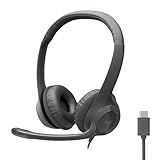
The H390 is the default answer when someone asks which USB headset works reliably with a laptop. Its plug-and-play USB-A connection eliminates adapter headaches, and the in-line control pod makes volume and mute adjustments frictionless during calls. For gamers, it handles voice chat acceptably, but the small drivers produce a thin, unengaging audio experience that quickly reveals the headset is tuned for speech, not music or explosions. The rotating noise-canceling boom mic captures your voice clearly at close range, which is the whole reason to buy this model over a plain pair of earbuds. Skip it if you want immersive audio for gaming or listen to music with any seriousness.
- Pro: Zero-driver USB-A setup works instantly on Windows and macOS
- Pro: In-line mute and volume controls are tactile and reliable
- Con: Small drivers produce weak bass and muddy midrange for gaming audio
Logitech H111
At under fourteen dollars, the H111 asks for almost nothing and delivers a surprising amount of function. The 3.5 mm jack means it connects to phones, consoles, desktops, and laptops without any dongle. For voice chats and quick game sessions, it works. The fixed microphone is adequate in quiet rooms but picks up keyboard noise and room echo noticeably during calls. Sound quality is flat and unremarkable — this is a tool, not a listening experience. Buy it as a backup pair or for a child’s first gaming setup. Skip it if you take calls with other humans who will notice the thin audio reproduction.
- Pro: Universal 3.5 mm compatibility with nearly every device
- Pro: Lowest price in this roundup with consistent build quality
- Con: Fixed mic is sensitive to ambient noise and room echo
JBL Quantum 100M2
The Quantum 100M2 stands out because of its detachable microphone — remove the boom and you have decent over-ear headphones for commuting or music. The JBL QuantumSound signature gives the audio a bass-forward profile that suits gaming and casual music listening without sounding bloated. Comfort is good for its weight class, with soft pads that seal well without excessive clamping. The 3.5 mm connection keeps it platform-agnostic, though it requires a separate adapter for phones with USB-C ports. Skip it if you need a headset for long office calls without a boom mic, since the built-in mic on the cable is noticeably less clear than the detachable boom.
- Pro: Detachable boom mic allows use as standard over-ear headphones
- Pro: JBL’s bass-forward tuning makes games and music feel engaging
- Con: Inline mic quality drops noticeably compared to the boom mic
Ozeino Gaming Headset
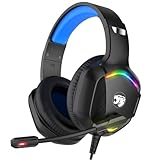
This headset is for the multi-platform household that needs one pair to reach across PC, PS5, Xbox, and Switch without thinking. Its 3.5 mm connection covers all four, and the 7.1 surround sound toggle adds spatial depth during competitive shooters. The LED lighting is purely cosmetic and cannot be turned off without covering it, which some users find distracting in dark rooms. Mic noise cancellation works reasonably at reducing background hum but does not isolate your voice dramatically. Skip it if you dislike RGB lighting or need plug-and-play without any audio settings adjustments.
- Pro: Works across PC, PS5, Xbox Series X/S, and Switch via 3.5 mm
- Pro: 7.1 surround toggle adds spatial awareness in competitive games
- Con: LED lights are always on with no physical switch to disable them
Logitech H391
The H391 is the USB-C version of the H390, and for modern laptop users this is a meaningful improvement — no adapter, no dongle, direct into a contemporary machine. Comfort, mic quality, and the control pod remain identical to the H390. This makes it an easy recommendation for office workers or students using USB-C-only machines who need a functional headset without thinking about compatibility. Audio quality for gaming or music is the same weak point as the H390: small drivers, thin sound. Skip it if your setup already has USB-A ports and you can buy the cheaper H390, or if you want gaming-grade audio.
- Pro: Native USB-C connection eliminates adapter need on modern laptops
- Pro: Same proven comfort and mic clarity as the H390 at no extra cost
- Con: Gaming audio performance is identical to the H390 and equally underwhelming
IMYB A36
The A36 is a budget gaming headset that prioritizes wide platform compatibility and a surprisingly comfortable fit. Memory foam ear cushions and a padded headband make it wearable for extended sessions, and the flexible boom mic swivels close to your mouth for clear voice pickup. Sound tuning leans bass-heavy, which feels punchy in action games but muddies positional audio in tactical shooters. The 3.5 mm connection keeps it universal across PC, PS5, and Xbox. Skip it if positional precision matters to you in competitive FPS titles, as the bass emphasis obscures subtle footsteps.
- Pro: Memory foam pads and light clamp force suit long-session comfort
- Pro: Flexible boom mic pivots close to the mouth for clear voice capture
- Con: Bass-heavy tuning washes out positional detail in competitive FPS games
Razer BlackShark V2 X
The BlackShark V2 X is the best all-around gaming experience in this group by a clear margin. Fifty-millimeter drivers produce full, detailed audio with strong bass response and clear highs — you hear enemy footsteps, ability cues, and music with equal definition. The lightweight design and breathable ear pads keep comfort high over marathon sessions. The fixed boom mic is among the clearest here for voice chat. It requires a 3.5 mm connection, and the inline control is limited to volume only, with no mute button on the cable. Skip it only if you cannot spend the extra dollars over the sub-twenty models; the upgrade is real.
- Pro: 50mm drivers deliver the fullest, most detailed audio in this roundup
- Pro: Lightest over-ear design here with excellent comfort over multiple hours
- Con: No inline mute button; volume-only control limits quick adjustments
Sony MDR-ZX110AP
The ZX110AP is a music headphone first, headset second — and that is exactly what makes it useful for a specific buyer. Closed-back on-ear design provides decent isolation and a balanced, non-fatiguing sound signature well suited to long listening sessions. The three-button inline mic and control module work naturally with phones for calls and media. The on-ear fit, however, creates pressure points on the pinnae after about ninety minutes, making it uncomfortable for marathon gaming. The mic picks up adequate voice quality in quiet environments but lacks the boom-mic directionality of dedicated headsets. Skip it if you need comfort over two-plus hours or competitive voice clarity.
- Pro: Balanced, musical tuning makes it the best-sounding option for music here
- Pro: Phone-native inline mic and controls work with Android and iOS out of the box
- Con: On-ear clamp causes ear-pinna discomfort during long sessions
Buying Guide
Microphone Type and Placement
Boom microphones capture voice better than built-in or inline alternatives because they sit close to your mouth, rejecting room noise and ambient hum. If calls, voice chat, or streaming matter to you, choose a headset with a dedicated boom — preferably flexible, so you can position it optimally. Inline mic cables work acceptably for casual phone calls but struggle in noisy rooms or during loud gameplay audio.
Connection Format: USB Versus 3.5 mm Versus USB-C
USB-A headsets offer plug-and-play simplicity and often include inline control pods with dedicated mute buttons. 3.5 mm headsets are the most universal — they connect to consoles, phones (with or without an adapter), desktops, and laptops without question. USB-C headsets target modern laptops that lack legacy ports. Choose based on the primary device you already own; compatibility frustration at home is worse than any marginal audio quality difference between these three options.
Comfort Metrics That Actually Matter
Weight under 250 grams, clamping force loose enough to avoid temple pressure, and ear pad material (memory foam or protein leather over thin foam) determine whether a headset is wearable for two or more hours. Over-ear designs generally outlast on-ear designs in comfort because they distribute pressure around the ear rather than onto it. If you game for long sessions or sit through multiple meetings, weight and pad construction are more important than any audio specification on the box.
Our Verdict
Top pick: The Razer BlackShark V2 X is the best headphones with microphone for anyone who wants genuine gaming audio plus a clear mic and can stretch their budget slightly. It is not the cheapest, but it is the only option here that feels like a purpose-built gaming headset rather than a compromise.
Budget pick: The Logitech H111 at around $13 is the lowest-cost option that does not feel disposable. Its universal jack, adequate mic, and proven comfort make it a rational first purchase or a backup pair for a second machine.
Conditional winner: The Sony MDR-ZX110AP overtakes every other option here if your primary use is music listening with occasional phone calls. No other headset in this group sounds as balanced or pairs as naturally with a smartphone.
FAQ
Can I use a 3.5 mm headset with a USB-only laptop?
Yes, but you will need a USB-A or USB-C to 3.5 mm adapter, which adds a small cost and an extra connection point that can loosen over time. If your laptop has no 3.5 mm jack, a native USB headset like the Logitech H390 or H391 avoids this problem entirely.
Does 7.1 surround sound actually improve gaming performance?
It can help with positional awareness in competitive shooters by widening the perceived soundstage, but the effect depends heavily on the headset’s driver quality and implementation. A well-tuned stereo headset like the Razer BlackShark V2 X will outperform a poor 7.1 implementation every time — do not treat a surround sound label as a guarantee of advantage.
How long do wired headsets with built-in mics typically last?
With normal daily use, expect two to four years before the cable frays at the connection point or the mic arm joint loosens. Avoid coiling the cable tightly or pulling it from the plug end, as these are the two most common causes of premature failure.
Is a noise-canceling microphone the same as active noise cancellation?
No. A noise-canceling microphone refers to the mic’s directional pickup pattern that reduces background noise when transmitting your voice. Active noise cancellation refers to headphones generating opposing sound waves to cancel ambient noise reaching your ears. None of the headsets in this roundup use active noise cancellation; they rely on passive isolation from the ear cups and padding.