The best budget mechanical keyboards split into two camps: boards that just swap in mechanical switches under cheap ABS caps, and boards that also fix the plate mounting and keycap material so the typing feel actually improves. Spending a budget wisely means prioritizing PBT keycaps and a gasket-mounted or foam-dampened design over raw switch brand names, since switches are the easiest part to upgrade later if you get hot-swap sockets.
As an Amazon Associate we earn from qualifying purchases at no extra cost to you.


Our Top Picks

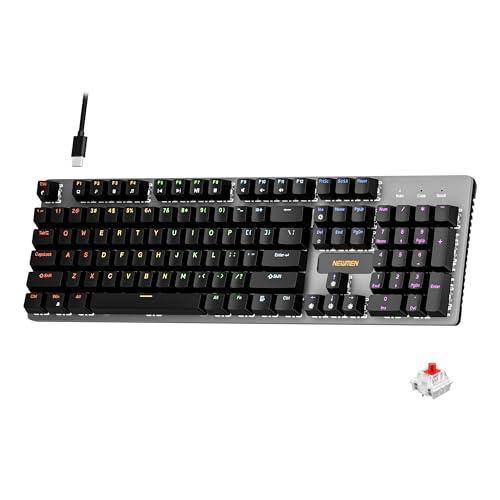
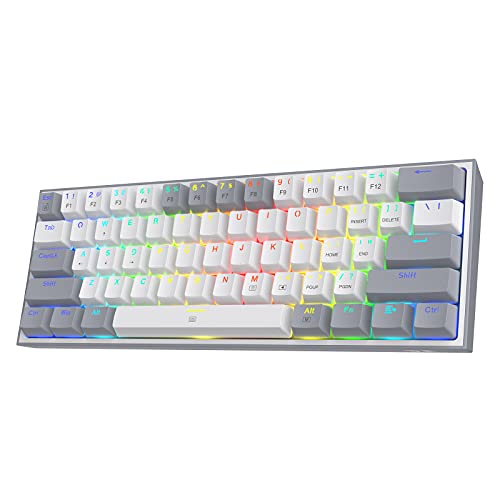


Top 3 picks at a glance
What Actually Changes Typing Feel at This Price
At the very cheapest end, nearly every board uses stock ABS keycaps, a plastic plate screwed directly to the case, and soldered switches. Toward the upper end of the budget tier, you start seeing PBT caps, gasket-mounted or foam-dampened plates, and hot-swap sockets. These three changes matter more than which switch brand is printed on the box, because they affect sound, keycap longevity, and whether you can fix a bad switch without a soldering iron.
ABS vs PBT Keycaps
ABS (acrylonitrile butadiene styrene) is cheaper to mold and gives a smoother, slightly hollow-sounding keystroke. The problem is shine: ABS caps develop a greasy, shiny patina on the WASD and home keys within 3-6 months of daily use, because the plastic is softer and absorbs oil from your fingers. PBT (polybutylene terephthalate) resists this almost entirely and has a slightly textured, deeper-pitched sound. The trade-off is that PBT caps are marginally more expensive to produce, so budget boards that include them usually cut costs elsewhere, like fewer RGB zones or a plainer case.
If you type more than a couple hours a day, PBT caps alone are worth prioritizing over switch choice. Shiny ABS caps don’t affect function, but they look worn fast and feel slicker under sweaty fingers.
Keycap Profiles: Cherry, OEM, MDA and OSA
Keycap material gets most of the attention, but profile, meaning the height and shape of each row, changes the feel just as much. Budget boards now ship with several profiles, and listings often mention them only in passing:
- Cherry profile: low and sculpted, with each row angled toward your fingers. The most common choice on gaming and enthusiast boards, and a safe default if you are unsure.
- OEM profile: slightly taller than Cherry with a similar sculpt. Found on most mainstream keyboards, so it feels familiar to most people moving up from a basic board.
- MDA profile: taller, with a rounded, spherical top that cups the fingertip. It produces a deeper sound and a softer feel but takes some adjustment for fast gaming. The Royal Kludge R75 uses this profile.
- OSA profile: roughly OEM height with a more rounded top, used on the Keychron C2 Pro 8K. Comfortable for long typing sessions.
Taller profiles usually make a wrist rest more important. Because almost all budget boards use standard MX-style stems, you can switch profiles later with an aftermarket PBT set, so choose the board for its mounting and sockets and treat the keycaps as replaceable if the profile does not suit you.
Plastic-Mounted vs Gasket-Mounted Plates
A plate screwed straight into a plastic case transmits every keystroke directly into the chassis, which is why cheap boards sound clacky and feel stiff with almost no give. Gasket-mounted plates sit on thin rubber or foam strips between the plate and the case, letting the whole plate flex slightly on each press. This softens the bottom-out feel and cuts down on the hollow case resonance that makes the cheapest boards sound like they’re typing on a biscuit tin.
Not every budget board does true gasket mounting correctly, some just add a foam sheet under the PCB without isolating the plate, which helps sound more than feel. Look for listings or reviews that specifically mention “gasket mount” or “plate foam + case foam” rather than just “sound dampening foam,” since the latter is often just a single layer that does little for feel.
Hot-Swap Sockets
Hot-swap sockets let you pull switches out with a small tool and replace them without soldering. On a budget board this matters for two reasons: stock switches at this price are often inconsistent (scratchy, wobbly stems, or just not to your taste), and a dead switch is a cheap replacement part instead of a trip to the trash. A board with hot-swap and mediocre stock switches is a better long-term buy than a soldered board with slightly nicer stock switches, because you can upgrade the switches later for a small outlay without replacing the whole keyboard.
Switch Types: Linear, Tactile, Clicky and Magnetic
Switch brand matters less than case and keycap upgrades at this price, but switch type still shapes how a board feels from the first keystroke. Most budget keyboards offer three mechanical types, and a growing number add a fourth:
- Linear (red, silver, yellow and most “creamy” switches): a smooth, straight press with no bump. Popular for gaming because double-taps and held keys feel consistent. Lighter linears around 40 to 45 gf actuation suit fast play; heavier ones reduce accidental presses for heavy-handed typists.
- Tactile (brown, banana and similar): a noticeable bump near the actuation point tells your finger the key has registered. A good compromise for mixed typing and gaming. Budget brown switches often have a faint bump, so look for switches described as “pronounced” tactile if that feedback matters to you.
- Clicky (blue): a tactile bump plus an audible click. Satisfying for some typists, but loud on voice chat and in shared rooms. The DIERYA T68SE in the main picks ships with blue switches, so consider whether the noise suits your space.
- Hall effect magnetic: keys register by measuring magnet position rather than metal contacts, which enables adjustable actuation and Rapid Trigger. These are a gaming feature rather than a typing-feel upgrade, and the switches are not interchangeable with standard MX-style sockets.
Two spec-sheet details are worth checking. Pre-lubed switches feel noticeably smoother and less scratchy than dry budget switches. And if a board advertises 5-pin hot-swap support, it accepts both 3-pin and 5-pin switches, which widens your upgrade options later.
Layout and Desk Footprint
Layout determines how much desk space you give up and how much mouse room you gain, which matters more than people expect once you factor in a mousepad.
| Layout | Typical Width | Depth | Keys | Best For |
|---|---|---|---|---|
| 60% | 29-30 cm | 10-10.5 cm | 61-64 | Max mouse room, FPS gaming, travel |
| 65% | 31-32 cm | 10.5-11 cm | 66-68 | Arrow keys without the bulk |
| 75% | 33-34 cm | 11-12 cm | 81-84 | Function row + compact body |
| TKL (80%) | 36-37 cm | 13-14 cm | 87-88 | Full typing layout, no numpad |
| Full-size | 44-45 cm | 13-14 cm | 104-108 | Numpad needed, spreadsheet work |
Going from full-size to TKL frees up roughly 7-9 cm of desk width, enough to shift a mouse mat fully onto the desk pad or give an elbow more room. Going from TKL to 75% saves another 2-3 cm in depth and width while keeping the function row, which is the layout most budget buyers actually want since it keeps media keys and F-keys without the numpad bulk. True 60% boards save the most space but push arrow keys and navigation into a function-layer combo, which has a real learning curve for anyone who alt-tabs or uses Home/End constantly.
Wired, Wireless and Polling Rate on a Budget
Tri-mode wireless used to be a premium feature, but boards like the AULA F75 and Ajazz AK820 Pro now offer 2.4 GHz, Bluetooth and USB-C at budget prices. For gaming, use the 2.4 GHz dongle or the cable; Bluetooth adds latency and is better suited to a laptop or tablet. Wireless budget boards also tend to be heavier and thicker because of the battery, so a wrist rest becomes more useful.
Polling rate describes how often the keyboard reports to your PC. Standard boards run at 1,000 Hz, or once per millisecond. Newer budget models such as the Keychron C3 Pro 8K, C2 Pro 8K and AULA WIN68 HE run at 8,000 Hz. The benefit is small and mostly relevant to competitive players on high refresh rate monitors, and it uses slightly more CPU time. It is a nice extra, not a reason on its own to choose one board over another with better keycaps or mounting.
If you never move your keyboard between devices, a wired board puts more of the budget into feel. That is why the wired C3 Pro 8K and R75 can offer gasket mounting and PBT caps at a lower tier than their wireless rivals.
Decision Matrix: Matching Specs to Your Situation
| Your Priority | Keycap Material | Mount Style | Switch Access | Layout |
|---|---|---|---|---|
| Longest keycap lifespan | PBT required | Either | Either | Any |
| Best typing feel for the money | PBT preferred | Gasket-mounted | Hot-swap preferred | 75% or TKL |
| Max desk space for mouse | Either | Either | Either | 60% or 65% |
| Plan to upgrade switches later | Either | Either | Hot-swap required | Any |
| Office use, need numpad | PBT preferred | Either | Either | Full-size or TKL |
| Quietest typing sound | PBT | Gasket-mounted | Hot-swap (swap to silent/dampened switches) | Any |
If you can only get two of the three feel-upgrades (PBT, gasket mount, hot-swap) at your price point, prioritize PBT first since it’s permanent and affects every session, then hot-swap, since it lets you fix switch feel later even on a plastic-mounted plate.
Price Bands and What You Actually Get
- Cheapest budget boards: ABS keycaps, plastic-mounted plate, usually soldered switches, basic RGB. Fine as a first mechanical board or for a kid’s desk, but keycaps will shine within months.
- Lower-middle of the budget tier: This is where PBT keycaps and hot-swap sockets start appearing, though rarely both on the same board. Plate mounting is often still plastic-direct but with a foam layer added for sound.
- Top of the budget tier: True gasket-mounted plates start showing up alongside PBT caps and hot-swap sockets together. This band is the sweet spot for anyone who wants a noticeably better typing feel without moving into mid-range “budget enthusiast” territory.
More Budget Mechanical Keyboards That Get the Fundamentals Right
The four picks above are solid entry points, but several newer boards now combine PBT keycaps, hot-swap sockets and real gasket or foam-damped construction while staying in the budget tier. The six keyboards below were chosen because each one ticks at least two of the three feel upgrades this guide prioritizes, and together they cover every common layout from a 65% gaming board to a full-size office keyboard.
AULA F75

The AULA F75 is the board that pushed gasket mounting into budget territory, and it remains the most complete budget all-rounder. It uses a 75% layout with 80 keys and a metal multi-function knob, sitting on a leaf-spring gasket structure with a grooved polycarbonate plate and a single-key grooved PCB. Under the plate sits a five-layer padding stack: sandwich foam, an IXPE switch pad, a PET sound pad, bottom foam and a silicone base pad. Keycaps are double-shot PBT, and the hot-swap sockets accept both 3-pin and 5-pin switches.
It is also tri-mode: 2.4 GHz wireless, Bluetooth 5.0 and USB-C wired, with a 4,000 mAh battery and support for pairing up to five devices. Switch options vary by listing, typically pre-lubed linear switches such as LEOBOG Reaper or Graywood.
The typing character is what made the F75 popular: the combination of leaf-spring gasket, grooved plate and dense foam produces the deep, muted sound often described as creamy or thocky, without the hollow ping cheap plastic boards are known for. Because the plate flexes slightly, bottoming out feels softer, which many people find more comfortable over long sessions. The knob adjusts volume by default and can be remapped in AULA’s software. Several variants exist, including Epomaker-branded versions and the F75 Pro and F75 Max, so check the listing for the exact switches, keycap profile and colorway.
Who it suits: anyone who wants the full PBT, gasket and hot-swap combination in a 75% layout, and who also wants to use one keyboard across a desktop, laptop and tablet.
Drawbacks: at roughly 1 kg and over 4 cm tall, it is chunky for a 75% board and benefits from a wrist rest. Software is basic compared with QMK or VIA boards, and the case is plastic.
Compared with the Redragon K617 and DIERYA T68SE in the main picks, the F75 is a step up in every feel-related area and adds wireless, at the top of the budget band.
Keychron C3 Pro 8K

The C3 Pro 8K, released in mid-2025, is the best wired TKL for buyers who want gasket mounting and programmability without paying for wireless. It uses an 87-key tenkeyless layout with a gasket-mounted polycarbonate plate, EVA acoustic foam, IXPE and EPDM foam layers and a silicone pad. Keycaps are double-shot PBT in Cherry profile with shine-through legends.
Every socket is hot-swappable and accepts nearly all 3-pin and 5-pin MX-style switches. It ships with pre-lubed Keychron Super switches (Red, Brown or Banana depending on the version), and runs QMK firmware with remapping and macros through the Keychron Launcher web app. The 8,000 Hz polling rate and Snap Tap-style SOCD support are aimed at competitive players.
The C3 Pro 8K also brings Keychron’s broader ecosystem to a budget board. Spare keycaps for Windows and macOS are included, along with a keycap and switch puller and a USB-C cable with an adapter. Because it runs QMK, you can create up to four layers, assign macros and change the layout through a browser without installing heavyweight software. For gamers, the TKL layout frees roughly 7 to 9 cm of mouse space compared with a full-size board while keeping a normal arrow cluster and function row, so there is no layer learning curve.
Who it suits: gamers and typists who want a full typing layout with arrows and a function row, PBT caps and gasket feel, plus deep remapping.
Drawbacks: wired only, an ABS plastic case, and shine-through PBT legends that some buyers find less crisp than solid caps. 8K polling also uses more CPU time and only benefits very high refresh rate setups.
It is the cleanest answer to the decision matrix’s “best typing feel for the money” row in a TKL size, at a budget price.
Keychron C2 Pro 8K

The C2 Pro 8K is the full-size option for spreadsheet work, data entry or anyone who simply refuses to give up the numpad. It shares much of the C3 Pro’s DNA: hot-swap sockets for 3-pin and 5-pin switches, pre-lubed Keychron Super or Apex switches, QMK firmware and 8,000 Hz wired polling. Keycaps are double-shot PBT in Keychron’s OSA profile, which sits at roughly OEM height with a slightly rounded top.
Unlike the C3 Pro, the C2 Pro 8K is tray-mounted rather than gasket-mounted, so the typing feel is firmer. Keychron offsets that with a full acoustic foam stack, and it offers three typing angles from its two-stage feet.
Full-size budget boards often get the least attention from manufacturers, and many stick with ABS caps and soldered switches. The C2 Pro 8K is one of the few in its tier to pair a numpad with PBT keycaps and hot-swap sockets. The OSA profile is a little taller and more rounded than standard Cherry caps, which some typists find comfortable for long data-entry sessions. If you later want a softer feel, swapping to lighter linear switches and adding a desk mat goes a long way, since the tray mount itself cannot be changed. Keychron’s Launcher web app handles remapping and macros, including numpad functions.
South-facing RGB and plate-mounted stabilizers round out a spec sheet that is simple but well chosen for a productivity keyboard.
Who it suits: office and productivity users who want PBT and hot-swap in a 104-key layout at a low price.
Drawbacks: no gasket mount, so it feels stiffer than the C3 Pro or AULA F75, and at about 44 cm wide it takes the most desk space of any board here, exactly as the layout table above warns.
Against the Newmen GM325Pro full-size pick, the C2 Pro 8K adds PBT keycaps and QMK programmability.
RK Royal Kludge R75 (Wired)

The wired R75 is one of the cheapest ways to get a genuine gasket-mounted 75% keyboard. It combines a gasket structure with Kailh hot-swap sockets that accept 3-pin and 5-pin switches, double-shot PBT keycaps in MDA profile, and a CNC aluminum volume knob that mutes with a press. Royal Kludge lists multiple sound-dampening layers including Poron foam, an IXPE switch pad and case foam, plus foam under the space bar and pre-lubed stabilizers.
The board supports QMK/VIA on current versions, and switch choices vary by listing (silver linear, brown tactile and cream linear among them). Its slightly spaced layout makes it a little wider than most 75% boards.
The MDA profile deserves a closer look before you buy. MDA caps are taller than Cherry profile with a spherical top, which gives a slightly cupped feel under the fingertips and a deeper sound. Some typists love that; others find the extra height unfamiliar for gaming. Because the board uses standard MX-style stems, you can replace the caps later with any Cherry or OEM set. VIA support lets you remap the knob and build layers. If you need wireless, Royal Kludge sells a separate R75 wireless model with a similar layout and dampening design at a slightly higher tier.
Who it suits: buyers who want the full PBT, gasket and hot-swap trio at the lower end of the budget tier.
Drawbacks: MDA keycaps are taller and rounder than the Cherry or OEM profile many gamers are used to, and the wider body reduces some of the desk-space gain expected from a 75% layout. Wireless needs the separate R75 wireless model.
It undercuts the AULA F75 while keeping its core feel upgrades, making it the strongest value pick in the lower-middle budget band described earlier.
Ajazz AK820 Pro

The AK820 Pro, sold in many regions through Epomaker, packs an unusual amount into a budget board. It is a 75% keyboard with 81 keys, a 0.85-inch TFT screen and a metal knob, built on a gasket mount with a flex-cut polycarbonate plate and flex-cut PCB to isolate vibration. A five-layer dampening stack sits inside the case, and the sockets are hot-swappable for 3-pin and 5-pin switches.
It connects over USB-C, Bluetooth and 2.4 GHz with a 4,000 mAh battery and south-facing RGB. Keycaps are PBT, and linear switches such as the Ajazz Gift or Flying Fish are common options.
The flex-cut plate and PCB are the details that matter most here. Cuts in the plate and circuit board let individual zones flex under each key, which works with the gasket mount to give a softer, more even feel across the board instead of a stiff center and bouncy edges. That construction choice is normally found on more expensive enthusiast keyboards. The south-facing RGB LEDs also avoid interference with Cherry-profile keycaps, which matters if you plan to change caps later. Several variants exist, including Ajazz-branded versions with MOA keycaps and different switches, so confirm the version before buying.
For buyers comparing it directly with the F75, the deciding factors are usually the screen, the colorways available and which switch options are in stock at the time.
Who it suits: buyers who want the F75’s core formula and like the idea of a small status screen for battery, connection mode and custom images.
Drawbacks: the screen adds cost and complexity without improving typing feel, the case is ABS plastic, and official battery life figures are not clearly published.
Next to the AULA F75 it is a sidegrade: similar feel upgrades, a screen instead of a slightly simpler design, at a comparable price tier.
AULA WIN68 HE

The WIN68 HE is a different kind of budget keyboard: it uses Hall effect magnetic switches instead of conventional mechanical contacts. Each key’s actuation point can be adjusted in software, and Rapid Trigger resets a key the moment it starts rising rather than at a fixed point. Combined with an 8,000 Hz polling rate and SOCD handling, these are features that competitive FPS players previously paid premium prices for.
The board has 68 keys in a compact layout that keeps arrow keys (often listed as 60% but closer to a 65% layout in practice), PBT keycaps, south-facing RGB and a detachable wired USB-C connection. AULA advises calibrating the switches after unboxing.
Rapid Trigger is the headline benefit for tactical shooters. In games where counter-strafing and quick stops matter, the key releases the instant you begin lifting your finger rather than waiting to pass a fixed reset point, so movement inputs end sooner. Adjustable actuation lets you set a very shallow trigger for movement keys and a deeper, safer trigger for ability or utility keys. AULA’s web driver handles these settings per key. For typing, a moderate actuation depth avoids accidental presses, since very sensitive gaming settings can feel twitchy during long-form writing.
Who it suits: FPS and rhythm-game players who want adjustable actuation and Rapid Trigger at a budget price, and who value desk space for wide mouse sweeps.
Drawbacks: wired only, a hollower sound than gasket boards unless modded, and magnetic switches are not interchangeable with standard MX-style switches, so the hot-swap advice elsewhere in this guide does not apply in the same way. Some tournaments restrict SOCD features.
It is the only board here that changes how keys register rather than how they feel, so treat it as a gaming-first alternative to the Redragon K617 rather than a typing upgrade.
Additional Picks Compared
| Keyboard | Layout | Keycaps | Mount | Hot-swap | Connection | Price tier |
|---|---|---|---|---|---|---|
| AULA F75 | 75% | Double-shot PBT | Leaf-spring gasket | Yes, 3/5-pin | 2.4 GHz, Bluetooth, USB-C | Upper budget |
| Keychron C3 Pro 8K | TKL (87 keys) | Double-shot PBT, shine-through | Gasket | Yes, 3/5-pin | Wired, 8 kHz | Budget |
| Keychron C2 Pro 8K | Full-size | Double-shot PBT (OSA) | Tray, foam-damped | Yes, 3/5-pin | Wired, 8 kHz | Budget |
| RK Royal Kludge R75 | 75% | Double-shot PBT (MDA) | Gasket | Yes, 3/5-pin | Wired | Budget |
| Ajazz AK820 Pro | 75% with screen | PBT | Gasket | Yes, 3/5-pin | 2.4 GHz, Bluetooth, USB-C | Upper budget |
| AULA WIN68 HE | 65%-style, 68 keys | PBT | Not a focus | Magnetic switches only | Wired, 8 kHz | Budget |
Read against the decision matrix above: the AULA F75, Keychron C3 Pro 8K, RK R75 and Ajazz AK820 Pro all deliver PBT, gasket mounting and hot-swap together. The C2 Pro 8K drops the gasket in exchange for a numpad, and the WIN68 HE trades conventional feel upgrades for adjustable-actuation switches.
A Quick Way to Check Before Buying
If a listing or spec sheet doesn’t explicitly say “PBT keycaps,” assume ABS. If it doesn’t say “hot-swappable,” assume soldered. If it only says “sound dampening foam” without the word “gasket,” assume it’s a single foam layer under the PCB rather than a true floating-plate design. Manufacturers list the upgrades when they’re present because they’re selling points, so an absence in the spec sheet is a reliable negative signal at this price range.
Getting More From a Budget Board After You Buy
A budget mechanical keyboard can feel considerably better with a few low-cost adjustments. These steps work on most of the boards in this guide:
- Check every key on arrival. Use an online key tester to confirm each switch registers once per press. On a hot-swap board, a chattering or dead key is usually fixed by reseating or swapping the switch.
- Tune the stabilizers. Rattle on the space bar, Enter and Shift keys is the most common budget-board complaint. Many boards now ship with pre-lubed stabilizers, but a small amount of dielectric grease on the stabilizer wire ends can quiet the rest.
- Try a tape or foam mod only if needed. If a board sounds hollow, a layer of painter’s tape on the back of the PCB or extra case foam can deepen the sound. Boards with multi-layer foam stacks, like the AULA F75 and Ajazz AK820 Pro, rarely need it.
- Upgrade switches gradually. On a hot-swap board, start by replacing switches on the keys you use most, such as WASD and the space bar, before committing to a full set.
- Clean PBT keycaps occasionally. Pull the caps with the included puller and soak them in warm soapy water, then let them dry fully before refitting. Avoid soaking keycaps with shine-through legends in very hot water.
- Use the software layers. On QMK or VIA boards, remap Caps Lock to a function or Control key, and put Home, End, Page Up and Page Down on a layer if your compact layout lacks them.
- Update firmware from the manufacturer only. Keychron, AULA, Royal Kludge and Ajazz publish firmware and software on their own sites. Avoid third-party firmware files unless you know how to recover the board.
Comfort and Ergonomics: Height, Angle and Wrist Rests
Budget mechanical keyboards are often taller than the membrane boards they replace. Gasket boards with thick foam stacks and wireless batteries, such as the AULA F75 at over 4 cm tall, put your wrists at a steeper upward angle if you rest them on the desk. Over long sessions, that extension is a common source of discomfort.
- Add a wrist rest that matches the front height. A foam or wooden rest roughly level with the keyboard’s front edge keeps your wrists neutral. Many budget boards do not include one.
- Use the feet sparingly. Flip-out feet raise the back of the board, which increases wrist extension. Many typists are more comfortable with the feet folded flat, especially on tall boards.
- Center the keys you use most. For gaming, a compact 60%, 65% or 75% board lets you angle the keyboard and keep the mouse closer to your shoulder line, reducing shoulder strain on long sessions.
- Consider switch weight. Heavier switches reduce accidental presses but add finger fatigue during long typing. Lighter linears around 40 to 45 gf suit most gaming; tactile switches with a moderate bump suit mixed use.
- Use a desk mat. A large mat stops the keyboard sliding, softens sound slightly and gives the mouse a consistent surface across the wider space a compact layout frees up.
Frequently asked questions
Are mechanical keyboards with better switches always better to buy?
No. At this price, PBT keycaps, gasket-mounted or foam-dampened plates, and hot-swap sockets can matter more than the switch brand. Switches are relatively easy to replace later when a board has hot-swap sockets, while keycap material and the mounting design affect the typing feel, sound, and long-term experience every time you use the keyboard.
How can I tell whether a keyboard will feel soft or stiff?
Look for a listing that specifically mentions gasket mount, because rubber or foam strips can let the plate flex slightly during each press. A plastic-mounted plate screwed directly into the case generally feels stiffer. Foam can reduce hollow resonance, but a foam sheet under the PCB may change sound more than the actual key feel.
What happens if one switch stops working on a budget keyboard?
On a hot-swappable keyboard, you can pull out the faulty switch with a small tool and replace it without soldering. That makes a dead switch a replaceable part rather than a reason to discard the keyboard. On a soldered board, replacing a switch requires soldering, so switch access is an important long-term consideration.
Which compact layout still includes arrow keys?
A sixty-five percent layout keeps arrow keys without the bulk of a larger keyboard. It is wider than a sixty percent board but remains compact, giving you more mouse room than a full-size layout. A sixty percent board saves more space, but its arrow keys and navigation functions use a function-layer combination that can require adjustment.
Why might a keyboard listing not mention the keycap material or mounting style?
If a listing does not explicitly say PBT keycaps, assume the caps are ABS. If it does not say hot-swappable, assume the switches are soldered. Likewise, wording such as sound dampening foam does not necessarily mean gasket mounting; it may describe only a foam layer under the PCB rather than a design that isolates the plate.
Is a wireless budget mechanical keyboard good enough for gaming?
Yes, when you use the 2.4 GHz dongle or a cable. Tri-mode boards like the AULA F75 offer low-latency 2.4 GHz connections suitable for gaming, while Bluetooth is better kept for laptops, tablets and casual use.
What is the difference between a Hall effect keyboard and a normal mechanical keyboard?
Hall effect keyboards detect key position with magnets, so the actuation point can be adjusted and Rapid Trigger can reset keys instantly. Normal mechanical keyboards register at a fixed point when metal contacts meet. Hall effect boards like the AULA WIN68 HE favor competitive gaming; conventional gasket boards usually feel and sound better for typing.
Do I need QMK or VIA support?
Not necessarily, but it helps. QMK and VIA let you remap any key and build layers through a web app without installing proprietary software. That is especially useful on 65% and 75% layouts where some navigation keys are moved to a function layer.
What does 3-pin and 5-pin hot-swap mean?
It describes which switches the sockets accept. 3-pin switches have two electrical pins and a center post; 5-pin switches add two plastic stabilizing legs. Sockets labeled 5-pin accept both types, while 3-pin-only boards need the extra legs clipped off 5-pin switches.
Is 8,000 Hz polling worth paying for?
Only if you play fast competitive games on a high refresh rate monitor and the board already has the feel upgrades you want. For most buyers, PBT keycaps, gasket mounting and hot-swap sockets make a bigger everyday difference.