
Achieving a state of flow requires eliminating distractions, managing your environment, and utilizing auditory tools like binaural beats to synchronize your brainwaves. However, sliding on a standard pair of gaming headsets or consumer earbuds often ruins the experience. Binaural beats rely on precise frequency separation between the left and right channels to create the illusion of a third beat in the brain. If your audio gear suffers from poor driver matching, excessive phase distortion, or overblown bass, that delicate neural entrainment breaks down completely.
Navigating the peripheral market requires looking past flashy RGB lighting and aggressive gaming aesthetics. As we evaluate the audio landscape in 2026, the focus has shifted heavily toward acoustic clarity, lightweight ergonomics, and reliable connectivity. Whether you are coding, writing, or analyzing dense data sets for hours on end, understanding the specific engineering features that matter will save you from buyer’s remorse and keep your focus sharp.
As an Amazon Associate we earn from qualifying purchases at no extra cost to you. Product prices and availability are accurate as of the date shown and are subject to change.
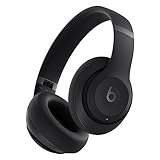
Driver Precision and Phase Accuracy
The core mechanism of binaural beats depends on playing two slightly different frequencies into each ear—for example, 200 Hz in the left channel and 210 Hz in the right channel. Your brain perceives the difference as a 10 Hz alpha wave. For this to work cleanly, the headphone drivers must exhibit exceptional phase accuracy and minimal channel imbalance. Cheap drivers often drift out of alignment, causing the stereo image to shift or blur. When shopping for deep work audio gear, look for models featuring meticulously matched dynamic drivers or planar magnetic arrays that maintain strict temporal coherence across the audible spectrum.
Choosing Between Closed-Back and Open-Back Designs
Your workspace environment dictates whether you should buy closed-back or open-back headphones. Closed-back models feature sealed ear cups that isolate you from external noises like HVAC hums, keyboard clatter, and household chatter. This physical isolation lets you run your binaural beats at lower, safer volumes. On the other hand, open-back headphones have perforated outer grills that allow air and sound to pass through freely. While they lack passive noise isolation, open-backs provide a massive, natural soundstage that makes audio feel like it is floating around your head rather than being piped directly into your ear canals, reducing listening fatigue during extended sessions.
The Pitfalls of V-Shaped Frequency Curves
Most mainstream consumer and gaming headphones are tuned with a V-shaped frequency response, meaning the bass and treble are heavily boosted while the mids are recessed. This tuning makes explosions sound thunderous and music feel energetic, but it is disastrous for binaural beats and focus tracks. Heavy, uncontrolled bass bleeds into the lower midrange, muddying the carrier frequencies necessary for effective brainwave entrainment. You want a neutral or slightly warm frequency response with tight, well-controlled bass, transparent mids, and smooth highs that do not cause ear fatigue over a four-hour work block.
Clamp Force, Weight, and Multi-Hour Ergonomics
Deep work sessions are notoriously long, often stretching across multiple hours without a break. Consequently, physical comfort is just as important as acoustic performance. Excessive clamp force will trigger tension headaches around your temples and jaw, while a heavy headband will cause a painful hot spot on the crown of your head. Look for lightweight chassis designs utilizing memory foam ear pads wrapped in breathable fabric or protein leather. A well-distributed weight profile ensures you forget you are wearing anything at all, allowing your mind to remain entirely immersed in your tasks.
Navigating Wireless Interference and Latency
While wired headphones offer pure, uncompressed signal transmission without battery anxiety, wireless models provide unmatched freedom of movement when pacing or adjusting your posture. If you choose a wireless path for your productivity setup, prioritize Bluetooth codecs like AAC and aptX, or opt for a dedicated 2.4GHz USB dongle that avoids crowded Bluetooth frequency bands. Bluetooth interference can occasionally cause micro-stutters or packet loss, which abruptly disrupts the continuous, steady rhythm required to maintain a deep focus state.
Cost Tiers: What Do You Actually Get for More Money?
Understanding where diminishing returns kick in prevents overspending. Entry-level headphones under budget thresholds often rely on generic drivers with noticeable channel imbalance and cheap plastic parts that squeak when you move. Mid-tier options generally hit the sweet spot, offering robust build quality, comfortable memory foam pads, and properly calibrated drivers suitable for daily productivity. Premium audiophile territory introduces exotic materials, planar drivers, and ultra-low distortion amplifiers, which yield marginal gains that only true audio purists or professional sound engineers will fully appreciate.
Related Guides
To explore specific product recommendations and alternative use-cases, take a look at our curated roundups. You can find our top picks for hardware by reading our guide to the best binaural beats headphones for deep work, or check out our comprehensive overview of the headphones for remote work to find gear that balances calls, meetings, and flow states.
FAQ
Do I need active noise cancellation for binaural beats?
Active noise cancellation (ANC) is helpful if you work in noisy environments like coffee shops or open offices. However, look for high-quality ANC systems that do not introduce a digital hiss or alter the frequency response of your audio tracks when enabled.
Can I use gaming headsets for binaural beats?
Many gaming headsets feature heavy software enhancements, virtual surround sound, and bloated bass profiles that distort binaural frequency separation. If you must use a gaming headset, disable all virtual surround features and use a flat EQ profile.
Are planar magnetic drivers better for focus tracks?
Planar magnetic drivers offer superior transient response and exceptionally low distortion compared to traditional dynamic drivers. This precision helps keep binaural beat frequencies remarkably crisp and distinct, though they generally require a dedicated headphone amplifier to shine.
Why do my ears feel tired after listening to focus beats?
Listening fatigue is usually caused by excessive volume levels, harsh high frequencies, or wearing headphones with too much clamp force. Keep your listening volume moderate and take a ten-minute break every hour to rest your ears and mind.

