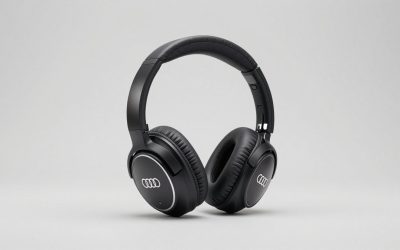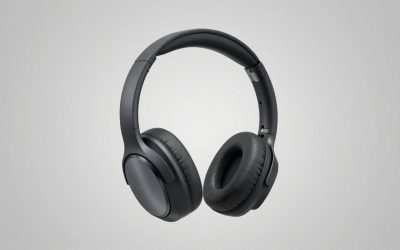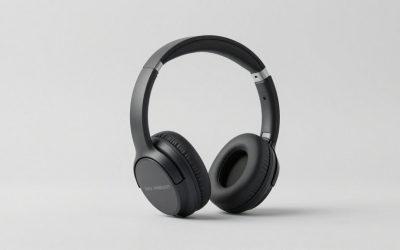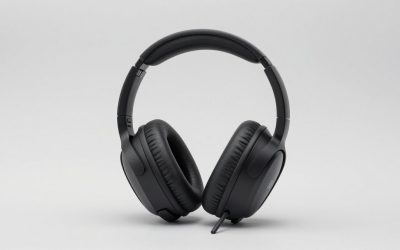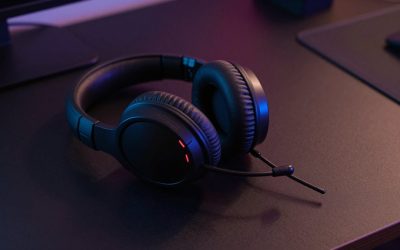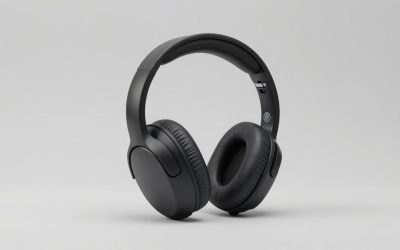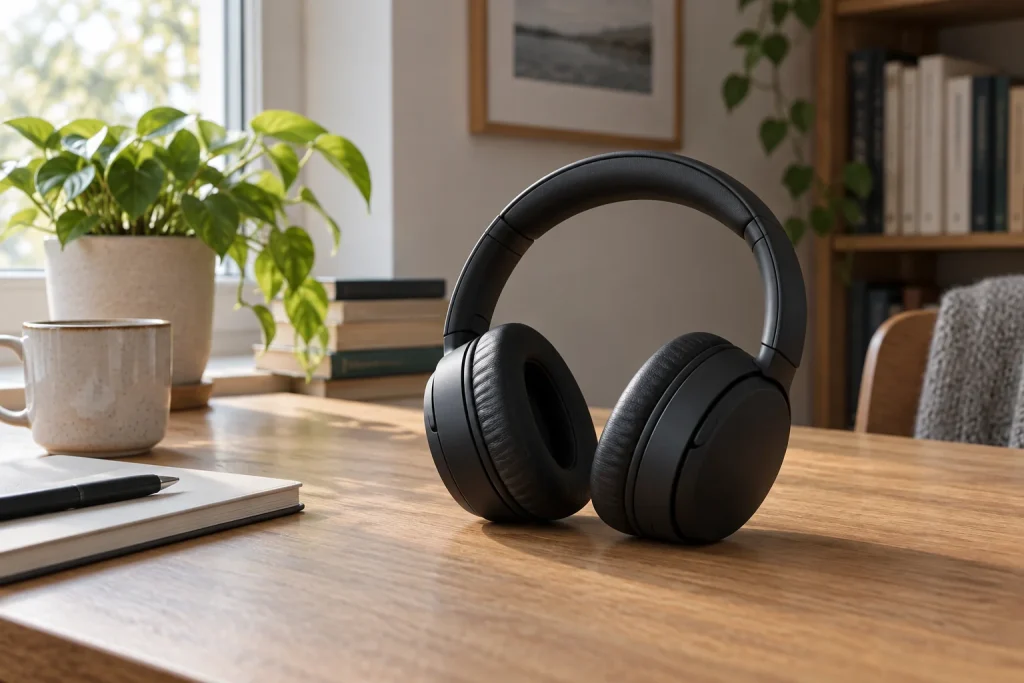
Binaural beats only work when left and right channels stay perfectly separated and stable for long stretches, and that is exactly where cheap or poorly tuned headphones fall apart. The headphones worth choosing hold a precise stereo image without channel drift, keep low-end detail clean without masking the beat frequency, and stay comfortable past the first hour. Weaker models smear the center image, add harshness that causes listening fatigue, or let office chatter leak back in.
For deep work, the difference between good and bad is not bass quantity or brand cachet — it is isolation, comfort, and tonal accuracy over time. The best picks create a quiet, consistent soundstage so your brain can lock onto the tone, while poor fits constantly remind you they are there with pressure points, inconsistent sealing, or a muddy presentation that buries the subtle pulsing effect. That focus on long-session stability shaped every pick below.
As an Amazon Associate we earn from qualifying purchases at no extra cost to you.


Our Top Picks
 Sony WH-1000XM5 Premium Noise Cancelling Wireless HeadphonesOne Size8.85 x 3.03 x 10.36 inches0.6 poundsCheck on Amazon
 Audio-Technica ATH-M50X Professional Studio Monitor HeadphonesOne-Size11.4 x 10 x 4.1 Inches0.6 PoundsCheck on Amazon


Top 3 picks at a glance
Quick Picks
| Product | Best for | Price |
|---|---|---|
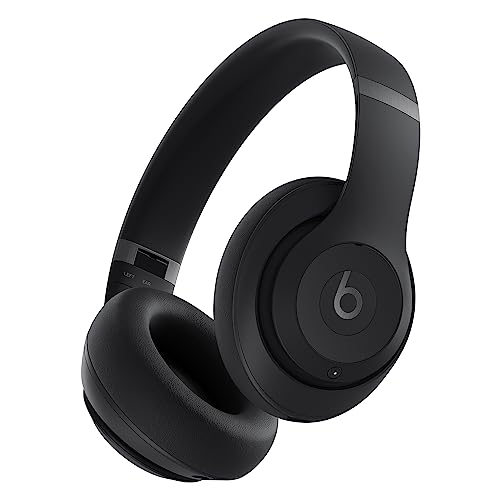
| Beats Studio Pro – Black | Overall deep work focus | Check on Amazon |
| Sony WH-1000XM5 – Silver | Maximum noise cancelling | Check on Amazon |
| Bose QuietComfort Headphones | Long-session comfort | Check on Amazon |
| Beats Solo 4 – Matte Black | Lightweight on-ear comfort | Check on Amazon |
| Audio-Technica ATH-M50x | Wired desk listening | Check on Amazon |
| kurdene Wireless Earbuds | Ultra-budget earbud option | Check on Amazon |
| Sony WH-CH720N | Budget noise cancelling | Check on Amazon |
| Beats Fit Pro – Black (Renewed) | Secure-fit in-ear focus | Check on Amazon |
How We Compared
We prioritized the factors that actually affect binaural beats and sustained concentration: sealing and noise control to preserve the subtle beat artifact, stereo accuracy and balanced tuning so carrier tones remain clear and non-fatiguing, comfort for extended wear without hot spots, and practical usability including battery endurance and reliable Apple and Android compatibility for laptop and phone switching. Durability and fit consistency mattered more than extra features that distract from focused listening.
The 8 Best Binaural Beats Headphones For Deep Work in 2026
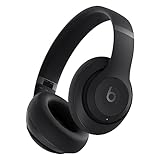
1. Beats Studio Pro – Black
Ideal for anyone who wants a true over-ear sanctuary for long focus blocks, the Black Studio Pro sets the reference for this list. Its soundstage stays centered and stable on sustained binaural tracks, so the perceived pulse does not wander, and the overall tuning keeps low frequencies controlled rather than bloated. That clarity helps you stay in flow without turning up volume to compensate. With broad device compatibility and USB-C Lossless Audio, it transitions cleanly from wireless work sessions to wired critical listening.
- Pro: Active Noise Cancelling is effective at reducing background office and commute noise
- Pro: Up to 40-Hour Battery Life supports multi-day deep work without frequent charging
- Con: Larger over-ear frame is less pocketable than compact in-ear alternatives
Skip it if you need an ultra-light on-ear feel or strongly prefer an in-ear design for portability.
2. Sony WH-1000XM5 – Silver
The Sony WH-1000XM5 is the strongest alternative to the Studio Pro for listeners who care most about blocking out a noisy room. Sony pairs its Integrated Processor V1 and QN1 chips with eight microphones and rates battery life at up to 30 hours with noise cancelling on. A very low noise floor lets binaural tracks stay audible at modest volume, and the Sony app’s equalizer can trim the bass if the default tuning feels too warm for long sessions. Multipoint pairing and LDAC support make it easy to move between a laptop and an Android phone.
- Pro: Excellent active noise cancelling keeps the background quiet in shared spaces
- Pro: Up to 30 hours of battery life with noise cancelling, plus multipoint pairing
- Con: The earcups swivel flat but do not fold, so the case is fairly large
Skip it if you want the smallest travel footprint or prefer Apple’s one-tap pairing.
3. Bose QuietComfort Headphones
The Bose QuietComfort Headphones are the comfort-first pick among mainstream noise-cancelling over-ears. Plush pads and a moderate clamping force make them easy to wear through long focus blocks, and Bose rates battery life at up to 24 hours. Quiet and Aware modes let you switch between full isolation and hearing a colleague, and the adjustable EQ in the Bose app helps keep low carrier tones clean. A wired audio cable is included for desk listening.
- Pro: Strong noise cancelling with a soft, low-pressure fit for multi-hour sessions
- Pro: Folding design and carry case suit desk-to-commute days
- Con: Shorter rated battery life than the Studio Pro or Solo 4
Skip it if you want the longest possible battery life or lossless USB-C audio.
4. Beats Solo 4 – Matte Black
Designed for focused listeners who dislike the pressure of heavy over-ears, the Matte Black Solo 4 trades some isolation for featherweight comfort. The on-ear fit stays comfortable for hours and the tuning remains powerful yet balanced, keeping binaural tones intelligible without harshness. While it does not seal as deeply as over-ear models, it is excellent for quiet home offices where you want awareness plus endurance. Broad Apple and Android compatibility keeps pairing simple across devices.
- Pro: Up to 50-Hour Battery Life is class-leading for marathon study and work days
- Pro: Ultra-lightweight comfort with a balanced sound that avoids fatigue
- Con: On-ear design provides less passive isolation than over-ear Studio Pro models
Skip it if you work in loud environments where maximum noise reduction is essential.
5. Audio-Technica ATH-M50x
The ATH-M50x is a wired, closed-back studio headphone that suits binaural listening at a desk. There is no battery, Bluetooth or digital processing, so the left and right channels arrive exactly as recorded, and the closed earcups block a fair amount of room noise passively. Its 45mm drivers give a punchy but controlled sound, and the 38-ohm impedance is easy to drive from a laptop or phone. Audio-Technica includes detachable cables, and the earcups swivel for one-ear monitoring.
- Pro: Accurate stereo imaging with no wireless compression or processing
- Pro: Detachable cables and a durable, foldable build
- Con: Wired only, with passive isolation that trails active noise cancelling in loud rooms
Skip it if you need wireless freedom or work in a loud, open office.
6. kurdene Wireless Earbuds
Best viewed as an ultra-affordable backup pair for casual focus sessions, the kurdene Wireless Earbuds keep things simple and light. The in-ear, lightweight design is comfortable for short to moderate work sprints and the Bluetooth 5.3 connection pairs quickly for laptop or phone playback. Do not expect the same isolation or soundstage stability as premium over-ears, but for testing binaural playlists, taking calls between sessions, or keeping a spare set in your bag, the value is hard to ignore.
- Pro: Extremely lightweight in-ear fit that is easy to wear and carry
- Pro: Bluetooth 5.3 provides straightforward wireless pairing and everyday convenience
- Con: Limited isolation and refinement compared to noise cancelling over-ear models
Skip it if your primary goal is maximum immersion and precise stereo accuracy for critical binaural use.
7. Sony WH-CH720N
The WH-CH720N is a budget-tier route to over-ear active noise cancelling. At about 192 grams it is one of the lightest noise-cancelling over-ears Sony makes, which helps on long sessions, and Sony rates battery life at up to 35 hours with noise cancelling on. Its noise cancelling does not match the flagships, but it removes enough fan and traffic hum to keep binaural tracks clear at moderate volume. Multipoint pairing and an app equalizer round out a practical package.
- Pro: Up to 35 hours of battery life with noise cancelling
- Pro: Lightweight over-ear fit that stays comfortable for hours
- Con: Noise cancelling and build quality trail premium models
Skip it if you need flagship-level isolation for a very loud office.
8. Beats Fit Pro – Black (Renewed) – MK2F3LL/A
Tailored for people who want a secure, stay-put in-ear fit for focused listening on the go, the renewed Beats Fit Pro combines portability with true noise cancelling. The wingtip design locks in during long walks or light movement, helping maintain a consistent seal that benefits binaural perception. Sound stays energetic yet controlled, and the compact case makes it easy to keep focus audio within reach. It is the most discreet pick that still offers meaningful isolation.
- Pro: True wireless noise cancelling in-ear design with a secure, stable fit
- Pro: Highly portable form factor that is easy to carry between work locations
- Con: Renewed condition and smaller in-ear soundstage compared to over-ear models
Skip it if you prefer over-ear comfort or want the longest battery life in this roundup.
More Headphones Worth Considering for Binaural Focus Sessions
The main list centers on Beats plus a few proven alternatives from Sony, Bose and Audio-Technica. The six picks below widen the field further: the two noise-cancelling flagships most deep-work guides recommend, a long-battery option, a budget over-ear with real active noise cancelling, and two wired headphones that suit binaural listening at a desk. These six broaden the choice without repeating anything above.
9. Sony WH-1000XM6 Noise Cancelling Wireless Headphones

Sony’s WH-1000XM6 is the current version of one of the most popular noise-cancelling headphones for office and travel use. It pairs Sony’s QN3 noise-cancelling processor with a 12-microphone array, and Sony rates battery life at up to 30 hours with noise cancelling on and up to 40 hours with it off. It supports SBC, AAC, LDAC and LC3 over Bluetooth, multipoint pairing for a laptop and phone at once, and a passive wired mode with a detachable cable. Unlike the previous generation, the XM6 folds for travel again.
For binaural sessions, the appeal is a very low noise floor in open-plan offices and cafes, which lets you keep the volume modest while still hearing the subtle beat. Sony’s app includes an equalizer, so you can tame bass if the default tuning feels too warm for long sessions.
Who it is for: Deep workers in noisy shared spaces who want the strongest wireless isolation and long battery life.
Strengths: Excellent active noise cancelling, LDAC support, multipoint, foldable design, adjustable EQ.
Drawbacks: Premium price tier; the default tuning is bass-forward; some listeners find the clamping force noticeable in the first hours.
How it compares: It competes directly with the Studio Pro and WH-1000XM5 picks above. The XM6 is the stronger choice for noise cancelling and Android users who want LDAC; the Studio Pro still suits Apple-centric users who value one-tap pairing.
10. Bose QuietComfort Ultra Bluetooth Headphones (2nd Gen)

Bose’s second-generation QuietComfort Ultra is the comfort pick among flagship noise-cancelling headphones. Bose rates battery life at up to 30 hours with noise cancelling on, or up to 45 hours with it off, and the second generation adds lossless audio over USB-C, which is useful if you want a wired digital connection to a laptop while it charges. It also includes a conventional analog cable, multipoint Bluetooth and aptX Adaptive support on compatible devices.
Bose’s Immersive Audio spatial mode is a highlight for movies but should be switched off for binaural tracks, since spatial processing can blur the strict left-right separation the effect relies on. With spatial mode off, the plush pads and moderate clamping force make it easy to wear through a long focus block.
Who it is for: Listeners who wear headphones for many hours a day and prioritize comfort alongside strong noise cancelling.
Strengths: Top-tier noise cancelling, very comfortable fit, USB-C lossless audio, long battery with ANC off.
Drawbacks: Premium price tier; battery life drops when Immersive Audio is enabled; the microphone does not work in wired mode.
How it compares: Against the Studio Pro, which also offers USB-C audio, the Bose generally wins on long-session comfort and noise cancelling, while the Beats suit Apple users who want ecosystem features.
11. Sennheiser MOMENTUM 4 Wireless Headphones

The MOMENTUM 4’s headline feature is endurance: Sennheiser rates it for up to 60 hours of playback with adaptive noise cancelling on, roughly double most flagship rivals. It uses 42mm dynamic drivers, supports aptX Adaptive on compatible devices, and has a customizable EQ in the Sennheiser app. The tuning is generally regarded as balanced and detailed for a wireless headphone, which suits low carrier tones and layered ambient tracks.
If you routinely forget to charge, this is the headphone that can go a full working week or more between charges. Its noise cancelling is effective, though most reviewers place it a step behind Sony and Bose for raw isolation.
Who it is for: Long-day users who want balanced sound and the longest battery life in this guide.
Strengths: 60-hour battery life with ANC, balanced tuning, adjustable EQ, aptX Adaptive.
Drawbacks: Noise cancelling trails the Sony and Bose; the earcups swivel flat but do not fold inward, so the case is fairly large; touch controls take some getting used to.
How it compares: It outlasts the Studio Pro’s 40 hours and approaches the Solo 4’s 50-hour figure while adding full noise cancelling and over-ear isolation, making it a strong middle ground between those picks.
12. Soundcore by Anker Q20i Hybrid Active Noise Cancelling Headphones

The Q20i is the budget-tier answer for anyone who wants real active noise cancelling without premium spending. Soundcore rates it for 40 hours with noise cancelling on and 60 hours in normal mode, with a fast charge that adds several hours from a few minutes. It uses 40mm dynamic drivers, hybrid noise cancelling with internal and external microphones, a transparency mode, multipoint pairing and an app with a customizable EQ. It is Hi-Res certified when used with the included 3.5mm cable.
Its noise cancelling does not match the flagships, but it removes enough low-frequency hum from fans, HVAC and traffic to make binaural tracks clearer at moderate volume. The default tuning is bass-heavy, so use the app’s EQ to pull the low end down if it masks the beat.
Who it is for: Students and budget-conscious workers who want over-ear isolation rather than earbuds.
Strengths: Very long battery life, real hybrid ANC, multipoint, adjustable EQ, low price tier.
Drawbacks: Bass-forward default sound; noise cancelling does not work in wired mode; build is mostly plastic.
How it compares: It is a far more capable budget pick than the kurdene earbuds for focus work, with over-ear isolation and active noise cancelling at a still-low price.
13. beyerdynamic DT 770 Pro (80 Ohm) Closed-Back Studio Headphones

The DT 770 Pro is a long-running studio staple that many binaural listeners prefer because of its accurate stereo imaging and comfortable velour ear pads. It is a closed-back, wired design, so it blocks a fair amount of ambient sound passively and leaks little to colleagues. The 80-ohm version is easy to drive from most laptops and audio interfaces, and beyerdynamic lists a wide frequency response from 5 Hz to 35 kHz.
There is no battery, no noise cancelling processor and no Bluetooth, which also means no compression, no DSP effects and nothing to charge. For desk-bound deep work, that simplicity is an advantage: the stereo channels arrive exactly as recorded.
Who it is for: Desk workers who want accurate, uncolored stereo for binaural tracks and maximum comfort over long sessions.
Strengths: Accurate imaging, soft velour pads, durable build, closed-back isolation, mid-range price tier.
Drawbacks: Wired only; the cable is not detachable; treble can sound bright to some ears; passive isolation is weaker than active noise cancelling in loud rooms.
How it compares: It offers more precise stereo than any wireless pick in this guide, but less isolation than the Studio Pro or Sony in noisy spaces. Choose it for a quiet home office.
14. Sennheiser HD 650 Open-Back Headphones

The HD 650 is the open-back reference many listeners return to for long, relaxed sessions. Open-back headphones let air and sound pass through the earcups, which produces a natural, spacious soundstage and very low listening fatigue. For binaural beats specifically, open-backs present each channel cleanly without the pressure buildup of a sealed cup. The trade-off is isolation: the HD 650 blocks almost no outside noise and leaks sound to anyone nearby.
At 300 ohms, it benefits from a dedicated headphone amplifier or a capable audio interface. Plugged straight into a laptop or phone, it can sound quiet and thin.
Who it is for: People who work alone in a quiet room and want the most natural, least fatiguing sound for hours of listening.
Strengths: Spacious, balanced sound, very comfortable for long sessions, replaceable cable and pads.
Drawbacks: No isolation; leaks sound; needs an amplifier; premium price tier once the amp is included.
How it compares: It is the opposite of the noise-cancelling picks: unbeatable in a silent room, unsuitable for offices or cafes.
Buying Guide
Isolation That Preserves the Beat
Binaural beats rely on clean separation between ears, so any leak breaks the illusion. Over-ear models with active noise cancelling provide the most consistent quiet, but a well-sealed in-ear with wingtips can also work in moderate noise. Test how the seal holds when you turn your head or adjust your glasses; a stable seal beats a spec sheet every time for maintaining focus.
Comfort and Stability for Long Sessions
Look for even pressure distribution, breathable padding, and a fit that does not shift as you work. On-ear designs reduce heat and weight, while over-ears distribute pressure more broadly and often isolate better. For in-ears, wingtips and multiple tip sizes help maintain seal without ear fatigue, which is essential when you plan to keep tracks looping for an hour or more.
Tuning That Stays Clear, Not Colored
You want balanced, non-fatiguing tuning where low carrier tones are present but not boomy and highs are smooth rather than sharp. USB-C Lossless Audio is useful if you prefer wired critical listening, and broad Apple and Android compatibility ensures volume and controls behave consistently. Prioritize clarity and center-image stability over exaggerated bass, since detail and steadiness make binaural tones easier to perceive at moderate volume.
Closed-Back, Open-Back or Noise Cancelling?
The right headphone type depends far more on your room than on the music.
- Active noise cancelling (Sony, Bose, Beats Studio Pro, Sennheiser MOMENTUM 4, Soundcore Q20i): best for offices, cafes, commutes and homes with HVAC or traffic noise. They lower the background noise floor so the beat stays audible at lower volume.
- Closed-back wired (Audio-Technica ATH-M50x, beyerdynamic DT 770 Pro): good passive isolation, accurate stereo and no processing. A strong fit for moderately quiet desks.
- Open-back (Sennheiser HD 650): the most natural, least fatiguing sound, but only in a quiet room where nobody minds hearing faint sound leak.
- Earbuds: convenient and portable, but stereo imaging and comfort vary with fit. Choose models with several tip sizes and noise cancelling if you plan long sessions.
Turn Off Features That Undermine Binaural Beats
A binaural beat is created in the brain from two slightly different tones, one in each ear. Anything that mixes the channels or adds head-tracked processing weakens the effect. Before a session, check these settings:
- Spatial audio and head tracking: Disable Immersive Audio, Spatial Audio, 360 Reality Audio or similar modes for binaural tracks.
- Mono audio: Phones and computers have an accessibility option that sums both channels to mono. If it is on, binaural beats disappear entirely.
- Heavy EQ presets: Strong bass boost can mask low carrier tones. A flat or gently tuned EQ works best.
- Adaptive sound features: Modes that change noise cancelling or EQ based on activity can cause audible shifts during a long session. Set a fixed mode instead.
Wired Headphones: Impedance and Amplifiers
Low-impedance headphones, such as most wireless models in wired mode and the 80-ohm DT 770 Pro, run well from a laptop or phone. High-impedance models like the 300-ohm HD 650 need more voltage to reach a comfortable level with good control, so pair them with a dedicated headphone amplifier or a desktop audio interface. A modest USB DAC and amp combo is enough for focus listening; you do not need a high-end stack.
Comparison Table: Additional Picks
| Model | Type | Noise control | Battery (rated) | Best room | Price tier |
|---|---|---|---|---|---|
| Sony WH-1000XM6 | Wireless over-ear | Flagship ANC | Up to 30 hrs ANC on | Noisy office, travel | Premium |
| Bose QuietComfort Ultra (2nd Gen) | Wireless over-ear | Flagship ANC | Up to 30 hrs ANC on, 45 hrs off | Noisy office, long days | Premium |
| Sennheiser MOMENTUM 4 | Wireless over-ear | Adaptive ANC | Up to 60 hrs ANC on | Mixed environments | Mid-range to premium |
| Soundcore Q20i | Wireless over-ear | Hybrid ANC | Up to 40 hrs ANC on, 60 hrs off | Home, dorm, moderate noise | Budget |
| beyerdynamic DT 770 Pro (80 Ohm) | Wired closed-back | Passive | None needed | Quiet to moderate desk | Mid-range |
| Sennheiser HD 650 | Wired open-back | None | None needed | Silent private room | Premium |
How to Set Up a Binaural Deep Work Session
- Choose a track built for headphones. Binaural beats need separate left and right tones. Many focus tracks use carrier tones in the low hundreds of hertz with a beat difference in the alpha or beta range, but there is no single proven frequency, so experiment.
- Set volume low. The beat should be just noticeable, not loud. Keeping volume moderate protects hearing over long sessions and reduces fatigue.
- Check left and right. Make sure the headphones are on the correct ears and that mono audio is off. A quick left-right test track confirms channel balance.
- Pick a noise mode and lock it. Use full noise cancelling in noisy spaces and turn off adaptive modes that change during the session.
- Work in blocks. Pair a track with a defined focus block, such as 45 to 90 minutes, then take the headphones off for a short break to rest your ears.
- Keep notes. Research on binaural beats and focus is mixed, and responses vary from person to person. Tracking which tracks and volumes help you is more useful than any general claim.
Comfort Tips for Long Sessions
- Loosen the headband slightly so the pads rest rather than clamp; pressure points become distracting after the first hour.
- Glasses wearers should look for soft, deep pads or consider open-back or on-ear designs that press less on the arms of the frames.
- Replace worn ear pads; flattened pads reduce isolation and change the sound.
- In warm rooms, velour or fabric pads stay cooler than protein leather.
Which Headphone Fits Your Work Style?
The best binaural headphone is the one that suits where and how you work. Use these scenarios to narrow the field quickly.
Open-Plan Office or Co-Working Space
Conversations, keyboards and phone calls are the main distractions, so noise cancelling matters most. The Sony WH-1000XM6 and Bose QuietComfort Ultra lead here, with the Beats Studio Pro as a strong Apple-friendly option. Choose a model with a transparency mode so you can hear a colleague without taking the headphones off.
Quiet Home Office
Without much background noise, sound accuracy and comfort take priority. The beyerdynamic DT 770 Pro offers precise stereo with passive isolation, and the Sennheiser HD 650 gives the most relaxed, natural sound if nobody else is in the room. Neither needs charging, which suits a fixed desk.
Commuting and Working on the Move
Portability and a stable seal matter. Earbuds with wingtips, such as the Beats Fit Pro, or a foldable over-ear like the Sony WH-1000XM6 travel well. Battery life becomes more important away from a charger, so long-endurance models like the Sennheiser MOMENTUM 4 suit long travel days.
Students and Tight Budgets
The Soundcore Q20i gives over-ear isolation and active noise cancelling at a budget price, with battery life that comfortably covers a week of study sessions. It is a better focus tool than ultra-cheap earbuds, which rarely seal consistently.
Glasses Wearers and Very Long Sessions
Pressure on glasses arms is the most common reason people give up on headphones mid-session. Look for deep, soft pads and moderate clamping force; the Bose QuietComfort Ultra and velour-padded DT 770 Pro are good starting points. On-ear designs like the Solo 4 press directly on the arms of your glasses, so they are usually less comfortable for this group.
Battery and Charging Habits for Daily Focus Work
- Charge on a routine. Topping up at the end of each workday avoids a flat battery mid-session; most models here fast-charge several hours of playback in minutes.
- Use wired mode at the desk when possible. Many wireless headphones support a cable, which saves battery and removes Bluetooth compression entirely. Check whether noise cancelling still works in wired mode, since on some models it does not.
- Turn off unused features. Spatial audio, wear detection and voice assistants all draw power and are rarely helpful during binaural sessions.
- Store them properly. Keeping headphones in their case and avoiding full drain-to-zero cycles helps the battery hold its capacity for longer.
Bluetooth Codecs and Binaural Tracks
Binaural beats rely on low, steady tones and clean channel separation, not on fine high-frequency detail, so every modern Bluetooth codec reproduces them well. SBC, AAC, aptX and LDAC all keep left and right channels separate. Codec choice matters more for music quality than for the beat itself. Two practical points do matter, though:
- Avoid headset or call mode. When a headphone’s microphone is active for a call or voice chat, many devices switch to a low-quality hands-free profile that can sound muffled. Start binaural tracks outside of calls, or use a separate microphone.
- Use high-quality source files. Heavily compressed or re-uploaded tracks can introduce artifacts around low tones. Use reputable apps or files and keep streaming quality set to high.
Our Verdict
Top pick overall is the Beats Studio Pro in Black because it delivers flagship over-ear isolation, balanced and stable imaging for binaural tracks, and Up to 40-Hour Battery Life with USB-C Lossless Audio. Budget pick is the kurdene Wireless Earbuds for its exceptionally low cost, lightweight Bluetooth 5.3 convenience, and acceptable everyday performance. If you prioritize featherweight, all-day endurance over maximum isolation, the Beats Solo 4 in Matte Black wins with its Up to 50-Hour Battery Life and ultra-lightweight comfort.
FAQ
Do I need active noise cancelling for binaural beats?
It helps significantly, but it is not mandatory in quiet rooms. Noise cancelling maintains a stable, low-noise floor so subtle beat frequencies remain audible at comfortable volume, especially in offices or cafes.
Are over-ear or in-ear headphones better for deep work?
Over-ears generally provide stronger isolation and a more spacious center image, which favors binaural perception. In-ears win for portability and heat management, and a secure-fit model can still deliver solid focus if you get a consistent seal.
Will any stereo headphones work for binaural beats?
Any true stereo pair can reproduce them, but poor channel matching or muddy tuning can obscure the effect. Models with balanced tuning and stable imaging keep the perceived pulse clear without requiring high volume.
Should I use Bluetooth or wired for binaural audio?
Both work when the headphones maintain accurate stereo separation. Wired USB-C Lossless Audio is useful if you want a consistent, uncompressed feed, while modern Bluetooth is convenient and reliable for most deep work setups.
Do binaural beats actually improve focus?
The evidence is mixed. Some studies report small effects on attention or mood, while others find no meaningful difference. Many people simply find steady, low-distraction audio helps them settle into work. Treat binaural beats as one tool to try, and judge them by how your own sessions go.
Do binaural beats work through speakers?
No. The effect depends on each ear receiving a different tone. Speakers mix the left and right channels in the room before they reach your ears, so you need headphones or earbuds.
Is open-back or closed-back better for binaural beats?
Both reproduce binaural beats accurately. Open-back headphones sound more natural and cause less fatigue but need a quiet room. Closed-back and noise-cancelling headphones are better wherever there is background noise or other people nearby.
Can spatial audio interfere with binaural beats?
Yes. Spatial audio and head-tracking features process and blend the channels to simulate speakers around you, which can weaken the beat. Turn these features off for binaural tracks.
How loud should binaural beats be?
Quiet. The beat should be just audible over the background. Low volume is more comfortable over long sessions and better for your hearing; noise-cancelling headphones make it easier to keep volume down in noisy places.