Drummers buy isolation headphones for one reason: to hear a backing track or metronome clearly while blocking out the sound of their own kit hitting the pads around them. That sounds simple, but it is where most generic studio headphones fail the moment you put them on for a thirty-minute practice session. The clamping force that keeps ambient noise out also presses against your temples until you want to rip them off, and drivers tuned for flat studio response can make your hi-hat track sound thin or your kick pad feel lifeless through the mix.
The best drum headphones solve these problems in different ways. Some lean on deep ear-cup padding and moderate clamp to stay comfortable for an hour or more. Others prioritize maximum isolation at the cost of a tighter fit. Wired models eliminate the latency that Bluetooth introduces when you need a click track locked to your playing. Based on specs and owner feedback, the guide below shows which pairs handle the real tradeoffs and which ones look great on a spec sheet but fall short in actual use.
As an Amazon Associate we earn from qualifying purchases at no extra cost to you.


Our Top Picks
 Audio-Technica ATH-M20x Professional Studio Monitor HeadphonesATH-M20X11.4 x 10 x 4.1 inches0.5 PoundsCheck on Amazon
 Sony MDR7506 Professional Large Diaphragm HeadphonePack of 11 x 1 x 1 inches0.5 PoundsCheck on Amazon



Top 3 picks at a glance
Quick Picks
| Product | Best for | Price |
|---|---|---|
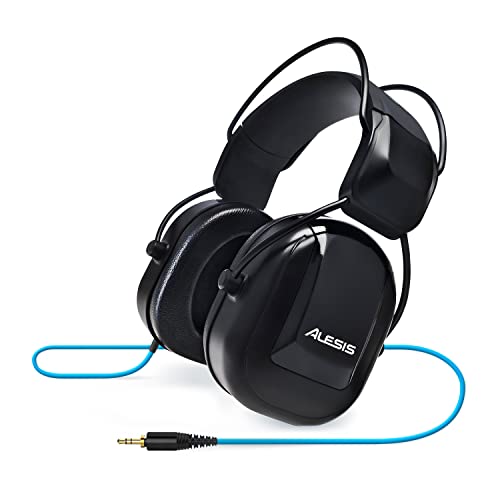
| Vic Firth SIH3 | Maximum isolation for loud electronic kits | Check on Amazon |
| OneOdio Wired DJ Hi-Res | Tight budgets without sacrificing build | Check on Amazon |
| Alesis DRP100 | Matching an Alesis kit out of the box | Budget |
| Audio-Technica ATH-M20x | Flat monitoring for recording sessions | Budget |
| Sony MDR7506 | Detailed sound on long sessions | Mid-range |
| OneOdio A70 | Wireless practice at home | Check on Amazon |
| Vic Firth VXHP0012 | Bluetooth isolation in a smaller form factor | Check on Amazon |
| HXW DMH10 | Replacement pair for daily pad work | Check on Amazon |
How We Compared
Four criteria drove every decision here. First, isolation quality: how much of your own kit’s volume disappears once the cups seal around your ears. Second, sustained comfort: pad material, clamp pressure, and headband padding after a full hour of use. Third, sound accuracy for monitoring: you need to hear a metronome click and a backing track clearly without them fighting each other. Fourth, build durability: drummers bump these against stands, cables get yanked, and sweat is constant.
The 8 Best Drum Headphones in 2026
Vic Firth SIH3
If your electronic kit outputs volume that makes your neighbors knock on the wall, the SIH3 is built for exactly that scenario. Vic Firth designed these from the ground up for drummers, and it shows in the deep over-ear cups that swallow the entire ear without pinning it. Isolation is the standout here; ambient stick noise drops to a distant murmur.
- Exceptional passive isolation blocks kit bleed effectively
- Plush ear pads remain comfortable past an hour
- Bulkier profile sits awkwardly under hearing protection at a venue
Skip this pair if you need something compact for commuting or if your practice volume is modest, because the isolation and size are overkill.
OneOdio Wired DJ Hi-Res
At a budget price, this pair punches well above its price in build solidity. The plastic feels dense rather than cheap, and the detachable cable is a genuine rarity at this tier. Sound leans warm, which makes kick and snare pads feel punchy through a backing track.
- Detachable cable eliminates the single most common failure point at low prices
- Warm tuning suits electronic drum pads without sounding muddy
- Clamp pressure is firm out of the box and needs several sessions to soften
Skip it if you already wear glasses or run long sessions; the clamp tightness will bother you before the pads break in.
Alesis DRP100
Alesis designed these for its electronic kits, and they work exactly as the name implies: no-frills drum monitoring. A protective bag is included, and the fixed straight cable of roughly 1.8 meters reaches most module outputs from the throne.
- Easy-to-drive 32-ohm drivers suit modest module outputs
- Included protective bag keeps it clean in a kit bag
- Sound is functional but lacks detail in the upper mids, making hi-hat tracks feel recessed
Skip it if you need a pair that doubles as everyday listening headphones, because the tuning is specialized to a narrow task.
Audio-Technica ATH-M20x
The M20x is the entry point into Audio-Technica’s studio line, and drummers who record their electronic kit will appreciate the relatively neutral midrange. Backing tracks sound like what they are, not colored toward bass or treble. For tracking sessions where you need to judge your own mix, that neutrality matters.
- Neutral tuning serves both practice monitoring and rough mix review
- Lightweight build reduces fatigue during long recording takes
- Shallow ear cups press against the outer ear on larger heads
Skip it if isolation is your priority, because this closed-back design isolates only moderately and still lets ambient stick noise in noticeably.
Sony MDR7506
The 7506 is a studio standard for a reason, and its detail retrieval makes it excellent for hearing the difference between a clean pad hit and a muted one. Coiled cable, replaceable pads, and a fold mechanism have kept these in production for years. They are also the most expensive of the eight main picks.
- High detail reveals subtle dynamic shifts in your playing through a monitoring mix
- Replaceable pads and coiled cable give a long service life
- The clamping force is aggressive and fatiguing before a break-in period
Skip it if you need something for quick practice without a break-in, or if the price sits above your budget.
OneOdio A70
Bluetooth frees you from cable drag across a module’s output jack, and the A70 handles that tradeoff well. Wired mode is included for zero-latency monitoring when needed. Battery life is rated long enough to cover a week or more of daily practice between charges.
- Dual mode gives wireless freedom with a wired fallback for latency-sensitive work
- Comfortable oval cups handle larger ears without pinching
- Bluetooth codec support is basic, so audio quality in wireless mode is serviceable rather than excellent
Skip it if you primarily play along to a click track, because wireless latency will throw your timing off.
Vic Firth VXHP0012
This is Vic Firth’s answer to the OneOdio A70: wireless isolation in a smaller package. The cups are shallower than the SIH3, which trades a degree of isolation for portability. If you practice on a quieter mesh-pad kit and want Bluetooth without the bulk, this fills that gap.
- Compact wireless design slips into a drum bag side pocket easily
- Decent isolation for a model this slim
- Bluetooth latency makes it a poor choice for click-track practice
Skip it if you need maximum isolation from loud pads, because the shallower cups let more ambient noise through.
HXW DMH10
The DMH10 is the pair you throw on for a quick thirty-minute pad session without worrying about the price. It does not impress, but it seals around the ear well enough to hear a metronome over moderate stick noise. Build materials are the tradeoff, and you will feel it within a few months.
- Comfortable fit right out of the box with no break-in needed
- Decent seal for the price blocks moderate ambient noise
- Headband adjustment hinges feel fragile and are a likely failure point
Skip it if you need these to last more than a season of daily use.
6 More Drum Headphones Worth a Look
The list above covers drummer-specific models and popular studio staples. Editorial roundups from drum and recording publications consistently add a handful of other names, from extreme-isolation specialists for acoustic kits to the closed-back monitors that Roland designs alongside its V-Drums modules. Here are six more pairs worth considering, grouped by what they do best.
Direct Sound EX-29
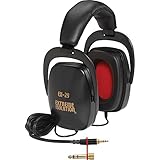
If you play an acoustic kit and want to hear a click or backing track without cranking it to unsafe levels, the EX-29 is built for exactly that problem. Direct Sound markets it as an extreme-isolation headphone, and the company rates it at a 29 dB Noise Reduction Rating, with attenuation reaching roughly 36.7 dB at high frequencies. That frequency detail matters: cymbals and snare crack are reduced much more than the low thump of a kick drum, which is true of all passive isolation.
Inside the thick, deep cups are 40mm drivers with a 32-ohm impedance and high sensitivity, so the EX-29 gets loud from almost any source, including a phone, a small mixer, or an e-kit module. The listing includes a 10-foot extension cable, useful when your playback device sits across the room from the throne. The cups are large and the headband is firmly sprung to create that seal, so expect a snug fit rather than a relaxed one.
For electronic kits, this much isolation is usually overkill, since the main noise is pad thud rather than loud cymbals. For acoustic players, though, it addresses the most important issue in this whole category: protecting your hearing while you practice to a track.
- Strength: Among the highest passive isolation figures you will find in a music headphone.
- Strength: Efficient 32-ohm drivers play loud from weak sources.
- Drawback: Bulky, heavy cups and a firm clamp; not a pair for casual listening.
- Drawback: Sits in a higher price tier than the Vic Firth SIH3.
Compared with the Vic Firth SIH3, the EX-29 isolates more on paper and sounds closer to a studio headphone, while the Vic Firth is lighter and less expensive. If your kit is acoustic and loud, the EX-29 is the stronger hearing-protection tool.
Sennheiser HD 280 Pro

The HD 280 Pro is the closed-back studio headphone that many recording engineers hand to drummers during tracking, and the reason is isolation. Sennheiser rates it at up to 32 dB of passive ambient attenuation, which is exceptional for a conventional studio monitor. It is the pair that bridges the gap between purpose-built isolation headphones and studio monitors you would also trust for mixing.
Listed specs include a frequency response of 8 Hz to 25 kHz and a 64-ohm impedance. Most e-drum modules and audio interfaces drive it well, though some very small practice amps may need their volume turned up further than with the 32-ohm Roland and Direct Sound pairs. The cable is a single-sided coiled cord with a 3.5mm plug and 6.3mm adapter, and the coil gives slack when you lean forward to reach a crash or ride.
The ear cups rotate and the headband collapses for storage in a stick bag. The tuning is accurate and slightly lean in the low end, so a metronome click and a backing track stay distinct rather than blurring into a bass-heavy mix.
- Strength: Excellent isolation without the bulk of dedicated isolation headphones.
- Strength: Accurate sound that doubles as a recording and mixing reference.
- Drawback: Tight clamp and synthetic leather pads get warm in long, sweaty sessions.
- Drawback: Not as plush as the Sony MDR7506 once both are broken in.
The HD 280 Pro is the pair to choose if you want one headphone for both acoustic-kit practice and studio work. It isolates better than the Audio-Technica ATH-M20x and Sony MDR7506 in the main list.
Audio-Technica ATH-M50x

Several 2026 drum-headphone roundups name the ATH-M50x their best all-rounder, and the reasoning is easy to follow. It combines solid closed-back isolation, a punchy but controlled sound, and a detachable cable system in a pair that drummers can also use for everyday listening and recording. It is the bigger sibling of the ATH-M20x already on this list.
The M50x uses 45mm drivers with a 38-ohm impedance and a listed frequency response of 15 Hz to 28 kHz. That low impedance makes it easy to drive from e-kit modules, interfaces, and phones. It ships with three detachable cables: a coiled cable that extends from about 1.2 to 3 meters, a straight 3-meter cable, and a short straight cable for portable use. For drummers, the coiled cable is the right choice behind the kit, and a yanked cable never takes the headphone down with it.
The earcups swivel 90 degrees for one-ear monitoring, handy for a quick check of the room between takes, and the frame folds for transport. Bass is lifted enough that kick pads and bass guitar lines in a play-along track feel full, while the midrange stays clear enough to hear the click.
- Strength: Three detachable cables, including a coiled one ideal for drumming.
- Strength: Punchy, detailed tuning that suits both practice and recording.
- Drawback: Isolation is good but below the HD 280 Pro and EX-29 for loud acoustic kits.
- Drawback: Pads are firm and can get hot; many owners eventually swap to softer aftermarket pads.
Choose the M50x over the ATH-M20x if you want more detail, deeper bass, and the detachable cable system. Choose it over the Vic Firth SIH3 if you play an electronic kit and want a pair that also works as your main studio headphone.
Roland RH-5

Roland designs its RH series headphones with its own V-Drums and digital pianos in mind, and the RH-5 is the entry point. It is a closed-back, around-ear monitor with 40mm drivers, a 32-ohm impedance, and a frequency response listed from 10 Hz to 22 kHz. The low impedance matters here: e-drum modules often have modest headphone outputs, and an easy-to-drive pair reaches a useful level without distortion.
The RH-5 is light at roughly 190 grams without the cord, which makes it one of the most comfortable options in this guide for long practice sessions. The cable is about 3 meters long, ending in a 3.5mm plug with a 6.3mm adapter that fits the headphone jack on most modules. Sound is balanced with a modest bass lift, so kick and toms have weight but the click track stays clear.
- Strength: Lightweight and easy to drive from e-kit modules.
- Strength: Long cable reaches from module to throne without strain.
- Drawback: Isolation is moderate, so it suits electronic kits more than loud acoustic drums.
- Drawback: The lightweight plastic build will not take the same abuse as studio-grade pairs.
Against the Alesis DRP100, the RH-5 offers a lighter fit and a more balanced sound at a similar price tier. Against the HXW DMH10, it is a clear step up in build and tuning for players who practice daily.
Roland RH-300

The RH-300 is Roland’s higher-end closed monitor and a common upgrade for drummers who outgrow entry-level headphones. It uses 45mm neodymium drivers with a frequency response listed from 10 Hz to 25 kHz and high sensitivity, so it plays loudly even from modest outputs. The long cable, roughly 3.5 meters, ends in a screw-on 6.3mm plug over a 3.5mm connector, a practical match for drum modules and mixers.
The padded, adjustable earpieces and a weight of about 285 grams put it in the same class as studio monitors like the Sony MDR7506. Sound is detailed and full-range, which helps you judge dynamics and ghost notes in your playing when you record practice sessions or play along with complex tracks.
- Strength: Detailed, full-range sound with plenty of output from e-kit modules.
- Strength: Long cable with a robust screw-on adapter.
- Drawback: Priced in a higher tier than the Sony MDR7506 with similar isolation.
- Drawback: Not designed for extreme isolation, so acoustic players may still prefer the EX-29.
The RH-300 makes most sense for electronic drummers who also record and want a pair voiced by the same company that makes their module. Acoustic players chasing isolation will get more from the EX-29 or HD 280 Pro.
Shure SRH440A

The SRH440A is Shure’s 2022 refresh of its long-running entry studio headphone, and it competes directly with the ATH-M20x and Sony MDR7506 on this list. Shure specifies 40mm drivers, a 40-ohm impedance, a frequency response of 10 Hz to 22 kHz, and a weight of about 268 grams. The low impedance and high sensitivity mean it plays loud from phones, modules, and small interfaces alike.
The key upgrade for drummers is the detachable 3-meter cable, which locks into the left earcup and terminates in a 3.5mm plug with a threaded 6.3mm adapter. A snagged cable can be replaced rather than ending the headphone’s life. The refreshed headband and pads aim for a more comfortable fit than the original SRH440, and the tuning is flat and accurate for checking recordings.
- Strength: Detachable locking cable and accurate, easy-to-drive sound.
- Strength: Comfortable refreshed fit for long sessions.
- Drawback: Isolation is average for a closed-back, well short of the EX-29 or HD 280 Pro.
- Drawback: Straight cable is less convenient behind a kit than a coiled one.
Choose the SRH440A over the ATH-M20x if you want a detachable locking cable and a more refined fit. Choose the Sony MDR7506 instead if you prefer a coiled cable and a long studio track record.
Buying Guide
Isolation vs. Comfort: Choosing the Right Clamp Force
Drum practice is the one scenario where a tight clamp and a loose clamp fight each other directly. Tight clamp means better isolation from your own kit’s volume, but it presses against glasses temples and ear cartilage within twenty minutes. Look for models with replaceable pads so you can soften the fit over time, and favor oval cup shapes that wrap the ear rather than pressing it flat. If you wear in-ear monitors at gigs, a moderate-clamp over-ear like the OneOdio A70 will feel far more familiar during practice than a compression-fit pair.
Wired Latency and Why It Matters for Drummers
Bluetooth codecs introduce between forty and two hundred milliseconds of delay depending on the chip and codec. For a guitarist listening to a track over speakers, that is imperceptible. For a drummer triggering a pad and needing to hear the resulting sound instantly through the same pair, even fifty milliseconds throws your timing into a loop you cannot play out of. Always wire in when practicing to a click. Use wireless only for listening to full tracks or when the module is too far away for a comfortable cable run.
Cable Design: Coiled, Detachable, or Fixed
Drum setups generate cable chaos. The coiled cable on the Sony MDR7506 stretches to keep tension off the module’s jack when you lean forward on the throne. Detachable cables, like the OneOdio Wired DJ Hi-Res and Audio-Technica ATH-M50x, mean a single bad pull does not strand your headphones; you simply swap in an inexpensive replacement cable. Fixed cables on the Vic Firth SIH3 are robust but become the weak point if the connector eventually loosens.
Comparison Table: The Additional Drum Headphones
| Model | Driver | Impedance | Cable | Best kit match | Price tier |
|---|---|---|---|---|---|
| Direct Sound EX-29 | 40mm | 32 ohms | Fixed, extension included | Loud acoustic kits | Premium |
| Sennheiser HD 280 Pro | Dynamic, closed | 64 ohms | Fixed coiled | Acoustic and studio tracking | Mid-range |
| Audio-Technica ATH-M50x | 45mm | 38 ohms | Three detachable, incl. coiled | Electronic kits and recording | Premium |
| Roland RH-5 | 40mm | 32 ohms | Fixed, about 3 m | Entry e-kits | Budget |
| Roland RH-300 | 45mm | Low, module-friendly | Fixed, about 3.5 m | E-kits with recording | Premium |
| Shure SRH440A | 40mm | 40 ohms | Detachable locking, 3 m | E-kits and home studio | Mid-range |
How to Choose Drum Headphones: What Competitor Guides Often Miss
Start With Your Kit: Acoustic or Electronic
This is the single most important decision, and it changes which features matter. An acoustic kit can produce sound pressure levels well above 100 dB at the throne, so the headphone’s job is hearing protection first and playback second. Isolation-focused pairs like the Direct Sound EX-29, Vic Firth SIH3, and Sennheiser HD 280 Pro belong here. An electronic kit is quiet in the room, and all of its sound arrives through the headphones. That shifts priorities toward sound quality, comfort, and a long cable, which is where the ATH-M50x, Roland RH series, and Sony MDR7506 shine.
Read Isolation Numbers Carefully
Manufacturers quote isolation in different ways: some give a single Noise Reduction Rating, others list maximum attenuation at a specific frequency. Passive isolation is always strongest in the treble and weakest in the bass, so a headphone that blocks 35 dB of cymbal wash might block only 20 to 25 dB of kick drum. Use quoted figures to compare models within the same brand, and expect real-world bass reduction to be lower than the headline number.
Match Impedance to Your Module or Interface
Many e-drum modules and small practice amps have limited headphone output. Low-impedance pairs, roughly 32 to 40 ohms, like the Roland RH-5, Direct Sound EX-29, ATH-M50x, and Shure SRH440A, reach loud levels easily. Higher-impedance pairs can sound quiet or compressed when the module runs out of headroom. If a module’s volume knob is near maximum and the click still feels weak, a lower-impedance headphone or a small headphone amp is the fix.
Plan for Hearing Safety, Not Just Comfort
Drummers are at real risk of noise-induced hearing loss, and the danger often comes from turning the click up to beat the room. Good isolation lets you keep the mix at a moderate level. As a rule of thumb, if you cannot hear someone speaking at normal volume next to you after you take the headphones off, your practice level was too high.
Consider In-Ear Monitors for Gigs
Over-ear headphones dominate practice rooms, but many gigging drummers move to in-ear monitors on stage because they are smaller, stay put during fast fills, and isolate well with a good seal. Over-ears remain the easier, more comfortable choice for home practice and are far more forgiving of fit.
Setup Tips for Practicing With Headphones
- Route the click and track through your module or mixer. Most e-drum modules and small mixers have an aux input; send your phone or computer there so the click, backing track, and kit share one headphone output with independent levels.
- Set the click first, then the kit. Bring the metronome to a level you can hear clearly, then raise the kit and track around it. This keeps overall volume lower than starting with a loud mix.
- Use a coiled cable or a cable clip. Run the cable over your shoulder and clip it to your shirt or throne so leaning toward a crash does not pull on the jack.
- Stay wired for timing-critical work. Bluetooth latency can make a click feel late. Use wireless headphones only for listening along to full songs.
- Wipe pads after sweaty sessions. Sweat degrades synthetic leather pads quickly. A dry cloth after each session and replacement pads every year or two keep comfort and hygiene in check.
- Take short breaks. Removing headphones for a minute between songs relieves clamp pressure and gives your ears a rest.
Which Drum Headphones Fit Your Situation?
With fourteen pairs across this guide, the right choice depends less on which headphone is “best” and more on what you play, where you play, and what else you need the headphones to do.
Beginner on an Electronic Kit
A first e-kit is usually played in a bedroom or apartment, where the goal is quiet practice and clear sound from the module. The Roland RH-5 and Alesis DRP100 are easy to drive, comfortable, and priced in the entry tier. The OneOdio Wired DJ Hi-Res is a capable alternative if you also want a pair for gaming or music at your desk. Isolation is not critical here, so prioritize comfort and cable length.
Intermediate Player on an Acoustic Kit
Once you play an acoustic kit regularly, hearing protection becomes the priority. The Vic Firth SIH3 is the most accessible drummer-specific option, the Sennheiser HD 280 Pro adds studio-grade sound with strong isolation, and the Direct Sound EX-29 offers the most attenuation of the group. Practicing to a click on an acoustic kit with ordinary open or semi-isolating headphones tempts you to push the volume, which is exactly what these models are designed to prevent.
Drummer Who Also Records
If you track your own drums, mix play-along videos, or edit practice recordings, you want accurate sound as much as isolation. The Audio-Technica ATH-M50x, Sony MDR7506, Shure SRH440A, and Roland RH-300 all double as studio references. The M50x and SRH440A add detachable cables, which matter when the same headphones move between the kit and the desk.
Teacher or Shared Practice Room
Drum teachers and schools need pairs that survive repeated handling and many different head sizes. Models with replaceable pads and detachable cables, such as the ATH-M50x and SRH440A, cost more up front but avoid frequent replacements. Budget pairs like the HXW DMH10 work as spares for students who forget their own.
Wireless Listening Away From the Kit
Bluetooth models like the OneOdio A70 and Vic Firth VXHP0012 are best treated as listening headphones for learning songs, transcribing parts, or relaxing after practice. When the click matters, switch the A70 to wired mode or use a wired pair from this list.
Budget Planning Across Tiers
- Budget tier: Roland RH-5, Alesis DRP100, OneOdio Wired DJ Hi-Res, ATH-M20x, HXW DMH10. Good for electronic kits and beginners.
- Mid-range: Vic Firth SIH3, Sennheiser HD 280 Pro, Sony MDR7506, Shure SRH440A. The sweet spot for isolation and studio-quality sound.
- Premium tier: Direct Sound EX-29, ATH-M50x, Roland RH-300. For maximum isolation or a long-term studio-and-practice headphone.
Our Verdict
The Vic Firth SIH3 is the top pick for drummers who need genuine isolation from a loud electronic kit. If your budget is tight, the OneOdio Wired DJ Hi-Res delivers surprising solidity at half the price. One condition where another pair wins outright: if you primarily practice with a click track and your module sits on a stand within arm’s reach, the Sony MDR7506’s detail and build quality justify its premium over anything else on this list.
FAQ
Can I use regular studio headphones for drum practice?
You can, but you will lose the isolation advantage that makes practice tolerable for your neighbors and your own hearing. Studio headphones like the ATH-M20x are tuned for neutral monitoring, not for blocking out the percussive noise of your own pads.
Do I need Bluetooth for drum headphones?
Only if your practice space keeps you far from your module and you listen to full backing tracks. For click-track work, always go wired to eliminate latency. The OneOdio A70’s dual-mode design is the most practical middle ground.
How long do drum headphones last compared to regular ones?
Shorter, because sweat and constant adjustment stress the headband and pads. Budget pairs like the HXW DMH10 may fail within a season, while sturdier models such as the Vic Firth SIH3, or pairs with replaceable pads and detachable cables such as the ATH-M50x, can last several years of daily use.
Are the Vic Firth models really made specifically for drummers?
Yes. Vic Firth designs these around the drummer’s specific problem: hearing a metronome or backing track clearly while your own sticks generate loud transients around your ears. The cup depth, pad material, and clamp pressure are tuned for sustained practice rather than studio mixing.
Part of our headphones buying guide hub.
What headphones do drummers use for acoustic kits?
For acoustic kits, drummers usually choose closed-back headphones with strong passive isolation, such as the Direct Sound EX-29, Vic Firth SIH3, or Sennheiser HD 280 Pro. These block enough cymbal and snare volume that the click and backing track can stay at a safer level.
Can I use earmuffs or earplugs instead of isolation headphones?
Earplugs and earmuffs protect hearing but do not deliver a click or track. Some drummers combine earplugs with in-ear monitors, while others rely on isolation headphones that combine both jobs. For home practice with a play-along track, isolation headphones are simpler.
Why does my e-drum module sound quiet through my headphones?
Many modules have limited headphone output, and high-impedance headphones need more voltage to reach a given volume. Switching to a low-impedance pair around 32 to 40 ohms, such as the Roland RH-5 or ATH-M50x, or adding a small headphone amplifier usually fixes it.
Are Roland headphones better for Roland V-Drums?
Not automatically. Roland’s RH series is voiced and powered with its modules in mind and is easy to drive, but any low-impedance closed-back headphone works well with V-Drums. Choose based on comfort, cable length, and budget rather than brand matching alone.
How loud should my click track be?
Loud enough to hear clearly over your playing, and no louder. Good isolation is what lets you keep the click moderate. If your ears ring or feel dull after practice, lower the overall level or move to a more isolating headphone.