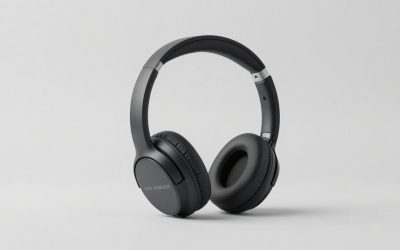
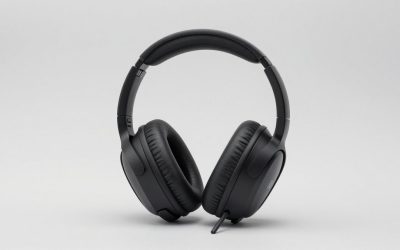
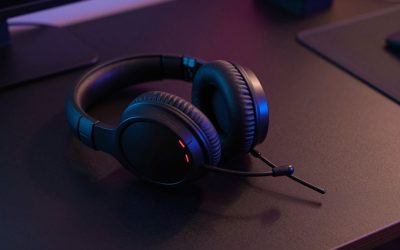
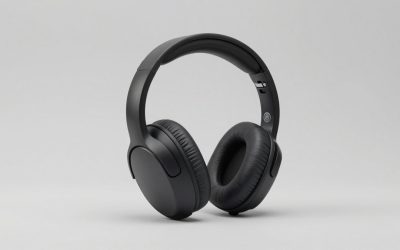
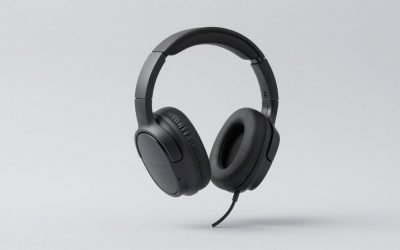
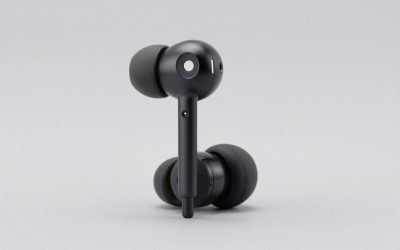
The job of a DJ headphone is brutal and specific. You are monitoring a mix at close range while the venue hammers back at you from the PA. A bad pair lets ambient noise bleed in, forces you to crank the volume to dangerous levels, or distorts when the kick drum hits hard. A good one isolates, stays accurate under pressure, and does it without turning your ears into a pressure cooker.
What separates the best DJ headphones from the rest comes down to three things: passive isolation you can actually trust, a tuning that lets you cue a track without it sounding muddy, and a build that survives being coiled, stuffed into a laptop bag, and pulled out mid-set. The models below cover the full price range, from budget backup pairs to studio-grade monitors and flagship headphones that double as a DJ’s daily driver.
As an Amazon Associate we earn from qualifying purchases at no extra cost to you.





Our Top Picks
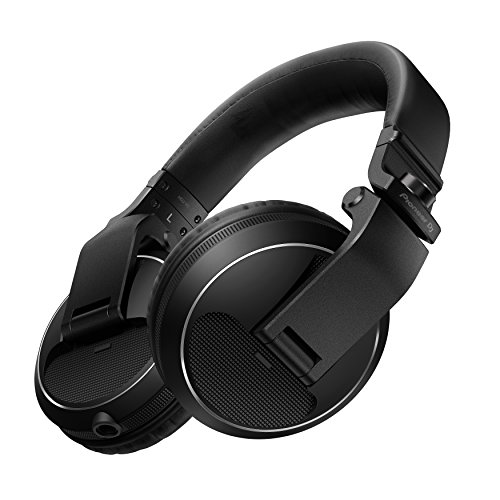
 Pioneer DJ HDJ-CUE1 On-Ear Wired DJ Headphones(Pack of 1)3.15 x 6.06 x 7.48 inches0.5 poundsCheck on Amazon
 Audio-Technica ATH-M50X Professional Studio Monitor HeadphonesOne-Size11.4 x 10 x 4.1 Inches0.6 PoundsCheck on Amazon
 Audio-Technica ATH-M20x Professional Studio Monitor HeadphonesATH-M20X11.4 x 10 x 4.1 inches0.5 PoundsCheck on Amazon


Top 3 picks at a glance
Quick Picks
| Product | Best for | Price |
|---|---|---|
| OneOdio Hi-Res Over-Ear | Budget over-ear comfort | Check on Amazon |
| Pioneer HDJ-CUE1 | Mobile DJs who travel light | Mid-range |
| PUPGSIS M20 | Dual-jack flexibility on a budget | Check on Amazon |
| Audio-Technica ATH-M50X | Studio DJs who also produce | Mid-range |
| Audio-Technica ATH-M20x | Budget studio monitoring | Budget |
| Pioneer HDJ-X5 | Serious club and festival sets | Check on Amazon |
| TASCAM TH-02 | Recording and DJ cross-use | Check on Amazon |
| Wired Over-Ear Studio Monitor | Absolute minimum entry point | Check on Amazon |
How We Compared
Every model here is weighed against four criteria that matter most for DJ monitoring specifically: passive isolation (how well the ear cups or pads block external sound without active cancellation), cue accuracy (whether you can hear a track you are preparing to mix while another is playing through the monitors), build durability (hinge quality, cable strain relief, and whether the ear cups flex and return or feel like they are about to crack), and comfort under extended use with a hooded head. We weighted club and festival use higher than home listening, because a headphone that sounds great in a quiet room but fails when the sub is pushing air is not a DJ headphone.
The 8 Best DJ Headphones in 2026
OneOdio Wired DJ Hi-Res Over-Ear Headphones for PC, Keyboard Guitar
OneOdio has carved out a reputation for giving beginners an over-ear experience without the over-ear price tag. This model delivers Hi-Res capability in a wired, closed-back form that actually blocks a reasonable amount of ambient noise at a budget price. The fit is comfortable enough for a house party set, and the over-ear design means less ear fatigue than cheaper on-ear alternatives.
- Over-ear design provides noticeably better passive isolation than anything else at this price
- Hi-Res certification suggests a frequency response that stays clean above the midrange
- Plastic-heavy construction means the headband can creak under pressure
Skip this if you are playing in loud clubs or outdoor festivals. The isolation is adequate for a bedroom studio or a small house gig, but it will not let you cue a track at low volume when the room is at full SPL.
Pioneer DJ HDJ-CUE1 On-Ear Wired DJ Headphones, Foldable, Dark Silver
Pioneer designed the HDJ-CUE1 as an entry point into their DJ headphone ecosystem, and it works. The on-ear format keeps the profile slim and makes these easy to throw in a bag alongside a controller. The foldable hinge is solid, not flimsy, and Pioneer’s tuning gives you a mid-forward sound that makes cueing tracks intuitive. At this mid-range price, you are buying brand trust and a sound signature tuned specifically for DJ monitoring rather than casual listening.
- Compact foldable design ideal for mobile DJs and controller setups
- Pioneer’s tuning prioritizes midrange clarity for accurate cueing
- On-ear pads compress harder over long sessions and can become uncomfortable after two hours
Skip this if your primary venue is a loud club or outdoor stage. On-ear isolation will force you to push volume too high in those environments.
PUPGSIS M20 Wired DJ and Studio Monitor Headphones, 50mm, 3.5/6.35mm
The PUPGSIS M20 is a no-frills headphone that gets one thing right: dual connectors. The included 3.5mm and 6.35mm jacks mean you can plug straight into a mixer, an audio interface, or a laptop without hunting for an adapter. The 50mm drivers deliver a full-bodied low end that helps you feel the bass before you hear the transient detail. As a budget option, this is a legitimate backup pair or a first headphone for someone learning to mix.
- Dual 3.5mm and 6.35mm connectors eliminate the need for a separate adapter
- Large 50mm drivers produce a satisfying, physical bass response
- The brand has no established reputation, so long-term durability is uncertain
Skip this if you need a single primary pair for professional gigs. The lack of brand track record and the generic build make it better suited as a secondary or practice headphone.
Audio-Technica ATH-M50X Professional Studio Monitor Headphones, Black, Professional Grade, with Detachable Cable
The ATH-M50X is arguably the most recognized studio headphone in the world, and for good reason. Its critically acclaimed tuning pairs punchy bass with crisp treble, giving a detailed, energetic picture of a mix rather than a strictly flat one. The detachable cable is a practical feature for DJs who need to swap between a coiled cable at a gig and a straight cable in the studio. This is not a dedicated DJ headphone, but it is a widely trusted studio monitor that many DJs also use for cueing.
- Detailed studio tuning that many producers and DJs already know well
- Detachable cable system adds versatility and a replacement path if the cable dies
- It costs considerably more than the budget options with similar isolation
Skip this if your budget is tight or if you primarily DJ in loud environments where the isolation difference between these and a dedicated club model is marginal compared to the price jump.
Audio-Technica ATH-M20x Professional Studio Monitor Headphones, Black
The M20x is the entry point to Audio-Technica’s studio line, and it brings a surprising amount of the M50X’s tuning philosophy to a fraction of the cost. The sound is balanced and not bass-boosted, which means you will hear your mix honestly rather than through a flattering low-end veil. The lightweight over-ear design keeps the weight low and the profile compact. As a budget pick, it is a legitimate studio monitoring option that can also serve as a quiet-venue DJ headphone.
- Audio-Technica’s tuning philosophy delivers accuracy that outclasses most budget headphones
- Lightweight and low-profile, easy to wear for extended studio sessions
- Thinner pads and a lighter clamp provide less passive isolation than dedicated DJ models, limiting loud-club use
Skip this if you are buying a single pair for club work. It excels in quieter settings and studio environments but will not keep up with the isolation demands of a packed venue.
Pioneer DJ HDJ-X5 Professional DJ Headphones, Black
The HDJ-X5 is Pioneer’s mid-tier professional model, and it hits the sweet spot for DJs who need a real workhorse. Over-ear cups with dense padding provide genuine passive isolation that lets you cue tracks at manageable volume even in a loud room. The hinge design allows the ear cups to rotate and fold flat for easy transport. Pioneer built this specifically for club monitoring, and the midrange-forward tuning reflects that priority. It is the most complete dedicated DJ headphone among the first eight picks.
- Genuinely professional isolation suited for loud club and festival environments
- Ear cup rotation and folding make it practical for one-ear monitoring during a mix
- The padded headband can run warm during summer outdoor sets
Skip this if you are on a strict budget. The HDJ-CUE1 covers similar ground for mobile use, but for serious club work it is the strongest of the first eight picks.
TASCAM TH-02 Professional Studio Monitor Headphones, Wired, Over Ear
TASCAM is a brand built around recording hardware, and the TH-02 reflects that DNA. The over-ear design with large ear cups provides a comfortable seal that blocks a decent amount of noise, and the included quarter-inch adapter means you can plug directly into a mixer or interface without any dongles. The sound is neutral enough for monitoring levels and basic mixing decisions. As a budget pick, this is one of the lowest-cost ways to get a genuinely usable closed-back pair.
- Included 1/4-inch jack adapter makes mixer connectivity immediate
- Over-ear design and TASCAM’s recording-oriented tuning produce a balanced response
- Build quality is adequate but feels like the price suggests, with no premium materials
Skip this if you need durability for touring. It is a solid practice or home studio pair, but the construction will not survive years of gigging.
Wired Headphones, Over Ear Headphones for Studio Monitor and Mixing DJ
This is the absolute floor of the category, and it earns a spot here because sometimes you genuinely need a backup pair that costs less than a round of drinks. The over-ear design at this budget price provides more isolation than you should expect at this price. The tuning is serviceable for rough level-matching and basic cueing. It is not a reference, not a tour companion, and not what you want on your primary mixer, but it will get you through a situation where your main pair died ten minutes before doors.
- Lowest cost entry point for an over-ear closed-back design in the category
- Serviceable for emergency use and rough practice sessions
- No established brand, uncertain long-term quality control, and generic tuning
Skip this if it would be your only pair. A backup is one thing, but making this your primary monitoring tool will hurt your mixes.
More DJ Headphones Worth Considering
The eight picks above lean toward budget and entry-level models. The six additions below fill in the professional end of the market, including the on-ear model most clubs still treat as the standard, Pioneer’s flagship, and two studio favorites that many DJs use for production as well as cueing.
Sennheiser Pro Audio Professional HD 25 On-Ear DJ Headphones
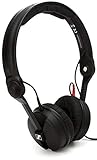
The Sennheiser HD 25 has been a fixture in DJ booths for decades, and most 2026 buying guides still name it the default choice for club work. It is a closed, on-ear design that weighs about 140g without the cable, with a split headband that spreads the clamping force and a rotating ear capsule that makes one-ear monitoring easy. Sennheiser rates it at 70 ohms with a 16Hz to 22kHz frequency response and a maximum sound pressure level of 120dB.
The sound is punchy and forward, with an upper-bass emphasis that helps kick drums cut through a loud room, which is exactly what matters when beatmatching against a booming PA. The firm clamp creates a strong seal for an on-ear model, so isolation is better than its small pads suggest. Just as important for working DJs, almost every part can be replaced: ear pads, headband padding, the detachable cable and even the drivers are available separately, so a damaged pair can be repaired rather than replaced.
The trade-offs are comfort and style. The clamp can feel tight over a long set, especially for people with larger heads or glasses, and on-ear pads press directly on the ear. The plastic construction looks utilitarian. The 70-ohm impedance is easy to drive from DJ mixers and controllers but slightly less loud from some phones than 32-ohm models.
Strengths: excellent isolation for an on-ear, punchy cue-friendly tuning, very light weight and fully replaceable parts.
Drawbacks: firm clamp, on-ear pressure during long sessions, and a plain plastic look at a mid-range to premium price.
How it compares: it contradicts the general advice that over-ear always isolates better; the HD 25 shows that a tight on-ear seal can work in loud booths. Against the Pioneer HDJ-X5, it is lighter and more repairable, while the HDJ-X5 offers over-ear comfort.
Pioneer DJ HDJ-X10 Flagship Over-Ear DJ Headphones, 50 mm
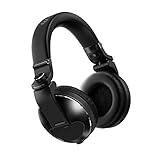
The HDJ-X10 is Pioneer’s flagship DJ headphone and the most common premium alternative to the HD 25. It is a closed over-ear design with 50mm drivers, 32-ohm impedance and a frequency range Pioneer lists as 5Hz to 40kHz, which the brand markets as high-resolution sound in a DJ headphone. Sensitivity is rated at 106dB and maximum input power at 3,500mW, so it handles loud mixer outputs without strain.
Build quality is the other selling point. The metal-reinforced frame and hinges are designed for touring, Pioneer states that the HDJ-X series passed MIL-STD-810G durability tests, and the ear cups swivel for one-ear monitoring. Two detachable cables are included, a coiled cable for the booth and a straight cable for travel, so a damaged cable can be swapped in seconds. Weight is about 328g without the cable, heavier than on-ear models but well distributed over thick memory-foam pads.
Sound is detailed and controlled, with strong but not boomy bass and clear mids for picking out vocals and hi-hats during a mix. Because it is clear rather than heavily bass-tilted, it also works for casual production and listening.
Strengths: premium build, excellent detail, over-ear comfort with strong isolation, and two detachable cables.
Drawbacks: premium pricing, more weight than an on-ear, and pads that can feel warm in hot booths.
How it compares: it is the step up from the HDJ-X5 recommended in the verdict, with larger drivers, better materials and a wider frequency range. Choose it over the HD 25 if you prefer over-ear comfort and want one premium pair for both booth and home use.
beyerdynamic DT 770 Pro (80 Ohm), Closed-Back Studio Headphones

The DT 770 Pro is a studio staple that many producer-DJs use for both mixing tracks and practicing sets. The 80-ohm version is the one to choose for DJ work: it is easy enough to drive from controllers, mixers and audio interfaces, while the higher-impedance 250-ohm version really needs a dedicated amplifier. It is a closed-back, over-ear design with large velour ear pads and a frequency response beyerdynamic lists from 5Hz to 35kHz.
Comfort is the standout. The soft velour pads and moderate clamp make it one of the most comfortable closed headphones for long sessions, and the sound is detailed with extended treble and deep bass. Isolation is good for a studio headphone, adequate for home practice and small gigs, though the velour pads let in more ambient noise than leatherette DJ pads.
It is not a purpose-built DJ headphone. The coiled cable is attached rather than detachable, the cups do not swivel far enough for comfortable one-ear monitoring, and the frame does not fold, so it takes up more room in a bag. The treble can feel bright to some listeners at high volume.
Strengths: excellent long-session comfort, detailed sound for production, and replaceable pads and headband padding.
Drawbacks: fixed cable, no folding, limited swivel for one-ear cueing, and velour pads that isolate less than leatherette.
How it compares: it fills a similar producer-DJ role as the ATH-M50X. The DT 770 Pro is more comfortable for long sessions, while the M50X folds, swivels further and has a detachable cable, making it better for gigs.
V-Moda M-100 PRO Professional Over-Ear DJ Headphones

The M-100 PRO replaced the long-running M-100 Master in 2025 and is V-Moda’s current flagship DJ headphone. It uses 50mm ceramic-coated dual-diaphragm drivers with bass ducts inside the ear cups, 32-ohm impedance and a 5Hz to 40kHz frequency response with Hi-Res certification. Reviewers describe the sound as punchy and loud, aimed squarely at DJs and beatmakers.
V-Moda’s reputation rests on durability, and the PRO continues that with a metal frame, an improved hinge, a cover that protects the cable joint and ear cups that you can detach and replace yourself. The cups swivel for one-ear listening and the deep memory-foam pads create a good seal. Two detachable cables come in the box: a 3m coiled cable with a 6.3mm plug for the booth and a 1.5m straight cable with a 3.5mm plug for phones and laptops.
At about 319g it is similar in weight to the HDJ-X10 but more compact, and the styling is distinctive, with customizable metal shields. The bass-forward tuning is great for club music but less neutral than studio-oriented headphones.
Strengths: robust metal build, strong isolation, swiveling cups, two detachable cables and user-replaceable parts.
Drawbacks: premium pricing, bass emphasis that is less suited to production, and a snug fit that some may find tight.
How it compares: it competes directly with the HDJ-X10. The V-Moda leans more toward bass and ruggedness; the Pioneer is slightly more detailed and neutral.
AIAIAI TMA-2 DJ XE Wired On-Ear DJ Headphones

The TMA-2 DJ XE is a modular on-ear DJ headphone from the Danish brand AIAIAI. Every part, from the headband and ear pads to the speaker units and cable, can be swapped or replaced, which makes it one of the most repairable headphones you can buy. The stock configuration weighs just 168g and uses 40mm bio-cellulose drivers rated at 32 ohms, with PU leather on-ear pads and a straight 1.5m cable with a 3.5mm plug.
The light weight and minimal frame make it comfortable for long sessions, and the PU pads seal reasonably well for an on-ear design. The tuning is balanced with enough low end for beatmatching. Because the system is modular, you can upgrade later to different drivers, over-ear pads, or a coiled cable without buying a new headphone.
The XE configuration is the brand’s more affordable package, so the stock straight cable is better suited to home practice than a crowded booth, and the plastic headband feels lighter-duty than the metal frames of premium models. On-ear isolation is lower than closed over-ear designs in very loud rooms.
Strengths: extremely light, fully modular and repairable, balanced sound and comfortable for long sets.
Drawbacks: straight cable in the stock kit, lighter-duty materials, and less isolation than over-ear options.
How it compares: it is a modern, modular take on the HD 25 formula. The HD 25 isolates better; the TMA-2 is lighter and easier to customize.
Sony MDR7506 Professional Large Diaphragm Headphone

The MDR-7506 has been a broadcast and studio standard for decades and remains a solid mid-range choice for beginner DJs who also record or edit audio. It is a closed-back, folding headphone with 40mm drivers, 63-ohm impedance and a frequency response Sony lists as 10Hz to 20kHz. A long coiled cable with a gold-plated plug and a 1/4-inch adapter is permanently attached.
The sound is clear and detailed with a lively treble, which helps pick out hi-hats and vocals when cueing. The ear cups fold inward for transport, and the light build is comfortable for long sessions. Many audio engineers own a pair, a sign of how long it has stayed in professional use.
For DJ use, the limitations are a non-detachable cable, modest bass compared with dedicated DJ models, and ear pads that are known to flake over time and need replacing. Isolation is good for home practice and small venues but not as strong as the HD 25 or HDJ-X10 in a loud club.
Strengths: proven durability, detailed sound, folding design and long coiled cable.
Drawbacks: fixed cable, lighter bass for club music, and pads that wear out.
How it compares: it fits between the ATH-M20x and ATH-M50X as a studio-first headphone that can double for DJ practice. Choose it if recording and editing matter as much as mixing.
Buying Guide
Isolation is the non-negotiable spec
Unlike consumer headphones where open-back designs add airiness, DJ monitoring demands passive isolation. Closed-back ear cups with dense padding are the minimum. Over-ear designs outperform on-ear for this purpose because the pad seals around your ear rather than pressing on it. If you are playing in environments above eighty-five decibels, on-ear models force you to add volume to overcome bleed, which damages your hearing over time.
Tuning for cueing is different from tuning for listening
A DJ headphone needs a mid-forward response that lets you hear the melody and structure of the track you are preparing to mix while another track is playing in your monitors. Heavily bass-boosted consumer headphones obscure these mid frequencies. A balanced or slightly mid-emphasized tuning is what you want. This is why studio monitors and purpose-built DJ headphones outperform consumer models even when the consumer model has more expensive drivers.
Durability and transport features matter more than you expect
Your DJ headphone will get thrown into a case, stepped on, yanked off during a quick change, and coiled dozens of times per gig. The hinge mechanism and cable strain relief are where budget models fail first. Look for designs with metal hinge points or reinforced plastic at the joint. A detachable cable is not a luxury; it is a replacement part that saves the entire headphone when the cable inevitably dies.
Swivel cups make one-ear monitoring practical
Most DJs cue with one ear on the headphone and the other listening to the room, so they can compare the incoming track with what the crowd hears. Ear cups that rotate or flip let you hold one cup against your ear while the headband rests on your neck or shoulder. Check the swivel range before buying; studio headphones such as the DT 770 Pro rotate only slightly, while DJ models like the HD 25, HDJ-X10 and M-100 PRO are designed for this from the start.
Keep impedance low for mixers and controllers
Impedance, measured in ohms, affects how loud a headphone plays from a given output. DJ mixers and controllers have decent headphone amplifiers, but laptop and phone outputs are weaker. Models between 32 and 80 ohms, such as the HDJ-X10 at 32 ohms or the HD 25 at 70 ohms, play loud from almost anything. Avoid 250-ohm studio versions unless you also use a dedicated headphone amplifier.
Cables: coiled for the booth, straight for travel
A coiled cable stretches when you move around the decks and retracts when you do not, which keeps it from snagging. Straight cables are lighter and tidier for listening on the go. The best DJ headphones include both and let you swap them, because the cable is the most common point of failure. A locking or twist-in connector prevents accidental unplugging mid-set.
Weight and clamp force decide comfort
Light on-ear models like the HD 25 and TMA-2 weigh under 200g and are easy to wear for hours, but they press directly on the ears. Over-ear models around 300g or more spread the pressure but trap more heat. A firm clamp improves isolation and keeps the headphone in place when you lean over the decks, at the cost of comfort over long sets. If you play long nights, prioritize soft pads and a padded headband.
Protect your hearing
Loud booths encourage DJs to turn up the cue level to compete with the monitors, which over years can cause permanent hearing damage and tinnitus. Choose headphones that isolate well enough to cue at moderate volume, ask for a booth monitor turned toward you, and consider musician’s earplugs for the ear that is not on the headphone. For very loud festival stages, some DJs switch to in-ear monitors, which can block more noise than any passive over-ear design.
Comparison of the Added Picks
| Model | Fit | Impedance | Cable | Best for | Price tier |
|---|---|---|---|---|---|
| Sennheiser HD 25 | On-ear, closed | 70 ohms | Detachable straight | Club booths, loud rooms | Mid-range |
| Pioneer HDJ-X10 | Over-ear, closed | 32 ohms | Detachable coiled and straight | Premium club and home use | Premium |
| beyerdynamic DT 770 Pro 80 | Over-ear, closed | 80 ohms | Fixed coiled | Producer-DJs, long sessions | Mid-range |
| V-Moda M-100 PRO | Over-ear, closed | 32 ohms | Detachable coiled and straight | Touring durability, bass-heavy genres | Premium |
| AIAIAI TMA-2 DJ XE | On-ear, closed | 32 ohms | Detachable straight | Lightweight, modular setups | Mid-range |
| Sony MDR-7506 | Over-ear, closed | 63 ohms | Fixed coiled | Recording plus DJ practice | Budget to mid-range |
Caring for DJ Headphones
- Store them in a case. A hard or padded case protects hinges and cables in a gig bag full of controllers and laptops.
- Unplug by the connector, not the cable. Pulling the cable is the fastest way to break the internal wires at the plug.
- Replace pads before they crack. Worn pads reduce isolation and comfort. Most DJ headphones use replaceable pads; leatherette pads typically last a year or two of regular use.
- Wipe pads after sweaty sets. A slightly damp cloth removes sweat and oils that degrade leatherette.
- Carry a spare cable. If your headphones have a detachable cable, a spare weighs almost nothing and can save a gig.
- Coil cables loosely. Tight wrapping around the headband stresses the cable joints.
Which DJ Headphones Fit How You Play?
- Bedroom practice on a first controller: the OneOdio, PUPGSIS M20 or TASCAM TH-02 cover the basics; the Pioneer HDJ-CUE1 is the step up to a purpose-built DJ design.
- Regular club gigs: the Sennheiser HD 25 for a light, tightly sealed on-ear, or the Pioneer HDJ-X5 if you prefer over-ear cups.
- Premium booth upgrade: the Pioneer HDJ-X10 for detail and comfort, or the V-Moda M-100 PRO for a rugged, bass-forward alternative.
- DJing plus music production: the Audio-Technica ATH-M50X for portability and a detachable cable, or the beyerdynamic DT 770 Pro 80 for long-session comfort.
- Recording, podcasting and occasional mixing: the Sony MDR-7506 or Audio-Technica ATH-M20x.
- Long sets where weight matters: the AIAIAI TMA-2 DJ XE or HD 25, both under 200g.
- Backup pair for the gig bag: any budget closed-back model in this guide, as long as it isolates enough to hear your cue.
Whatever your budget, prioritize closed-back isolation, swiveling cups for one-ear monitoring, a replaceable cable and pads, and an impedance your mixer can drive comfortably. Those four features matter more on a loud night than driver size or frequency-range claims.
Our Verdict
The OneOdio Hi-Res Over-Ear is the best starting point for most new DJs on this list, pairing closed-back over-ear isolation and comfort with a budget price. When you move on to regular club gigs, step up to the Pioneer HDJ-X5, which delivers genuine club-grade isolation, a tuning optimized for cueing, and build quality that will survive regular gigging. If your primary use is home studio production with occasional quiet-venue DJ work, the Audio-Technica ATH-M50X wins thanks to its detailed studio tuning and detachable cable.
FAQ
Can I use studio monitoring headphones for DJing?
Yes, and many professional DJs do exactly that. The main limitation is that some studio headphones are tuned for quiet-room accuracy rather than loud-environment clarity. The Audio-Technica ATH-M50X is a strong example of a studio monitor that works well for DJ cueing because its closed-back isolation and punchy, detailed tuning hold up in moderate ambient noise.
Do I need Hi-Res certification for DJ headphones?
No. Hi-Res certification guarantees a frequency response that extends well beyond what most DJ equipment produces. Your mixer and source files likely do not exceed the standard range, so certification is a quality indicator rather than a functional requirement. Buy for tuning and isolation first.
On-ear or over-ear for DJing?
Over-ear is the better choice for anything beyond a small practice session. The seal around the ear provides superior passive isolation, which means you can cue at lower volume and protect your hearing. On-ear models are lighter and more compact, making them a reasonable trade-off for mobile DJs in smaller venues.
How many pairs should a DJ carry?
Two. A primary pair matched to your typical venue size and a budget backup pair for emergencies. The backup does not need to match your primary in quality; it needs to plug in, isolate enough to hear your cue, and survive being in a bag for months without degrading.
Part of our headphones buying guide hub.
More DJ Headphone Questions
Are wireless headphones good for DJing?
Standard Bluetooth adds latency that makes beatmatching difficult. A few DJ-specific models use low-latency wireless links, but most DJs still use wired headphones in the booth for reliability.
What impedance is best for DJ headphones?
Between about 32 and 80 ohms. That range plays loud from mixers, controllers and laptops without a separate amplifier.
Why do so many DJs use the Sennheiser HD 25?
It combines strong isolation for an on-ear headphone, light weight, a punchy sound that cuts through loud rooms and almost fully replaceable parts. That mix has kept it a booth standard for decades.
How long do DJ headphones last?
A well-built pair can last many years with replacement pads and cables. Budget models with fixed cables and plastic hinges tend to fail sooner, often at the cable joint or hinge.
Do I need closed-back headphones for DJing?
Yes. Open-back headphones let sound in and out, which makes cueing in a loud room nearly impossible. Every model in this guide is closed-back.