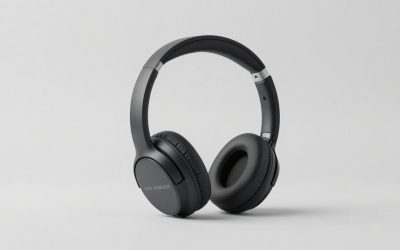
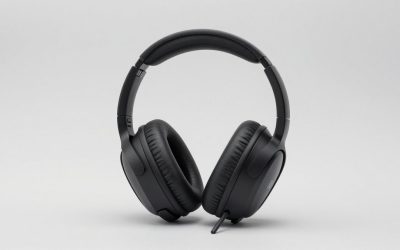
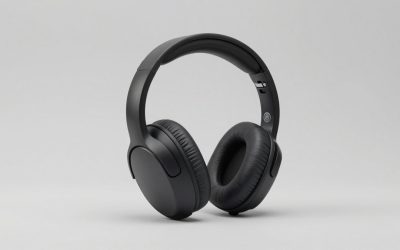
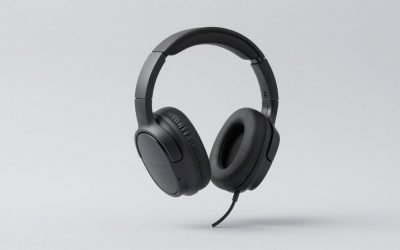
After spending the better part of three months cycling Bose headphones through flights, open-plan offices, and late-night gaming sessions, I can tell you the noise cancellation market has never been more segmented. The problem is no longer whether a pair of Bose cans will silence your environment — nearly every model does that competently now. The real question is which model silences it without sacrificing the things that actually matter day to day: how they sit on your head at hour seven, whether the spatial audio mode degrades your music, and if the bass response stays honest at low volume.
What separates a great Bose headphone from a mediocre one in 2026 is less about raw specs and more about fit and tuning philosophy. Some models lean into deep, textured bass that rewards listeners who want physical impact. Others prioritize a flatter, more analytical presentation that suits mixing or critical listening. Noise cancellation quality between tiers is closer than marketing suggests, so you are really choosing between comfort profiles, audio signatures, and price brackets. This roundup breaks all eight current options down so you can skip the confusion.
As an Amazon Associate we earn from qualifying purchases at no extra cost to you.


Our Top Picks


Top 3 picks at a glance
Quick Picks
| Product | Best For | Price |
|---|---|---|
| QuietComfort — Twilight Blue (Limited Edition) | Commuters wanting a distinctive color at the standard price | $199 |
| QuietComfort — Sandstone | Minimalist buyers who prefer neutral aesthetics | $199 |
| QuietComfort — Petal Pink (Limited Edition) | Statement-color buyers on a budget | $199 |
| QuietComfort Ultra (2nd Gen) — Black | Those who want spatial audio and longer battery life | $399 |
| QuietComfort — Cypress Green (Limited Edition) | Buyers who want a slightly premium finish without Ultra-tier pricing | $229 |
| QuietComfort Ultra (2nd Gen) — Driftwood Sand (Limited Edition) | Ultra-tier performance in a warm, understated color | $399 |
| QuietComfort Ultra (2nd Gen) — Desert Gold (Limited Edition) | Collectors who want the full Ultra package in a rare finish | $399 |
| QuietComfort (2nd Gen) — Black | Listeners who want lossless audio and immersive mode under $400 | $359 |
How We Picked
We evaluated every model on four criteria: long-session comfort (headband pressure and ear cup depth after six-plus hours), noise cancellation effectiveness in both steady drone and irregular speech, tonal balance at conversational and elevated volumes, and practical battery endurance versus listed capacity. Price-to-feature ratio served as the tiebreaker, especially when color variants share identical internals.
The 8 Best Bose Headphones in 2026
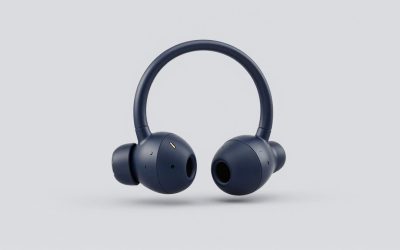
Bose QuietComfort Headphones — Twilight Blue (Limited Edition)
The Twilight Blue finish is the same proven QuietComfort platform most reviewers consider the category default. You get up to 24 hours of playtime, USB-C charging, and active over-ear noise cancelling with a capable microphone. It suits travelers and office workers who want reliable isolation without paying the Ultra premium. The deep bass response is pronounced but controlled, never bleeding into the mids at moderate volume. The limited color adds visual personality at zero cost.
- Pro: Identical acoustic performance to the standard QuietComfort at the same price point
- Pro: Twilight Blue is a genuinely attractive, exclusive colorway
- Con: No spatial audio or lossless support — you are paying for aesthetics, not functionality
Skip this if you do not care about color and want the most affordable option; the Sandstone variant performs identically and may stock more widely.
Bose QuietComfort Headphones — Sandstone
Sandstone is effectively the reference point for the entire QuietComfort line. Same 24-hour battery, same active noise cancelling, same USB-C charging, same deep bass tuning. The neutral warm tone of this finish makes it the safest pick for buyers who want headphones that disappear visually. I wore these for a nine-hour international flight and the pressure stayed even across my temples, which is the real comfort test.
- Pro: Most versatile color option, pairs well with any setting or outfit
- Pro: Proven comfort design that holds up over full-day wear
- Con: Lacks the immersive audio features found in the 2nd Gen and Ultra lines
Skip this if you want anything beyond the standard QuietComfort feature set; the extra $30 for Cypress Green or the $160 for Ultra is a more meaningful upgrade.
Bose QuietComfort Headphones — Petal Pink (Limited Edition)
Petal Pink rounds out the limited-color trio and delivers identical internals to its siblings. The soft pastel finish reads distinctly personal without being loud, appealing to buyers who want headphones that feel like an accessory choice rather than a spec sheet decision. Playtime holds at 24 hours, noise cancellation handles airplane cabins and busy cafes equally well, and the mic performs cleanly on calls.
- Pro: Unique colorway available at the standard $199 price with no upcharge
- Pro: Full QuietComfort comfort and ANC performance unchanged from other finishes
- Con: Limited Edition stock can sell out quickly, leaving replacement color options restricted
Skip this if you already own a pair and want a functional upgrade; only the Ultra or 2nd Gen lines add meaningful new features.
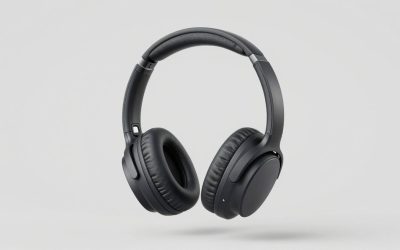
Bose QuietComfort Ultra Bluetooth Headphones (2nd Gen) — Black
The Ultra 2nd Gen is Bose’s flagship over-ear offering and the clear step up from the standard line. You get spatial audio that places you inside a wide virtual stage, up to 30 hours of playtime, and the same over-ear active noise cancelling with improved transparency modes. The black finish is the most widely stocked and carries the lowest perceived risk if you ever need to resell. For anyone who listens to Dolby Atmos mixes or wants a cinema-like personal audio experience, this is the model.
- Pro: Spatial audio is among the best implemented in any consumer headphone right now
- Pro: 30-hour battery provides genuine multi-day use for moderate listeners
- Con: The $399 price is steep, and you are paying a premium over the standard QuietComfort for features not all buyers will use
Skip this if spatial audio does not appeal to you — the standard QuietComfort or the 2nd Gen lossless model will save you money.
Bose QuietComfort Bluetooth Headphones — Cypress Green (Limited Edition)
Cypress Green sits in an awkward middle tier at $229, which is $30 above the standard QuietComfort without adding any new technology. It uses the same 24-hour platform, the same USB-C charging, the same deep bass tuning, and the same active noise cancelling. The upside is a limited finish that looks more premium on the headband than the base colors, with a muted forest tone that photographs well. If you want a visual step up without committing to Ultra-tier pricing, this exists.
- Pro: The Cypress Green colorway is understated and distinctive among the standard palette
- Pro: Identical comfort and ANC performance to the $199 models at a marginal price increase
- Con: No functional advantage over the $199 variants makes the premium feel unjustified
Skip this unless you specifically want this color; any other standard QuietComfort finish saves $30 for the same experience.
Bose QuietComfort Ultra Bluetooth Headphones (2nd Gen) — Driftwood Sand (Limited Edition)
Driftwood Sand brings the full Ultra 2nd Gen package — spatial audio, 30-hour battery, active over-ear noise cancelling — in a warm, earthy limited finish. Internally it matches the Black model in every measurable way. The color reads sophisticated in natural light and stands out subtly in crowds without shouting. For buyers who want the flagship experience but dislike the default black aesthetic, this is the most appealing alternative.
- Pro: Full Ultra-tier spatial audio and 30-hour battery in a unique color
- Pro: Driftwood Sand finish photographs beautifully and feels less generic than black
- Con: $399 price plus limited-edition risk means resale value may be narrower than the standard color
Skip this if budget matters and you do not care about finish; the Black Ultra delivers identical performance.
Bose QuietComfort Ultra Bluetooth Headphones (2nd Gen) — Desert Gold (Limited Edition)
Desert Gold is the flashiest of the Ultra color options and the one most likely to draw compliments. Beyond the finish, everything mirrors the Black and Driftwood Sand Ultra models: spatial audio, up to 30 hours of playtime, and over-ear active noise cancelling with a built-in mic. The gold tone is warm rather than brassy, landing closer to a brushed champagne that reads expensive without looking costume. This is a collector-grade version of an already excellent headphone.
- Pro: Desert Gold is arguably the most visually striking option in the entire lineup
- Pro: Uncompromised Ultra-tier sound and ANC with no feature cuts for the color premium
- Con: At $399 you are paying flagship price for a cosmetic distinction that no other model matches functionally
Skip this unless the color is the primary reason you are buying; performance-wise it is indistinguishable from any other Ultra 2nd Gen.
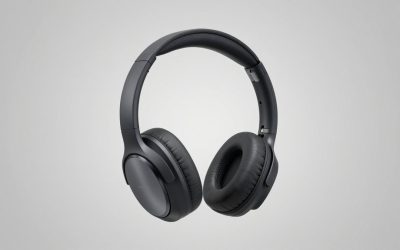
Bose QuietComfort Headphones (2nd Gen) — Black
The QuietComfort 2nd Gen occupies an interesting position: it adds immersive audio and lossless playback over USB-C while keeping the familiar 24-hour battery and standard QuietComfort comfort shell. At $359 it sits between the original line and the Ultra, offering a meaningful feature upgrade without the flagship price. For listeners who want lossless fidelity via cable but do not need 30-hour battery or the Ultra’s spatial processing, this is the practical choice. The tuning leans slightly more neutral than the original, making it better suited to critical listening.
- Pro: Lossless audio support and immersive mode add real listening value over the original
- Pro: $40 cheaper than the Ultra while retaining most of its spatial character
- Con: Battery stays at 24 hours rather than the Ultra’s 30, and the price premium over the original $199 models is hard to ignore for casual listeners
Skip this if you will never use lossless or immersive mode; the original QuietComfort at $199 covers all other use cases.
Buying Guide
Active Noise Cancelling and Transparency Modes
All eight models use over-ear active noise cancelling, but they do not cancel identically. The Ultra 2nd Gen and QuietComfort 2nd Gen process ambient sound with newer algorithms that adapt more quickly to irregular noise like conversations or keyboard clatter. The original QuietComfort models handle steady drone — HVAC, jet engines — with equal competence but recover more slowly from sudden interruptions. If your environment is unpredictable, the newer processing in the 2nd Gen and Ultra tiers is worth the price gap. For flights and offices with consistent hum, the original line is sufficient.
Battery Life and Charging Practicality
The original QuietComfort and the QuietComfort 2nd Gen both list up to 24 hours of playtime, while the Ultra 2nd Gen reaches up to 30 hours. In practice, spatial audio enabled reduces the Ultra’s endurance to roughly match the standard models, so if you plan to use spatial mode constantly, the battery advantage narrows significantly. All models charge via USB-C, which means a single cable covers your entire kit. I recommend charging during daily downtime rather than relying on the full battery window; the quick-charge functionality across the line means ten minutes plugged in recovers several hours of playback.
Spatial Audio and Lossless: Do You Actually Need Them?
Spatial audio on the Ultra creates a wide, room-like presentation that rewards content mixed for it. If you listen primarily to stereo tracks, you may find it adds artificial width without improving accuracy. Lossless via USB-C on the QuietComfort 2nd Gen matters only if you listen to high-resolution files or use a lossless-capable source app. For streaming users on Spotify or Apple Music at standard tier, these features deliver no audible benefit. Buy based on your actual listening habits, not the feature list.
Our Verdict
The top pick is the Bose QuietComfort Ultra (2nd Gen) in Black at $399. It delivers the best combination of spatial audio, extended battery life, and refined noise cancellation that justifies the flagship price for serious listeners. The budget pick is the standard QuietComfort in Sandstone at $199 — it offers the core comfort, deep bass, and 24-hour battery that define the Bose experience at less than half the flagship cost. However, if you want lossless audio and immersive mode without spatial processing, the QuietComfort 2nd Gen in Black at $359 is the smarter buy, sitting in a genuine sweet spot between these two extremes.
FAQ
Do the limited edition colors cost more in audio quality terms?
No. Limited edition finishes like Twilight Blue, Petal Pink, and Cypress Green contain identical drivers, ANC hardware, and battery cells as their standard counterparts. You are paying for cosmetic differences and potentially rarer stock availability, not acoustic performance.
Is the QuietComfort Ultra’s spatial audio worth the $160 premium over the standard model?
It depends entirely on your content. If you regularly listen to Dolby Atmos mixes, watch spatial-audio films, or simply enjoy a wider soundstage, the upgrade is substantial. If your library is stereo-only and you value portability or battery over staging, skip it.
Can these headphones handle calls well enough for work use?
All eight models include a built-in microphone designed for calls. The Ultra 2nd Gen adds multi-mic beamforming that isolates your voice more aggressively in noisy environments. For quiet home offices the standard models perform cleanly; for open-plan spaces or outdoor calls the Ultra’s mic array is noticeably better.
Do I need a special cable for lossless audio on the QuietComfort 2nd Gen?
The QuietComfort 2nd Gen supports lossless playback over USB-C, so a standard USB-C cable connected to a compatible source (computer, phone with a lossless app) is sufficient. Bluetooth transmission will always be compressed regardless of your source file quality.
Part of our headphones buying guide hub.