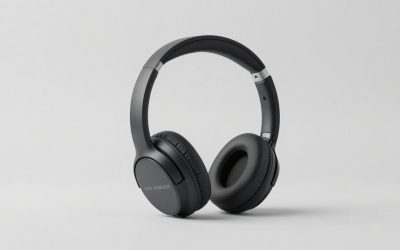
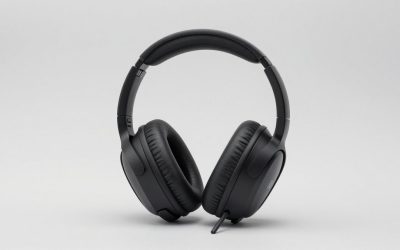
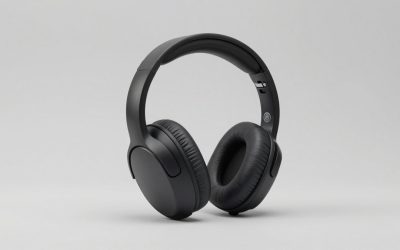
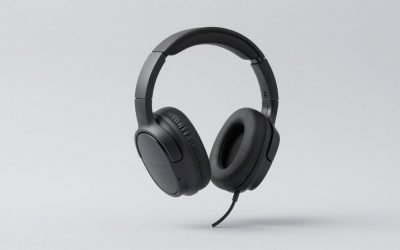
DJ headphones occupy a strange middle ground. You need them to stay put during a long set, reject the room noise bouncing off monitors and crowds, and give you enough low-end detail to beatmatch without second-guessing your cues. Yet most of the options marketed toward working DJs cost more than a decent controller, and plenty of cheap consumer cans fall apart after a single gig season.
Based on specs and owner feedback, the budget segment has matured considerably. The real differences now come down to clamp force, ear pad breathability over hours, and whether the coiled cable is replaceable or glued in. These eight models represent the current best of what you can get at a budget price, and they each solve a slightly different problem depending on whether you are a bedroom producer, a mobile DJ, or someone who just needs a reliable pair for cueing at house parties.
As an Amazon Associate we earn from qualifying purchases at no extra cost to you.



Our Top Picks


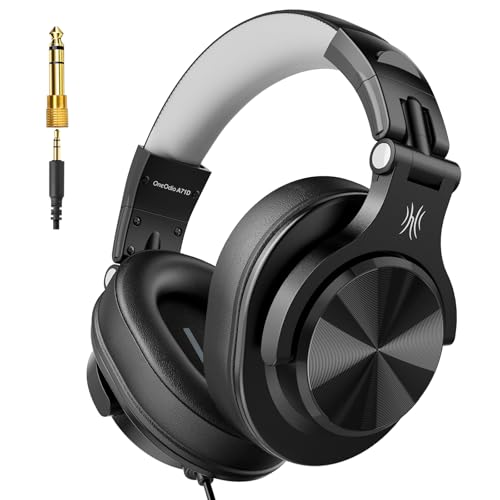


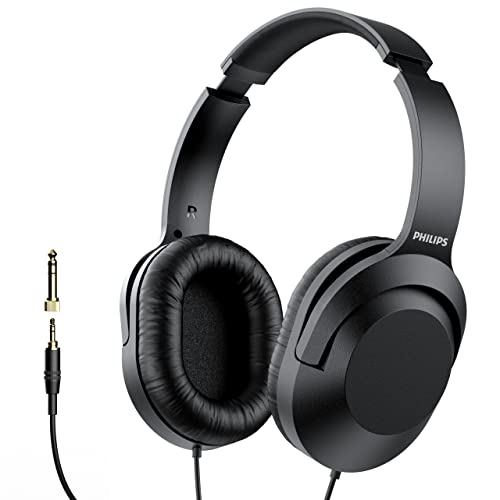
Top 3 picks at a glance
Quick Picks
| Product | Best for | Price |
|---|---|---|
| OneOdio Wired Hi-Res | Multi-instrument practice sessions | Check on Amazon |
| Studio Monitor & Mixing DJ | Absolute lowest entry cost | Check on Amazon |
| OneOdio A71D | Studio accuracy on a budget | Check on Amazon |
| OneOdio A70 | Wireless convenience with a wired backup | Check on Amazon |
| PUPGSIS M20 | High-volume club monitoring | Check on Amazon |
| Philips Over Ear Wired | Podcasting and recording | Check on Amazon |
| OneOdio A71 | Gear with a proven DJ lineage | Check on Amazon |
| Aechorhy Wired | Casual home DJing | Check on Amazon |
How We Compared
This list was narrowed using four criteria that matter most at this price point: long-session comfort (clamp force and pad material), cable durability and replaceability, sound isolation without active noise canceling, and build quality sufficient to survive being tossed into a backpack between gigs. Every product here scored at least moderately across all four, and none rely on gimmicks that sacrifice longevity for a single spec-sheet number.
The 8 Best Budget Dj Headphones in 2026
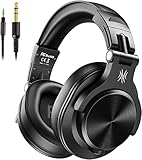
OneOdio Wired Hi-Res Over-Ear
This is a strong pick for beginners who also play guitar or keyboard and need a single pair for everything. The swiveling ear cups let you cue with one side while monitoring with the other, which is essential for DJ work. The hi-res certification is a marketing detail more than a measurable gain, but the tuning is neutral enough for mixing practice without fatiguing your ears.
- Pivoting ear cups for one-ear monitoring during a set
- Comfortable enough for sessions past three hours
- Plastic headband flexes feel slightly cheap over time
Skip it if you need Bluetooth for laptop-only workflows or want a more bass-forward sound for hip-hop mixing.
Wired Over Ear Studio Monitor & Mixing DJ
At a budget price, this is the cheapest credible option that still delivers usable isolation and a flat enough response to learn on. It will not impress anyone at a club, but for bedroom mixing and cueing practice it removes price as a barrier to entry. The build feels like what it costs, yet nothing rattles or buzzes at moderate volume.
- Lowest price with a genuinely flat midrange for the money
- Lightweight enough for extended sitting sessions
- Pads flatten quickly and are not easily replaced
Skip it if you plan to use these on stage, where the cable strain and thin plastic housing will become a liability.
OneOdio A71D Hi-Res DJ Studio
The A71D sits in a sweet spot between the generic budget cans and the more expensive OneOdio models. Tuning is slightly more studio-accurate than its siblings, making it useful for producers who split time between tracking and DJing. The coiled cable stretches reasonably without pulling the jack from your mixer output.
- More accurate midrange than comparable budget DJ headphones
- Coiled cable with good stretch and minimal spring-back
- Clamp force is noticeable on wider heads during the first week
Skip it if you have sensitive ears that are bothered by a tight initial fit or need something for wireless mobile monitoring.
OneOdio A70 Bluetooth Over-Ear
The A70 is the most versatile pair in this list because it switches between Bluetooth and wired without fuss. As a DJ, you get the freedom to walk around your setup while pre-listening tracks on your phone, then plug into the mixer for cueing. The wired mode sounds marginally more detailed, but the Bluetooth latency is low enough for casual practice.
- Dual-mode connectivity in a single headphone
- Battery life easily covers a full night of wireless use
- Noticeably heavier than its wired siblings due to internal components
Skip it if you already have a dedicated wired DJ setup and do not value the wireless option, or if extra weight bothers you during long sessions.
PUPGSIS M20 Wired DJ & Studio Monitor
With its 50mm drivers, the M20 pushes more low-end energy than anything else in this bracket. That makes it a strong choice for DJs working in loud environments where you need to hear the kick over ambient noise. The included 3.5mm and 6.35mm connectors cover every mixer and controller on the market without needing adapters.
- Powerful bass response that cuts through crowded venues
- Dual connector compatibility included out of the box
- Low-end emphasis can smear detail in the mids for critical mixing
Skip it if you primarily mix electronic genres where midrange clarity matters more than sub-bass rumble.
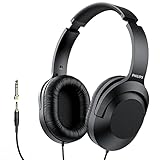
Philips Over Ear Wired Stereo
Philips has made comfortable headphones for decades, and this pair shows it. The ear pads are soft and well cushioned, and a 6.3mm adapter is included for mixers and interfaces. At a budget price, it is a strong value for anyone doing podcasting or vocal recording who also wants to DJ occasionally.
- Comfortable, well-cushioned ear pads
- 6.3mm adapter included for mixers and interfaces
- Sound isolation is below average for DJ cueing in loud rooms
Skip it if your primary use is loud club environments, where you need maximum passive isolation to protect your ears and hear cues clearly.
OneOdio A71 Hi-Res Wired Over-Ear
The A71 is the more established sibling in OneOdio’s budget DJ lineup, and it remains a reliable choice. The tuning leans slightly warm, which is forgiving on poorly recorded tracks you might encounter when DJing open decks. The headband adjustment ratchets with clear clicks, so you can set your fit once and trust it.
- Warm, forgiving sound that handles rough-sourced audio well
- Clear-click headband adjustment for repeatable fit
- Ear cup depth is shallow, which compresses hair on longer sessions
Skip it if you need a neutral, analytical sound for mastering or if shallow cups bother you physically.
Aechorhy Wired Over Ear DJ & Studio Monitor
This is the sleeper pick in the budget tier. It will not win build quality awards, but the sound is more balanced than you would expect at this price, with a slightly forward midrange that helps with beatmatching by ear. For anyone who needs a backup pair in their bag without spending real money, it delivers more than its price suggests.
- Balanced tuning that outperforms its price class
- Light enough to wear for casual home practice
- Cable sheath is thin and vulnerable to snagging or tearing
Skip it if you travel frequently with your gear, as the cable and build will not survive being tossed in a bag regularly.
More Budget DJ Headphones Worth a Look
The eight picks above cover the cheapest end of the market well, but most competing guides also include a handful of models from established DJ and pro-audio brands that sit a step higher, a step up from the budget tier into the mid-range. If you can stretch the budget slightly, these six are the ones that come up again and again, and each fixes a specific weakness of the bargain-bin options: replaceable cables, sturdier hinges, or a tuning designed around a club mixer rather than a laptop.
Pioneer DJ HDJ-CUE1
The HDJ-CUE1 is the entry point into Pioneer DJ’s headphone range, and it is the model most budget DJ guides name as the best starter pair from a dedicated DJ brand. It borrows its 40mm drivers from the more expensive HDJ-X5, with tuning that leans toward the kick and bass frequencies you lock onto when beatmatching. Pioneer lists a 32-ohm impedance and 104dB sensitivity, which means it gets loud from a controller headphone output without needing much gain.
The practical details are where it earns its place. The coiled cable detaches with a bayonet-style lock, so a snapped lead is a cheap fix rather than a reason to replace the whole headphone, and the coiled length of about 1.2m stretches to roughly 1.8m. The ear cups swivel for one-ear monitoring and fold into the headband for travel, and at around 215g without the cable it is one of the lightest closed-back DJ designs at this level. Pioneer also sells replacement pads and colored parts, which helps the pair last several years instead of one season.
Strengths: genuine DJ-brand tuning, detachable locking cable, light weight, replaceable parts.
Drawbacks: it is an on-ear design, so isolation depends on how firmly the pads press against your ears, and people with larger ears may find it less comfortable than the over-ear OneOdio models above over a four-hour set. It also costs roughly double most of the main list, landing in the mid-range tier.
Compared with the OneOdio A71, the CUE1 is lighter, more portable and more serviceable, while the A71 offers bigger cups for a lower price. If you already know DJing is a long-term hobby, the CUE1 is the most logical first upgrade. There is also a Bluetooth version, the HDJ-CUE1BT, for anyone who wants wireless listening away from the decks.
Audio-Technica ATH-M30x

The ATH-M30x is a studio monitor headphone first, but several DJ publications rank it as their favorite budget pair for mixing because it combines a closed-back over-ear seal with a more even tonal balance than most bass-heavy DJ models. It uses 40mm drivers with a 47-ohm impedance and a stated frequency response of 15Hz to 22kHz, and the ear cups collapse into the headband for storage.
That balance makes it a strong choice for bedroom DJs who also produce, edit mixes for upload, or record voice-overs for their sets. You hear the vocal and synth layers clearly, so transitions between tracks with clashing keys or crowded midrange stand out before they go out to an audience. The cushioned pads seal well around the ear, giving useful passive isolation for practice in a shared apartment.
Strengths: balanced, detailed sound that doubles for production; good over-ear seal; collapsible frame; a well-known brand with long-running spare parts.
Drawbacks: the long straight cable is fixed, not detachable, and it is far more likely to snag in a DJ booth than a coiled lead. The cups do not rotate as freely as dedicated DJ designs, so one-ear cueing means lifting a cup off rather than flipping it. It also sits in the mid-range tier.
Against the OneOdio A71D, which also targets studio accuracy, the M30x offers tighter build tolerances and a more refined midrange. If you want a pair that is mainly for producing and only sometimes for mixing, pick this; if DJing is the priority, the HDJ-CUE1 or Behringer HPX6000 handle booth abuse better.
Behringer HPX6000

The HPX6000 is Behringer’s top DJ headphone, and it is built around the features working DJs ask for while staying in the mid-range tier. It uses 50mm neodymium drivers, a 24-ohm impedance and a 98dB sensitivity rating, so it pairs easily with low-powered controller outputs. The cable is a single-sided detachable coiled lead with a 3.5mm plug, and the ear cups rotate for one-ear monitoring.
The larger drivers give it a heavier low end than the Pioneer, which works well for house, techno and hip-hop where you mostly follow the kick and bassline. The detachable cable is the key advantage over most of the main list: when the lead wears out, you swap it for a replacement instead of throwing the whole headphone away. At around 290g without the cable, it is heavier than the CUE1, so the padding and clamp matter more over long sessions.
Strengths: big 50mm drivers with strong bass, detachable coiled cable, rotating cups, easy to drive.
Drawbacks: the bass emphasis can mask midrange detail, much like the PUPGSIS M20 above, and the extra weight makes it less pleasant for very long sets. Build materials are mostly plastic, so it rewards careful handling.
Think of the HPX6000 as a more serviceable alternative to the PUPGSIS M20: similar bass-forward tuning, but with a cable you can replace. For balanced listening or production work, the ATH-M30x is the better fit.
Numark HF175
Numark makes some of the most common beginner DJ controllers, and the HF175 is designed to match them. It is a closed-back, on-ear headphone with 40mm neodymium drivers, a 32-ohm impedance and a 15Hz to 22kHz frequency response. Each ear cup rotates 180 degrees, so you can keep one ear on the cue and the other on the room, and the cups also fold flat for packing. A 3m cable with a 3.5mm plug and a quarter-inch adapter covers both controllers and mixers.
It sits in the budget tier alongside the main list, but carries the name of a DJ brand that understands how headphones get treated in a booth. The tuning is lively in the bass without overwhelming vocals, and the padded headband and leatherette cups make it comfortable for a typical two- or three-hour practice session.
Strengths: 180-degree rotating cups, folding design, DJ-focused tuning, quarter-inch adapter included.
Drawbacks: the long straight cable is permanently attached, so a damaged cable means a repair job or a replacement headphone. The straight cable can also tangle on the decks more than a coiled one.
Compared with the Aechorhy and the generic studio-monitor pair in the main list, the HF175 offers a more proven DJ design for a similar budget tier. Against the Pioneer HDJ-CUE1, it gives up the detachable cable and replaceable parts in exchange for a much lower price.
TASCAM TH-02

The TH-02 is one of the cheapest headphones from a long-standing pro-audio brand, and it appears in many budget DJ and home-studio roundups for that reason. It has 50mm drivers, a 32-ohm impedance, a folding design and a long 3m cable with a quarter-inch adapter included, so it plugs into a mixer, audio interface or keyboard straight out of the box.
For a beginner who wants to learn the basics of cueing and beatmatching without spending much, it is a sensible pick. The big drivers produce a full, bass-forward sound, and the closed-back cups give reasonable isolation for home practice. Because it sits in the budget tier, it also makes a good backup pair to keep in a gig bag.
Strengths: very low price tier, 50mm drivers, foldable, adapter included, recognized pro-audio brand.
Drawbacks: the cable is not detachable, the plastic hinges are the weakest point if the headphones are thrown into a bag, and the pads are thinner than on the Philips or OneOdio models. Isolation is fine for a bedroom but not for a loud venue.
The TH-02 competes most directly with the Philips and Aechorhy pairs above. It is a little bigger and bassier, and the brand name brings some confidence about quality control, but none of these three are built for regular club use.
AKG K72

The AKG K72 is a closed-back over-ear headphone with 40mm drivers, a 32-ohm impedance and a self-adjusting headband that sets the fit automatically each time you put it on. It is aimed at studio and home recording, but it shows up in budget DJ guides because it is notably comfortable for long sessions and delivers a clean, fairly balanced sound at an accessible price.
For DJs who play long practice sessions, stream mixes, or spend hours editing tracks in their library, comfort is often the deciding factor, and the K72’s large cups and self-adjusting band help a lot. The sound is clearer in the mids than most bass-heavy DJ models, which makes it useful for checking vocals and transitions.
Strengths: very comfortable self-adjusting headband, large over-ear cups, balanced sound, easy to drive.
Drawbacks: it does not fold, the cups do not swivel for one-ear cueing, and the long fixed cable is better suited to a desk than a booth. It is also bulkier than the other picks.
Choose the K72 over the main list if comfort and studio use come first and DJing is occasional. If you need to cue with one ear in a busy room, the Numark HF175 or Pioneer HDJ-CUE1 are more practical designs.
Buying Guide
Comfort and Clamp Force
DJ headphones sit on your head for hours, so the clamp matters more here than in any other audio category. Too loose and they fall off when you turn to read your mixer; too tight and you get a headache by the second hour. Look for models with adjustable headbands that click into position rather than relying on friction alone, and check whether the ear pads use protein leather or velour since each behaves differently under heat and sweat.
Cable and Connector Options
The single most common failure point on budget DJ headphones is the cable. Choose a model where the cable detaches from at least one side so you can replace it without buying a new pair. A coiled cable with a 6.3mm adapter included is the practical standard for mixer use, while straight cables are fine if you mostly work at a laptop or controller with a 3.5mm input.
Sound Isolation for Cueing
Passive isolation determines whether you can hear your next track over the crowd and the main PA. At this price point, isolation comes from ear cup seal and pad material, not from active noise canceling. Closed-back designs that press firmly around the ear will attenuate 15-20dB of ambient noise, which is enough for small venues but not for outdoor stages. If you play loud rooms, treat these as practice headphones and invest in proper in-ear monitors for live gigs.
How the Step-Up Picks Compare
| Model | Design | Driver | Cable | One-ear cueing | Price tier | Best for |
|---|---|---|---|---|---|---|
| Pioneer DJ HDJ-CUE1 | Closed, on-ear, foldable | 40mm | Coiled, detachable (locking) | Swiveling cups | Mid-range | First serious DJ pair |
| Audio-Technica ATH-M30x | Closed, over-ear, collapsible | 40mm | Straight, fixed | Lift one cup | Mid-range | DJs who also produce |
| Behringer HPX6000 | Closed, over-ear | 50mm | Coiled, detachable | Rotating cups | Mid-range | Bass-heavy genres |
| Numark HF175 | Closed, on-ear, foldable | 40mm | Straight, fixed | 180-degree rotating cups | Budget | Controller beginners |
| TASCAM TH-02 | Closed, over-ear, foldable | 50mm | Straight, fixed | Lift one cup | Budget | Backup or first pair |
| AKG K72 | Closed, over-ear | 40mm | Straight, fixed | Lift one cup | Budget to mid-range | Long, comfortable sessions |
On-Ear vs Over-Ear for DJing
Many professional DJ headphones, including the Pioneer HDJ-CUE1 and the long-running Sennheiser HD 25, are on-ear designs. Smaller cups press directly on the ear, which keeps the headphone light and makes it quick to slide one side off while cueing. Over-ear models such as the OneOdio A71 and ATH-M30x surround the ear, which usually gives a better seal and more comfort for long practice sessions, but they are bulkier and can feel warm in a hot booth. If most of your mixing happens at home, over-ear is the comfortable default. If you play out regularly and constantly flip one cup on and off, a light on-ear pair is easier to live with.
Impedance and Sensitivity
DJ controllers and entry-level mixers have modest headphone amplifiers, so you want a headphone that gets loud easily. Look for an impedance of roughly 24 to 50 ohms and a sensitivity figure in the high 90s or above (in dB). Most picks in this guide fall in or near that range. High-impedance studio headphones rated at 250 ohms or more can sound quiet from a controller, forcing you to run the headphone output near its limit, where distortion creeps in. Higher sensitivity also means you can keep the volume lower overall, which matters for your long-term hearing.
Rotating Cups and Folding Hinges
Single-ear monitoring is the core DJ technique: one ear hears the next track in the headphones while the other hears the room. Cups that rotate or swivel make this much easier, because you can rest one cup against your ear and flip the other behind your head. The trade-off is that hinges and swivel joints are the most common mechanical failure point on budget headphones. Metal-reinforced sliders and hinges last longer than all-plastic ones, so check the headband construction before buying if you will be taking the pair to gigs.
Replaceable Parts and Long-Term Cost
A cheap headphone that fails after one season can cost more over time than a slightly more expensive model with spare parts. Detachable cables, replaceable ear pads and a brand that actually sells those parts all extend the useful life of a pair. Pioneer, Audio-Technica and AKG all sell replacement pads for their popular models, and detachable coiled cables are easy to source. For bargain picks with glued-in cables and non-standard pads, budget for replacing the whole headphone eventually.
Setup and Usage Tips for Budget DJ Headphones
- Set the headphone level before the set, not during it. Start with the controller’s headphone volume around halfway, then raise it only until you can clearly hear the kick over the room. Turning the cue level all the way up is the fastest way to fatigue your ears and distort cheap drivers.
- Use the cue mix knob. Most controllers let you blend the cue channel with the master output in your headphones. Practicing with a partial blend helps you hear how the two tracks will sit together before you bring up the fader.
- Protect the cable. Loop the cable over the edge of the table or through a clip so a sudden turn does not yank the plug out of the mixer. With a fixed straight cable, this one habit prevents most failures.
- Use the right adapter. Screw-on quarter-inch adapters stay put better than push-on adapters. Keep a spare in your bag, since they are easy to leave behind in a booth.
- Rotate ear pads when they flatten. Worn pads leak more sound and reduce bass, which makes you push the volume higher. Replacing pads is often enough to make an older pair sound right again.
- Take breaks and limit volume. Hearing damage builds up over time. Short breaks during long practice sessions, and keeping the cue level as low as practical, protect your hearing for years of mixing.
- Store them folded or hung. Leaving headphones crushed in the bottom of a bag stresses the hinges and headband. A simple case or a hook on the wall adds a lot of life to budget plastic frames.
Which Budget DJ Headphones Fit Your Setup?
The right pair depends less on spec sheets than on where and how you mix. Here is how the full list maps to the most common situations.
Bedroom DJ on a laptop controller
If you practice at home on a two-channel controller, comfort and a decent seal matter more than ruggedness. The OneOdio A71, AKG K72 or Numark HF175 are comfortable for long sessions and plug straight into a 3.5mm controller output. The Numark has the advantage of rotating cups for proper one-ear cueing, while the AKG is the more comfortable choice if you also use the pair for streaming or editing.
Mobile DJ playing weddings and parties
Mobile DJs pack and unpack their gear constantly, so folding hinges and a detachable coiled cable save a lot of hassle. The Pioneer HDJ-CUE1 and Behringer HPX6000 are the strongest choices here because a damaged cable can be swapped in minutes. A cheap backup such as the TASCAM TH-02 or Aechorhy pair is worth keeping in the bag in case the main headphones fail mid-event.
DJ who also produces or records
If you split time between mixing and making tracks, a more balanced headphone helps you avoid overcooking the bass in your productions. The Audio-Technica ATH-M30x and OneOdio A71D lean toward accuracy, and the M30x in particular works well as a production reference for beginners. Keep a bass-heavy pair for the booth and use the flatter one for mixdowns if your budget allows both.
Absolute beginner on the tightest budget
If you are not yet sure DJing will stick, start with the generic studio-monitor pair, the Philips or the TASCAM TH-02. All three sit in the lowest price tier and are good enough to learn beatmatching and EQ basics. Once you know you will keep going, move to a pair with replaceable parts rather than buying another disposable headphone.
Our Verdict
Our top pick is the OneOdio Wired Hi-Res Over-Ear for its swiveling cups, long-session comfort, and versatility across DJing and instrument practice. The OneOdio A71 is the best pick for warm, forgiving tuning and a headband that holds its setting across sessions. The Philips is the budget pick, offering comfort that punches well above its price. If you need Bluetooth flexibility for a mobile or laptop-first workflow, the OneOdio A70 is the only pair here that solves that problem without a separate device.
FAQ
Do I need a 6.3mm adapter for DJing?
Almost certainly yes if you plug into a mixer or controller with quarter-inch outputs. A 3.5mm jack with an included adapter covers every standard DJ setup without needing to buy a separate cable, so look for models that ship with one already in the box.
Is hi-res certification meaningful on budget DJ headphones?
It indicates the drivers are rated to reproduce frequencies up to 40kHz or higher, which is inaudible to humans and irrelevant to mixing. In practice, hi-res labeled budget models tend to have better driver materials and tighter tolerances because the manufacturer committed to a spec sheet, but do not pay a premium for the badge alone.
Can I use DJ headphones for mixing and mastering?
You can use them for rough mixing, but they lack the spatial accuracy and frequency neutrality of dedicated studio monitors or mastering-grade headphones. For critical decisions about EQ and stereo width, trust monitors over any budget pair in this list.
What happens if the cable breaks on a detachable model?
If your headphones use a standard 3.5mm input on the ear cup side, any generic aux cable works as a replacement, which is the entire point of detachable cables. Some budget models use proprietary connectors, so verify the cable type before purchasing if long-term serviceability matters to you.
Part of our headphones buying guide hub.
Can I DJ with regular headphones or earbuds?
You can practice with almost any wired headphone, but regular earbuds and open-back headphones make cueing hard because they let in too much room sound and cannot be quickly lifted off one ear. Wireless earbuds add latency that makes beatmatching by ear unreliable. A closed-back, wired over-ear or on-ear pair is the practical minimum once you start mixing regularly.
Are Bluetooth headphones usable for DJing?
Not for cueing. Bluetooth adds a delay between what the controller plays and what you hear, which throws off beatmatching. Models such as the OneOdio A70 and Pioneer HDJ-CUE1BT get around this by also accepting a wired connection; use the cable at the decks and Bluetooth only for casual listening.
Should I choose on-ear or over-ear DJ headphones?
On-ear designs are lighter and easier to flip on and off one ear, which suits frequent gigging. Over-ear designs seal better and stay comfortable longer, which suits home practice and long sessions. Neither is objectively better; pick based on where you mix most.
How long do budget DJ headphones usually last?
With regular use, the cable, ear pads and hinges usually wear out first, often within one to three years on the cheapest models. Pairs with detachable cables and replaceable pads can last much longer because you only replace the worn part. Careful storage and a cable clip at the mixer extend the life of any pair.
When is it worth upgrading from a budget pair?
Upgrade when you start playing regularly in loud venues, when your current pair keeps breaking, or when you need better isolation to hear cues clearly at safe volumes. Mid-range models, such as the Pioneer HDJ-CUE1, are a sensible next step before moving to professional booth headphones.
Do DJ headphones need an amplifier?
No. DJ controllers and mixers have a built-in headphone output designed for low-impedance headphones, and every model in this guide is easy to drive. A separate headphone amplifier only makes sense for high-impedance studio headphones, which are not ideal for DJing anyway.
What does closed-back mean, and why does it matter for DJing?
Closed-back headphones have solid ear cups that block outside sound and keep the headphone sound from leaking out. That isolation is what lets you hear the cued track over the speakers. Open-back headphones sound airy but let room noise in, so they are poorly suited to cueing in any space with loud monitors.