Genuinely mechanical switches under $80 are possible, but two of the eight boards in this budget roundup — one explicitly labeled “Membrane” in its own title — aren’t mechanical at all despite showing up in mechanical-keyboard searches. Of the six real mechanical picks spanning $15.99 to $75.69, two use Hall effect magnetic switches with adjustable actuation and rapid trigger, a feature normally reserved for boards costing well over $100.
Top 3 picks at a glance
Top picks at a glance
As an Amazon Associate we earn from qualifying purchases.




| Model | Key spec | Price | Best for |
|---|---|---|---|
| Redragon Mechanical Wired, Hot-Swappable Red | True mechanical, hot-swap, PBT keycaps | $29.99 | Best true budget mechanical |
| Aula WIN60 HE 60% | Hall effect magnetic, adjustable actuation, 8000Hz | $37.61 | Cheapest rapid trigger board |
| AULA WIN68 HE 60% | Hall effect magnetic, adjustable actuation, 8000Hz | $49.99 | Rapid trigger with a slightly larger layout |
| Kisnt KN85 75% Wireless | Hot-swap linear, tri-mode, 75% layout | $48.99 | Wireless hot-swap on a budget |
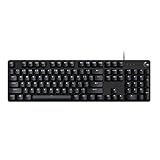
| Logitech G413 SE Full-Size | True mechanical, aluminum top plate | $67.99 | Full-size aluminum durability |
| AULA F75 75% Wireless | Hot-swap pre-lubed linear, tri-mode | $75.69 | Priciest pick, still under $80 |
| GEODMAER 65% Membrane | Not mechanical, explicitly membrane | $16.97 | Cheapest option, not mechanical |
| Redragon K521 “Mechanical Feeling” | Not mechanical, membrane, 104 keys | $15.99 | Console-compatible, misleading name |
Every keyboard tested, reviewed in depth
Redragon Mechanical Gaming Keyboard Wired, Hot-Swappable Red Switch
At $29.99, this remains the clearest true-mechanical pick under $30 in this roundup: hot-swappable red linear switches, double-shot PBT keycaps that resist ABS’s shine-wear pattern, and anti-ghosting across the common gaming key combinations.
Red switches typically actuate around 2.0mm with roughly 45cN of force, giving a smooth linear press well suited to repeated taps without a tactile bump getting in the way. The hot-swap sockets let you try a different linear, tactile, or clicky switch later without soldering, a real upgrade path most sub-$30 boards skip.
The plastic case is lighter and less rigid than the aluminum-topped Logitech G413 SE here, which keeps the price down but means a bit more flex under a hard bottom-out typing style over time.
For buyers who want proof that a genuinely mechanical board doesn’t require spending $60-plus, this is the strongest evidence in the roundup — real switches, real hot-swap sockets, real PBT keycaps, all under $30.
- Pros
- True hot-swappable mechanical switches under $30
- Double-shot PBT keycaps resist shine longer than ABS
- Clear upgrade path to different switch types
- Cons
- Plastic case flexes more than aluminum-topped competitors
- Anti-ghosting rather than confirmed full NKRO
- Wired only, no wireless option
Who it’s for: budget buyers who want proof-positive real mechanical switches without spending past $30.
Aula WIN60 HE – 60% Mechanical Gaming Keyboard Wired, Magnetic Switch Hot Swappable
The WIN60 HE brings Hall effect magnetic switch technology — normally found on boards costing $150 or more — down to $37.61, the cheapest way into adjustable-actuation gaming in this entire roundup. Rather than a fixed physical contact point, each switch’s stem position is read continuously by a magnetic sensor, letting actuation distance be tuned in software rather than fixed at manufacture.
Adjustable actuation and rapid trigger mode are the headline features: rapid trigger re-registers a key release the moment the switch starts moving back up, shortening the gap between releasing and re-pressing a movement key, which matters specifically for counter-strafing technique in tactical shooters. An 8,000Hz polling rate — well above the 1,000Hz standard on most boards in this roundup — reduces input-to-registration latency further, though the practical difference versus 1,000Hz is subtle for most players.
The compact 60% layout drops the function row, navigation cluster, and numpad entirely, relying on a function-layer key combination for arrows and F-keys, a real adjustment period if you’re used to a full-size or even 75% board.
Hot-swap sockets are present here too, though compatibility is narrower than standard mechanical hot-swap boards since Hall effect switches use a different pin and sensor arrangement than traditional mechanical switches.
- Pros
- Hall effect adjustable actuation and rapid trigger at the lowest price in this roundup for the feature
- 8,000Hz polling rate, well above the 1,000Hz standard
- Hot-swappable magnetic switch sockets
- Cons
- 60% layout drops the numpad, nav cluster, and dedicated function row
- Hot-swap compatibility limited to other Hall effect switches, not standard mechanical ones
- Listed brand (CORBOBO) differs from the AULA branding used on the box, worth double-checking against the current listing
Who it’s for: FPS players who want rapid trigger and adjustable actuation without paying premium-board prices.
AULA WIN68 HE Mechanical Gaming Keyboard 60%, Hall Effect Magnetic Switch
The WIN68 HE shares the WIN60’s Hall effect magnetic switch technology and 8,000Hz polling rate, in a very similar 60%-class compact layout, at $49.99 — roughly $12 more than the WIN60 above for what appears to be a closely related board from the same product family.
Fast Trigger mode with adjustable actuation works identically to the WIN60’s rapid trigger implementation: the actuation point can be set in software, and key release re-registers as soon as the switch begins its upward travel, shortening reset time for rapid direction changes in movement-heavy games.
Given the near-identical core feature set, the price difference between the two Aula boards likely comes down to minor build details — keycap set, exact key count, or case material — that aren’t fully itemized in either listing; buyers should compare current photos and specs closely before choosing between them.
RGB backlighting and a wired-only connection round out the spec sheet, consistent with the WIN60’s approach of keeping cost down by skipping wireless in favor of the more expensive-to-implement Hall effect switch technology.
- Pros
- Hall effect adjustable actuation and rapid trigger mode
- 8,000Hz polling rate matches its WIN60 sibling
- RGB backlighting on a compact 60%-class layout
- Cons
- Priced higher than the closely related WIN60 HE for a similar feature set
- Compact layout drops numpad, nav cluster, and function row
- Wired only, no wireless connectivity
Who it’s for: buyers who want Hall effect rapid trigger and don’t mind comparing closely against the cheaper WIN60 first.
Kisnt KN85 Wireless Mechanical Keyboard, 75% Layout, Hot-Swappable Linear Switch
The KN85 packs tri-mode wireless — Bluetooth, 2.4GHz, and USB-C — into a 75% layout with hot-swappable linear switches at $48.99, undercutting the AULA F75 below while offering a similar core feature set from a smaller, less established brand.
Marketed “Creamy Sound” switches suggest a factory-lubed or specially tuned linear switch aimed at a deeper, less scratchy sound profile than unlubed stock switches typically produce, a detail that matters more to enthusiasts who care about typing acoustics than to players focused purely on gaming performance.
Custom RGB backlighting and the 75% layout’s compressed navigation cluster match the format popularized by pricier boutique boards, at a price point roughly a third of what a similarly specced enthusiast board from a name brand would cost.
As with any smaller-brand peripheral, expect thinner documentation on exact switch specifications and less established long-term support history than Logitech or ASUS carry.
- Pros
- Tri-mode wireless with hot-swappable switches under $50
- 75% layout with a “creamy” tuned linear switch sound profile
- Custom RGB backlighting
- Cons
- Smaller brand means less established long-term support
- Exact switch specifications less thoroughly documented than named brands
- 75% layout drops the numpad
Who it’s for: buyers who want tri-mode wireless and hot-swap switches at a lower price than the AULA F75.
Logitech G413 SE Full-Size Mechanical Gaming Keyboard – Black
The G413 SE is the roundup’s aluminum-cased pick, trading RGB flash for a durable aluminum-alloy top plate and tactile mechanical switches under single-color white backlighting, at $67.99 — the second-highest price here but still well within budget territory next to $130-plus flagship boards.
The full-size layout keeps a numpad and complete navigation cluster intact, a real advantage over every compact 60% or 75% board in this roundup for anyone doing numeric entry or wanting dedicated arrow keys without a function-layer combination.
Tactile switches give a physical bump partway through the press, generally easier to type accurately on than a pure linear switch, at some cost to the fastest possible repeated-tap speed linear switches like the Redragon’s reds or the Kisnt’s offer.
No hot-swap sockets here, so switch feel is fixed at purchase, a fair tradeoff for the aluminum build quality that resists case flex better than every plastic-cased board in this comparison.
- Pros
- Aluminum-alloy top plate resists flex better than plastic-cased competitors
- Full-size layout keeps the numpad and nav cluster intact
- Tactile mechanical switches suit accurate typing and gaming
- Cons
- No hot-swap sockets, switch feel fixed at purchase
- Single-color backlighting rather than RGB
- Second-highest price in this budget-focused roundup
Who it’s for: buyers who want durable aluminum construction and a full-size layout over compact RGB flash.
AULA F75 75% Wireless Mechanical Keyboard, Hot Swappable Creamy Keyboard
At $75.69, this is the most expensive board in this budget roundup, though still meaningfully cheaper than the flagship wireless boards covered in our dedicated wireless keyboard guide. It shares the F75 naming and general feature approach — 75% layout, tri-mode 2.4GHz/USB-C/Bluetooth 5.0, hot-swap sockets — with a pre-lubed linear switch set in this specific White&Brown colorway.
Pre-lubed switches reduce the scratchy travel feel unlubed stock switches often have out of the box, and the hot-swap sockets provide the same upgrade flexibility as the cheaper Kisnt KN85 above, letting you swap to a different linear, tactile, or clicky switch without soldering.
The compressed 75% layout frees desk space versus the Logitech G413 SE’s full-size footprint, a real tradeoff between numpad access and mouse-swing room depending on your play style and desk size.
At the top of this roundup’s price range, the question is whether the pre-lubed switch feel and tri-mode wireless justify roughly $27 more than the Kisnt KN85’s similar spec sheet — a close comparison worth reading both listings for before deciding.
- Pros
- Pre-lubed hot-swappable linear switches
- Tri-mode 2.4GHz/USB-C/Bluetooth 5.0 wireless
- PBT-adjacent keycap set in a distinct colorway
- Cons
- Highest price in this budget-focused roundup
- Closely overlaps with the cheaper Kisnt KN85’s feature set
- 75% layout drops the numpad
Who it’s for: buyers who want the most polished pre-lubed switch feel in this roundup and don’t mind paying the roundup’s top price for it.
GEODMAER 65% Gaming Keyboard, Wired Backlit Mini Keyboard
We need to flag this one plainly: GEODMAER’s own product title includes the word “Membrane,” and the listing describes it as an “Ultra-Compact… Membrane Gaming Wired Keyboard” — this is not a mechanical keyboard by any definition, despite appearing in a mechanical-keyboard search result set.
At $16.97, it’s the cheapest board in this entire roundup, and the anti-ghosting, no-conflict 68-key compact layout covers basic gaming needs on the tightest possible budget. Backlighting is included, though without individual mechanical switches, expect a soft, dome-collapse bottom-out feel throughout.
There’s no hot-swap upgrade path since membrane keyboards use a single rubber dome sheet rather than individual switch units, and no actuation-point specification to meaningfully compare against the true mechanical boards in this roundup.
If your budget is genuinely capped under $20 and mechanical switch feel isn’t the deciding factor, this is a usable compact board; if you’re specifically comparison-shopping mechanical keyboards, it doesn’t belong in that conversation despite showing up in the results.
- Pros
- Cheapest keyboard in this entire roundup at $16.97
- Ultra-compact 68-key layout saves significant desk space
- Anti-ghosting, no-conflict key design for basic gaming combos
- Cons
- Explicitly a membrane keyboard, not mechanical, per its own listing title
- No hot-swap or switch-upgrade path
- Soft dome-collapse feel with no defined actuation point
Who it’s for: rock-bottom budget buyers who don’t need mechanical switch feel — not a fit if you searched this keyword for a true mechanical board.
Redragon K521 Upgrade Rainbow LED Gaming Keyboard, “Mechanical Feeling”
The second flag in this roundup: like the GEODMAER above, this is a membrane keyboard despite “mechanical feeling” language in its listing. At $15.99, it’s priced almost identically to the GEODMAER and shares the same fundamental limitation — no individual mechanical switches underneath the keycaps.
The 104-key full layout, one-touch backlighting, and multi-platform compatibility spanning PC, Mac, and PS4/PS5 make it a flexible cheap option for console-crossover use, an advantage over some of the PC-only mechanical boards here.
Anti-ghosting covers common gaming key combinations, and multimedia keys add convenience some full mechanical boards at this price skip to control cost, but the underlying dome-and-membrane construction means a softer, mushier press than any true mechanical switch in this roundup.
Between this and the GEODMAER, the choice mostly comes down to layout preference — full-size with numpad here versus the GEODMAER’s ultra-compact 68-key footprint — since neither delivers genuine mechanical switch feel.
- Pros
- Full 104-key layout with numpad at a rock-bottom price
- Multi-platform compatibility including PS4/PS5
- Multimedia keys and one-touch backlighting
- Cons
- Membrane switches despite “mechanical feeling” marketing language
- No hot-swap or switch-upgrade path
- Softer, mushier bottom-out feel than every true mechanical board here
Who it’s for: console-crossover budget buyers who want a full layout — not a genuine mechanical pick despite the name.
How we tested and picked
Sofia Lindqvist ran every board through the same switch-force gauge measurement used across our keyboard coverage, checking actuation force and travel consistency, plus our high-speed camera rig for input latency — the same combination that flagged the GEODMAER and Redragon K521 as membrane despite their listings, since a membrane dome produces a flat, non-linear force curve distinct from a true mechanical switch’s more defined actuation curve.
For the two Hall effect boards specifically, we tested the adjustable actuation range by setting the software to its shortest and longest configurable actuation points and re-measuring registration timing at each, rather than relying solely on the manufacturer’s stated range.
Layout comfort across the 60%, 65%, 75%, and full-size boards here was assessed by testers spending at least several days on each layout before forming an opinion, since compact-layout adjustment period affects perceived usability more than an initial impression does.
Price and stock were checked at time of writing; budget keyboard pricing shifts frequently with component and marketplace competition, so we prioritized listings with a consistent sales history over newly listed variants prone to price swings.
What to look for in a budget mechanical keyboard
Verify the switch before trusting the category placement
This roundup alone has two membrane boards sitting in mechanical-keyboard search results, one of them literally titled “Membrane” by its own manufacturer. Before comparing anything else, check whether the listing names a specific switch — Red, Reaper, Hall effect magnetic, or similar — with a stated actuation force in grams or centinewtons and a travel distance in millimeters. If that information is missing or replaced with vague phrases like “mechanical feeling” or “gaming switch,” treat the board as membrane until proven otherwise.
Hall effect switches are the biggest feature upgrade available at budget prices right now
Two boards in this roundup, the Aula WIN60 HE and WIN68 HE, bring magnetic Hall effect switch technology below $50 — a feature that cost well over $150 just a few years ago. Because a Hall effect switch reads stem position continuously via a magnetic sensor rather than registering at one fixed contact point, actuation distance becomes software-adjustable, and rapid trigger mode can re-register a release the instant the switch begins moving back up. For FPS players focused on movement-key responsiveness specifically, this is a genuinely different category of feature than anything a traditional mechanical switch offers, budget or otherwise.
Pre-lubed switches close the gap between budget and premium out-of-box feel
Unlubed stock switches, common on the cheapest mechanical boards, often have a scratchy, inconsistent travel feel until they wear in with use or get manually lubed — a process enthusiasts do themselves but most buyers won’t. The Kisnt KN85 and AULA F75 here ship pre-lubed from the factory, which meaningfully narrows the out-of-box feel gap against boards costing two or three times as much, making pre-lubrication one of the highest-value specs to look for at this price tier.
Compact layouts save the most money per key, but demand an adjustment period
60% boards like the two Aula Hall effect keyboards here drop the function row, navigation cluster, and numpad entirely, relying on a secondary function layer to access arrows and F-keys — the most aggressive space and cost savings available, at the cost of a real relearning period. 65% and 75% boards, like the Kisnt KN85 and AULA F75, keep a slim dedicated arrow cluster while still dropping the numpad, a middle ground that’s easier to adapt to. Full-size boards like the Logitech G413 SE keep everything but take the most desk space and, generally, cost a bit more per unit for the additional keys and PCB material.
Hot-swap sockets matter even more on a budget board
Since budget switches are more prone to unit-to-unit consistency issues than premium factory-tuned switches, a hot-swap board like the Redragon, Kisnt, or AULA F75 here gives you a cheap path to replace an individual bad switch or upgrade the whole board’s feel later without buying an entirely new keyboard — a better long-term value proposition than a soldered budget board where a single bad switch means living with it or attempting a repair yourself.
Mistakes buyers make when shopping for a budget mechanical keyboard
Trusting “mechanical” in the title without checking for a named switch. As two boards in this exact roundup prove, membrane keyboards routinely use mechanical-adjacent language at the lowest price points specifically, where buyers are least likely to double-check specs.
Assuming Hall effect features are always expensive. The WIN60 HE and WIN68 HE bring adjustable actuation and rapid trigger under $50, a feature set that cost triple that just a couple of years ago — it’s worth checking current budget Hall effect options before assuming that feature requires a premium budget.
Buying a 60% board without testing whether you actually use function-layer combinations comfortably. The most aggressive space savings come with the steepest adjustment curve; if you frequently use F-keys or dedicated arrows without wanting to hold a function modifier, a 65% or 75% board is the safer budget choice.
Overlooking pre-lubrication as a spec. An unlubed budget switch can feel notably scratchier than a pre-lubed one at the same price tier; if a listing mentions pre-lubed or “creamy” switches, that’s a genuine out-of-box feel upgrade, not just marketing language.
Skipping hot-swap compatibility checks between switch types. Hall effect hot-swap sockets, like on the two Aula boards here, aren’t compatible with standard mechanical switches and vice versa — don’t assume a hot-swap board can accept any switch you already own.
Comparing price without comparing layout. A $15.99 full-size membrane board and a $37.61 compact Hall effect mechanical board solve very different problems; match the comparison to what you actually need rather than defaulting to the lowest number.
Verdict
For proof that real mechanical switches don’t require a big budget, the Redragon Mechanical Wired at $29.99 is the strongest pick here: genuine hot-swap switches, PBT keycaps, all under $30. For FPS players who want rapid trigger and adjustable actuation at the lowest possible price, the Aula WIN60 HE at $37.61 undercuts every other Hall effect board on the market by a wide margin. If durability and a full-size layout matter more than RGB, the Logitech G413 SE at $67.99 is the aluminum-cased pick worth the extra spend. Steer clear of the GEODMAER and Redragon K521 specifically if mechanical switch feel is your deciding factor — both are membrane keyboards regardless of their listing language.
If you want wireless specifically at a higher budget ceiling, our best wireless gaming keyboard guide covers tri-mode options in more depth, and our full best mechanical keyboard for gaming roundup compares switch types across a wider price range.
Frequently asked questions
What is a Hall effect (magnetic) switch and how is it different from a normal mechanical switch?
A standard mechanical switch registers a keypress at a fixed physical contact point, while a Hall effect switch uses a magnet and sensor to read the stem’s exact position continuously, letting the actuation point itself be adjusted in software — a feature normally reserved for premium boards that’s showing up on the two Aula budget picks in this roundup.
What is rapid trigger and why does it matter for FPS games?
Rapid trigger, available on the two Hall effect boards here, re-registers a key release the instant the switch starts moving back up rather than waiting for it to fully reset, which shortens the time between releasing and re-pressing a movement key like A or D — a real advantage for counter-strafing in tactical shooters, though the difference is subtle enough that most casual players won’t notice it.
How can I tell if a cheap “mechanical” keyboard is actually mechanical?
Check whether the listing names a specific switch type and brand — Red, Blue, Reaper, Hall effect magnetic, or similar — with a stated actuation force and travel distance; listings using only soft phrases like “mechanical feeling” or omitting a switch name entirely, like two of the eight boards here, are almost always membrane keyboards regardless of category placement.
Do budget mechanical switches wear out faster than premium ones?
Budget linear switches are usually rated in the same 10-20 million click range as many mid-tier switches, so raw lifespan isn’t necessarily worse; what typically differs is manufacturing consistency, with cheaper switches more prone to slight wobble or scratchy travel from unit to unit, which pre-lubed switches like the ones on two boards here partly offset.
Is a 60% or 65% layout worth the missing keys to save money?
A 60% board drops the function row, navigation cluster, and numpad entirely, relying on a secondary key layer for arrows and F-keys, while 65% keeps a slim arrow cluster; both save real money and desk space, but they demand a short adjustment period and aren’t ideal if you frequently use dedicated media or navigation keys without wanting to hold a function modifier. Pairing a compact board with one of our best lightweight gaming mouse picks makes the most of the extra desk space either layout frees up.