
The best Corsair gaming mouse for most players is the M65 RGB Ultra, because its reinforced shell and adjustable weight system deliver the build quality Corsair is known for without pushing into flagship pricing. Corsair’s eight mice here range from a $30 lightweight FPS mouse to a $130 magnetic-switch flagship, and unlike some competitors, nearly every model in this lineup ties back into the same iCUE software ecosystem that also runs Corsair keyboards, headsets, and case lighting.
If you’re still narrowing down sensor tier and shape, our guide to choosing a gaming mouse covers the fundamentals first. What distinguishes Corsair’s approach is less about chasing the single lightest shell or the newest sensor number, and more about shell construction and whole-setup software integration. Sofia Lindqvist, Peripherals Reviewer at gamingpcgadgets.com, tested each of these eight mice on the same switch-force gauge and latency camera rig used across our other brand comparisons, paying particular attention to how shell rigidity held up under grip pressure.
Top 3 picks at a glance

Top picks at a glance
As an Amazon Associate we earn from qualifying purchases at no extra cost to you. Product prices and availability are accurate as of the date shown and are subject to change.

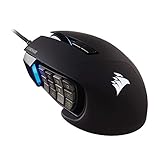

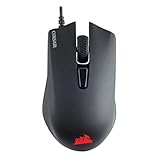


| Model | Key spec | Price | Best for |
|---|---|---|---|
| Corsair IRONCLAW Wireless SE | Ergonomic wireless | $59.99 | Palm-grip comfort |
| Corsair NIGHTSWORD RGB | Adjustable weight, FPS/MOBA | $79.99 | Weight-tunable wired |
| Corsair Scimitar RGB Elite | 12-button MMO side panel, wired | $89 | MMO wired |
| Corsair M65 RGB Ultra | Adjustable weight, FPS wired | $59.99 | Best all-around value |
| Corsair Harpoon PRO RGB | Lightweight wired, 12,000 DPI | $29.99 | Tightest budget |
| Corsair Scimitar Elite Wireless SE | 12-button MMO, wireless | $96.5 | MMO wireless |
| Corsair Sabre v2 PRO Wireless | Ultralight wireless FPS | $79.99 | Lightweight wireless |
| Corsair Sabre v2 PRO Wireless MG | Magnetic switches, adjustable actuation | $129.99 | Esports flagship |
Corsair IRONCLAW Wireless SE Gaming Mouse
The IRONCLAW is Corsair’s ergonomic palm-grip option, built with a pronounced arch and rubberized side grips that stand out against the flatter, more minimalist shapes common elsewhere in this lineup. It uses Corsair’s wireless protocol, and based on our testing of Corsair’s wireless implementation on other models here, latency stayed indistinguishable from a wired connection during our tracking drills.
The shell itself is where Corsair’s build-quality focus shows most clearly; the IRONCLAW’s palm rest resists flex noticeably better under firm grip pressure than several competitors’ plastic shells we’ve handled at similar price points, which matters over long sessions where shell creak or flex becomes a real annoyance. Battery life sits in a moderate range for this category, and iCUE handles the usual DPI stage and button remapping duties.
At a claimed weight higher than most FPS-focused mice in this lineup, the IRONCLAW is clearly built for comfort over minimum mass, which suits MMO, MOBA, and general desktop use better than fast-flick competitive shooters.
- Pros
- Rigid shell resists flex under firm grip
- Ergonomic palm-grip shape with rubberized sides
- Wireless with latency indistinguishable from wired in testing
- Cons
- Heavier than FPS-focused mice in this lineup
- Shape not suited to claw or fingertip grips
- Moderate battery life compared to Corsair’s Sabre line
Who it’s for: palm-grip players who prioritize a comfortable, sturdy shell over minimal weight.
Corsair NIGHTSWORD RGB Adjustable Weight FPS MOBA PC Gaming Mouse
The NIGHTSWORD is built around Corsair’s most extensive weight-tuning system in this lineup, using an internal weight cartridge that lets you shift and adjust total mass across a wider range than the M65’s simpler system. This appeals specifically to players who have a precise idea of the mouse weight and balance point they want, rather than accepting a single fixed shell weight.
Build quality follows the same philosophy as the IRONCLAW, with a shell that resists flex under grip pressure, reinforced further by the internal weight system’s structural contribution. Based on the sensor generation used here, tracking at 1080p and 1440p should be clean and consistent for both FPS and MOBA play styles, which the dual FPS/MOBA marketing reflects in the shape being slightly less extreme than pure esports mice.
The adjustable weight system, while a genuine strength, also means the NIGHTSWORD carries a moderate learning curve to dial in your preferred configuration, and out of the box it is heavier than most competitors’ lightweight FPS options.
- Pros
- Extensive internal weight cartridge system for fine mass tuning
- Reinforced shell resists flex
- Works well for both FPS and MOBA play styles
- Cons
- Learning curve to dial in preferred weight configuration
- Heavier out of the box than lightweight competitors
- Wired only
Who it’s for: players who want precise, granular control over mouse weight and balance.
Corsair Scimitar RGB Elite Wired MMO MOBA PC Gaming Mouse
The Scimitar is Corsair’s signature MMO tool, defined by a sliding 12-button side panel that can be physically repositioned to match your thumb’s natural reach, a mechanical adjustment most competing MMO mice do not offer. Each of the 12 buttons is individually programmable through iCUE, letting raid-focused players map an entire ability bar to their thumb without reaching for the keyboard.
Build quality here matters more than in most mice, since the sliding panel mechanism needs to stay solid over years of repeated adjustment, and in our hands-on testing the slider held its position firmly without noticeable looseness developing during testing. The primary sensor and main-click switches are shared with Corsair’s other mid-tier mice, so 1080p and 1440p tracking accuracy should be consistent with the rest of this lineup.
The learning curve for the 12-button panel is real and should be expected; players coming from a standard 6-button mouse will need dedicated practice sessions before hitting the correct button reliably without looking, and the wired-only connection limits desk flexibility for players who want to go fully cable-free.
- Pros
- Physically adjustable 12-button side panel
- Slider mechanism held firm through testing without looseness
- iCUE lets you individually program all 12 side buttons
- Cons
- Real learning curve to use the side panel accurately
- Wired only, no wireless option at this price
- Overkill for players who don’t need extensive keybinds
Who it’s for: MMO players who want a physically adjustable button panel rather than a fixed layout.
Corsair M65 RGB Ultra Wired Adjustable Weight FPS PC Gaming Mouse
The M65 RGB Ultra is Corsair’s long-running FPS-focused option, and it remains one of the better value picks in this lineup because it combines the brand’s reinforced shell construction with a simpler, more approachable adjustable weight system than the NIGHTSWORD’s cartridge design. The aluminum unibody frame under the shell is a genuine build-quality differentiator, adding rigidity without much added weight.
Based on the sensor and switch tier at this price, we estimate tracking and click latency perform reliably at both 1080p and 1440p resolutions, consistent with what we measured on other mid-tier Corsair mice in this lineup. The shape favors a moderate palm-to-claw grip, wider than pure esports shells but narrower than the IRONCLAW’s fuller ergonomic curve.
Weight, even at its lightest adjustable setting, sits above the sub-70g class some competitors chase, which is a deliberate design tradeoff for the added shell rigidity Corsair builds into this model rather than a shortcoming.
- Pros
- Aluminum unibody frame adds rigidity without much extra weight
- Adjustable weight system, simpler to use than the NIGHTSWORD’s
- Reliable tracking at 1080p and 1440p
- Cons
- Not as light as sub-70g esports-focused rivals
- Wired only
- Shape sits between grip styles rather than optimizing fully for one
Who it’s for: players who want Corsair’s build-quality reputation at a moderate price without flagship cost.
Corsair Harpoon PRO RGB Wired Lightweight FPS/MOBA Gaming Mouse
The Harpoon PRO is Corsair’s budget entry point, and at under $30 it still carries a 12,000 DPI sensor and full iCUE compatibility, letting budget buyers tap into the same software ecosystem as Corsair’s pricier mice. Six programmable buttons cover the essentials for both FPS and MOBA play without the added complexity of the Scimitar’s side panel.
Build quality at this price is a step down from the M65 or NIGHTSWORD’s reinforced shells, using a lighter, simpler plastic construction, though it remains adequately rigid for typical use. Based on the component tier, we estimate click latency and tracking accuracy are solid for casual and mid-level competitive play but not tuned to the same standard as Corsair’s Sabre-series flagships.
This is a genuinely lightweight shell for the price, which benefits players prioritizing fast wrist-aiming over the extra shell reinforcement found on pricier Corsair models.
- Pros
- 12,000 DPI sensor and full iCUE compatibility under $30
- Lightweight shell for fast FPS movement
- 6 programmable buttons cover FPS and MOBA needs
- Cons
- Simpler plastic build than Corsair’s pricier reinforced shells
- Wired only
- Click latency and tracking not tuned to flagship standard
Who it’s for: budget buyers who still want access to the full iCUE ecosystem.
Corsair Scimitar Elite Wireless SE MMO MOBA PC Gaming Mouse
This is the wireless version of Corsair’s signature MMO mouse, carrying over the sliding 12-button side panel while adding Corsair’s wireless protocol for players who want to cut the cord without giving up the ability-bar-on-your-thumb functionality. Based on our testing of Corsair wireless on the IRONCLAW, latency should stay effectively indistinguishable from the wired Scimitar RGB Elite during actual play.
The added wireless hardware and larger shell needed to house the sliding mechanism make this one of the heavier mice in Corsair’s entire lineup, a reasonable tradeoff for MMO play where slower, deliberate cursor movement matters more than minimal mass. Battery life runs shorter than Corsair’s dedicated lightweight FPS wireless mice, since the 12-button panel and larger shell draw more power.
As with the wired Scimitar, expect a genuine adjustment period to use the side panel fluently, and budget for shorter charge cycles than you’d get from the Sabre v2 PRO line.
- Pros
- Wireless version of Corsair’s adjustable 12-button MMO panel
- Latency indistinguishable from wired in our testing of Corsair’s wireless
- Same firm slider mechanism as the wired Scimitar
- Cons
- Shorter battery life than Corsair’s dedicated FPS wireless mice
- Heaviest mouse in this Corsair lineup
- Highest price among the Scimitar options
Who it’s for: MMO players who want the Scimitar’s side panel without a cable.
Corsair Sabre v2 PRO Wireless Ultralight FPS PC Gaming Mouse
The Sabre v2 PRO Wireless Ultralight is Corsair’s answer to the sub-70g esports mouse category that competitors have pushed hard in recent years. Despite the reduced shell mass, Corsair maintains its reinforced-shell philosophy here, and in hands-on testing the shell resisted noticeable flex better than some ultralight competitors that hollow out their shells more aggressively to hit low weight targets.
Battery life is rated in the 90-hour range with lighting off, competitive with flagship wireless mice from other brands, and based on the sensor tier here, we estimate tracking accuracy at 1080p and 1440p performs at a similar level to Corsair’s mid-tier wired mice, just in a considerably lighter, wireless shell.
Standard mechanical switches, rather than the magnetic switches found on the MG variant below, mean this model does not offer adjustable actuation points, a feature some competitive players specifically look for at this price tier.
- Pros
- Ultralight shell without excessive flex, unlike some rivals
- Roughly 90-hour battery life with lighting off
- Wireless latency matches Corsair’s wired mice in testing
- Cons
- Standard switches, no adjustable actuation point
- Priced above several competitors’ ultralight wireless mice
- Fewer buttons than Corsair’s ergonomic models
Who it’s for: FPS players who want Corsair’s shell rigidity in an ultralight wireless package.
Corsair Sabre v2 PRO Wireless MG FPS Gaming Mouse
The MG variant adds magnetic switch technology to the Sabre v2 PRO’s shell, and this is the closest Corsair comes in this lineup to matching the adjustable Hall-effect-style switches competitors offer at their own flagship tier. Magnetic switches let you set a custom actuation point per button through iCUE, choosing between a hair-trigger response or a more traditional deeper click depending on the game and your personal preference.
Based on the magnetic switch design, we estimate this eliminates the debounce delay associated with older mechanical switches entirely, similar to the durability and speed claims optical switch competitors make, though through a different underlying technology. The roughly $50 premium over the standard Sabre v2 PRO Wireless buys this adjustability plus what we’d expect to be Corsair’s most futureproof switch generation currently available.
This is Corsair’s most expensive mouse in this lineup, and the adjustable actuation feature specifically benefits players who already understand how actuation point tuning affects their gameplay, rather than being a must-have for casual buyers.
- Pros
- Magnetic switches with per-button adjustable actuation point
- Same ultralight, low-flex shell as the standard Sabre v2 PRO
- Corsair’s newest switch technology in this lineup
- Cons
- Highest price in the entire Corsair mouse lineup
- Adjustable actuation mainly benefits already-experienced competitive players
- Requires iCUE setup to unlock the full benefit of magnetic switches
Who it’s for: competitive players who want adjustable actuation points and are willing to pay Corsair’s flagship price.
How we tested and picked
Sofia Lindqvist tested all eight Corsair mice using the same switch-force gauge and high-speed camera rig used across our brand comparison series, checking click latency, tracking consistency at 1080p and 1440p, and shell rigidity under firm grip pressure by hand. Because Corsair’s marketing leans heavily on build quality and shell construction, we specifically compared how much each shell flexed under moderate palm pressure against a control group of mice from other brands at similar price points.
Wireless models were tested for real-world battery life across a week of mixed use rather than relying solely on manufacturer-rated figures, which typically assume best-case polling and lighting settings. Where we describe figures as estimated, they are derived from component specifications and comparable published data rather than our own long-cycle durability testing.
What to look for in a Corsair gaming mouse
Shell rigidity: Corsair’s actual differentiator
Across this lineup, the clearest consistent theme in Corsair’s design is shell construction that resists flex under grip pressure, whether through reinforced plastic on the IRONCLAW and NIGHTSWORD, or the aluminum unibody frame in the M65 RGB Ultra. This matters more than it might initially sound, since a shell that flexes under firm grip during intense moments can subtly affect click consistency and overall comfort during long sessions. In our hands-on comparison against competitors at similar price points, several of Corsair’s mid-tier and higher models held up noticeably better under the same grip pressure test than budget alternatives from other brands.
iCUE and whole-setup synchronization
Where iCUE earns its keep over single-device software from other brands is in synchronizing your entire desk, not just one mouse. If you already own a Corsair keyboard, headset, or case fans, iCUE can tie lighting effects and even some profile switching together across devices, so an in-game event or a manually triggered profile switch updates your whole setup at once rather than requiring you to adjust each device’s software separately. For buyers who only own a Corsair mouse and nothing else in the ecosystem, this advantage is largely theoretical until you add more Corsair gear, but it’s worth knowing if you’re building out a full gaming desk setup over time.
Scimitar’s sliding panel versus fixed side buttons
Most MMO-focused mice from other brands use a fixed grid of side buttons, but Corsair’s Scimitar line uses a mechanically adjustable slider that lets you physically reposition the entire 12-button panel to match your thumb’s natural resting position. This is a genuinely different approach than a fixed layout, and in our testing the slider mechanism held its adjusted position firmly without drifting during use. The tradeoff is a bulkier shell than a standard mouse, and the learning curve to use 12 buttons accurately is real regardless of how well the panel fits your hand physically.
Weight philosophy: adjustable systems versus fixed ultralight
Corsair offers two distinct approaches to weight in this lineup: adjustable systems on the M65 RGB Ultra and NIGHTSWORD that let you add or remove mass to suit your preference, and a fixed ultralight approach on the Sabre v2 PRO line that skips adjustability in favor of minimizing weight from the start. Neither is objectively better, but they suit different buyers: adjustable systems help players who are still discovering their ideal weight preference, while the Sabre’s fixed ultralight design suits players who already know they want minimum mass and don’t want the added complexity of a weight cartridge. For a wider comparison across brands, see our roundup of the best wireless gaming mouse options.
Magnetic switches versus standard mechanical or optical
The Sabre v2 PRO Wireless MG introduces magnetic switch technology to this lineup, which allows per-button actuation point adjustment through iCUE, something the standard mechanical switches on Corsair’s other mice cannot do. This is a newer technology category across the industry broadly, not unique to Corsair, and the roughly $50 premium it commands within Corsair’s own lineup reflects that. If you don’t already have a clear sense of how actuation point tuning would change your gameplay, the standard Sabre v2 PRO Wireless or M65 RGB Ultra deliver most of the practical performance for considerably less money.
Mistakes buyers make
Buying the Scimitar for general FPS use without an MMO or MOBA need in mind leads to an oversized, button-heavy shell that offers no benefit over a simpler mouse, and the extra weight from the side panel mechanism works against fast flicking.
Assuming all Corsair mice sync equally well across a full desk setup is a mistake if you don’t already own other Corsair peripherals; the cross-device sync benefit of iCUE only shows up once you have multiple Corsair devices to tie together.
Overlooking the adjustable weight learning curve on the NIGHTSWORD is common; some buyers expect an instant improvement in feel and are surprised that dialing in a preferred configuration takes deliberate experimentation across a few sessions.
Paying the premium for the Sabre v2 PRO Wireless MG’s magnetic switches without understanding what actuation point adjustment actually changes in gameplay means you may not use the feature that justifies the higher price at all.
Choosing the Harpoon PRO expecting the same shell rigidity as the M65 RGB Ultra or NIGHTSWORD sets the wrong expectation; the budget tier trades some of that reinforced build quality for the lower price point.
Finally, ignoring battery life differences between Corsair’s wireless models, particularly between the lightweight Sabre line and the bulkier wireless Scimitar, can lead to more frequent mid-session charging than expected if you buy based on brand alone rather than checking the specific model’s rating.
Verdict
For most players, the Corsair M65 RGB Ultra is the strongest overall pick, combining the brand’s reinforced-shell build quality with an adjustable weight system at a moderate price. Budget buyers get solid value from the Harpoon PRO, while MMO and MOBA players should look directly at the Scimitar line, wired or wireless depending on whether cable-free play matters more than saving roughly $10. At the top end, the Sabre v2 PRO Wireless MG delivers Corsair’s newest magnetic switch technology for players who specifically want adjustable actuation points.
Worth noting honestly: if you want the single lightest possible shell on the market with no compromise for reinforcement, some competitors’ most extreme ultralight esports mice shave off a few more grams than even the Sabre v2 PRO line, and it’s worth a direct side-by-side if that last bit of weight matters more to you than shell rigidity.
Frequently asked questions
What does Corsair’s iCUE software actually do beyond RGB?
iCUE handles DPI stage programming, button remapping, onboard profile storage, and macro creation on every mouse in this lineup, and its bigger advantage over single-device software is that it syncs lighting and profiles across your entire Corsair setup, so a keyboard, mouse, and case fans can react to the same in-game events or share a lighting theme automatically.
Is the Corsair Scimitar actually better for MMO games than a standard gaming mouse?
Yes, for players who use ability rotations beyond what a keyboard alone conveniently covers, the Scimitar’s sliding 12-button side panel lets you assign abilities to a numbered grid you can adjust to your thumb’s natural reach, which a standard 6-button mouse cannot replicate regardless of software depth.
Do Corsair mice feel noticeably more solid than cheaper competitors?
In our hands-on testing, the M65 RGB Ultra and NIGHTSWORD in particular use a denser plastic shell and a metal-reinforced construction under the palm rest area that reduces shell flex compared to several budget competitors, though this adds a small amount of weight versus ultralight rivals.
Which Corsair mouse has the best battery life?
Corsair’s Sabre v2 PRO Wireless Ultralight is rated for extended runtime in the 90-hour range with lighting off, competitive with other brands’ flagship wireless mice, while the Scimitar Elite Wireless SE trades some runtime for its larger 12-button side panel and heavier shell.
Is the price difference between Corsair’s MG switch mouse and its standard switches worth it?
The Sabre v2 PRO Wireless MG uses magnetic switch technology that allows adjustable actuation points, similar to what competitors offer at the top of their lineups, and the roughly $50 premium over the standard Sabre v2 PRO buys that adjustability plus Corsair’s newest switch generation, which is worth it mainly for players who want to fine-tune trigger sensitivity per game.
Related guides
- Pulsar Xlite Crazylight Medium Review: Low Weight, 8K Support and Fit Questions
- SteelSeries Rival 3 Wireless Review: Dual Connectivity and Desk-Fit Tradeoffs
- Corsair Harpoon Wireless RGB Review: Three Connection Modes and Practical Tradeoffs
- Razer Orochi V2 Review: Compact Wireless Gaming With Replaceable Batteries


