Most sim rigs get the visual and audio side of racing down to a science, yet the moment you crest a curb or run wide onto gravel, the experience falls flat. That missing physical layer is exactly what bass shakers solve: they convert low-frequency audio into tactile vibration you feel through the seat or cockpit frame, closing the gap between “looking at a race” and “being inside one.” The best bass shakers for sim racing do this without buzzing, rattling, or introducing latency that makes the sensation feel divorced from what is happening on screen.
What separates a good setup from a disappointing one comes down to three things: whether the amplifier and transducer are properly matched in power and impedance, how securely the shaker mounts to your rig (a loose bracket kills the effect and creates noise), and whether the whole signal chain preserves transient detail. Pairing the wrong amp with the wrong transducer is the single most common mistake, and it is why this roundup treats amplifiers, transducers, and mounts as a unified system rather than reviewing them in isolation.
As an Amazon Associate we earn from qualifying purchases at no extra cost to you.


Our Top Picks
 Douk Audio BS-2 Bass Shaker: 30W Tactile TransducerSmall3.38 x 3.53 x 1.51 inches2.34 PoundsCheck on Amazon
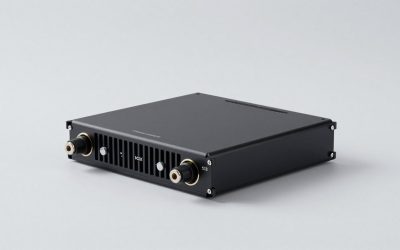
 Douk Audio 230W Bass Shaker Amplifier: Bridgeable Stereo/MonoV2.09.53 x 8.43 x 2.56 Inches5.16 PoundsCheck on Amazon
 Earthquake Sound Q10B 1000 Watts Low Frequency Effects3.54 x 3.54 x 6.22 Inches5.08 PoundsCheck on Amazon


Top 3 picks at a glance
What You Need for a Complete Tactile Setup
A working bass shaker system has four parts, and it helps to plan all of them before buying anything. First is the transducer itself, the device that turns an electrical signal into vibration. Second is an amplifier, because transducers are passive and cannot be driven directly from a PC headphone jack. Third is a mount that couples the transducer rigidly to your seat frame or pedal plate. Fourth is a signal source: either low-passed game audio or, preferably, telemetry effects generated by software such as SimHub through a dedicated USB sound card.
This guide covers all four layers, starting with eight core picks and then adding five more transducers that come up repeatedly in current sim racing builds, from budget pucks to premium discs. If you already own an amplifier, focus on matching its per-channel power and minimum impedance to the transducers you choose; if you are starting from zero, the budget-tier system suggestions further down give you a complete shopping list by tier.
Quick Picks
| Product | Best for | Price |
|---|---|---|
| Douk Audio BS-2 (1 Pair) | Best overall: dual-shaker immersion | Check on Amazon |
| Douk Audio 230W Amplifier | Driving multiple transducers | Check on Amazon |
| Next Level Racing HF8 Pro | Plug-and-play haptic pad | Check on Amazon |
| XINGBIRDS BST-1 Mount | Low-cost mounting on aluminum profiles | Check on Amazon |
| Earthquake Q10B | Premium high-power feel | Check on Amazon |
| Douk Audio BS-2 (1 PC) | Single-shaker entry setup | Check on Amazon |
| SimSport Mount for BST-1/AST-2B-4 | Clean aluminum-profile install | Check on Amazon |
| SimSport Mount for BST-300EX | Mounting a larger-transducer shaker | Check on Amazon |
How We Compared
Every product here is judged against four criteria that directly determine day-to-day satisfaction: power compatibility between amp and transducer, mounting rigidity on common aluminum-profile rigs, ease of wiring for someone who does not want to solder, and overall value when you account for the fact that most buyers need at least two of these components together. A transducer that is brilliant on paper but impossible to mount cleanly on a 40-series profile is a non-starter, so installation practicality weighed heavily alongside raw output potential.
The 8 Best Bass Shakers For Sim Racing in 2026
Next Level Racing HF8 Pro
The HF8 Pro sidesteps the entire amp-and-transducer puzzle by packing eight individually controlled haptic motors into a single mesh pad that lies along your seat and backrest, connected over USB and tuned through Next Level Racing’s HFS software or SimHub. If you want results without wiring, matching impedances, or building a bracket, this is the path of least resistance. Pros: genuinely plug-and-play, no external amplifier needed, a stronger motor set than the original HF8, and the pad form factor means you can move it between rigs and gaming chairs. Con: the tactile range is narrower than a dedicated transducer driven by a proper amp, so heavy curb strikes feel less authoritative. Skip this if your rig already has a power amp in the chain or if you want the deepest possible rumble; it is a convenience product, not a maximum-fidelity one.
Douk Audio 230W Bass Shaker Amplifier
This bridgeable stereo/mono amplifier is the workhorse of a budget-to-mid-tier haptic chain. At 230 watts total it comfortably drives one or two low-power transducers like the BS-2, and the wired remote lets you adjust level from your cockpit without reaching behind the rig. Pros: bridgeable design gives you headroom if you upgrade transducers later, and the subsonic filter trims ultra-low garbage that causes buzzing. Con: it is bulkier than compact class-D alternatives and needs a dedicated power outlet. Skip this if you already own a compatible amp or if you are running a single-shaker setup where a cheaper unit would suffice.
Douk Audio BS-2 (1 PC)
Thirty-watt tactile transducers are the entry point into real bass shaking, and the BS-2 nails the fundamentals at a price that makes a single-unit experiment painless. Mount it under your seat, feed it a low-frequency signal through the Douk amplifier, and you get curb rumble and engine vibration that headsets simply cannot replicate. Pros: compact enough to fit tight rig spaces, and it is the same transducer used in the pair listed above, so you can add a second unit later. Con: at 30 watts it can clip under sustained heavy effects, so a well-managed signal level matters. Skip this if you want dual-shaker immersion from the start; the pair version, our top pick, is the better value.
XINGBIRDS Bass Shaker Mount
A budget-tier, purpose-built bracket that clamps the BST-1 onto 2040, 2080, 4040, or 4080 aluminum extrusion is genuinely excellent value. It solves the #1 headache of budget shaker builds: getting a secure, vibration-free mounting point without machining your own hardware. Pros: low cost, wide profile compatibility, and it positions the transducer close enough to the seat rail for effective coupling. Con: the anodized finish is utilitarian and the included hardware is basic. Skip this if you prefer the cleaner aesthetic of the SimSport bracket or if you are mounting a different transducer entirely.
Earthquake Sound Q10B
A thousand-watt tactile transducer is overkill for a bedroom rig, but if you are running a full-motion cockpit or want the most physically imposing haptic output available in a single unit, the Q10B earns its place. It translates low-frequency effects into deep, chest-felt vibration that smaller transducers simply cannot match. Pros: massive output headroom means no clipping even during sustained rumble, and the build quality reflects its price. Con: you will need a serious amplifier (this unit alone will not match the Douk 230W) and it demands significant mounting space. Skip this unless your project genuinely calls for extreme tactile authority; for most sim racers it is a gold-plated solution to a problem the BS-2 already solves well.
Douk Audio BS-2 (1 Pair)
Buying two BS-2 units as a pair is the single best value move in this category, which is why it is our top pick. Dual transducers let you place one under each side of the seat or split front and rear, creating directional effects and a noticeably fuller frequency spread. Pros: the price per unit undercuts buying singles, and the pair fills out the low end without clipping concerns that a single unit faces at high volume. Con: you now need a stereo-capable amp and two mounting points, so plan your rig layout before purchasing. Skip this if your amplifier only has a mono output or if a single transducer already satisfies your immersion threshold.
SimSport Gadget Mount for BST-1 / Aurasound AST-2B-4
SimSport designed this bracket specifically for aluminum-profile rigs, and the CNC-machined build gives it a rigidity and finish that cheaper stamped or cast options cannot match. It accepts both the BST-1 and the Aurasound AST-2B-4, which covers the most popular compact transducers on the market. Pros: clean integration with standard profile hardware and no flex under sustained vibration, which keeps the tactile signal sharp. Con: the transducer is not included, so budget for that separately. Skip this if you are mounting a larger unit like the Q10B or the BST-300EX, which have their own dedicated bracket.
SimSport Gadget Mount for BST-300EX
The BST-300EX is a physically larger transducer, and generic brackets either do not fit or allow too much flex. This SimSport mount solves that with a purpose-built cradle that transfers vibration directly into the profile rail. Pros: eliminates the rattle and energy loss that plague improvised mounting solutions, and the anodized aluminum matches most black or silver rigs visually. Con: it costs noticeably more than the XINGBIRDS option, though the construction justifies the difference. Skip this if you are running a BST-1-class transducer; the profile-specific fit means it will not accept smaller units.
Dayton Audio BST-1 High Power Pro Tactile Bass Shaker
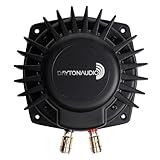
If one transducer has become the default answer in sim racing communities, it is the Dayton Audio BST-1. It is the reference unit that most aftermarket brackets are designed around, including both the XINGBIRDS and SimSport mounts already covered above, which makes it the most logical transducer to pair with those brackets. Buying the BST-1 means the mounting question is already solved before the box arrives.
On paper, the BST-1 is rated at 50 watts RMS (100 watts peak) into 4 ohms, with a resonant frequency around 40 Hz and a usable range of roughly 20 to 80 Hz. That band sits right on top of the effects that matter most in a cockpit: engine idle, gear-change thumps, rumble strips and the low-frequency bump of a car settling over a crest. The 4-ohm load is easy for most compact class-D amplifiers, and the 50-watt rating gives noticeably more authority than 30-watt units such as the BS-2 when you push effects hard.
Who it is for: sim racers building their first proper tactile system on an aluminum-profile rig, and anyone who wants a seat shaker and a pedal-plate shaker that match each other. Two BST-1 units on a stereo amp is one of the most common mid-range setups for good reason.
Strengths: broad bracket compatibility, a proven track record in sim cockpits, a sturdy metal body with four mounting tabs, and a power rating that sits comfortably between budget pucks and premium discs. It is also forgiving of amplifier choice, since almost any 4-ohm stable stereo amp in the mid-range tier will drive it well.
Drawbacks: it is heavier and taller than puck-style transducers, so it can be awkward under very low seat sliders. The terminals are basic, and many owners switch to crimped connectors for a more secure connection. And like any single-coil shaker, it reproduces a narrow band, so it will not deliver fine high-frequency texture such as ABS chatter on its own.
How it compares: against the Douk BS-2, the BST-1 offers more headroom and better bracket support; against the Earthquake Q10B, it is far easier to power and mount, though with less raw output. For a rig that already uses one of the BST-1 brackets listed above, this is the most natural transducer to complete the chain.
Dayton Audio TT25-8 Puck Tactile Transducer Mini Bass Shaker
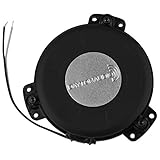
The TT25-8 Puck is exactly what the name suggests: a transducer roughly the size and shape of an ice hockey puck, about 3.5 inches across and only around one inch deep. Dayton rates it at 15 watts RMS (30 watts peak) into 8 ohms, with a usable response of roughly 20 to 80 Hz. Current versions ship with a surface mount ring kit, so you can screw it onto any flat panel rather than cutting a mounting hole.
Who it is for: budget-tier builds, wheel-stand and playseat owners who have no aluminum extrusion to bolt into, and racers who want to add small, localized effects to places a larger shaker cannot reach, such as the underside of a pedal plate or the back of a seat shell. Because the pucks are so small, many sim racers run two or four of them to split effects between seat and pedals.
Strengths: the slim profile fits almost anywhere; the low power requirement means a small budget amplifier is enough; and the 8-ohm rating gives wiring flexibility. Dayton notes that four pucks can be wired as a two-channel 8-ohm stereo system or as a single 4-ohm channel, which is useful when you are working with a basic two-channel amp.
Drawbacks: one puck on its own feels modest. It excels at sharp, localized cues such as gear shifts and curb hits through the pedals, but it cannot fill an entire seat with heavy rumble the way a BST-1 or Q10B can. It also relies on a stiff mounting surface: screwed into a soft or flexible panel, much of its energy is lost.
How it compares: it is the most affordable way into tactile feedback in this guide, and its tiny footprint makes it the best choice for pedal plates. The usual approach is to combine a puck on the pedals with a larger shaker such as the BST-1 or BS-2 under the seat, then give each its own amplifier channel so you can balance them independently.
AuraSound AST-2B-4 Pro Bass Shaker Tactile Transducer

The AuraSound AST-2B-4 Pro is the original “bass shaker” design that much of this category grew out of, and it remains a close alternative to the Dayton BST-1. Specifications are almost identical: 50 watts RMS (100 watts peak), 4 ohms, a resonant frequency of about 40 Hz and a usable response around 20 to 80 Hz, with a force peak in the region of 30 lb-ft. The housing is roughly 6.2 inches across and 2.5 inches tall.
Who it is for: racers who want BST-1-class performance but prefer the AuraSound unit, or who already own one and want a matched pair. Importantly, the SimSport bracket in this roundup is specifically designed for both the BST-1 and the AST-2B-4, so it drops straight onto aluminum-profile rigs.
Strengths: a long-established design with a reputation for durability under sustained use, full compatibility with common BST-1-style brackets, and the same easy 4-ohm load. Its response is concentrated on the low bass band that produces the most convincing chassis vibration, which helps keep the effect feeling like the car rather than like a speaker.
Drawbacks: because the frequency range is narrow, it is not the best choice for fine detail such as tyre slip or ABS pulses; those effects need a transducer with a wider range or software that shifts them down into the shaker’s sweet spot. Availability also fluctuates more than with the Dayton unit, so it usually lands in the mid-range tier rather than the budget one.
How it compares: treat it as an interchangeable alternative to the BST-1. Choose whichever is in stock in the right tier and make sure both units on the same rig match, so the left and right channels feel balanced. Against the Douk BS-2, it offers more power handling and a heavier, more substantial build.
Clark Synthesis TST209 Tactile Transducer Bass Shaker

Clark Synthesis is a name associated with commercial simulators and high-end home theater seating, and the TST209 is one of its more accessible models. It is a large disc, about 8 inches in diameter, rated by the manufacturer at 100 watts continuous and 350 watts peak into 4 ohms. Unlike the narrow-band shakers above, Clark lists a tactile frequency range of roughly 15 Hz to 800 Hz, along with built-in overload protection and fluid cooling of the voice coil.
Who it is for: serious sim racers with a rigid cockpit who want more detail than a standard 20 to 80 Hz shaker can provide. The wider range means it can reproduce higher-pitched texture such as road surface grain, tyre scrub and rev-limiter buzz, not just low thumps. It suits a premium-tier build alongside a direct drive wheel and load cell pedals.
Strengths: exceptional range for its class, a sealed design meant for long service life, and protective features that make it hard to damage through overdriving. The broad response makes SimHub effects feel more distinct from one another, because each effect does not need to be squeezed into the same narrow band.
Drawbacks: it needs a properly sized amplifier; Clark’s installation guide asks for at least 100 to 150 watts per transducer into 4 ohms, which rules out the smallest budget amps. The large disc shape also requires a flat mounting area under the seat, and it does not fit the BST-1 brackets in this guide, so plan on a flat plate or custom bracket. It sits firmly in the premium tier.
How it compares: where the Earthquake Q10B emphasises raw low-end force, the TST209 emphasises range and detail. If your goal is to feel the difference between a rumble strip, a gravel trap and a locked wheel, the Clark is the more nuanced choice; if you want the heaviest possible thump, the Q10B goes further.
ButtKicker Mini LFE Tactile Transducer
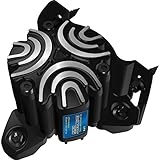
ButtKicker is the best-known brand in tactile audio, and the Mini LFE is its compact single-seat transducer. Unlike the voice-coil-on-a-plate design of most shakers here, ButtKicker units use a magnetically suspended piston that moves inside the housing, which is part of why they produce a deep, punchy feel for their size. The Mini LFE is rated at 4 ohms with power handling of 50 watts minimum up to 250 watts, and the housing is only about 4.75 inches square and 3 inches tall, weighing roughly 2 pounds.
Who it is for: racers who want a brand-name piston transducer in a compact package that fits under a bucket seat, and who already have, or plan to buy, a 4-ohm stable amplifier. It is sold as the transducer alone, so it slots into a component system rather than replacing one.
Strengths: very low-frequency reach (published figures start in the single digits of hertz), a compact footprint, and a strong reputation for longevity. It reproduces low engine notes and heavy impacts with a weight that small pucks cannot match.
Drawbacks: published frequency figures vary between sources depending on product revision, so check the listing for the version you receive. It needs a mounting bracket or plate that clamps it firmly to the seat frame, and the brand premium means it usually costs more than a BST-1. Like most shakers, it is not a high-frequency texture device.
How it compares: the Mini LFE is a middle ground between the BST-1 and the larger ButtKicker Gamer and LFE models. It costs more than Dayton units but is smaller and punchier than the Douk BS-2. For a single high-quality seat shaker paired with the Douk 230W amplifier, it is a clean, compact upgrade.
Buying Guide
Matching Amplifier Power to Transducer Handling
The amplifier should comfortably exceed the transducer’s rated power without creating a situation where you are running the amp at full tilt to reach volume. Pairing small 30W transducers with a 230W amp means you can keep the gain well below maximum, which keeps distortion low and leaves headroom for transient peaks, as long as you never push more power into the transducer than it is rated for. Underpowering clips the signal and produces a harsh buzz that ruins the effect entirely.
Mounting Security Determines Fidelity
A bass shaker works by coupling vibration into a rigid structure. If the bracket flexes or the bolt pattern does not match your profile width, energy scatters instead of reaching the seat. Use a bracket designed for your specific transducer model and aluminum profile size, and torque fasteners to spec. One rattle at high vibration levels is worth more than any wattage upgrade.
Signal Source and Crossover Management
Feed your amplifier from a dedicated subwoofer or LFE output rather than trying to split speaker-level signals. A low-pass filter set around 80 to 120 Hz keeps the tactile channel focused on the frequencies that produce the best physical sensation without bleeding midrange into what should be a pure rumble.
Transducer Types: Pucks, Plates, Discs and Pistons
Not every bass shaker works the same way, and the design affects where it fits and what it feels like. Understanding the four main styles makes it much easier to pick the right one for each position on your rig.
- Pucks (such as the Dayton TT25-8) are small, flat and low-powered. They are ideal for pedal plates, seat backs and wheel stands where space is tight, and they are usually run in pairs or groups of four.
- Plate-style shakers (Dayton BST-1, AuraSound AST-2B-4, Douk BS-2) are the classic sim racing choice. They have mounting tabs that bolt into brackets on aluminum profiles and cover the core 20 to 80 Hz band.
- Large discs (Clark Synthesis TST209, Earthquake Q10B) offer more force and, in Clark’s case, a much wider frequency range. They need a flat mounting area and a stronger amplifier.
- Piston transducers (ButtKicker Mini LFE) move a suspended mass inside the housing, giving a deep, punchy low end in a compact footprint, typically clamped to a seat frame.
How Many Shakers, and Where to Put Them
The number of transducers matters less than how you split the effects between them. A simple progression that works for most rigs looks like this:
- One shaker under the seat. This delivers engine vibration, gear shifts and big impacts. Center it under the seat base, close to where your weight rests.
- Add one under the pedal plate. Pedal feedback is where ABS pulses, wheel lock and rumble strips become genuinely useful information, not just immersion. A puck or BST-1 works well here.
- Split the seat into left and right. Two seat shakers on separate channels let you feel which side of the car hit a curb, which adds directional cues during cornering.
- Add a seat-back or front/rear split. Advanced builds use four or more channels for front and rear axle effects, but the gains are smaller than the first two steps.
Whatever layout you choose, keep the transducers decoupled from the floor with rubber feet under the rig. Isolation keeps the vibration in the cockpit and reduces the low rumble that travels through floors into other rooms.
Wiring and Impedance Basics
Every amplifier is stable down to a minimum impedance, usually 4 or 2 ohms per channel. Wiring transducers in parallel halves the impedance; wiring them in series doubles it. Two 8-ohm pucks in parallel present 4 ohms, while two 4-ohm BST-1s in parallel drop to 2 ohms, which many small amps cannot handle safely. The cleanest approach is one transducer per amplifier channel, which also lets you set each level independently. Use 14- or 16-gauge speaker wire, secure the runs along the profile with cable ties so they do not buzz against the frame, and double-check polarity so paired shakers move in phase.
Telemetry Versus Audio: Setting Up SimHub
There are two ways to feed a bass shaker. The first is game audio, usually via a low-passed output. It is simple, but it shakes on every explosion of engine noise and cannot separate useful information from sound effects. The second, and far better, approach is telemetry-driven effects, most commonly through the free SimHub software. SimHub reads data from the sim and generates dedicated signals for engine RPM, gear shifts, road texture, wheel slip, ABS and impacts, then routes each one to the channel and transducer you choose.
A practical starting point is to send engine RPM and gear shifts to the seat, and road texture, ABS and wheel lock to the pedals. Assign the shakers to a separate USB sound card or a second audio output so game sound and tactile effects never compete. Then raise the amplifier gain slowly until the strongest effect is firm but not rattling, and fine-tune each effect inside SimHub rather than at the amp. Small changes in effect frequency often make a bigger difference than volume, because each transducer has a sweet spot around its resonant frequency.
Comparison of the Additional Picks
| Model | Style | Rated power | Impedance | Best position | Price tier |
|---|---|---|---|---|---|
| Dayton Audio BST-1 | Plate | 50W RMS | 4 ohm | Seat or pedal plate | Budget to mid-range |
| Dayton Audio TT25-8 Puck | Puck | 15W RMS | 8 ohm | Pedals, seat back, wheel stands | Budget |
| AuraSound AST-2B-4 Pro | Plate | 50W RMS | 4 ohm | Seat or pedal plate | Mid-range |
| Clark Synthesis TST209 | Large disc | 100W continuous | 4 ohm | Under seat on a flat plate | Premium |
| ButtKicker Mini LFE | Piston | 50-250W | 4 ohm | Under seat, clamped to frame | Mid-range |
Sample Systems by Budget Tier
- Budget: two Dayton TT25-8 pucks or a single Douk BS-2, driven by a small stereo class-D amp, with one puck under the pedals and one under the seat. This is the easiest way to find out whether tactile feedback suits you.
- Mid-range: two Dayton BST-1 or AuraSound AST-2B-4 units on BST-1 brackets, powered by the Douk 230W amplifier, with SimHub splitting seat and pedal effects. This is the sweet spot for most aluminum-profile rigs.
- Premium: a Clark TST209 or Earthquake Q10B under the seat with a high-power amplifier, plus a BST-1 or ButtKicker Mini LFE on the pedals, and a multi-channel sound card so each transducer gets its own effect mix.
Common Mistakes to Avoid
- Running every effect at full strength, which turns the rig into a constant buzz and hides the useful cues.
- Bolting shakers to thin plastic seat shells or flexible panels instead of the frame or a rigid plate.
- Mixing unmatched transducers on the left and right of the seat, which makes one side feel stronger.
- Forgetting rubber isolation feet, which sends low-frequency noise through the floor.
- Leaving the amplifier gain maxed and turning effects down in software, which raises noise and wastes headroom.
Our Verdict
The Douk Audio BS-2 pair driven by the Douk 230W amplifier, bolted to a rigid bracket or plate on the seat frame, is the most complete and cost-effective haptic chain for a sim racer who wants to feel every surface change while keeping the total budget in the mid-range tier. For pure convenience, the Next Level Racing HF8 Pro wins if you simply do not want to deal with separate components. If your rig is large enough to justify a second mounting point and you want the most physical impact per dollar, start with the BS-2 pair and upgrade the transducers later while reusing the same amp and brackets.
FAQ
How many bass shakers do I need for a sim rig?
One transducer under the seat provides a solid baseline, and most sim racers find that two create a noticeably fuller and more directional experience. Beyond two the gains diminish unless you are building a full-motion platform with separate channels for different effects.
Can I use a regular amplifier instead of a dedicated bass shaker amp?
Technically yes, but a dedicated unit like the Douk 230W includes a subsonic filter and level control tuned for the frequency range that drives transducers effectively. A standard music amp will work if you add an external low-pass filter and accept that volume management is less convenient.
Will a bass shaker work on a desk setup without an aluminum rig?
It can, but the effect is far weaker because the vibration needs a rigid structure to transmit into the seat. On a standard office chair the energy dissipates quickly, so you would want to bolt the transducer to a solid wooden or metal frame under the seat for meaningful feedback.
Do bass shakers introduce latency?
Any added processing stage can introduce a few milliseconds, but a direct line-level signal from your audio interface or DAC into a dedicated amp produces latency that is imperceptible during racing. Avoid wireless or heavily DSP-laden signal paths if you want zero perceptible delay.
Do bass shakers make you faster, or are they just for immersion?
Mostly immersion, but pedal-mounted shakers do carry useful information. Feeling ABS activation, wheel lock or a car running onto a curb through your feet can help you react earlier than you would from visuals or sound alone. The seat shakers are primarily about atmosphere and a sense of speed.
Can I use bass shakers while wearing headphones?
Yes, and that is how most sim racers run them. Because the shakers are driven by a separate amplifier and, ideally, a separate audio output for telemetry effects, your headphones carry game sound while the transducers handle physical feedback. The two do not interfere with each other.
Will bass shakers disturb neighbors or other people in the house?
Tactile transducers are much quieter than a subwoofer because they move the rig rather than the air, but some low-frequency vibration still travels through the floor. Rubber isolation feet under the rig, moderate gain settings and avoiding direct contact between the rig and walls reduce this considerably, which matters most in apartments.
What is SimHub, and do I need it?
SimHub is free software that reads telemetry from most popular racing sims and turns it into dedicated tactile effects such as RPM, gear shifts, road texture and wheel slip. You can run shakers from game audio without it, but telemetry-driven effects are far more precise and controllable, so most sim racers consider it essential.
Can I mix different transducer brands on one rig?
You can, as long as each transducer has its own amplifier channel and you balance the levels in software. It works well to use a puck on the pedals and a larger shaker under the seat. For left and right seat positions, though, matched models give a more even feel.