
Top 3 picks at a glance
Quick Comparison
The table below lines up every mop in this roundup by what it is actually good at, the specs that drive day-to-day satisfaction, and a price tier so you can filter before you read a single full section. Heat-up time, tank size, pad type, and floor compatibility are the four numbers that decide whether a mop feels convenient or like a chore, so they carry the most weight here.
| Product | Best for | Key specs (from listing / category norms) | Price tier |
|---|---|---|---|
| Shark Steam Pocket Mop S3501 | Budget buyers with lots of sealed hard floor and a need for two-sided pads | Two washable double-sided Pocket Pads; swivel head; sealed-hard-floor steam cleaning; upright stick format | Budget |
| Shark Steam Mop S1000 | First steam mop for a small apartment or a single-room refresh | Two Dirt Grip pads; sealed hard floors only; slim upright stick; simple on/off steam | Budget |
| Wotaste Steam Mop Cleaner | Fast-start cleaning in a compact footprint; hardwood and tile households | 260°F steam in about 15 seconds; 16.9 oz (500 ml) tank; hardwood and tile compatible; handheld-style body | Budget |
| Shark Steam & Scrub S8001 | Large hard-floor homes that want scrubbing action, not just steam | All-in-one hard floor cleaner; rotating scrub pads; upright stick; grout and texture-friendly heads | Premium |
| SQKMYSU Steam Mop 6-in-1 | Buyers who want one tool for floors, grout, glass and upholstery | Six-piece accessory set; large removable water tank; 23 ft power cable; lightweight body; steam cleaning | Mid-range |
| Amazon Basics Steam Mop | Value shoppers who want a no-fuss mop with spare pads included | Heats up in about 30 seconds; chemical-free cleaning; three washable pads; all sealed hard floors | Budget |
| Shark SteamSpot S2001 | Sticky, dried-on messes in kitchens and entryways | Steam Blaster technology for spot treatment; upright stick format; sealed hard floors; washable pad | Mid-range |
| Bissell PowerFresh Deluxe 1806 | Tile and grout plus sealed hardwood in the same home | Built-in SpotBoost brush; fast heat-up; variable steam; flip-down scrubber; Spring Breeze scent discs (category norm) | Mid-range |
| Bissell SpinWave Hard Floor Expert 20393 | Hands-free-feeling spin cleaning on sealed hard floors | Corded spin mop; rotating mop pads; on-demand spray plus spin action; sealed hard floors and tile | Premium |
| Bissell CrossWave HydroSteam Deluxe 3515G | Homes that want to vacuum and wash hard floors in one pass | 3-in-1 wet/dry vacuum and steam wash; multi-surface sealed floors; self-clean cycle (category norm); multi-tank design | Premium |
| McCulloch MC1385 Canister Steam Cleaner | Grout, tile, and detail jobs a stick mop cannot reach | Canister steam cleaner; 23 accessories; long hose and cord; pressurized steam for grout and tile | Premium |
| PUREBEAR 300°F Scrub & Steam Mop | Heavy scrubbing with a deep steam temperature, plus attachments for odd jobs | 300°F scrub-and-steam operation; 13 accessories; handheld/steam-cleaner hybrid; hard floor and detail use | Mid-range |
How We Chose
Every mop on this list is a real, currently listed product, and each earned its place by matching a specific household situation rather than by being “the best” in the abstract. The primary filter was category fit: a stick steam mop, a spin mop, a wet/dry vacuum-and-wash machine, and a canister steam cleaner solve genuinely different problems, so the list deliberately spans those four categories instead of piling up twelve near-identical sticks.
From there we weighed the criteria that actually change behavior at home. Heat-up time determines whether you pull the mop out for a two-minute spill or let it sit in the closet. Tank capacity decides how often you stop to refill — and a 16-ounce tank on a two-bedroom home means refills, while a large removable tank usually means one fill per session. Pad design separates a mop that spreads dirt from one that lifts it: double-sided pads double your usable cleaning surface before a wash, rotating pads scrub grout instead of gliding over it, and a flip-down scrubber handles dried ketchup and cereal without a separate sponge.
Floor compatibility was the final gate. Sealed hardwood, laminate, vinyl plank, and ceramic tile tolerate steam; unsealed wood, some luxury vinyl with a wax finish, and any floor with lifted seams do not. We also considered upgrade path — a buyer who starts with a budget stick and later wants grout and upholstery coverage should be able to see the next sensible step in this same list. Prices are only ever given as general market ranges by tier, because listings move daily.
1. Shark Steam Pocket Mop S3501 — Best for Double-Sided Pad Coverage on a Budget
As an Amazon Associate we earn from qualifying purchases at no extra cost to you.
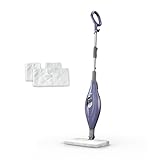
The Shark Steam Pocket Mop S3501 is the classic budget pick for households with a lot of sealed hard floor and no interest in accessories. Its defining feature is the Pocket Pad: the pad wraps around the mop head on both sides, so you clean with one face, flip the head, and clean with a fresh face before you ever touch the laundry basket. On a 1,200 square foot first floor, that effectively doubles the interval between pad changes compared with a single-sided mop.
Key specs
- Two washable double-sided Pocket Pads included
- Swivel mop head for reaching under chairs, toe kicks, and around toilets
- Designed for sealed hard floors: tile, sealed stone, laminate, sealed hardwood, vinyl
- Upright stick format with a trigger or pump steam release (varies by revision)
- Machine-washable pads, so ongoing cost is low
Strengths
What makes the S3501 worth buying is the combination of a low entry point and a pad system that respects your time. The dual-sided pad is not a gimmick — it is the single biggest convenience upgrade in the budget tier, because pad saturation is usually what ends a steam mop session, not water running out. The swivel head lets you steer around table legs and along baseboards without repositioning your body, which matters in kitchens with islands and tight cabinet runs.
It is also forgiving to own. Replacement or extra Pocket Pads are the only consumable, and they go in the washing machine rather than the trash, so the long-term cost of ownership stays near the floor of this list. For a household that already owns a vacuum and simply wants a chemical-free mop for weekly touch-ups, the S3501 covers the job.
Where it asks for patience is scale. Because this is a stick mop with a modest on-board tank, a whole-house clean on a large open plan may involve a refill, and there is no scrub brush or spot-treatment jet for dried-on messes. You get steam and pad pressure, and that is it.
Pros
- Double-sided washable pads stretch each cleaning session
- Very approachable budget-tier entry point
- Swivel head maneuvers around furniture and fixtures well
- No chemicals required; pads are machine washable
- Simple controls with essentially nothing to configure
Cons
- Tank capacity suits small-to-medium areas, not whole large homes in one pass
- No dedicated scrub brush or spot blaster for stuck-on food
- Steam-only performance means heavily soiled grout needs a second tool
- No rotating pads, so textured tile takes more passes
How it compares
Against the Shark S1000, the S3501’s advantage is entirely in the pad design and the bundled double-sided pads; both are budget entry sticks aimed at sealed floors, and the S1000 is the leaner of the two with two Dirt Grip pads and a simpler feature set. Against the Amazon Basics Steam Mop, the S3501 competes on pad format rather than heat-up speed — the Amazon Basics listing emphasizes roughly 30-second heat-up and includes three washable pads, which is a more generous pad count out of the box. If you want the fastest possible start and the most pads for the money, the Amazon Basics mop has the edge; if you want the flip-and-keep-going Pocket Pad experience, the S3501 is the one.
2. Shark Steam Mop S1000 — Best for a First Steam Mop in a Small Space

The Shark S1000 is the stripped-down entry point: a slim white stick mop, two Dirt Grip pads, and a mandate to clean sealed hard floors with steam. It exists for the person who has never owned a steam mop and does not want to learn a new appliance to mop a hallway, a bathroom, and a kitchen.
Key specs
- Two washable Dirt Grip pads included
- Sealed hard floors only — tile, sealed hardwood, laminate, vinyl, sealed stone
- Upright stick form factor, light enough to carry between floors
- Steam-on-demand control; no chemical cleaners needed
- Refillable on-board water tank (compact)
Strengths
Simplicity is the product. There is no spin function, no spray trigger to time, and no accessory kit to store — you fill the tank, wait for the small budget-tier heat-up window, and push. That makes it an excellent starter mop and an excellent second mop for an upstairs bathroom that you do not want to drag the big machine to.
The Dirt Grip pads are textured, which gives them a bit more bite on films of dried soap scum and kitchen grease than a smooth microfiber face. Because the mop is light, cleaning a bathroom floor, the grout lines around a toilet, and the strip in front of a shower takes a few minutes rather than a project. For renters who move often, the low price and small footprint mean it packs without a second thought.
The trade-off is capability. There is no scrubber, no swivel-heavy maneuver set, and no spot treatment. In a home with pets, kids, and a tiled kitchen that sees spills daily, you will feel the ceiling on this mop within a month — not because it fails, but because it has nothing beyond steam and pad friction.
Pros
- Least complicated steam mop in this list to operate
- Light and easy to carry up and down stairs
- Washable pads mean near-zero ongoing cost
- Budget-tier price is easy to justify for one or two rooms
- Chemical-free cleaning on sealed surfaces
Cons
- No scrub brush or spot-treatment feature
- Compact tank means refills on larger floors
- Single-sided pads — no flip-and-continue trick
- Not suitable for unsealed wood or waxed surfaces
How it compares
The nearest alternative is the S3501 Steam Pocket Mop, which is a sister product in the same price tier. The S1000 wins on minimalism and slightly easier storage; the S3501 wins on pad design because its double-sided Pocket Pads roughly double usable cleaning area per pad change. For a single bathroom or a small apartment, the S1000 is enough. For a whole first floor of tile, step up to the S3501 or, if you want scrubbing action, the Shark Steam & Scrub S8001.
3. Wotaste Steam Mop Cleaner — Best for Fast Heat-Up on Wood and Tile
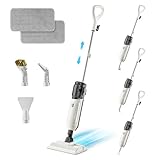
The Wotaste Steam Mop Cleaner leads with a number: 260°F steam in about 15 seconds. That heat-up claim is the reason to consider it, because wait time is the hidden tax on steam mops — a 15-second start means you will actually use it for a spilled cereal bowl instead of reaching for a paper towel.
Key specs
- 260°F steam output, claimed heat-up in roughly 15 seconds
- 16.9 oz (500 ml) water tank
- Listed for hardwood and tile, plus other sealed hard surfaces
- Compact handheld-style body with a floor attachment
- Designed for chemical-free steam cleaning
Strengths
The 15-second heat-up paired with a 260°F steam temperature is a genuinely useful combination. Hotter steam flashes off residue faster and cuts grease on kitchen tile with less dwell time, which is the difference between one confident pass and three hesitant ones. A 16.9-ounce tank is on the smaller side of mid-size, but in practice it covers a kitchen, bathroom, and entryway before a refill.
The compact body is the other selling point. It stores in a broom closet, handles like a handheld for stair treads and baseboards, and does not require the physical commitment of a full upright. If your cleaning pattern is “small, frequent, targeted” rather than “Saturday whole-house blitz,” this is the profile that fits.
The tank math, worked out
Steam mops turn roughly 1 ounce of water into about 1 minute of continuous steaming at a moderate flow setting, which is a useful rule of thumb for planning. A 16.9 oz tank therefore buys you about 15–17 minutes of continuous steam. A 1,200 square foot home with 600 square feet of hard floor and a 30-inch-wide mop head covers about 25 square feet per minute at walking pace, so 600 square feet takes roughly 24 minutes — one refill, and you will want to time it so you refill while the mop cools for 30 seconds rather than mid-hallway. Knowing that number before you buy tells you more than any spec badge.
Pros
- Very fast ~15-second heat-up is the standout spec
- 260°F steam cuts grease and soap film quickly
- Compact enough for a closet and easy to carry
- Works on both hardwood and tile per the listing
- Tank is a manageable size for frequent small jobs
Cons
- 16.9 oz tank means a mid-session refill in larger homes
- Compact head covers less floor per pass than a wide upright
- No rotating scrub pads for textured grout
- Fewer bundled accessories than kits from SQKMYSU or PUREBEAR
How it compares
Against the Amazon Basics Steam Mop, the Wotaste trades a slightly slower nominal heat-up (30 seconds vs 15) for a hotter steam temperature and a tank you can actually measure in ounces rather than guess at — 16.9 oz is a meaningful, fillable quantity. Against the SQKMYSU 6-in-1, the Wotaste is the purist’s choice: you clean floors and nothing else, and you pay for speed instead of accessories. If you have grout, upholstery, or window tracks on your to-do list, the SQKMYSU kit is the better buy; if you just want the fastest hot steam on hardwood and tile, the Wotaste is the sharper tool.
4. Shark Steam & Scrub S8001 — Best for Scrubbing Large Hard-Floor Homes

The Shark Steam & Scrub S8001 is the premium Shark in this roundup, and its pitch is simple: add rotating scrubbing action to steam so you are not relying on elbow grease for dried-on messes. It is an all-in-one hard floor cleaner built as an upright stick, which means it covers ground fast without asking you to kneel.
Key specs
- All-in-one hard floor cleaner with steam and rotating scrub pads
- Upright stick format, grey finish, designed for sealed hard floors
- Scrub heads intended to work grout lines and textured tile
- Washable pads (category norm for this class)
- Premium tier — expect a noticeably higher price than budget sticks
Strengths
Rotating pads are the reason to pay up. A static steam mop relies entirely on your pushing force to break up dried food, and on grout the pad mostly rides the ridges. A scrub mop spins the pad against the surface, which mechanically agitates the grime while steam softens it — two mechanisms at once. On a tiled kitchen that gets cooked on a daily basis, that combination cuts the number of passes per square foot significantly.
The all-in-one framing also means fewer accessories to lose. You do not need a separate scrub brush for the grout line behind the toilet or the corner where the fridge meets the wall; the same machine handles the whole floor. For a large hard-floor home — say 800 to 1,500 square feet of tile and sealed wood — that consolidation is the real value.
The cost is up-front price and maintenance. Premium scrub mops have more moving parts, more pads to wash, and generally a higher replacement-pad cost than a basic stick. If your floors are already clean and you mop weekly as maintenance, you are paying for capability you will not exercise.
Pros
- Rotating scrub action attacks dried messes and grout
- One tool replaces a mop plus a separate grout brush
- Upright format saves your back versus kneeling with a cloth
- Sealed-hard-floor safe when used per the manufacturer’s guidance
Cons
- Premium pricing is hard to justify for small homes
- More pads and parts to wash and store
- Overkill for a single bathroom or a light maintenance routine
- Still limited to sealed surfaces — no exception for unsealed wood
How it compares
Against the Shark SteamSpot S2001, the S8001 is a different job description: the S2001 is a mid-range stick whose headline feature is Steam Blaster spot treatment for targeted sticky messes, while the S8001 is a scrubbing machine for whole floors. Against the Bissell SpinWave Hard Floor Expert 20393, both deliver rotation — the SpinWave approaches it as a corded spin mop with on-demand spray and spin action, while the S8001 frames itself as a steam scrubber. If steam is non-negotiable for you, stay with the S8001; if you want spin cleaning with a spray-and-wipe workflow, the SpinWave is the alternative to weigh.
5. SQKMYSU Steam Mop 6-in-1 — Best for One-Tool Whole-Home Coverage

The SQKMYSU Steam Mop 6-in-1 is the value play for people who want accessories included rather than sold separately. Six attachments, a large removable water tank, a 23-foot power cable, and a lightweight body add up to a mop that can follow you from the kitchen floor to the grout line to the couch cushion without a trip to the garage for a second tool.
Key specs
- Six-piece multi-accessory set for floors and detail work
- Large removable water tank — refill at the sink instead of at the mop
- 23 ft power cable — unusually long for the class
- Lightweight body for overhead and stair use
- Steam cleaning across sealed hard surfaces and attachments
Strengths
The removable tank is the feature that changes routine most. Instead of carrying the whole mop to the faucet, you unclip the tank, fill it, clip it back, and keep working. On a multi-room clean, that is several minutes saved and far less water on the floor from a sloppy pour. Pair it with the 23-foot cord and you can often clean an entire floor without moving the plug.
The accessory count is the second reason to buy. Six tools cover the usual secondary jobs — grout, crevices, and non-floor surfaces — and in the mid-range tier you are getting that coverage in a single purchase rather than adding pieces over a year. Light weight matters too: carrying a mop up a staircase to a bathroom is the moment most people decide they hate their steam mop, and this one avoids that.
The honest caveat is that accessory kits multiply storage demands and that a six-in-one tool rarely matches a single-purpose tool on any one task. The grout brush here is good enough for routine upkeep, not the equal of a full canister steam cleaner’s pressurized jet.
Pros
- Removable tank makes refilling genuinely convenient
- 23 ft cord reduces outlet-hopping
- Six accessories included at a mid-range price
- Light enough for stairs and overhead detail work
- Covers floors plus grout and crevices in one purchase
Cons
- Accessories need dedicated storage space
- Jack-of-all-trades, master of none versus specialized tools
- Small attachments are easy to misplace
- Corded operation limits reach to cord length regardless of accessories
How it compares
Against the PUREBEAR 300°F Scrub & Steam Mop, the SQKMYSU competes on tank design and cord length, while PUREBEAR competes on steam temperature (a claimed 300°F) and a 13-accessory kit. If the deepest, hottest steam and the largest attachment spread matter most — grout, tile, and heavy detail work — PUREBEAR is the stronger spec sheet. If your priority is not running back and forth to the sink and not hunting for an outlet, the SQKMYSU’s removable tank and 23-foot cable are the differentiators, even though its steam temperature is not published as the higher figure. Both sit in the mid-range tier, so the decision is about which convenience you value more.
6. Amazon Basics Steam Mop — Best for Cheap, Fast, Chemical-Free Basics

The Amazon Basics Steam Mop is the pragmatic budget answer: heats up in about 30 seconds, cleans with no chemicals, and ships with three washable pads. There is nothing exotic here, and that is the point — it is the appliance equivalent of a plain white t-shirt.
Key specs
- Heats up in about 30 seconds per the listing
- Chemical-free steam cleaning
- Three washable pads included
- Listed for all sealed hard floors
- Simple stick format with no extras to configure
Strengths
Three pads out of the box is a real advantage at this price. Pad turnover is the most common reason a steam mop session stalls, and starting with a spare set means you can clean a floor, throw a pad in the wash, and still have coverage for the next day. Add a 30-second heat-up and you have a mop that is ready before you have finished filling it.
The “all sealed hard floors” claim also makes this a safe first purchase for a mixed-floor home — tile in the kitchen, laminate in the hall, sealed wood in the living room — as long as every surface is properly sealed. Because it does not chase features, there is very little to break or maintain, which suits buyers who want a tool that works and stays out of the way.
The trade-offs are the predictable ones. There is no scrub brush, no rotating action, and no spot jet. On stains that have dried onto tile, you will be working with steam, pad friction, and whatever patience you bring.
Pros
- Three washable pads included — unusually generous for the tier
- About 30-second heat-up keeps sessions short
- Chemical-free cleaning on sealed surfaces
- Simple design with minimal failure points
- Budget-tier price makes it a low-risk first steam mop
Cons
- No scrubbing or spot-treatment capability
- Tank capacity is modest; large floors need a refill
- Static pads ride over grout rather than into it
- Nothing here for upholstery, glass, or grout detail
How it compares
Against the Wotaste Steam Mop Cleaner, this is a straight heat-versus-pads trade: the Amazon Basics mop heats in about 30 seconds and gives you three pads, while the Wotaste claims roughly 15 seconds and a hotter 260°F steam from a 16.9 oz tank. If you want the maximum number of pads and the lowest possible entry price, this is the pick. If you hate waiting and want hotter steam for grease, the Wotaste is worth the step up. Against the Shark S1000, the difference comes down to two Dirt Grip pads versus three generic washable pads and a slightly faster heat-up — on paper the Amazon Basics mop edges ahead on kit contents.
7. Shark SteamSpot S2001 — Best for Targeting Sticky, Dried-On Spots

The Shark SteamSpot S2001 is built around a single idea: a Steam Blaster that concentrates steam on one spot instead of spreading it across the floor. If your problem is not the whole floor but the three square feet where the kids eat, this is the mop that solves it.
Key specs
- Steam Blaster technology for concentrated spot treatment
- White upright stick format, sealed hard floors
- Washable pad (single-sided, category norm)
- Mid-range tier positioning
- Standard on-board tank with refillable design
Strengths
Spot concentration is genuinely different from general steaming. General steam spreads over the mop head and dilutes quickly on a cold floor; a blaster directs a focused burst at the stain, raising the local surface temperature fast enough to soften dried jam, syrup, or cheese. You then wipe with the pad in the same motion, which is why this beats the “steam the whole room and hope” approach on high-traffic eating areas.
It is also a good middle-ground purchase. You are not paying premium scrub-mop money, but you get a capability the budget sticks simply do not have. For a household where the complaint is “the floor is mostly fine except under the high chair,” this is the most efficient tool in the list.
The limits are predictable: single-sided pad, no rotating scrub action, and no accessory ecosystem. It is a targeted tool, and it does its targeted job well rather than doing everything at a mediocre level.
Pros
- Steam Blaster concentrates heat on stubborn spots
- Mid-range price for a real feature upgrade
- Fast for entryway and kitchen touch-ups
- Fits the same upright workflow as other Shark sticks
- Chemical-free on sealed hard floors
Cons
- Single-sided pad — no flip-and-continue benefit
- No rotating scrub for grout lines
- No accessory kit for grout, glass, or upholstery
- Spot blasting does not replace whole-floor coverage speed
How it compares
Against the Shark Steam & Scrub S8001, this is a scope decision. The S2001 treats spots; the S8001 scrubs whole floors with rotating pads for a premium price. If 90% of your problem is the same three spots recurring, the S2001 is the smarter, cheaper buy. If the entire floor is textured tile that needs mechanical scrubbing every week, the S8001 justifies its price. Against the Bissell PowerFresh Deluxe 1806, both offer spot-focused capability — Bissell’s answer is the built-in SpotBoost brush, which combines scrubbing with steam, while Shark’s Steam Blaster leans on concentrated steam. Buyers who want bristles on the spot should look at the PowerFresh; buyers who want a hot burst and a wipe should look at the SteamSpot.
8. Bissell PowerFresh Deluxe 1806 — Best for Tile, Grout, and Sealed Hardwood in One Home

The Bissell PowerFresh Deluxe 1806 is the mid-range workhorse that most households end up happiest with, because it balances three things budget sticks cannot: fast heat-up, a built-in SpotBoost scrub brush, and variable steam control for different surfaces.
Key specs
- Built-in SpotBoost brush for scrubbing stuck-on messes
- Fast heat-up (Bissell markets this class as ready in about 30 seconds)
- Variable steam control to dial intensity up or down
- Flip-down scrubber for grout lines and textured tile
- Compatible with scented discs in this product family (category norm; confirm current listing contents)
Strengths
The SpotBoost brush is the feature you will use most. It swings down from the mop head, so when you hit dried cereal or a stuck patch of adhesive residue, you do not stop and fetch a sponge — you flip the brush down, scrub for ten seconds, and flip it back. That removes the single biggest friction point in steam mopping.
Variable steam matters more than people expect. Sealed hardwood and laminate are happiest with a lighter steam setting; glazed tile and grout tolerate more. Being able to turn the dial rather than choose between “off” and “full” means you can clean a mixed-floor home without changing machines or risking a finish. The flip-down scrubber covers grout on hands and knees only when the job is genuinely bad.
Caveat: scented discs and other consumables vary by revision, so check the current listing for what is actually in the box. And like every steam mop here, it is for sealed floors — steam plus an already-damaged finish is a recipe for a bigger problem.
Pros
- SpotBoost brush handles dried-on messes without extra tools
- Variable steam suits tile and sealed wood in the same home
- Flip-down scrubber reaches grout lines
- Fast heat-up keeps sessions efficient
- Strong replacement-pad and accessory availability in this family
Cons
- Consumables like scent discs are optional extras to budget for
- Not a replacement for a deep canister steamer on heavy grout
- Heavier than budget sticks when the tank is full
- Still strictly for sealed hard surfaces
How it compares
Against the Shark SteamSpot S2001, the PowerFresh Deluxe gives you bristles and variable steam, while the SteamSpot gives you concentrated steam bursts in a lighter package. On grout and dried food, the PowerFresh’s physical brush generally wins; on a quick sticky spill, the SteamSpot’s blaster answers faster. Against the Bissell SpinWave 20393, the PowerFresh is the steam-first mop and the SpinWave is the spin-first cleaner — if you prefer scrubbing pads rotating under you rather than a brush you flip down, the SpinWave is the natural upgrade within the same brand.
9. Bissell SpinWave Hard Floor Expert 20393 — Best for Spin Cleaning Sealed Hard Floors
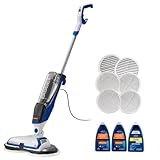
The Bissell SpinWave Hard Floor Expert 20393 replaces the push-scrub rhythm of a steam mop with two rotating pads and an on-demand spray. It is a corded spin mop cleaner aimed at sealed hard floors and tile, and it is the right answer for people who dislike the physical effort of a stick mop.
Key specs
- Corded spin mop cleaner with rotating dual pads
- On-demand spray plus rotation for cleaning solution delivery
- Listed for sealed hard floors and tile
- Washable/replaceable mop pads (Bissell SpinWave pad family)
- Premium tier
Strengths
Rotation does the work you would otherwise do with your shoulders. Two spinning pads under a powered head scrub the floor as you guide it forward, which on a large tiled kitchen translates to noticeably less effort per square foot. The on-demand spray also means you control how wet the floor gets, which matters on laminate and vinyl where standing water is unwelcome.
Because you supply the cleaning solution and control the spray, the SpinWave suits homes that want a scent or a specific floor cleaner rather than pure steam. It handles kitchen grease, footprints, and everyday grime quickly, and the dual-pad design covers a wide swath, so large open-plan floors go faster than with a compact mop.
The trade-off is that this is a wash-and-spin tool rather than a sterilizing steam tool, and it is corded, so reach is bounded by the cable. Pads and solution are ongoing costs. If your goal is chemical-free sanitation, a steam mop is the more direct route; if your goal is fast, low-effort cleaning of big sealed floors, the SpinWave is excellent at exactly that.
Pros
- Rotating pads reduce the physical effort of mopping
- On-demand spray gives precise control over floor wetness
- Wide cleaning path speeds up large rooms
- Corded power means consistent pad speed with no battery fade
- Works with your choice of floor cleaning solution
Cons
- Uses solution rather than chemical-free steam
- Cord limits range and adds a cable to manage
- Ongoing cost for pads and cleaning fluid
- Heavier and pricier than a basic steam stick
How it compares
Against the Shark Steam & Scrub S8001, the difference is method: Shark combines steam with rotating scrubbers, Bissell SpinWave combines spin pads with a sprayed solution. If you want heat and no chemicals, Shark has the edge; if you want a specific cleaner scent and total control of moisture, the SpinWave wins. Against the Bissell CrossWave HydroSteam Deluxe 3515G, the SpinWave is simpler and cheaper — it just mops. The CrossWave adds vacuuming and steam washing in one pass, so it makes sense only if you are also ready to replace your vacuum routine on hard floors.
10. Bissell CrossWave HydroSteam Deluxe 3515G — Best for Vacuum-and-Wash in One Pass

The Bissell CrossWave HydroSteam Deluxe 3515G is the premium consolidation play: a 3-in-1 machine that vacuums dry debris and washes hard floors with steam in a single pass. If you resent sweeping before you mop, this is the product that deletes that step.
Key specs
- 3-in-1 wet/dry vacuum, washer, and steam mop design
- Designed for sealed hard floors and multi-surface cleaning
- Separate clean and dirty water paths (category norm for this class)
- Self-clean cycle for the brush and internal path (category norm; verify on the current listing)
- Premium tier
Strengths
One-pass cleaning is the entire value proposition, and it is a big one. Crumbs, dust bunnies, and dried spills all get picked up while the floor is washed, which on a kitchen-and-entryway run means one machine out, one machine away. The dirty-water tank concept means you are not pushing a grimy mop pad around — the machine is continuously drawing soiled water away.
The steam element adds a sanitizing dimension that a plain wet/dry vacuum lacks, which appeals to households with pets or small children. And the self-clean cycle reduces the least pleasant part of owning any wet cleaner: disassembling and rinsing the brush by hand.
The costs are real. This is premium-tier, it has the most parts to maintain of anything in this list, and dirty-water tanks need emptying and rinsing after every use or they smell. It is also heavier and more involved than a mop you grab for a two-minute spill — which is exactly why a budget stick still earns a place in the closet alongside it.
Pros
- Vacuums and washes in one pass — no separate sweeping step
- Steam adds sanitizing capability beyond plain washing
- Dirty water is captured rather than smeared
- Self-clean cycle simplifies end-of-job maintenance
- Handles dry debris and sticky messes with the same machine
Cons
- Premium pricing and the most maintenance of any mop here
- Tanks must be emptied and rinsed after each use
- Heavier and slower to deploy for tiny spills
- Only for sealed hard floors — never for area rugs or unsealed wood
How it compares
Against the Bissell SpinWave 20393, the CrossWave is a broader tool for more money: SpinWave mops, CrossWave mops and vacuums. If you already sweep reliably and just want a great mop, the SpinWave is the better-value buy. Against the McCulloch MC1385, the comparison is scope versus depth: the CrossWave owns your floors, while the McCulloch owns grout, tile, and detail work with 23 accessories and pressurized steam. Households with big hard floors and no interest in detailing should pick the CrossWave; households chasing grout and crevices should pick the McCulloch.
11. McCulloch MC1385 Canister Steam Cleaner — Best for Grout, Tile, and Detail Work

The McCulloch MC1385 is not a mop in the push-it-around sense — it is a canister steam cleaner that happens to solve floor problems better than any stick when the problem is grout. With 23 accessories and a hose instead of a handle, it reaches places a mop physically cannot.
Key specs
- Canister steam cleaner with a hose and 23 included accessories
- Positioned for grout and tile work
- Pressurized steam delivery through interchangeable nozzles and brushes
- Corded with a long hose for reach
- Premium tier
Strengths
A canister steamer is the right tool for the jobs a stick mop fails at: the grout lines between tile, the caulk seam behind a sink, the burner grates, the shower door track, and the corners where walls meet floors. A mop head cannot concentrate steam into a 3 mm grout channel; a brush nozzle can. If your complaint is that your tile never looks clean even after mopping, this machine is the answer and no mop is.
It is also unusually versatile for the price tier. Twenty-three accessories cover brushes, nozzles, and squeegees across floors, fixtures, and appliances, which makes it a genuine multi-surface tool rather than a single-purpose appliance. A long hose means you can leave the canister in the hallway and still reach the bathroom.
What it is not: a quick-reaction mop. There is no wide pad to push around a whole floor in ten minutes, so canister steamers are typically paired with a stick mop in well-equipped homes. It also holds a larger volume of water at high pressure, which means longer heat-up and more caution around finishes than a low-pressure stick.
Pros
- Pressurized steam is unmatched for grout and tile detail
- 23 accessories cover floors, fixtures, and appliances
- Long hose gives reach without moving the unit
- Chemical-free deep cleaning on sealed surfaces
- One tool for kitchen, bath, and hard-floor edges
Cons
- No wide mop pad — slow for whole-floor coverage
- Longer heat-up and more setup than a stick mop
- Accessory storage requires a shelf or bin
- Pressurized steam demands care on delicate or unsealed finishes
How it compares
Against the PUREBEAR 300°F Scrub & Steam Mop, both chase deep cleaning, but the shapes differ. PUREBEAR is a scrub-and-steam mop with 13 accessories, meaning it can do a floor pass and then switch to detail; the McCulloch is a canister that does detail exceptionally well and floor passes adequately. If you want one device that mostly mops and sometimes details, PUREBEAR fits better. If grout, tile, and fixtures are the actual problem, the McCulloch is the more capable machine despite giving up the mop form factor. Against the Bissell CrossWave HydroSteam Deluxe, the choice is depth versus breadth: CrossWave cleans floors broadly, McCulloch cleans them deeply at the edges and seams.
12. PUREBEAR 300°F Scrub & Steam Mop — Best for Hot Steam Plus a Full Attachment Kit

The PUREBEAR 300°F Scrub & Steam Mop stakes its claim on temperature and kit size: a claimed 300°F steam output and 13 accessories, in a mop-shaped body. It is the mid-range pick for a household that wants both floor coverage and enough attachments to stop borrowing the kitchen sponge for grout.
Key specs
- 300°F scrub-and-steam operation per the listing
- 13 accessories included
- Steam cleaner with a mop-style floor head plus detail tools
- Designed for hard floors and detail cleaning
- Mid-range tier
Strengths
Higher steam temperature is not marketing noise — it changes cleaning chemistry. Grease, syrup, and dried food residue soften faster at higher temperatures, so you spend less time dwelling on a spot. At a claimed 300°F, this is among the hottest steam outputs in this roundup, and pairing that with scrub action gives it two mechanisms for breaking down grime rather than one.
The 13-accessory kit is the second draw. It means the same appliance can handle a floor pass, then convert to a handheld for the stovetop hood, the microwave interior, the sliding door track, and the grout line behind the toilet. For a mid-range price, you are effectively buying a steam mop and a handheld steam cleaner together, which is why it earns a spot even though the SQKMYSU kit is close in price.
Relative weaknesses are the usual hybrid compromises: lots of accessories to store and keep track of, and a floor-head pass that is good rather than class-leading. If you want pure floor coverage and nothing else, a dedicated upright is simpler.
Pros
- Claimed 300°F steam is among the hottest here
- 13 accessories cover floors plus detail cleaning
- Scrub-and-steam combines heat and agitation
- Mid-range price for a full kit
- Replaces a separate handheld steam cleaner for many jobs
Cons
- Accessory storage and organization take space
- Not the fastest whole-floor solution versus a wide upright
- Hybrid tools rarely match specialists at any single task
- High-temperature steam needs care on delicate surfaces
How it compares
Against the SQKMYSU Steam Mop 6-in-1, the trade is clear: PUREBEAR leads on steam temperature (300°F claimed vs a lower published figure for the SQKMYSU) and on accessory count (13 vs 6), while the SQKMYSU counters with a large removable tank and a 23-foot cable that make it more pleasant for covering large floors. Buyers who want maximum heat and the most tools should pick PUREBEAR; buyers whose main annoyance is refilling and reaching outlets should pick the SQKMYSU. Against the McCulloch MC1385, PUREBEAR is the friendlier daily driver — it still mops — while the McCulloch is the specialist for grout and tile deep work.
How to Choose
Choosing a steam mop is really four decisions stacked in order, and if you make them in the wrong sequence you end up with a machine that sits unused. Work through floor compatibility first, then heat-up time, then tank capacity, then pad design. If a mop fails the first test, the other three do not matter.
Step 1: Confirm your floors can take steam
Steam mops are safe on sealed hard floors: glazed ceramic and porcelain tile, sealed natural stone, laminate, luxury vinyl plank and tile that is rated for wet cleaning, linoleum, and sealed hardwood. They are not safe on unsealed or oiled hardwood, bamboo with an oil finish, waxed vinyl, or any floor with lifted seams, missing grout, or exposed particleboard edges. Steam plus an unsealed surface equals swelling, warping, and a finish you cannot easily repair.
The quick test is a drop of water. Put a few drops on an inconspicuous spot, wait ten minutes, and wipe. If the water beads on the surface, the floor is sealed and steam is safe. If it darkens or soaks in, do not steam it. On hardwood specifically, look for a sealed or factory-finished surface and keep the mop moving — a hot mop parked in one place on wood is the single most common way people damage a floor.
Step 2: Decide how much heat-up time you are willing to tolerate
Heat-up is the spec that determines whether you use the tool. In this roundup the range runs from roughly 15 seconds (Wotaste, claimed) to about 30 seconds (Amazon Basics, Bissell PowerFresh class) to longer waits for canister steamers that must pressurize a larger volume of water. Fifteen versus thirty seconds sounds trivial; over a year of daily small cleanups it is the difference between reaching for the mop and reaching for a paper towel.
Rule of thumb: if you clean small spills frequently, prioritize fast heat-up and a compact body. If you clean the whole house once a week, a longer heat-up is irrelevant and you should spend your money on tank size and pad design instead. A pressurized canister with a two- or three-minute wait is a fine trade for someone who plans a deep-clean session rather than a reactive wipe.
Step 3: Size the tank to your actual floor area
Tank capacity converts directly into session length. A working estimate: steam mops produce roughly one minute of continuous steam per ounce of water at a moderate setting. That gives you a simple, useful table.
| Tank size | Approx. continuous steam | Hard floor you can finish without a refill* | Typical home shape |
|---|---|---|---|
| ~10 oz (300 ml) | ~10 min | ~250 sq ft | Apartment galley kitchen + bath |
| ~16.9 oz (500 ml) | ~15–17 min | ~375–425 sq ft | Kitchen, bath, entryway in a small home |
| ~20–25 oz (600–750 ml) | ~20–25 min | ~500–625 sq ft | Open-plan kitchen and dining |
| Large removable tank + canister reservoir | ~30+ min or multiple fills | ~750+ sq ft | Whole first floor of tile or sealed wood |
*Assumes a 30-inch-wide mop head at walking pace covering roughly 25 sq ft per minute, with no spot re-passes. Heavy soil, grout scrubbing, and textured tile all cut these numbers substantially — expect 30–50% less coverage on rough or heavily soiled floors.
Two practical notes. First, distilled water is worth the small cost if you live in a hard-water area; it prevents mineral scale from clogging the steam path, and scale is the most common reason a steam mop loses performance after a year. Second, if your floor area sits right at the edge of a tank’s range, buy the larger tank or the removable-tank design rather than planning to refill mid-room — a hot refill in the middle of a hallway is awkward and spills water on the floor you just cleaned.
Step 4: Match the pad design to the dirt you actually have
Pads come in four meaningful configurations, and each solves a different problem.
- Single-sided washable microfiber: the baseline. Cheap, easy to launder, adequate for maintenance mopping on smooth tile. The catch is that one side saturates, so you rotate pads rather than flip them.
- Double-sided (Pocket-style) pads: the pad wraps the head, giving you two usable faces before laundering. Covering the same floor with half as many pad changes is the most underrated convenience upgrade in the budget tier. Shark’s Steam Pocket Mop is the reference here.
- Rotating/spinning pads: powered rotation agitates grime mechanically instead of relying on your pushing force. This is what makes grout and textured tile cleanable in one pass, and it is the main reason to pay for the Shark Steam & Scrub, Bissell SpinWave, and CrossWave machines.
- Bristle brush attachments and flip-down scrubbers: targeted tools for dried-on messes and grout channels. A built-in brush like Bissell’s SpotBoost or a flip-down scrubber saves you from fetching a sponge mid-job, which is why it is worth paying for if you have kids or pets.
Buy at least one spare set of pads regardless of which mop you choose. A saturated pad smears; a clean pad lifts. Two spare sets plus a laundry rotation keeps you from ever mopping with a wet, dirty pad, which is the false economy most buyers discover too late.
Consider cord length and weight, especially in multi-level homes
A 20-foot cord covers most single rooms; a 23-foot cord (SQKMYSU) often lets you clean an entire floor from one outlet. In a two-storey home, weight matters more than cord: a heavy wet/dry machine like the CrossWave is a commitment to carry upstairs, while a lightweight stick or compact handheld is not. Many well-equipped homes end up with exactly that pairing — a premium machine for the main floor and a light stick for upstairs bathrooms.
Decide whether you need steam alone or steam plus washing
Straight steam mops sanitize with heat and no chemicals, which suits households avoiding cleaning products around pets and children. Steam-plus-wash machines (CrossWave) vacuum and mop in one pass, which saves a step but introduces tanks to empty and rinse. Spin mops (SpinWave) use your chosen solution and give you moisture control. None is universally better — pick the workflow you will actually maintain. A machine whose maintenance you skip becomes a smelly appliance; a mop with no maintenance becomes a tool you use daily.
A worked budget example
Suppose you have 700 sq ft of hard floor: 300 sq ft of glazed tile kitchen and bath, 250 sq ft of sealed laminate hallway and dining, and 150 sq ft of factory-sealed hardwood living room. Your criteria resolve like this: all three surfaces are sealed, so steam is safe (confirm the laminate and wood with the drop test). Total area needs a tank that covers roughly 500–625 sq ft, so a 16.9 oz tank would require one refill and a 20–25 oz tank would not. The tile and bath benefit from a scrub brush for grout; the wood wants a gentler steam level. That points to a mid-range mop with variable steam and a built-in scrub brush — the Bissell PowerFresh Deluxe profile — or a premium scrub-and-steam machine if you want rotating pads for the tile and are willing to pay for the coverage. A compact 16.9 oz handheld would work but would force a mid-session refill, and a canister steamer would be overkill for laminate and wood. That is the whole decision process: floors first, then heat-up, then tank, then pads.
Frequently Asked Questions
How hot should a steam mop be for hard floors?
Look for a mop that reaches at least 200°F at the nozzle, and preferably 250–300°F for grease and dried food. Higher temperature softens residue faster and lets you spend less time dwelling on any one spot. In this roundup the Wotaste claims 260°F and the PUREBEAR claims 300°F, while most budget sticks do not publish a figure at all. Hotter is not automatically safer — on sealed wood, keep the mop moving regardless of temperature.
Is a steam mop safe on hardwood floors?
Only on sealed hardwood, and only if you keep the mop moving. Factory-finished and properly sealed wood is fine with light steam; unsealed, oiled, or waxed wood is not, because moisture can penetrate and cause swelling or finish damage. Do the ten-minute water-drop test on an inconspicuous spot first. When in doubt, use the lowest steam setting and never leave the mop parked in one place.
How often do I need to refill the tank?
As a working estimate, one ounce of water produces roughly one minute of continuous steam, so a 16.9 oz tank gives you about 15–17 minutes and roughly 375–425 sq ft at normal walking pace. Heavy soil, grout scrubbing, and textured tile cut that by 30–50%. If your hard floor exceeds about 500 sq ft, choose a large or removable tank, or accept one planned refill.
Can I use vinegar, detergent, or floor cleaner in a steam mop?
Most manufacturers specify plain water, often distilled, and adding anything else risks clogging the steam path or voiding the warranty. Vinegar can degrade seals over time and some brands explicitly prohibit it. If you want a scented or detergent clean, that is what spin mops and wet/dry washers like the Bissell SpinWave and CrossWave are for — they are designed to take solution, while steam mops are designed for water only.
What is the difference between a steam mop and a spin mop?
A steam mop converts water to vapor and cleans with heat, no chemicals, and pad friction. A spin mop uses rotating pads, usually with a sprayed cleaning solution, and cleans with mechanical agitation plus chemistry. Steam mops are better for chemical-free sanitizing and sealed wood caution; spin mops are better for fast, low-effort coverage of large tile floors and for households that want a specific cleaner scent.
Do I need a vacuum-and-wash machine or is a mop enough?
If sweeping before mopping is the step you skip, a vacuum-and-wash machine like the Bissell CrossWave HydroSteam Deluxe genuinely removes that step by picking up dry debris and washing in one pass. If you already vacuum reliably, a mop is simpler, lighter, and cheaper to own. Vacuum-and-wash machines also demand tank emptying and rinsing after every use, which is the maintenance trade for the convenience.
How many pads should I have?
At minimum, one spare set beyond what ships in the box, and ideally two spare sets. Pad saturation — not water running out — is what usually ends a cleaning session, and a dirty pad smears rather than cleans. Double-sided pads stretch that interval, and washable pads make owning spares inexpensive. Wash pads separately from lint-heavy loads and air-dry them to keep them absorbent.
Will a steam mop clean grout?
Lightly soiled grout, yes, especially with a scrub brush or rotating pad. Heavily stained or neglected grout usually needs pressurized steam from a canister cleaner like the McCulloch MC1385, which can concentrate steam into the grout channel in a way a flat mop head cannot. If grout is your main problem, a stick mop is the wrong first purchase.
How long should a steam mop last?
With distilled water and regular descaling, a well-kept steam mop commonly serves several years of household use. The parts that fail first are the steam path (from mineral scale) and the pads (from wear and laundering). Buying a couple of spare pads and using distilled water in hard-water areas are the two cheapest ways to extend a mop’s working life.
Closing: Which Mop Fits Your Home
If you want one recommendation with no caveats: the Bissell PowerFresh Deluxe 1806 is the safest all-round pick for a mixed-floor home, because fast heat-up, variable steam, and a built-in SpotBoost brush cover tile, grout, and sealed hardwood without forcing you to buy a second tool. Pair it with spare pads and it will handle the vast majority of household messes.
Buy the Shark Steam Pocket Mop S3501 if you are on a tight budget with a lot of smooth sealed floor and want the double-sided pad convenience. Buy the Amazon Basics Steam Mop if you want the lowest-risk first steam mop with three pads in the box, or the Wotaste if a roughly 15-second heat-up and 260°F steam for hardwood and tile matters more to you than accessories.
Buy the Shark SteamSpot S2001 if the recurring problem is a few sticky spots rather than a whole dirty floor, and the Shark Steam & Scrub S8001 if you have broad tiled areas that need rotating scrub action every week. Buy the SQKMYSU 6-in-1 if you hate refilling and outlet-hopping, or the PUREBEAR if you want the hottest steam and the biggest attachment kit in the mid-range tier.
Buy the Bissell SpinWave if you want spin cleaning with solution control and you already vacuum; buy the Bissell CrossWave HydroSteam Deluxe if you want to delete the sweeping step and clean hard floors in one pass. Finally, buy the McCulloch MC1385 if grout, tile edges, and fixtures are your real target — it is not a quick mop, but nothing in this list cleans grout like a canister steamer. In most homes the ideal setup is one premium machine for the main floor and one lightweight stick in the upstairs closet.


