
Most sim rigs get the visual and audio side of racing down to a science, yet the moment you crest a curb or run wide onto gravel, the experience falls flat. That missing physical layer is exactly what bass shakers solve: they convert low-frequency audio into tactile vibration you feel through the seat or cockpit frame, closing the gap between “looking at a race” and “being inside one.” The best bass shakers for sim racing do this without buzzing, rattling, or introducing latency that makes the sensation feel divorced from what is happening on screen.
What separates a good setup from a disappointing one comes down to three things: whether the amplifier and transducer are properly matched in power and impedance, how securely the shaker mounts to your rig (a loose bracket kills the effect and creates noise), and whether the whole signal chain preserves transient detail. Pairing the wrong amp with the wrong transducer is the single most common mistake, and it is why this roundup treats amplifiers, transducers, and mounts as a unified system rather than reviewing them in isolation.
As an Amazon Associate we earn from qualifying purchases at no extra cost to you.
![Douk Audio 230W Bass Shaker Amplifier: Bridgeable Stereo/Mono Subwoofer Power Amp with Wired Remote for Home Theaters/Gaming Chairs/Sim Racing Rigs [BSA600 V2.0]](https://m.media-amazon.com/images/I/31B++xGNZOL._SL160_.jpg)


Top 3 picks at a glance
Quick Picks
| Product | Best for | Price |
|---|---|---|
| Next Level Racing HF8 | Plug-and-play haptic pad | $195.99 |
| Douk Audio 230W Amplifier | Driving multiple transducers | $249.99 |
| Douk Audio BS-2 (1 PC) | Single-shaker entry setup | $31.99 |
| XINGBIRDS BST-1 Mount | Low-cost mounting on aluminum profiles | $7.42 |
| Earthquake Q10B | Premium high-power feel | $446.52 |
| Douk Audio BS-2 (1 Pair) | Dual-shaker immersion | $58.99 |
| SimSport Mount for BST-1/AST-2B-4 | Clean aluminum-profile install | $21.99 |
| SimSport Mount for BST-300EX | Mounting a larger-transducer shaker | $24.99 |
How We Picked
We evaluated every product against four criteria that directly determine day-to-day satisfaction: power compatibility between amp and transducer, mounting rigidity on common aluminum-profile rigs, ease of wiring for someone who does not want to solder, and overall value when you account for the fact that most buyers need at least two of these components together. A transducer that is brilliant on paper but impossible to mount cleanly on a 40-series profile is a non-starter, so installation practicality weighed heavily alongside raw output potential.
The 8 Best Bass Shakers For Sim Racing in 2026
Next Level Racing HF8
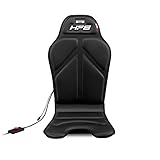
The HF8 sidesteps the entire amp-and-transducer puzzle by packing haptic drivers into a single pad that sits under your seat. If you want results without wiring, matching impedances, or building a bracket, this is the path of least resistance. Pros: genuinely plug-and-play, no external amplifier needed, and the pad form factor means you can move it between rigs or use it on a couch. Con: the tactile range is narrower than a dedicated transducer driven by a proper amp, so heavy curb strikes feel less authoritative. Skip this if your rig already has a power amp in the chain or if you want the deepest possible rumble; it is a convenience product, not a maximum-fidelity one.
Douk Audio 230W Bass Shaker Amplifier
This bridgeable stereo/mono amplifier is the workhorse of a budget-to-mid-tier haptic chain. At 230 watts total it comfortably drives one or two low-power transducers like the BS-2, and the wired remote lets you adjust level from your cockpit without reaching behind the rig. Pros: bridgeable design gives you headroom if you upgrade transducers later, and the subsonic filter trims ultra-low garbage that causes buzzing. Con: it is bulkier than compact class-D alternatives and needs a dedicated power outlet. Skip this if you already own a compatible amp or if you are running a single-shaker setup where a cheaper unit would suffice.
Douk Audio BS-2 (1 PC)
Thirty-watt tactile transducers are the entry point into real bass shaking, and the BS-2 nails the fundamentals at a price that makes a single-unit experiment painless. Mount it under your seat, feed it a low-frequency line signal from the Douk amplifier, and you get curb rumble and engine vibration that headsets simply cannot replicate. Pros: compact enough to fit tight rig spaces, and the mounting hole pattern suits common brackets. Con: at 30 watts it can clip under sustained heavy effects, so a well-managed signal level matters. Skip this if you want dual-shaker immersion from the start; the pair version saves you money.
XINGBIRDS Bass Shaker Mount
Under eight dollars for a purpose-built bracket that clamps the BST-1 onto 2040, 2080, 4040, or 4080 aluminum extrusion is genuinely excellent value. It solves the #1 headache of budget shaker builds: getting a secure, vibration-free mounting point without machining your own hardware. Pros: low cost, wide profile compatibility, and it positions the transducer close enough to the seat rail for effective coupling. Con: the anodized finish is utilitarian and the included hardware is basic. Skip this if you prefer the cleaner aesthetic of the SimSport bracket or if you are mounting a different transducer entirely.
Earthquake Sound Q10B
A thousand-watt tactile transducer is overkill for a bedroom rig, but if you are running a full-motion cockpit or want the most physically imposing haptic output available in a single unit, the Q10B earns its place. It translates low-frequency effects into deep, chest-felt vibration that smaller transducers simply cannot match. Pros: massive output headroom means no clipping even during sustained rumble, and the build quality reflects its price. Con: you will need a serious amplifier (this unit alone will not match the Douk 230W) and it demands significant mounting space. Skip this unless your project genuinely calls for extreme tactile authority; for most sim racers it is a gold-plated solution to a problem the BS-2 already solves well.
Douk Audio BS-2 (1 Pair)
Buying two BS-2 units as a pair is the single best value move in this category. Dual transducers let you place one under each side of the seat or split front and rear, creating directional effects and a noticeably fuller frequency spread. Pros: the price per unit undercuts buying singles, and the pair fills out the low end without clipping concerns that a single unit faces at high volume. Con: you now need a stereo-capable amp and two mounting points, so plan your rig layout before purchasing. Skip this if your amplifier only has a mono output or if a single transducer already satisfies your immersion threshold.
SimSport Gadget Mount for BST-1 / Aurasound AST-2B-4
SimSport designed this bracket specifically for aluminum-profile rigs, and the CNC-machined build gives it a rigidity and finish that cheaper stamped or cast options cannot match. It accepts both the BST-1 and the Aurasound AST-2B-4, which covers the most popular compact transducers on the market. Pros: clean integration with standard profile hardware and no flex under sustained vibration, which keeps the tactile signal sharp. Con: the transducer is not included, so budget for that separately. Skip this if you are mounting a larger unit like the Q10B or the BST-300EX, which have their own dedicated bracket.
SimSport Gadget Mount for BST-300EX
The BST-300EX is a physically larger transducer, and generic brackets either do not fit or allow too much flex. This SimSport mount solves that with a purpose-built cradle that transfers vibration directly into the profile rail. Pros: eliminates the rattle and energy loss that plague improvised mounting solutions, and the anodized aluminum matches most black or silver rigs visually. Con: at $24.99 it costs roughly triple the XINGBIRDS option, though the construction justifies the difference. Skip this if you are running a BST-1-class transducer; the profile-specific fit means it will not accept smaller units.
Buying Guide
Matching Amplifier Power to Transducer Handling
The amplifier should comfortably exceed the transducer’s rated power without creating a situation where you are running the amp at full tilt to reach volume. A 30W transducer driven by a 230W amp means you will sit around twenty percent of the dial, keeping distortion low and leaving headroom for transient peaks. Underpowering clips the signal and produces a harsh buzz that ruins the effect entirely.
Mounting Security Determines Fidelity
A bass shaker works by coupling vibration into a rigid structure. If the bracket flexes or the bolt pattern does not match your profile width, energy scatters instead of reaching the seat. Use a bracket designed for your specific transducer model and aluminum profile size, and torque fasteners to spec. One rattle at high vibration levels is worth more than any wattage upgrade.
Signal Source and Crossover Management
Feed your amplifier from a dedicated subwoofer or LFE output rather than trying to split speaker-level signals. A low-pass filter set around 80 to 120 Hz keeps the tactile channel focused on the frequencies that produce the best physical sensation without bleeding midrange into what should be a pure rumble.
Our Verdict
The Douk Audio BS-2 pair driven by the 230W amplifier, mounted with SimSport brackets, is the most complete and cost-effective haptic chain we would recommend to a sim racer who wants to feel every surface change without spending over four hundred dollars total. For pure convenience and a small footprint, the Next Level Racing HF8 wins if you simply do not want to deal with separate components. If your rig is large enough to justify a second mounting point and you want the most physical impact per dollar, start with the BS-2 pair and upgrade the transducers later while reusing the same amp and brackets.
FAQ
How many bass shakers do I need for a sim rig?
One transducer under the seat provides a solid baseline, and most sim racers find that two create a noticeably fuller and more directional experience. Beyond two the gains diminish unless you are building a full-motion platform with separate channels for different effects.
Can I use a regular amplifier instead of a dedicated bass shaker amp?
Technically yes, but a dedicated unit like the Douk 230W includes a subsonic filter and level control tuned for the frequency range that drives transducers effectively. A standard music amp will work if you add an external low-pass filter and accept that volume management is less convenient.
Will a bass shaker work on a desk setup without an aluminum rig?
It can, but the effect is far weaker because the vibration needs a rigid structure to transmit into the seat. On a standard office chair the energy dissipates quickly, so you would want to bolt the transducer to a solid wooden or metal frame under the seat for meaningful feedback.
Do bass shakers introduce latency?
Any added processing stage can introduce a few milliseconds, but a direct line-level signal from your audio interface or DAC into a dedicated amp produces latency that is imperceptible during racing. Avoid wireless or heavily DSP-laden signal paths if you want zero perceptible delay.


