
Setting up an ergonomic and visually striking gaming desk requires careful spatial planning. While we easily obsess over monitor heights, keyboard depths, and mousepad clearance, the humble gaming headset is often left as an afterthought, draped over a monitor corner or taking up valuable desktop real estate. A dedicated headset stand solves this clutter, but choosing one with the wrong dimensions can lead to bent cables, stretched headbands, or a constantly tipping stand.
To keep your premium audio gear safe and your desk looking pristine, you must find the sweet spot between stand height, base stability, and headphone clearance. This comprehensive size guide breaks down exactly how tall your headset stand should be, complete with real-world measurements, use cases, and tips for measuring your setup.
As an Amazon Associate we earn from qualifying purchases at no extra cost to you. Product prices and availability are accurate as of the date shown and are subject to change.

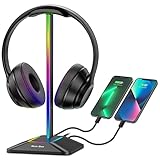


Top 3 picks at a glance
The Short Answer
For the vast majority of gaming headphones, a desktop headset stand should be between 8.5 and 11 inches (21.5 to 28 cm) tall. This height range provides a comfortable 1- to 2-inch clearance buffer between the bottom of your headset’s earcups (or its cable strain relief) and the desk surface.
If you use a wired gaming headset with a fixed, downward-pointing cable or a stiff, non-retractable microphone boom, lean toward the taller end of this spectrum—ideally 10 to 11 inches (25.4 to 28 cm). For wireless headsets or those with detachable cables, a compact stand measuring 8.5 to 9.5 inches (21.5 to 24 cm) is perfectly sufficient and keeps a lower profile on your desk.
Standard Sizes
Headset stands come in several design profiles, from simple vertical pillars to multi-functional hubs with integrated charging ports and controller mounts. The table below outlines the standard sizes available on the market, their physical dimensions, and their ideal use cases.
| Stand Type | Height (Inches) | Height (Centimeters) | Base Footprint / Depth | Best For |
|---|---|---|---|---|
| Compact / Minimalist (e.g., basic aluminum or plastic T-frames) |
8.5″ – 9.0″ | 21.5 – 23.0 cm | 4.0″ x 4.0″ (10 x 10 cm) | Wireless headphones, small desks, budget-conscious setups ($5 to $10 price range). |
| Standard Gaming (e.g., RGB stands with built-in USB hubs) |
9.5″ – 10.5″ | 24.0 – 26.5 cm | 4.5″ x 4.5″ to 5.0″ x 5.0″ (11.5 to 12.7 cm) | Wired headsets, RGB-themed rooms, mid-tier setups ($15 to $20 price range). |
| Multi-Device / Controller Combo (Holds headset + 1-2 gamepads) |
11.0″ – 12.5″ | 28.0 – 31.8 cm | 6.0″ x 6.0″ to 7.0″ x 5.5″ (15.2 to 14 cm) | Console/PC hybrid setups, heavy headsets, organizing multiple peripherals ($25 to $35 price range). |
| Under-Desk Hanger / Clamp (Mounts under the desktop edge) |
2.5″ – 3.5″ (Drop Height) | 6.4 – 9.0 cm (Drop Height) | Requires ~2.0″ x 1.5″ clamp surface | Zero-footprint desks, minimalist aesthetics, ultra-budget setups ($5 to $8 price range). |
How to Measure Your Space
Before purchasing a stand, you should take a few quick measurements of your physical headphones and your desk layout. Follow these steps to ensure a perfect fit:
- Measure the Headset Hang Height: Hold your gaming headset by the center of its headband. Use a tape measure to find the distance from the underside of the headband cushion to the absolute lowest point of the headset. This lowest point might be the bottom of the earcups, a protruding microphone, or the rubber strain relief sleeve of a hardwired cable. Note this measurement.
- Add the Cable Clearance Buffer: If your headset is wired, add 1.5 to 2 inches (3.8 to 5 cm) to your hang height. This extra space prevents the cable from bending sharply against your desk, which can cause internal wire fraying and premature hardware failure over time. For wireless headsets, a 0.5-inch (1.3 cm) buffer is plenty.
- Check Vertical Clearance Under Shelves: If you plan to place your headset stand under a monitor riser, a floating wall shelf, or a desk hutch, measure the vertical opening of that space. Ensure the total height of the stand *plus* another 1.5 inches of “grab clearance” (the space your hand needs to lift the headset off the hanger) is less than the shelf height.
- Verify Base Footprint: Clear a circle on your desk corresponding to the stand’s base diameter (usually 4 to 6 inches). Ensure this area sits outside your active mouse-swipe zone to avoid high-speed collisions during intense gaming sessions.
By Room or Use Case
Different gaming environments demand different storage solutions. How you prioritize space, aesthetics, and functionality will dictate the ideal height and style of your stand.
The Dedicated PC Gaming Setup
For a traditional PC gaming desk, visual integration and peripheral connectivity are key. Dedicated gaming stands often stand between 9.5 and 10.5 inches tall and feature integrated RGB lighting and built-in USB pass-through ports. These stands do more than just hold your gear; they act as a desktop desktop hub.
A stand in this category usually weighs between 0.6 and 1.2 pounds (270 to 540 grams) and features a wider, weighted base to offset the height. These functional stands typically range from $15 to $30. The extra height is necessary to keep the USB ports accessible at the base while ensuring your headset’s earcups clear any cables plugged into the stand itself.
The Minimalist Home Office
If your gaming desk doubles as a professional remote-work station, you likely want a clean, distraction-free aesthetic. A sleek, aircraft-grade aluminum alloy stand standing 8.5 to 9.5 inches tall is the perfect fit. These minimalist stands feature slim vertical bars and compact, unweighted or lightly weighted bases that occupy minimal visual space. Because they lack bulky RGB housings or controller brackets, they keep your desk looking mature and organized, with budget-friendly prices ranging from $6 to $12.
The Compact Studio or Shared Bedroom
When desk surface area is at an absolute premium, a vertical desktop stand might not be the best choice, regardless of its height. Instead, look to an under-desk hanger or clamp-on hook. These brackets clamp onto the edge of your desk (requiring about 1.5 to 2 inches of edge clearance) and drop down only 2.5 to 3.5 inches below the desktop. This completely frees up your desktop workspace while keeping your headset within arm’s reach. They are incredibly affordable, usually costing between $5 and $10, and are highly effective at hiding cable clutter.
Console Gaming Stations
Console gamers often have to store both a headset and one or two gamepads. Multi-device stands are the tallest options on the market, frequently reaching 11 to 12.5 inches in height. They feature staggered tiers, with controller cradles positioned below the primary headset hanger. Because these stands hold multiple devices (often weighing a combined 1.5 to 2 pounds), they require a heavy, slip-resistant base with a footprint of at least 6 inches to prevent tipping over. These heavy-duty organizational hubs typically cost between $20 and $35.
Common Sizing Mistakes
Avoid these frequent pitfalls when selecting your headset stand to ensure your audio gear remains safe and your desk stays functional:
- Ignoring the Cable Strain Relief: Many buyers measure only the plastic earcup of their headset, forgetting that a stiff rubber cable sleeve protrudes another inch from the bottom. Resting a headset on a stand that is too short forces this rubber sleeve to bend against the desk, ruining the cable over time.
- Buying a Top-Heavy, Unweighted Stand: Tall stands (10 inches or higher) made of lightweight plastic without a weighted base are highly susceptible to tipping. If your wireless gaming headset is on the heavier side (350 to 450 grams / 0.8 to 1.0 lbs), a cheap, unweighted stand will tip over every time you bump your desk. Look for bases with built-in metal weights or silicone grip pads.
- Neglecting Headband Width vs. Cradle Width: A stand can be the perfect height, but if the top hanger plate is too narrow or sharp, it will dent and crease the soft foam pad of your headset’s headband. Look for a hanger plate that is at least 1.5 to 2.0 inches wide with a curved contour that mimics the natural arch of your head.
- Blocking Monitor Real Estate: Placing a 12-inch tall multi-device stand directly in front of or beside your monitor can block your line of sight to the screen, especially if you use a dual-monitor setup or a wide-aspect display. Always plan to place tall stands to the far left or right of your active viewing angles.
FAQ
Do I need a weighted base for a tall headset stand?
Yes. If your headset stand is 10 inches (25.4 cm) or taller, or if your gaming headset weighs more than 300 grams (0.66 lbs), a weighted base is highly recommended. Look for a stand that features a steel or solid aluminum base, or one with a weighted bottom plate weighing at least 0.4 to 0.8 pounds. This lowers the center of gravity and prevents the stand from sliding or tipping over when you grab your headset in a hurry.
Can a stand stretch out my gaming headset’s headband?
A stand will not stretch out your headband as long as the headset hangs naturally from its top arch. However, avoid stands that require you to stretch the earcups outward over a central block to secure them. Always choose “hanger-style” stands where the headset suspended freely by its top band.
Are under-desk headphone hangers better than desktop stands?
Under-desk hangers are superior for maximizing desk space and maintaining a clean visual aesthetic. However, desktop stands are better if you want quick access to integrated USB charging ports, custom RGB lighting sync, or if your desk lacks a protruding edge suitable for a clamp-on hanger.
What features should I look for in a gaming headset stand in 2026?
Modern setups in 2026 benefit greatly from stands that feature high-speed USB-C charging ports (delivering at least 10W to 15W of power) to quickly charge wireless headsets. Additionally, look for stands with customizable RGB lighting that integrates with major PC smart-home and peripheral ecosystems, and modular designs that let you add or remove controller clips as your gear collection evolves.

