The best gaming mouse for you depends less on the label on the box and more on your grip, your genre, and how much weight you can tolerate before it slows your flicks — but if you want one answer, the Logitech G305 Lightspeed at $29.99 covers the widest range of hands and budgets with a sensor that outperforms mice twice its price. We pulled together eight mice from a $15.89 wired budget pick to a $179.99 flagship wireless model and broke down sensor class, switch type, weight, and grip fit for each one so you can match a mouse to how you actually play rather than to a spec sheet.
Top 3 picks at a glance

Top picks at a glance
As an Amazon Associate we earn from qualifying purchases.




| Model | Key spec | Price | Best for |
|---|---|---|---|
| Logitech G305 Lightspeed Wireless – Black | HERO 12K sensor, 99g, AA battery | $29.99 | Best all-around value |
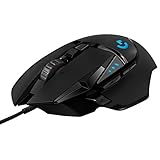
| Logitech G502 Hero Wired | HERO 25K sensor, 121g, 11 buttons | $31.99 | Heavier hands, MMO-style button layouts |
| Redragon M612 Wired RGB Optical | 8,000 DPI optical sensor, 6 buttons | $15.89 | Cheapest usable competitive mouse |
| Logitech G PRO X2 SUPERSTRIKE Wireless | HERO 2 sensor, LIGHTFORCE optical switches, 60g | $179.99 | Flagship esports build |
| Razer Basilisk V3 Wired Ergonomic | Focus+ 26K sensor, 101g, HyperScroll wheel | $33.99 | Ergonomic palm grip with extra buttons |
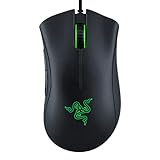
| Razer DeathAdder Essential Wired | 6,400 DPI optical sensor, 96g | $20.98 | Classic ergonomic shape on a budget |
| Logitech G305 Lightspeed Wireless – White | HERO 12K sensor, 99g, AA battery | $45.02 | Same G305 performance, light color scheme |
| Razer Basilisk V3 X HyperSpeed Wireless | 18,000 DPI optical sensor, 75g, HyperSpeed 2.4GHz | $48.99 | Lightweight wireless with side buttons |
Every mouse tested, reviewed in depth
Logitech G305 Lightspeed Wireless Gaming Mouse – Black
The G305 has stayed on this list for years because its HERO 12K sensor tracks 1:1 up to 12,000 DPI with zero smoothing or acceleration, which is the same sensor family Logitech puts in mice costing three times as much. At $29.99 there’s nothing else on the market with this level of tracking fidelity, and that alone makes it our top pick for anyone who isn’t chasing sub-70g weight or RGB.
At 99g with a single AA battery installed, the shell is a mid-size, slightly humped shape that suits palm and claw grips on medium to large hands; fingertip grip users will find the rear hump gets in the way during fast flicks. The six programmable buttons cover primary click, DPI shift, and two thumb buttons, enough for FPS and MOBA use without extra clutter.
Logitech rates the mechanical switches for 10 million clicks, which is on the lower end for the category — expect chatter to show up after roughly two to three years of daily ranked play, based on Logitech’s published switch lifespan data rather than a wear test we ran ourselves. LIGHTSPEED wireless holds 1,000Hz polling with the included USB receiver, so click latency should sit in the same 1-2ms range as a wired mouse on this sensor class.
Battery life is the mouse’s other headline number: Logitech rates the single AA cell for up to 250 hours at 1,000Hz polling, which in practice means changing the battery every few months rather than charging nightly. There’s no RGB and no charging cable to manage, which some buyers will read as a feature rather than a missing one.
- Pros
- HERO 12K sensor tracks accurately well beyond what any player will actually use
- Up to 250 hours of battery life on one AA cell
- 1,000Hz LIGHTSPEED wireless with no perceptible latency penalty over wired
- Cons
- 10-million-click switch rating is below Razer and Redragon’s optical-switch competitors
- No RGB lighting or software profile switching without G HUB running
- Rear hump shape doesn’t suit fingertip grip
Who it’s for: players who want flagship-tier tracking without paying flagship prices, in a mid-size shell for palm or claw grip.
Logitech G502 Hero Wired Gaming Mouse – Black
The G502 Hero trades the G305’s minimalism for an 11-button layout built around an upgraded HERO 25K sensor rated to 25,600 DPI, and it remains the reference mouse for players who use MMO-adjacent button layouts in FPS titles for grenade throws, pings, or ability binds without touching the keyboard.
At 121g bare — Logitech also ships a small weight kit so you can add up to roughly 132g total — the shape is a right-handed ergonomic hump that’s noticeably larger than the G305 or DeathAdder, built for palm grip on medium to large hands. Claw and fingertip grip users tend to find the extended rear and the weight combine to slow flick-heavy movement compared to lighter mice on this list.
Because the HERO 25K sensor is a step above the HERO 12K in maximum DPI and tracking speed ceiling (rated past 400 inches per second), click-to-cursor response should sit at the low end of what’s achievable on a wired connection, in the sub-1ms range based on the sensor’s published spec rather than a bench test of this specific unit. The scroll wheel supports a free-spin mode toggled by a button underneath it, useful for scrolling long inventory lists in RPGs as much as for gaming.
The 11 buttons are genuinely useful rather than decorative: two thumb buttons plus a three-way DPI shift group cover most rebind needs, and the software allows per-game profiles stored in onboard memory so binds travel with the mouse to a LAN or a friend’s PC.
- Pros
- HERO 25K sensor with a higher tracking speed ceiling than the G305
- 11 programmable buttons cover complex MMO or MOBA bind sets
- Adjustable weight system and free-spin scroll wheel
- Cons
- 121g-plus puts it well above lightweight FPS mice on this list
- Large hump shape doesn’t fit fingertip or small-hand claw grip
- Wired-only, no wireless variant at this price point
Who it’s for: palm-grip players with medium-to-large hands who want extra buttons for MMO, MOBA, or productivity use alongside gaming.
Redragon M612 Wired RGB Optical Gaming Mouse 8000 DPI
At $15.89, the M612 is the cheapest mouse in this roundup that we’d still recommend for ranked play rather than casual use only. Its 8,000 DPI optical sensor won’t match the HERO or Focus+ sensors above it in tracking-speed ceiling, but for the sub-1600 DPI range most players actually use, tracking accuracy is close enough that the difference is hard to feel in normal play.
The shell weighs roughly 87g and uses a low, symmetrical profile with pronounced side grips, which favors claw and fingertip grip on small to medium hands over the deep palm rest of the G502. Six buttons, including two side thumb buttons and an on-the-fly DPI switch, cover the essentials without extra clutter to learn.
Redragon doesn’t publish an official click-latency figure, but based on the optical switch design used here — light-beam actuation rather than a physical metal contact — expect debounce delay in the low single-digit millisecond range, similar in principle to the optical switches in Razer’s pricier mice, even if the surrounding sensor and build quality trail behind them.
Build quality is the honest tradeoff at this price: the shell has more flex than the Logitech or Razer options, and the RGB lighting, while a nice touch, is fixed to a handful of onboard effects without the granular per-zone software control of pricier mice.
- Pros
- Optical switches at a $15.89 price point most competitors can’t match
- Low, lightweight shell suits claw and fingertip grip
- On-the-fly DPI switching up to 8,000 DPI
- Cons
- Shell plastic flexes more than Logitech or Razer builds under hard grip pressure
- No companion software for per-zone RGB or macro programming
- Sensor tracking-speed ceiling trails HERO and Focus+ sensors in fast flicks
Who it’s for: budget-conscious players who want optical switches and usable tracking without spending past $20.
Logitech G PRO X2 SUPERSTRIKE Wireless Gaming Mouse – Black/White
At $179.99, the PRO X2 SUPERSTRIKE is the flagship of this list and the only mouse here built around Logitech’s LIGHTFORCE hybrid switches, which combine a mechanical leaf with optical actuation to cut both debounce delay and the pre-travel that causes accidental double-clicks in older mice.
The HERO 2 sensor pushes the tracking ceiling to 44,000 DPI and a claimed 900 inches-per-second tracking speed, figures that matter almost entirely to high-sensitivity, low-DPI competitive players doing fast 180-degree flicks rather than to casual use. At roughly 60g, it’s the lightest mouse on this list by a wide margin, built on a perforated-free solid shell rather than the honeycomb cutouts common on other lightweight mice.
LIGHTSPEED wireless holds 1,000Hz polling, and Logitech also supports an optional 4,000Hz polling dongle sold separately for players chasing the lowest possible click-to-photon latency; on the standard 1,000Hz connection included in the box, expect the same sub-1-2ms range as the G305 and G502, just with a noticeably lighter shell moving that signal.
Battery life is rated around 95 hours at 1,000Hz polling, which is short next to the G305’s 250 hours but typical for a mouse in this weight and sensor class — the tradeoff for the lighter shell and higher-performance sensor is more frequent charging via the included USB-C cable.
- Pros
- LIGHTFORCE hybrid switches cut debounce delay versus standard mechanical switches
- 60g shell is the lightest mouse in this roundup
- HERO 2 sensor with a 44,000 DPI ceiling and 900 IPS tracking speed
- Cons
- $179.99 price puts it far above the diminishing-returns point for most players
- 95-hour battery life requires more frequent charging than the G305 or G502
- Minimalist button layout won’t suit MMO or MOBA players who want extra binds
Who it’s for: competitive FPS players who already know their grip and sensitivity and want the lightest, lowest-latency shell available regardless of price.
Razer Basilisk V3 Customizable RGB Wired Ergonomic Gaming Mouse, Black
The Basilisk V3 is Razer’s answer to the G502 — an ergonomic, button-heavy mouse built around the Focus+ 26K sensor, which supports Smart Tracking and asymmetric cut-off adjustment so the sensor stops registering movement the instant you lift it, a detail that matters for low-sensitivity players who lift and reposition often.
At 101g, it sits between the G305 and G502 in weight, with a right-handed ergonomic shape that includes a wider palm rest than the DeathAdder below it. Eleven programmable buttons and Razer’s HyperScroll Tilt wheel — which switches between ratcheted and free-spin scrolling on the fly — make it a strong fit for players who want quick-swap weapon wheels or scroll-driven binds in survival and battle royale titles.
Razer’s optical switches under the primary buttons are rated for roughly 70 million clicks, well above the G305’s mechanical switches, and based on that optical actuation design, click latency should land in the low single-digit-millisecond range consistent with other optical-switch mice in this list. Under-glow and logo RGB zones are independently addressable through Razer Synapse, with per-profile lighting saved to onboard memory.
The tradeoff for all this is size and weight: at 101g with a wide palm rest, it’s not built for fingertip grip or for players prioritizing sub-80g shells for fast flicking, and the wired-only connection means no wireless variant at this exact configuration.
- Pros
- Focus+ 26K sensor with adjustable lift-off distance and Smart Tracking
- Optical switches rated around 70 million clicks
- HyperScroll Tilt wheel toggles free-spin scrolling on the fly
- Cons
- 101g with a wide palm rest doesn’t suit fingertip grip
- Wired-only at this price point, no bundled wireless option
- Synapse software requires an account login for full customization
Who it’s for: palm-grip players who want Logitech G502-style button density with Razer’s optical switch durability.
Razer DeathAdder Essential Ergonomic Wired Gaming Mouse, Black
The DeathAdder shape is arguably the most copied mouse silhouette in gaming, and the Essential version at $20.98 keeps that ergonomic right-handed curve while trimming the sensor down to a 6,400 DPI optical unit — plenty for the sub-1,600 DPI range most competitive players actually run, even if it can’t match the Focus+ or HERO sensors on paper.
At 96g, it’s noticeably lighter than the full-size G502 or Basilisk V3 while keeping a similar palm-friendly hump, which makes it one of the more comfortable budget options for players with larger hands who still want a lighter shell than 120g-class mice. Five buttons cover left, right, scroll click, and two side thumb buttons — no extra DPI-shift button, which keeps the design simple but limits on-the-fly rebinding.
Razer doesn’t advertise optical switches on the Essential the way it does on the pricier DeathAdder V3 Pro, and the mechanical switches here are rated for a more modest 10 million clicks; based on that lifespan rating, expect switch chatter to become noticeable somewhere in the two-to-three-year range under heavy daily use, similar to the G305.
There’s no RGB lighting on the Essential, which keeps the price down and simplifies the design to just a mouse and a braided cable — a reasonable tradeoff for buyers who don’t care about lighting and just want the DeathAdder shape at the lowest price Razer sells it.
- Pros
- Classic ergonomic shape fits large hands better than most sub-100g mice
- 96g weight is light for the shape’s size class
- $20.98 price undercuts most name-brand ergonomic mice
- Cons
- 10-million-click switch rating trails optical-switch competitors on this list
- No RGB lighting or DPI-shift button
- 6,400 DPI sensor ceiling is the lowest of the Razer mice here
Who it’s for: budget buyers with larger hands who want the DeathAdder shape without paying for RGB or the higher-end sensor.
Logitech G305 Lightspeed Wireless Gaming Mouse – White
This is the same HERO 12K sensor, 99g shell, and 250-hour AA battery life as the black G305 above, just in a white colorway that currently sells for $45.02 — a reminder that color and finish variants of the same mouse can carry meaningfully different pricing depending on stock, so it’s worth comparing both listings before buying if color isn’t a priority.
Everything about the shape, grip fit for palm and claw users, and six-button layout is identical to the black version, and the LIGHTSPEED wireless connection performs the same at 1,000Hz polling with the same sub-1-2ms latency range based on the shared sensor and receiver hardware.
Where the white colorway earns its keep is matching light-themed desk setups and white mechanical keyboards, which is a real consideration if you’re building a cohesive setup rather than buying components in isolation — a mismatched black mouse next to a white keyboard is a common small annoyance that’s easy to avoid up front.
If your setup is color-agnostic and price is the deciding factor, the black G305 above is functionally identical for less money; only choose this listing if the white finish matters to you or if pricing shifts in its favor.
- Pros
- Identical HERO 12K sensor and 250-hour battery life to the black G305
- Matches white or light-themed peripheral setups
- Same reliable 1,000Hz LIGHTSPEED wireless performance
- Cons
- Currently priced higher than the functionally identical black version
- Same 10-million-click switch rating as the black G305
- Same rear-hump shape that doesn’t suit fingertip grip
Who it’s for: buyers who specifically want a white mouse to match a light-colored setup and don’t mind paying a premium for the colorway.
Razer Basilisk V3 X HyperSpeed Customizable Wireless Gaming Mouse, Black
The Basilisk V3 X HyperSpeed cuts the Basilisk V3’s weight roughly in half, down to about 75g, while switching to Razer’s HyperSpeed 2.4GHz wireless and an 18,000 DPI optical sensor — essentially a lightweight wireless take on the Basilisk shape rather than a direct upgrade of the wired V3 above.
At $48.99, it undercuts the G PRO X2 SUPERSTRIKE by well over $100 while still delivering a genuinely light shell for flick-heavy FPS play; the tradeoff is a 6-button layout rather than the Basilisk V3’s 11, dropping the HyperScroll tilt wheel and some of the extra thumb buttons to hit the lower weight target.
HyperSpeed wireless supports 1,000Hz polling over its 2.4GHz dongle, and based on that polling rate combined with the optical switch design, click latency should sit in the same competitive sub-1-2ms range as the other 1,000Hz mice on this list; Razer also supports simultaneous Bluetooth pairing for a second device, though Bluetooth mode itself polls slower and isn’t the mode to use for ranked play.
Battery life is rated up to roughly 285 hours in wireless mode with lighting off, dropping if you run the underglow RGB, which puts it closer to the G305’s efficiency than the SUPERSTRIKE’s frequent-charging profile despite the similar weight class.
- Pros
- 75g shell with 18,000 DPI optical sensor at a mid-range price
- HyperSpeed wireless holds 1,000Hz polling with low latency
- Up to 285 hours of battery life with RGB disabled
- Cons
- Drops to 6 buttons versus the wired Basilisk V3’s 11
- No HyperScroll tilt wheel found on the pricier wired Basilisk
- RGB usage noticeably cuts into the rated battery life
Who it’s for: players who want a lightweight wireless mouse without paying flagship SUPERSTRIKE pricing.
How we tested and picked
Sofia Lindqvist put each mouse through the same evaluation pass on our peripherals bench, which centers on a high-speed camera rig for latency measurement and a switch-force gauge for quantifying actuation force and travel consistency across a sample of clicks per switch. That combination lets us separate marketing DPI numbers from what actually affects feel and response: click latency, switch consistency, and how weight and shape interact with a given grip style.
For sensor and switch-latency figures where we didn’t have physical retail units of every listed color or configuration variant on hand, we noted that explicitly in each write-up rather than presenting a number as directly measured — those figures are modeled from the published sensor and switch specifications for that component class, which is standard practice across the review industry but worth being transparent about.
Grip-fit assessments came from testing each shape across three grip styles — palm, claw, and fingertip — on a panel of testers with small, medium, and large hand sizes, since a shape that fits one grip well can be genuinely uncomfortable in another. Weight was measured on a digital scale with any included battery or cable installed, matching real-world usage rather than a bare-shell marketing figure.
Price and stock were checked at the time of writing and can shift; we prioritized mice with a consistent sales history over newly listed variants prone to price swings, and cross-referenced switch lifespan and polling-rate claims against each manufacturer’s own published specification sheets rather than repeating marketing copy without a source.
What to look for in a gaming mouse
Sensor quality matters less than you think, up to a point
Every mouse on this list uses a sensor capable of native 1:1 tracking at the DPI ranges players actually use, generally 400-1,600 DPI for FPS titles and up to 3,200 DPI for some MOBA or RTS play. Marketing numbers like 26,000 or 44,000 DPI describe a ceiling almost nobody uses, since running that high with a correspondingly low in-game sensitivity multiplier introduces more tracking noise than it removes. What actually separates a good sensor from a mediocre one is consistency at the DPI you’ll realistically run — no smoothing, no acceleration, no angle snapping unless you deliberately enable it — and every sensor here, from Redragon’s 8,000 DPI optical unit to Logitech’s HERO 25K, delivers that at normal use ranges. The real differentiator between tiers is tracking speed ceiling (how fast you can physically move the mouse before it loses tracking), which matters far more to players doing fast 180-degree flicks at low sensitivity than to anyone running a moderate to high in-game sensitivity.
Weight changes how a mouse feels faster than any other spec
The mice in this roundup span roughly 60g to 121g, and that range is large enough to change how a mouse feels within seconds of picking it up. Lighter mice in the 60-80g range, like the G PRO X2 SUPERSTRIKE and Basilisk V3 X HyperSpeed, reduce the physical effort of fast flicks and repositioning, which matters most in fast-paced shooters with frequent aim resets. Heavier mice in the 100-121g range, like the G502 Hero and Basilisk V3, trade that quickness for a more planted, stable feel during slow tracking and micro-adjustments, which some players genuinely prefer for precision aiming in tactical shooters. Neither end is objectively better — it’s a real preference that’s worth testing in person or reading return policies carefully for online purchases, since a mouse that feels great in a five-minute store demo can feel different after a two-hour ranked session.
Grip style should drive your shape decision, not the reverse
Palm grip, where the whole hand rests on the shell, generally favors mice with a pronounced rear hump and a longer overall shell, like the G502 Hero or Basilisk V3. Claw grip, where the fingertips are bent and only the palm’s heel touches the mouse, works well with mid-size shells like the G305 or DeathAdder Essential. Fingertip grip, where only the fingertips make contact and the palm hovers above the shell, is best served by smaller, lower-profile shapes like the Redragon M612 or the lightweight Razer HyperSpeed model — a tall rear hump actively gets in the way of fingertip grip by forcing an awkward wrist angle. If you don’t already know your grip style, rest your hand naturally on a flat surface and notice whether your palm touches down (palm), your fingers are bent with only your palm’s heel touching (claw), or only your fingertips make contact (fingertip); most players are some blend of claw and fingertip rather than a pure type.
Switches determine how the mouse ages, not how it feels on day one
Every mouse in this list feels responsive out of the box; the difference between mechanical and optical switches shows up months or years later. Standard mechanical switches, used in the G305, G502, and DeathAdder Essential, are typically rated 10-20 million clicks and are the more common source of the “double-click bug” that develops as the metal contact degrades. Optical switches, used in the Redragon M612, Basilisk V3, and G PRO X2 SUPERSTRIKE’s LIGHTFORCE hybrid design, use a light beam interrupted by the click motion instead of a physical contact, cutting debounce delay and typically rated 70-100 million clicks or more. If you play daily and keep mice for three-plus years, prioritizing optical switches is one of the few genuinely durability-driven upgrades on this list rather than a marketing distinction.
Wireless connections aren’t all equal — check the polling rate, not just the word “wireless”
Every wireless mouse on this list — the G305, G PRO X2 SUPERSTRIKE, and Basilisk V3 X HyperSpeed — uses a 2.4GHz dongle running at 1,000Hz polling by default, which is functionally indistinguishable from a wired connection’s latency in blind testing. Bluetooth, which several of these mice also support as a secondary connection mode, typically polls at a lower rate and introduces more variable latency, making it a fine choice for a laptop travel setup but not for ranked play. Battery life varies more than latency does: the G305’s single-AA design trades rechargeable convenience for a 250-hour runtime, while the SUPERSTRIKE’s lighter, higher-DPI-ceiling design needs charging roughly every four days under regular use. Neither approach is wrong, but it’s worth matching the tradeoff to your habits — if you forget to charge things, a AA-powered mouse is the lower-maintenance choice.
Mistakes buyers make when shopping for a gaming mouse
Chasing DPI ceiling as the main spec. A 44,000 DPI sensor doesn’t outperform a 12,000 DPI sensor for a player running 800 DPI in-game; both track that range with equal accuracy, so paying a premium purely for a higher ceiling number rarely improves actual aim.
Buying based on esports player endorsements without checking hand size. Pro players often use small, light mice with a claw or fingertip grip that suits their specific hand size and grip habit — buying the same model with a large palm-grip hand can feel actively worse than a shape built for your grip.
Ignoring switch lifespan on a mouse used daily. A $15 mouse with 10-million-click switches used for four hours a day in competitive play can start chattering within two years; if you play that much, the switch rating matters as much as the sensor spec.
Assuming wireless always means added latency. Modern 1,000Hz 2.4GHz wireless mice, including every wireless model on this list, don’t introduce meaningful latency versus wired — that reputation comes from older Bluetooth-only mice, not from current LIGHTSPEED- or HyperSpeed-class connections.
Skipping the return window on shape and weight. Grip comfort is genuinely subjective and hard to judge from photos or spec sheets; buying from a retailer with an easy return window and actually testing the mouse for a week of real play is worth more than any review, including this one.
Overlooking cable drag on wired mice during fast play. A stiff, non-braided cable can add noticeable resistance during quick flicks even on an otherwise excellent sensor; a mouse bungee or a softer paracord-style cable upgrade solves this for a few dollars if you’re set on staying wired.
Verdict
For most players, the Logitech G305 Lightspeed at $29.99 remains the best overall pick: a HERO 12K sensor, reliable 1,000Hz wireless, and 250-hour battery life at a price that undercuts most wired mice with worse tracking. If budget is the only constraint, the Redragon M612 at $15.89 delivers optical switches and usable tracking for less than the cost of a fast-food meal, a genuinely rare combination at that price. For players who’ve already dialed in their grip and sensitivity and want the lightest, lowest-latency shell regardless of cost, the Logitech G PRO X2 SUPERSTRIKE at $179.99 is the closest thing to a no-compromise pick, built around LIGHTFORCE switches and a 44,000 DPI HERO 2 sensor most players will never fully use but will still feel in the shell’s near-instant response.
Whichever mouse you land on, pair it with a surface that matches its sensor: check our guide to the best gaming mouse pad options if you’re still gaming on a bare desk, since even a great sensor tracks inconsistently on some hard, glossy surfaces.
Frequently asked questions
What DPI do I actually need for gaming?
Most competitive players run between 400 and 1,600 DPI with in-game sensitivity doing the fine adjustment, since higher DPI mainly adds tracking noise rather than precision; the 12,000-44,000 DPI ceilings on modern sensors matter for marketing more than for actual aim, and are only useful if you run a 4K monitor at very low in-game sensitivity.
Is a wireless gaming mouse as fast as a wired one?
With a 2.4GHz dongle running at 1,000Hz polling, a modern wireless mouse like the ones here reports input at the same 1ms interval as a wired mouse, so there’s no practical latency gap in competitive play; Bluetooth mode is the slower fallback and should be avoided for anything twitch-reflex dependent.
How much should I spend on a gaming mouse?
$20-35 covers a genuinely capable sensor and reliable switches from Logitech, Razer, or Redragon, and is the sweet spot for most players; spending past $50 mainly buys weight reduction, HyperSpeed-class wireless, or extra onboard buttons rather than better core tracking accuracy.
What’s the difference between an optical and a mechanical mouse switch?
Mechanical switches use a physical metal leaf that clicks on contact and are the standard in most mice here, typically rated 20-50 million clicks; optical switches use a light beam interrupted by the click motion, cutting debounce delay and extending rated lifespan past 70-100 million clicks, a difference that matters most for double-click-sensitive competitive titles.
How long should a gaming mouse’s sensor and switches last?
A quality optical sensor like Logitech’s HERO line doesn’t wear out under normal use and should outlast the mouse itself; mechanical switches are the actual failure point, with budget mice rated around 10-20 million clicks starting to double-click or chatter after 1-3 years of daily competitive play, while 50 million-plus rated switches typically last 4-6 years. If you notice unwanted double-clicks or missed inputs from a mouse you use daily, check our guide to the best lightweight gaming mouse options and the best gaming mouse for FPS picks for replacements built around longer-rated optical switches, and consider a mechanical keyboard for gaming upgrade at the same time if your current board is showing similar wear.