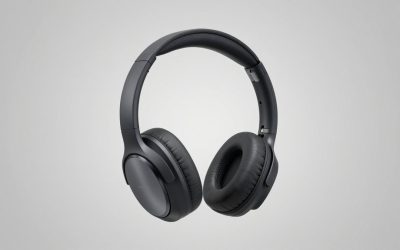
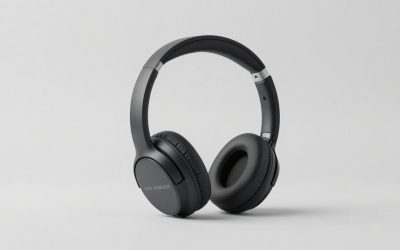
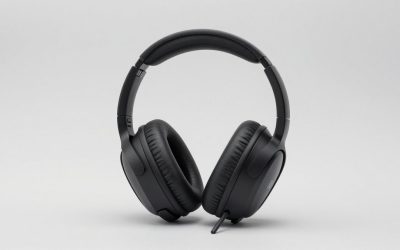
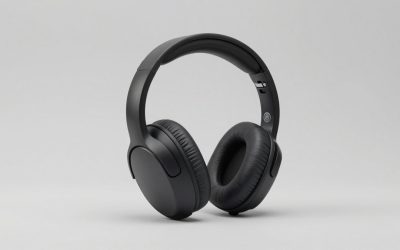
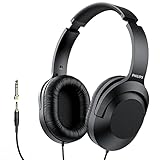
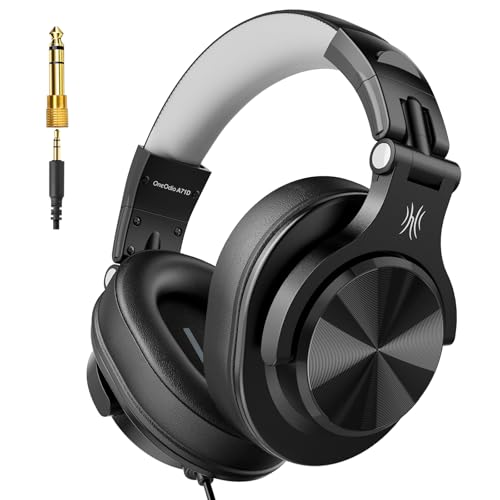
When you are setting up your desk for late-night gaming sessions, monitoring audio tracks, or plugging straight into a keyboard, the line between casual listening and serious gear blurs quickly. I spent the last few weeks swapping between the OneOdio A71D and the Philips Over Ear Wired Stereo Headphones, testing how they handle everything from frantic voice comms to delicate instrument tracking. Both sit comfortably in the budget tier, but they approach wired audio with entirely different philosophies that affect your daily comfort and sonic clarity.
Choosing the right pair in 2026 comes down to understanding what you demand from a wired over-ear setup. Do you want something tuned for DJ-style isolation and high-resolution media, or are you looking for a straightforward tool optimized for podcasts, recording, and multi-instrument practice? Let us break down how the OneOdio A71D and the Philips contender stack up against each other in the real world.
As an Amazon Associate we earn from qualifying purchases at no extra cost to you.

Our Top Picks
Quick Verdict
The OneOdio A71D is the ideal choice for users seeking a Hi-Res DJ studio headphone experience with robust over-ear isolation. Meanwhile, the Philips Over Ear Wired Stereo Headphones serve best as a budget-friendly utility headset built specifically for podcasts, computer use, and direct instrument monitoring.
OneOdio A71D vs Philips Over Ear Wired Stereo Headphones: Specs Side by Side
| Feature | OneOdio A71D | Philips Over Ear Wired Stereo |
|---|---|---|
| Product Type | Wired Over-Ear Headphones | Wired Stereo Headphones |
| Primary Focus | Hi-Res DJ Studio Headphone | Podcasts, Studio Monitoring, Recording |
| Price | Check on Amazon | Check on Amazon |
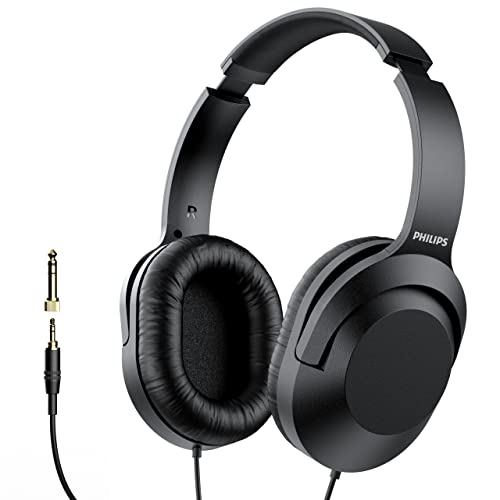
| Included Adapters | Not stated | 6.3 mm (1/4″) Add On Adapter |
| Acoustic Design | Over-ear | Over-ear |
| Compatible Equipment | Not stated | Computer, Keyboard, and Guitar |
| Microphone | Not stated | Not stated |
| Portability Features | Not stated | Not stated |
Where A Wins
- Hi-Res Audio Tuning: The OneOdio A71D is engineered specifically as a Hi-Res DJ studio headphone, delivering a richer and more detailed soundstage for music lovers and audio enthusiasts.
- Studio-Grade Aesthetic: It brings a robust physical design inspired by professional DJ gear, making it feel slightly more specialized for heavy studio or desk environments.
- Immersive Isolation: The over-ear fit seals tightly around the ears, naturally cutting down ambient room noise during intense listening or monitoring sessions.
Where B Wins
- Exceptional Affordability: At a noticeably lower price point, the Philips model leaves more room in your budget for other essential peripherals.
- Instrument Compatibility: Featuring a dedicated 6.3 mm (1/4″) add-on adapter right out of the box, it seamlessly connects to keyboards, guitars, and legacy audio gear.
- Multi-Purpose Utility: It is explicitly tailored for computer setups, podcast recording, and casual studio monitoring without overcomplicating features.
Real-World Use: Which One Fits You
The Content Creator and Podcaster
If your daily routine involves recording voiceovers, editing podcast episodes, and hopping onto Discord calls, the Philips Over Ear Wired Stereo Headphones are the practical choice. Their straightforward tuning handles spoken word content cleanly, and the inclusion of the 6.3 mm adapter means you can plug directly into audio interfaces or mixing boards without hunting for extra accessories.
The Keyboardist and Guitarist
Practicing an instrument late at night requires gear that can interface easily with amplifiers or digital keyboards. The Philips headset shines here because it is explicitly designed for computer, keyboard, and guitar use, giving you a reliable monitoring feed without breaking the bank.
The Audio Enthusiast and DJ-Style Fan
If you prefer a heavier emphasis on high-resolution sound reproduction and the robust feel of studio gear, the OneOdio A71D takes the lead. It leans into its identity as a DJ studio headphone, offering a satisfying sonic profile for electronic music, media consumption, and immersive listening.
Price and Value
The OneOdio A71D is priced at around $27, while the Philips Over Ear Wired Stereo Headphones come in at around $17. This creates a clear ten-dollar difference between the two devices. The premium for the OneOdio is completely justified if you prioritize Hi-Res audio capability and a dedicated DJ studio build. However, if you are looking to maximize your savings while retaining essential instrument connectivity via the included 6.3 mm adapter, the Philips model represents outstanding value.
Final Recommendation
Go with the OneOdio A71D if your primary goal is enjoying a Hi-Res DJ studio headphone experience with deeper music immersion. Choose the Philips Over Ear Wired Stereo Headphones instead if you need a budget-friendly utility headset for podcasting, recording, and plugging into keyboards or guitars.
FAQ
Do these headphones require any software or drivers to work?
No, both models are fully analog and use standard wired connections. You can simply plug them into your audio source and begin listening immediately without installing any third-party software.
Can I connect the Philips headphones to a standard electric guitar?
Yes, the Philips headset includes a 6.3 mm (1/4″) add-on adapter specifically designed for equipment like guitars and keyboards. This allows you to practice quietly through an amp or interface without needing extra cables.
Are both pairs comfortable for extended wear?
Both models feature an over-ear design that distributes weight evenly around the ears. While personal comfort varies based on head shape, they are both well-suited for long listening or monitoring sessions.
Which option provides better sound quality for music?
The OneOdio A71D leans into a Hi-Res DJ studio profile, making it the stronger candidate for detailed music listening and studio tracking. The Philips model focuses more on balanced utility for spoken word and instrument practice.
See also: our full roundup Best Budget Dj Headphones.