Swapping the lead-acid house batteries in an RV for lithium iron phosphate is one of the biggest upgrades an owner can make, and also one of the easiest to get wrong. The decision behind “best lithium RV batteries” is not simply which brand to trust. It is how much usable energy you need between charges, whether the bank must survive freezing nights, whether you can fit a battery in the compartment the old one occupied, and how much monitoring you want from a phone app. Every battery in this roundup is a 12-volt class LiFePO4 pack, so the real differences are capacity, battery management system current rating, and cold-weather behavior.
This guide is for owners of travel trailers, camper vans, and motorhomes who run an inverter, a fridge, lights, and a few devices off a house bank, and for people who also use the same battery for a trolling motor or an off-grid solar setup. We read the specs written in each product title, translate watt-hours and BMS ratings into plain language, and flag the compromises that come with each size. Nothing is assumed beyond what the titles state, so check the full listing for dimensions and terminals before ordering.
Our Top Picks
Top 3 picks at a glance
Quick Picks
As an Amazon Associate we earn from qualifying purchases at no extra cost to you.




| Product | Best for | Key spec from the title |
|---|---|---|
| Self-Heating 300Ah (APP) | Cold-climate large bank | 12.8V 300Ah, 200A BMS, 3840Wh, self-heating |
| MEYULMOL 300Ah | Long cycle life focus | 200A BMS, 15000+ cycles, 3840Wh, low-temp protection |
| 12V 300Ah Deep Cycle | Self-heating with app monitoring | 12V 300Ah, self-heating, APP monitoring |
| VATRER POWER 460Ah | Highest capacity single battery | 460Ah, 300A BMS, 5880Wh usable, 5000+ cycles |
| 2-Pack 100Ah Group 31 | Dropping into standard battery trays | Group 31 form, 100A BMS, 1.28kWh, 15000+ cycles |
| GOKWH 320Ah | Bluetooth app and mid-size bank | 320Ah, 4096Wh, 200A BMS, up to 8000 cycles |
| 100Ah Group 31 (single) | Starter upgrade or trolling motor | 1280Wh, 100A BMS, 4P4S expansion to 20.48kWh |
| 2-Pack 100Ah Group 24 | Tighter compartments | Group 24, 1280Wh, 100A BMS, low-temp cutoff |
How to Choose
Size the bank in watt-hours, not amp-hours alone
Amp-hours depend on voltage, so compare watt-hours instead. A 12.8V battery rated at 100Ah stores 1,280Wh, which matches the 1280Wh figure on the Group 31 and Group 24 listings. A 300Ah battery stores 3,840Wh, and the 460Ah VATRER lists 5,880Wh usable. Add up what you run: a compressor fridge, a few lights, a laptop, and a water pump may use a fraction of a kilowatt-hour overnight, while an inverter driving a microwave or air conditioner drains much faster. Buy enough capacity to cover your heaviest night plus a margin, because lithium delivers most of its rated energy but not all of it.
Match the BMS current to your biggest load
The battery management system protects the cells and limits current. A 100A BMS can supply up to 100 amps continuously, which is roughly 1,280 watts at 12.8 volts. A 200A BMS doubles that, and the 300A BMS in the VATRER lists a max load power of 3840W. If you run a 2,000-watt inverter, a single 100A battery will trip on a heavy load, so either choose a higher-current pack or wire two or more in parallel. Check the inverter’s rating and cable gauge together before buying.
Cold-weather charging and self-heating
Lithium iron phosphate cells should not be charged below freezing. Listings use a few approaches: low-temp cutoff or protection simply stops charging to protect the cells, while self-heating packs use internal heaters to warm the cells so charging can proceed. If you camp in winter or park in mountain regions, self-heating is worth paying for. If you only camp in mild weather, low-temp cutoff is enough and usually costs less.
Form factor, expansion, and monitoring
Group 31 and Group 24 refer to standard battery tray sizes, which matters if you are replacing a lead-acid unit in an existing compartment. Many of these listings mention 4P4S expansion, which means up to four in parallel and four in series, for a bank up to 20.48kWh. Bluetooth or app monitoring lets you read state of charge from your phone, which is far better than guessing from voltage. What to ignore: giant cycle-life numbers measured under ideal lab conditions. Treat them as a general sign of cell quality, not a promise that the battery lasts a specific number of years.
The 8 Best Options
Self-Heating 300Ah (APP)
This unbranded 12.8V 300Ah battery combines self-heating with APP monitoring and a 200A BMS, with 3840Wh listed. The title says it suits trolling motors, RVs, marine use, and solar. It is a strong fit for owners in cold regions who want a large bank in one box and who like to check state of charge on a phone rather than reading a display. For a rig that also powers a trolling motor on weekends, the multi-use description in the title means one battery can move between jobs, although you should confirm terminal type and weight before planning that.
- Strength: self-heating allows charging in cold weather.
- Strength: 200A BMS can support large inverter loads.
- Trade-off: a generic brand name makes warranty and support harder to judge.
Skip it if you require a well-known manufacturer or have limited space for a large battery.
MEYULMOL 300Ah
MEYULMOL lists 12.8V 300Ah, an upgraded 200A BMS, 15000+ cycles, 3840Wh, and low-temp protection. That cycle count is the headline: if the claim holds, the battery is built for years of regular camping and daily solar cycling. It suits full-time travelers who want maximum longevity from their purchase. Pair it with a lithium-compatible charger and a solar controller set to the correct profile, and the cycle number becomes less important than simply having a deep reserve that stays healthy.
- Strength: very high advertised cycle life.
- Strength: 3840Wh capacity is enough for a substantial inverter load.
- Trade-off: low-temp protection stops charging in the cold rather than warming the cells.
Skip it if you camp in freezing temperatures and cannot keep the battery warm.
12V 300Ah Deep Cycle
The title is short: a 12V 300Ah deep cycle LiFePO4 battery with self-heating and APP monitoring. Those two features are the selling point, and it positions itself between the other 300Ah options as a straightforward choice. It suits owners who want a large house battery that handles winter and gives them phone-based readings. Because the title offers few numbers, shoppers should compare its listed details against the other 300Ah packs and ask the seller for the BMS rating, dimensions, and warranty length before committing.
- Strength: self-heating and app monitoring together.
- Strength: 300Ah is a large energy reserve for long boondocking trips.
- Trade-off: the short title lists no BMS rating or cycle life, so confirm those details.
Skip it if you want documented protection ratings in the headline.
VATRER POWER 460Ah
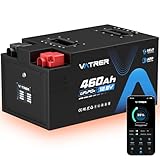
The VATRER is the largest single battery in the group at 12.8V 460Ah. The title lists a built-in 300A BMS, 3840W max load power, 5880Wh usable energy, 5000+ cycles, self-heating, and app monitoring. It targets big rigs and off-grid cabins where one large bank beats stacking several small ones. With 5880Wh listed as usable energy, it can cover a long weekend of inverter use for a family rig, and the 300A BMS leaves headroom for a coffee maker or induction cooktop that a smaller battery might trip on.
- Strength: highest capacity and highest BMS current of the set.
- Strength: self-heating plus app monitoring.
- Trade-off: a large battery is heavy and needs a big, strong mounting spot.
Skip it if your compartment is small or you carry weight limits.
2-Pack 100Ah Group 31
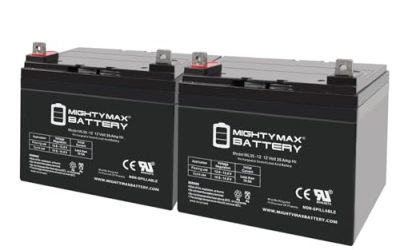
This is a pair of 12V 100Ah Group 31 batteries with a 100A BMS, listed at 1.28kWh with 15000+ deep cycles. The Group 31 size means it fits trays built for common lead-acid batteries, and having two lets you wire them in parallel for double the amp-hours. Owners who want to keep the old tray layout and cable runs will find the form factor familiar, and the 15000+ cycle claim in the title points to a pack intended for frequent use rather than occasional weekend trips.
- Strength: standard size makes swapping from lead-acid straightforward.
- Strength: two batteries give flexibility to build a bank gradually.
- Trade-off: 100A BMS per battery limits peak current per unit.
Skip it if you want a single large unit or need guaranteed cold-weather charging.
GOKWH 320Ah
The GOKWH offers 12V 320Ah with a Bluetooth app for RV use, low-temp protection, 4096Wh, a 200A BMS, and up to 8000 deep cycles. It is slightly larger than the 300Ah models and sits in a sweet spot for owners who want more reserve without moving up to the 460Ah class. That extra 20Ah over the 300Ah models adds roughly a few hundred more watt-hours, which is meaningful for refrigerators and electric blankets that run overnight, and the Bluetooth app makes it easier to see how fast the bank is draining.
- Strength: 4096Wh is the second-largest capacity in the group.
- Strength: Bluetooth monitoring and a 200A BMS.
- Trade-off: low-temp protection means no self-heating in the title.
Skip it if you camp in winter and need the battery to warm itself.
100Ah Group 31 (single)
A single 12V 100Ah Group 31 battery, listed at 1280Wh with a 100A BMS, 15000+ deep cycles, low-temp cutoff, and 4P4S expansion up to 20.48kWh. It is the entry point: easy to fit, easy to add to later, and suitable for RVs and trolling motors. Many first-time lithium buyers start here because a single unit is simple to wire, and the 4P4S note in the title shows the pack is designed to join others later when the budget allows.
- Strength: lowest entry point for a lithium upgrade.
- Strength: expandable up to 20.48kWh.
- Trade-off: 1280Wh alone supports only light loads.
Skip it if you plan to run a large inverter from a single battery.
2-Pack 100Ah Group 24
The Group 24 is a smaller tray size, and this listing is for two 12V 100Ah batteries at 1280Wh each with a 100A BMS, low-temp cutoff, and 4P4S expansion. It is aimed at RV and boat owners who have tighter spaces than Group 31 requires. Because both batteries ship together, they are easy to wire in parallel for a matched bank, and the low-temp cutoff offers basic protection for the cells when mornings turn cold.
- Strength: smaller form factor suits tight compartments.
- Strength: two units provide a ready-made starter bank.
- Trade-off: same 100A BMS limit per battery.
Skip it if you have room for larger packs and want fewer connections.
Which One Fits Your Situation
You camp in winter and run an inverter
Pick the Self-Heating 300Ah (APP) or the VATRER POWER 460Ah. Both pair self-heating with high BMS current, which is the combination a cold-weather rig needs.
You are replacing a pair of lead-acid batteries in standard trays
The 2-Pack 100Ah Group 31 or the 2-Pack 100Ah Group 24 will drop into familiar spaces. Choose Group 24 for tight compartments and Group 31 for slightly more room.
You want to start small and expand later
Buy the single 100Ah Group 31 and use its 4P4S expansion path to add more batteries over time. It spreads cost across seasons.
You want maximum longevity and capacity
The MEYULMOL 300Ah, with 15000+ listed cycles, and the GOKWH 320Ah, at 4096Wh, are strong picks for full-timers who want high capacity at mid-range cost.
Common Mistakes
- Sizing by amp-hours without checking watt-hours or load. A 100Ah battery runs out quickly with a large inverter.
- Ignoring BMS current. A 100A BMS can trip when a microwave or air conditioner starts, even if capacity is fine.
- Charging in freezing weather without self-heating. Low-temp cutoff protects the cells, but it also stops your charging.
- Mixing different batteries in one bank. Parallel and series wiring works best with identical units bought together.
- Buying on cycle-life numbers alone. Those figures come from controlled conditions; treat them as a quality hint, not a guarantee.
Related guides
- What Is The Best Budget Most Responsive Gaming Mouse Wired
- Low Latency Gaming Headphones Usb-C 2.4 Ghz Wireless
- Low Latency Gaming Headphones Usb-C Dongle 2.4 Ghz
Frequently Asked Questions
Can lithium batteries replace lead-acid directly?
Often yes, especially in Group 24 and Group 31 sizes, but the charger and converter must support lithium charging profiles. Older lead-acid chargers may undercharge or overcharge lithium cells, so check your converter first.
How many batteries do I need for a typical RV?
It depends on your loads. A modest setup with lights and a fridge can run on one 100Ah battery for a night or two, while a bigger inverter-driven rig points toward 300Ah and up.
Is self-heating necessary?
Only if you charge in freezing weather. If you camp mostly in mild climates, low-temp cutoff protection is enough and is often the less expensive route. For a 2026 camping season that stays above freezing, that is usually the smarter spend.
What does 4P4S expansion mean?
It describes wiring up to four batteries in parallel and four in series, forming a larger bank of up to 20.48kWh. Follow the manufacturer’s instructions and use matching units.