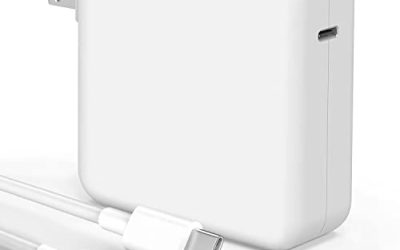
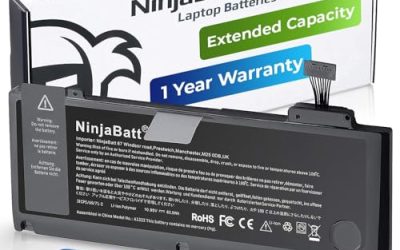
Most car chargers still advertise a big wattage number on the box, but the number that decides how fast your phone charges is smaller and harder to spot: how much power one port delivers on its own. A charger sold as 90W can split that between two ports, leaving each with 45W, and a phone only draws what its charging standard allows. Choosing a USB-C car charger means reading past the headline and checking the per-port output, the fast-charging protocols, and how many devices you plan to run at once. A charger that looks powerful on paper can still crawl if the cable is weak or the socket is shared, so the whole chain from lighter socket to phone matters.
This guide is for drivers who want to charge a recent phone quickly, run a passenger’s phone or tablet at the same time, or keep a spare charger in a second car. The six models below range from a compact Anker two-port unit to LISEN chargers with higher listed wattage, plus two unbranded multi-port options. Everything is judged from the titles, so confirm cable and device compatibility on the product page before you buy. Where a title names a phone generation, treat it as a compatibility hint rather than a guarantee, and read the full listing for protection features and the exact port layout.
Our Top Picks
Top 3 picks at a glance
Quick Picks
As an Amazon Associate we earn from qualifying purchases at no extra cost to you.




| Product | Best for | Key spec from the listing |
|---|---|---|
| 67W 3-Port Super Fast USB-C Car Charger | Families charging three devices | 67W total, 3 ports |
| 90W 2-Pack Dual 45W PPS USB-C Car Charger | Two cars or two seats | Dual 45W PPS USB-C ports, 2-pack |
| LISEN 69W 2-Pack Car Charger | Spare charger for a second vehicle | 69W, two chargers included |
| LISEN 90W Metal Car Charger | Phone plus another gadget | 45W PD and QC 3.0, metal body |
| Anker PowerDrive III Duo 40W | A small, trusted-brand two-port unit | 40W, 2 ports, PowerIQ 3.0, Power Delivery |
| LISEN 120W Car Charger | Highest listed output | 120W, USB-C fast charge |
How to Choose
Check per-port wattage, not the total
A recent phone charges quickly at around 20 to 30W with Power Delivery, so a charger with one 45W port already has headroom. Laptops and tablets want 45W or more. When a listing gives a combined number, such as 67W across three ports, the best single-port output is lower. Find the breakdown on the product page, because that determines whether your phone gets the full benefit when a second device is plugged in. As a rule of thumb, add up what each device wants and make sure the charger covers it, with a little spare capacity so it is not running at its limit on every commute.
Look for the right protocols
USB Power Delivery (PD) is the standard most modern phones use. PPS (Programmable Power Supply), named on the 90W dual-port pack, lets the charger fine-tune voltage for supported Samsung and some other phones. QC 3.0 (Quick Charge) matters mainly for older Android devices. A charger that lists PD alone may charge a newer iPhone and Galaxy well, while one listing PD, PPS, and QC covers the widest range. If everyone in the car uses a different brand of phone, the wider protocol list saves arguments about whose phone is charging slowly.
Consider build and fit
A metal body, as in the LISEN 90W listing, helps dissipate heat, which matters in a hot parked car. Check that the plug sits flush in the lighter socket. A charger that protrudes too far blocks other controls in some cars, and a loose fit can cut the connection over bumps. Pay attention to how bright any indicator light is as well, since a glaring blue LED can be distracting on night drives. Compact designs that sit nearly flush are easier to live with than long chargers that dangle from the socket.
Decide on single, dual, or multi-pack
Two-packs make sense for a household with two vehicles. Three-port models suit families but divide power. Cheap unbranded chargers cut corners on safety certifications and consistent output, so look for protection features such as overcurrent and overheating protection named in the full listing. Ignore the “gifts for men” style marketing text, which has no effect on performance. A charger sold as a gift for drivers is the same hardware as one sold without the slogan. For a 2026 phone, look up its maximum charging standard first and match the charger to it.
The 6 Best Options
67W 3-Port Super Fast USB-C Car Charger
This unbranded charger offers three ports and a combined 67W for Samsung, iPhone, and other Android phones, according to the title. It is meant for a driver who wants to run a phone, a passenger phone, and a small accessory at once. The title mentions USB-C and USB-A style ports elsewhere in the line, so check which port types this exact unit offers before you plan around a particular cable.
- Strength: three ports mean fewer fights over the one outlet.
- Strength: the 67W total is enough to charge several phones together.
- Trade-off: the per-port output falls once all three ports are used.
Skip it if you want a single port with maximum output for a laptop, or if the brand name matters to you.
90W 2-Pack Dual 45W PPS USB-C Car Charger
This set includes two chargers, each with dual 45W PPS USB-C ports according to the listing. It is the pick for owners of two vehicles, or for a household where two people charge at the same time. Keeping one unit in a spouse’s car and one in your own removes the habit of unplugging and carrying a charger back and forth, which is the usual way chargers get lost.
- Strength: two chargers in one purchase cover a second car.
- Strength: PPS support is stated, which helps compatible Samsung phones.
- Trade-off: the 90W label is a total, so each port tops out at 45W.
Skip it if you only need one charger, or if you want a recognizable brand on the label.
LISEN 69W 2-Pack Car Charger
LISEN sells this as a two-pack with 69W of listed output and USB-C ports for fast charging. It is a sensible spare set for a work truck and a family car, or for keeping one charger in a rental or borrowed vehicle without disturbing your main setup. The wattage sits in a middle tier, enough for a fast phone top-up without paying for headroom a phone cannot use.
- Strength: two units come in the pack.
- Strength: USB-C is the main port type, matching newer phones.
- Trade-off: the title does not break down per-port output.
Skip it if you need to know per-port wattage before buying, since the visible title only shows the combined figure.
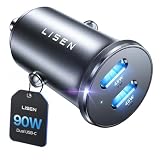
LISEN 90W Metal Car Charger
This LISEN model lists a 90W total with 45W PD and QC 3.0 support in a metal body. It suits a driver with a recent phone and a second device who wants a robust, heat-friendly design. A car parked in summer sun can turn a plastic charger into a hot lump, and a metal shell helps the unit shed that heat instead of trapping it.
- Strength: 45W PD covers many phones and some tablets.
- Strength: QC 3.0 support helps older Android devices.
- Trade-off: the 90W figure is shared, so full output on both ports is not guaranteed.
Skip it if you only want a very small plug that sits almost flush with the socket.
Anker PowerDrive III Duo 40W
Anker offers a compact two-port charger with 40W total, PowerIQ 3.0, and Power Delivery for iPhone 17, 16, and 15 series phones named in the title. It is the safer pick for buyers who prefer a known accessory brand. A modest total wattage is not a weakness for a driver who only charges a single recent phone on the commute, because phones rarely draw more than a fraction of what bigger chargers offer.
- Strength: Power Delivery is listed for current iPhones.
- Strength: a lower total wattage means a simple, small charger.
- Trade-off: 40W is the lowest total on the list.
Skip it if you plan to charge a tablet or laptop in the car, or if you need three or more ports.
LISEN 120W Car Charger
The 120W figure is the highest listed output on this page. It targets drivers who carry a phone, a tablet, and perhaps a small laptop and want one charger to handle all of them. It also leaves spare capacity for a passenger who needs a quick top-up halfway through a road trip, which is where lower-wattage chargers tend to run out of room.
- Strength: the highest wattage gives room for power-hungry devices.
- Strength: USB-C super fast charging is named for recent iPhones.
- Trade-off: you need compatible cables to use the full output.
Skip it if you only charge one phone and want a small plug, since the extra capacity would go unused.
Which One Fits Your Situation
You commute alone and charge only a phone
The Anker PowerDrive III Duo 40W handles one modern phone with room for a second small device, and its small size keeps the dashboard tidy for a daily commute.
You carry a tablet or laptop on the road
The LISEN 120W Car Charger offers the most headroom, which helps if you work from the road and need a charger that can keep up with a tablet and a phone together. The LISEN 90W Metal Car Charger is a lower-wattage alternative with a robust body.
You drive two vehicles
The 90W 2-Pack Dual 45W PPS charger or the LISEN 69W 2-Pack puts a charger in each car, so nobody has to move a charger between vehicles. The PPS option is the better fit if one driver uses a Samsung phone.
You haul passengers who all want power
The 67W 3-Port Super Fast USB-C Car Charger gives three ports for a full back seat, which is useful on family trips where each passenger brings a phone. Just remember the wattage is shared across the ports.
Common Mistakes
- Trusting total wattage and ignoring how it is split between ports.
- Pairing a fast charger with a slow, non-PD cable.
- Buying an unbranded charger with no mention of overheating or overcurrent protection.
- Forgetting that some lighter sockets switch off with the ignition, so the charger stops overnight.
- Expecting a USB-A port to match the speed of a USB-C port, then blaming the phone for slow charging.
Related guides
- What Is The Best Budget Most Responsive Gaming Mouse Wired
- Low Latency Gaming Headphones Usb-C 2.4 Ghz Wireless
- Mechanical Gaming Keyboards Competitive Pc Gaming
Frequently Asked Questions
Will a 120W charger damage my phone?
No. A phone requests only the power it can handle through the charging standard. A higher-wattage charger simply offers more capacity for devices that can use it.
Do I need PPS?
PPS helps certain Samsung and other Android phones reach their fastest charging speeds. If you use an iPhone, Power Delivery is the more important label.
Why does my phone charge slowly in the car?
Common causes are a low-quality cable, a shared-wattage port, or a phone that is hot from navigation use. Try a certified USB-C cable and a single device on the port. If the phone still charges slowly, check whether the charger lists the protocol your phone uses, such as PD or PPS.
Can I leave it plugged in all the time?
Many sockets lose power when the car is off, but some stay live. If yours does, unplug the charger on long trips to avoid slowly draining the battery. Even an idle charger draws a small amount of power, which adds up over several weeks of parking at an airport.