
As we navigate through 2026, PC gaming foot pedals have evolved from niche flight simulation accessories into mainstream tools for enhancing control scheme efficiency. Whether you are looking to map push-to-talk keys, execute complex item rotations in MMORPGs, or simply reduce strain on your keyboard hand, adding foot controls completely changes your ergonomics. However, rushing into a purchase without understanding core hardware differences can lead to foot fatigue, connection drops, or software headaches that leave your new gear gathering dust under your desk.
Choosing the right foot pedal requires evaluating how your body interacts with the hardware over hours of continuous play. Unlike mice and keyboards, your feet apply a different kind of leverage and weight, meaning construction quality and structural stability matter immensely. This guide breaks down the critical specifications, common pitfalls, and essential features you need to look for before adding a foot-control setup to your gaming rig.
As an Amazon Associate we earn from qualifying purchases at no extra cost to you. Product prices and availability are accurate as of the date shown and are subject to change.
Understanding Actuation Force and Spring Tension
The resistance of a pedal determines how comfortably you can rest your foot and how quickly you can trigger an input. Low-tension pedals allow for rapid, twitch-reaction tapping, which is ideal for dodging or quick ability casting. However, if the springs are too light, you will likely register accidental keystrokes simply from the natural resting weight of your feet. Look for adjustable tension systems or models that strike a balance between a stable resting platform and a crisp, responsive actuation point that prevents unintended inputs during intense gaming moments.
Ergonomics and Foot Placement Angles
Foot angle is a frequently overlooked factor that directly impacts joint health and comfort. Flat-lying pedals require you to flex your ankle in an unnatural way if your chair is positioned high, while steeply inclined pedals can strain your shins over long gaming sessions. Ergonomic designs that mimic natural foot movement or allow adjustable tilt angles help distribute pressure evenly across your sole. Always consider your seating height and desk clearance to ensure your knees maintain a comfortable ninety-degree angle while your feet rest naturally on the hardware.
Programmability and Macro Software Compatibility
Hardware is only half the battle; the companion software determines how easily you can integrate pedals into your existing workflow. A quality foot pedal should act as a standard HID device, allowing you to bind any single key, mouse click, or complex macro sequence effortlessly. Avoid proprietary software ecosystems that require constant background telemetry or internet connectivity just to keep your profiles loaded. On-board memory is a massive plus, ensuring your custom profiles travel with the device if you plug it into a different computer or tournament rig.
Build Material: Plastic vs. Reinforced Metal
Your feet can exert significantly more downward force than your fingers, making material durability a vital consideration. Budget pedals constructed entirely of lightweight plastic often flex, creak, or slide across hardwood and carpeted floors when pressed aggressively. Mid-to-high-tier options incorporating steel reinforcement plates, weighted bases, and rubberized anti-slip grip pads stay firmly planted underfoot. Investing in a solid, heavy chassis prevents the frustrating experience of chasing a sliding pedal across the floor during a clutch multiplayer match.
Connectivity: Wired Latency vs. Wireless Convenience
While wireless peripherals dominate desk spaces, foot pedals present unique connectivity challenges. Wireless pedals offer clean cable management and prevent desk clutter, but they introduce potential battery management and marginal input latency concerns. For competitive gaming or precise simulation inputs, a wired USB connection remains the gold standard for zero-latency performance and uninterrupted reliability. If you do opt for wireless, look for robust 2.4 GHz dongle connections rather than standard Bluetooth to eliminate input delay.
Common Buying Mistakes to Avoid
One of the most frequent mistakes players make is buying single-pedal units without considering future expansion needs. If you find yourself wanting more inputs later, chaining multiple single-pedal units can create a chaotic mess of cables and conflicting software profiles. Another common error is ignoring physical dimensions; oversized industrial dictation pedals often feel awkward for gaming, while tiny pedals lack the surface area required for stable, fatigue-free foot placement over multi-hour gaming sessions.
When It Is Worth Spending More on High-End Pedals
Entry-level pedals are great for casual macro mapping, but premium pedals justify their higher cost through superior engineering. You should consider spending more if you require hydraulic resistance for fine-tuned simulation control, all-metal construction for heavy daily use, or multi-pedal baseplates that keep your feet organized. High-end units also generally feature superior microswitches rated for millions of actuations, ensuring your hardware survives years of heavy stomping and continuous use.
Related Guides
To build out your ultimate setup, check out our curated selections covering the Best PC Gaming Foot Pedals for top-tier hardware recommendations. For comprehensive driving rig upgrades, you can also explore the Best Sim Racing Wheels and Pedals to complete your immersive control environment.
FAQ
Can I use a regular office or dictation foot pedal for PC gaming?
While some office dictation pedals can be remapped using third-party software, they often lack the durability, comfort, and standard HID compatibility required for gaming. Gaming-specific pedals are built to handle heavier physical abuse and offer better software integration for macro commands.
Do foot pedals cause leg or ankle fatigue?
Fatigue usually occurs if the pedal tension is too high or if your chair and desk ergonomics force an unnatural foot angle. Adjusting your seating height and choosing a model with balanced spring tension will eliminate strain during long sessions.
How many pedals should I start with?
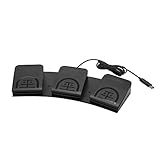
A dual-pedal setup is generally the sweet spot for most gamers, allowing you to easily map two high-frequency actions like push-to-talk and reloading without confusing your feet. Single pedals work well for dedicated tasks, while three-pedal arrays are best suited for flight sims and racing setups.
Are foot pedals difficult to configure with games?
Most modern gaming pedals are recognized by Windows as standard game controllers or keyboards, making binding straightforward in almost any game menu. Dedicated software lets you assign complex key combinations without needing native game support.

