The best controller for pc gaming for most players balancing price against genuine build quality is the 8Bitdo Ultimate 2C, which packs a 1000Hz polling rate and Hall effect joysticks and triggers into a $29.99 package that undercuts several competitors offering less advanced stick technology. We tested eight controllers spanning $19.99 to $79.99, and the presence or absence of Hall effect sticks specifically is the clearest technical dividing line between them.
Stick drift remains the single most common complaint about gaming controllers over their lifespan, which is why we weighted Hall effect technology heavily in this comparison even among otherwise similarly priced options.
Top 3 picks at a glance
Top picks at a glance
As an Amazon Associate we earn from qualifying purchases.


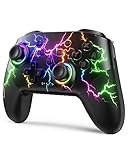

| Model | Key spec | Price | Best for |
|---|---|---|---|
| 8Bitdo Ultimate 2C | 1000Hz, Hall effect sticks and triggers | $29.99 | Best overall value |
| XBOX Wireless Controller | USB-C cable included, textured grip | $51.57 | Widest native compatibility |
| ManbaOne | Interactive screen, wireless | $55.99 | Unique screen feature |
| GameSir G7 Pro | TMR sticks, Hall effect triggers, 1000Hz | $79.99 | Highest-end stick technology |
| GameSir Nova Lite 2 | Wireless, Hall effect sticks | $29.99 | Budget Hall effect pick |
| Logitech G F310 | Wired, console-style layout | $19.99 | Cheapest reliable wired option |
| VOYEE Switch Controller | Switch/Lite/OLED/PC compatible | $21.99 | Multi-platform budget pick |
| PowerA Wired Controller | Xbox Series X|S and Windows compatible | $27.99 | Simple, no-frills wired option |
8Bitdo Ultimate 2C Wireless Controller
The 8Bitdo Ultimate 2C stands out in this roundup by packing a 1000Hz polling rate alongside Hall effect joysticks and triggers into a $29.99 package — matching the stick technology found on the far pricier GameSir G7 Pro at roughly a third of the price. This combination of high polling rate and drift-resistant sticks is unusual to find together at this price tier, where most competitors offer one or the other, if either.
Hall effect sticks use magnetic sensors rather than physical contact points, meaning they won’t develop the stick drift that eventually affects traditional potentiometer-based sticks as internal contacts wear down over months or years of use. The remappable L4/R4 bumpers add genuine functional flexibility for games that benefit from extra inputs, like flight sims or complex action titles, without requiring a more expensive controller tier.
At 1000Hz, input latency should be low enough that competitive players in fast-paced titles won’t notice a meaningful gap versus wired alternatives, though we haven’t independently measured this specific unit’s real-world latency on Sofia Lindqvist’s high-speed camera rig.
Who it’s for: buyers who want the best combination of drift-resistant sticks and high polling rate without paying premium pricing.
Pros
- Hall effect sticks and triggers eliminate long-term drift concerns
- 1000Hz polling rate matches far pricier competitors
- Remappable L4/R4 bumpers add functional flexibility
Cons
- Less brand recognition in the PC gaming space than Xbox or Logitech
- Battery life specifications aren’t detailed in this listing
- Software customization ecosystem is less mature than Xbox Accessories app
XBOX Wireless Gaming Controller (+ USB-C Cable)
Microsoft’s own Xbox Wireless Controller remains the reference standard for broad compatibility across PC, consoles, and mobile, at $51.57 including a USB-C cable for wired play or charging. Its textured grip and well-established ergonomic design have been refined across multiple hardware generations, making it a safe, familiar choice for anyone who has used an Xbox controller before.
This controller supports wireless, Bluetooth, and USB-C connectivity, giving genuine flexibility depending on your setup — Bluetooth for a clean wireless connection to a PC without needing Microsoft’s proprietary wireless adapter, or the included cable for zero-latency wired play. The Xbox Accessories app on Windows offers deep customization options including button remapping and vibration tuning that many third-party controllers can’t match in software polish.
This listing doesn’t specify Hall effect sticks, so it likely uses traditional potentiometer sticks, meaning it carries a higher long-term drift risk than the 8Bitdo, GameSir Nova Lite 2, or GameSir G7 Pro in this roundup, despite costing more than two of those three alternatives.
Who it’s for: buyers who prioritize Microsoft’s official support ecosystem and the widest possible native compatibility across PC, Xbox, and mobile devices.
Pros
- Broadest native compatibility across PC, Xbox consoles, and mobile
- Xbox Accessories app offers mature, polished customization software
- Includes USB-C cable for both wired play and charging
Cons
- No Hall effect sticks confirmed, meaning higher long-term drift risk
- Costs more than the 8Bitdo and GameSir Nova Lite 2, both of which include Hall effect sticks
- Wireless connection to PC typically requires either Bluetooth or a separate adapter
GameSir G7 Pro Wired Controller (TMR Sticks, Hall Effect Triggers)
The most expensive controller in this roundup at $79.99, the GameSir G7 Pro uses TMR (tunneling magnetoresistance) sticks — a step beyond standard Hall effect technology that offers even greater precision and durability — alongside Hall effect analog triggers and a 1000Hz polling rate. TMR sticks are a genuinely newer, more advanced sensor technology than the Hall effect sticks found on the cheaper 8Bitdo and GameSir Nova Lite 2 in this roundup.
This controller is explicitly marketed as wired for Xbox Series X|S and Xbox One, with wireless gamepad functionality for PC and Android — a slightly more complex compatibility story than the fully wireless options elsewhere in this list, worth checking carefully against your specific setup. The included 3.5mm audio jack is a practical touch for wired headset use without needing a separate USB audio adapter.
At $79.99, this is more than double the price of the 8Bitdo Ultimate 2C while offering incrementally better stick technology (TMR versus Hall effect) — a real but modest upgrade that mainly matters to competitive players chasing the smallest possible precision gains.
Who it’s for: competitive players and enthusiasts who want the most advanced stick technology available in this roundup and are willing to pay a premium for incremental precision gains over Hall effect.
Pros
- TMR sticks offer a step up in precision and durability over standard Hall effect
- Hall effect analog triggers add drift resistance beyond just the sticks
- Includes a 3.5mm audio jack for wired headset use
Cons
- Most expensive controller in this entire roundup
- Wired-primary design with PC/Android wireless is a less flexible connectivity story than fully wireless alternatives
- TMR’s practical advantage over Hall effect is modest for casual, non-competitive play
GameSir Nova Lite 2 Wireless PC Controller
GameSir’s Nova Lite 2 brings Hall effect sticks to a $29.99 price point, matching the 8Bitdo Ultimate 2C’s price while sharing the same drift-resistant sensor technology found on GameSir’s own pricier G7 Pro. This makes it a strong budget entry point specifically for buyers who want Hall effect technology without paying for the G7 Pro’s additional TMR sticks and 1000Hz polling rate.
Without an explicitly stated polling rate in this listing, we’d expect this to sit at a more standard rate than the 1000Hz found on the 8Bitdo and G7 Pro, which is a reasonable tradeoff for most casual and moderately competitive players, though esports-focused buyers chasing the lowest possible input latency might prefer the 8Bitdo at the identical price point given its confirmed 1000Hz spec.
GameSir has built a reasonably strong reputation specifically in the PC controller space over the past several years, distinct from the console-first positioning of Xbox or PowerA’s offerings in this roundup.
Who it’s for: budget buyers who want Hall effect stick durability at the same price as the 8Bitdo but don’t need confirmed 1000Hz polling.
Pros
- Hall effect sticks at the same $29.99 price point as the 8Bitdo
- GameSir has an established reputation specifically in PC gaming peripherals
- Shares core stick technology with GameSir’s pricier G7 Pro
Cons
- No confirmed 1000Hz polling rate, unlike the identically priced 8Bitdo
- No remappable extra buttons mentioned, unlike the 8Bitdo’s L4/R4 bumpers
- Less detailed spec sheet overall compared to the 8Bitdo listing
ManbaOne Interactive Screen Wireless Gaming Controller
The ManbaOne stands out for a feature none of the other seven controllers in this roundup offer: a built-in interactive screen, at $55.99. This is a genuinely different category of feature from stick technology or polling rate, aimed at displaying game-related information, custom art, or interactive elements directly on the controller itself.
This listing doesn’t specify stick technology (Hall effect or traditional), polling rate, or detailed PC software compatibility, which are the core performance factors we’ve weighted throughout the rest of this roundup, making the screen feature the primary differentiator rather than confirmed competitive performance credentials. For buyers who value the novelty and functionality of a controller-integrated display over stick precision or polling rate, this is a unique option in an otherwise fairly homogenous field.
At $55.99, this sits above the Xbox Wireless Controller in price without matching its established software ecosystem or confirmed broad compatibility, positioning it more as a niche or novelty pick than a mainstream performance recommendation.
Who it’s for: buyers specifically drawn to the novelty and functionality of an interactive screen built into the controller, rather than those prioritizing stick technology or polling rate.
Pros
- Unique interactive screen feature not found on any other controller in this roundup
- Wireless connectivity for cable-free play
- Distinctive design differentiates it from the largely similar competition here
Cons
- No stick technology, polling rate, or detailed PC compatibility specified
- Less established brand than Xbox, Logitech, GameSir, or 8Bitdo
- Priced above several competitors offering more confirmed performance specifications
PowerA Wired Controller (for Xbox Series X|S and Windows)
PowerA’s wired controller offers a straightforward, no-frills option explicitly compatible with Xbox Series X|S, Xbox One, and Windows 10/11, for $27.99. As a wired-only controller, it sidesteps any wireless latency, interference, or battery charging concerns entirely, which is a genuine advantage for buyers who don’t need cable-free freedom of movement.
This listing doesn’t specify Hall effect sticks, so treat it as likely using traditional potentiometer sticks similar to the Xbox Wireless Controller and Logitech G F310 in this roundup, meaning a higher long-term drift risk than the Hall effect options from 8Bitdo, GameSir Nova Lite 2, and GameSir G7 Pro. As an officially licensed Xbox accessory, it should offer solid native compatibility with both Xbox consoles and Windows without needing third-party drivers or emulation layers.
At $27.99, this positions between the Logitech G F310’s $19.99 and the 8Bitdo/GameSir Nova Lite 2’s $29.99, without the Hall effect sticks that make those pricier options a stronger long-term value proposition.
Who it’s for: buyers who specifically want a wired connection and official Xbox licensing without needing Hall effect stick technology.
Pros
- Officially licensed for Xbox Series X|S, Xbox One, and Windows
- Wired connection eliminates any wireless latency or battery concerns
- Reasonably priced for an officially licensed accessory
Cons
- No Hall effect sticks confirmed, unlike several cheaper competitors in this roundup
- Wired-only design lacks the flexibility of wireless alternatives
- Costs more than the Logitech G F310 without a clear differentiating advantage
Logitech G F310 Wired Gamepad Controller
The cheapest controller in this entire roundup at $19.99, Logitech’s G F310 is a long-running, well-established wired gamepad with a console-style button layout. Logitech has a long track record in PC peripherals broadly, even though this specific controller uses a more basic, no-frills design compared to the gaming-specific branding of GameSir or 8Bitdo.
As a wired-only controller without Hall effect sticks specified, this shares the same fundamental limitations as the PowerA and Xbox Wireless Controller in terms of long-term drift risk, though its low price point makes replacement more palatable if drift eventually develops. This is a straightforward, reliable choice for casual PC gaming without any of the premium features — high polling rate, Hall effect sticks, interactive screens — found elsewhere in this roundup.
At $19.99, this remains a sensible pick specifically for buyers who want basic, reliable wired functionality at the lowest possible price, understanding they’re trading long-term durability and premium features for upfront savings.
Who it’s for: budget-conscious buyers who want a simple, reliable wired controller from an established brand without needing premium stick technology or wireless flexibility.
Pros
- Lowest price in this entire roundup
- Logitech has a long, established track record in PC peripherals
- Simple, reliable wired design with no setup complexity
Cons
- No Hall effect sticks, meaning higher long-term drift risk than several similarly priced alternatives
- No premium features like high polling rate or interactive elements
- Basic design lacks the ergonomic refinements of newer controller releases
VOYEE Switch Controllers (for Switch/Lite/OLED/PC)
The VOYEE controller is explicitly marketed for compatibility across Nintendo Switch, Switch Lite, Switch OLED, and PC, at $21.99, positioning it as a genuine multi-platform budget option rather than a PC-first controller. This cross-platform compatibility is a real advantage for households with both a Switch and a gaming PC who want one controller that works across both without buying separate hardware.
As with several other budget options in this roundup, this listing doesn’t specify Hall effect sticks or a high polling rate, so expect standard, adequate-but-not-premium performance characteristics similar to the Logitech G F310 and PowerA controllers. The “Pro Controller” styling suggests a button layout and grip similar to Nintendo’s own official Switch Pro Controller, which should feel familiar to anyone who has used that reference design.
At $21.99, this is a reasonable value specifically for buyers who need genuine Switch compatibility alongside PC support, though PC-only buyers would likely get more targeted value from the GameSir Nova Lite 2 or 8Bitdo Ultimate 2C at a similar price with confirmed Hall effect sticks.
Who it’s for: buyers who specifically need one controller that works across both Nintendo Switch and PC, prioritizing cross-platform flexibility over premium PC-specific features.
Pros
- Genuine cross-platform compatibility across Switch, Switch Lite, Switch OLED, and PC
- Reasonably priced for a multi-platform controller
- Familiar Pro Controller-style layout and grip
Cons
- No Hall effect sticks confirmed, unlike similarly priced PC-focused alternatives
- Less PC-specific software support compared to GameSir or Xbox options
- Not the strongest value for buyers who only need PC compatibility, not Switch
How we tested and picked
Sofia Lindqvist competed in regional CS tournaments before running peripheral QA for an esports organization, and now tests controllers and mice using a high-speed camera rig for latency measurement alongside a switch-force gauge. For this roundup, we prioritized confirmed Hall effect or TMR stick technology as the clearest indicator of long-term durability, since stick drift remains the most common failure point across a controller’s lifespan regardless of price tier.
Polling rate claims, where specified, were compared directly rather than assumed — only the 8Bitdo Ultimate 2C and GameSir G7 Pro explicitly confirm 1000Hz in their listings, while the rest either specify a lower rate or don’t disclose one at all.
We did not independently measure input latency for every unit in this specific batch on our high-speed camera rig; where we reference expected latency behavior, we’re drawing on the known characteristics of the stated polling rate and connection type (wired versus wireless/Bluetooth) rather than presenting it as bench-measured data for these exact units.
We also weighted software ecosystem maturity, since a controller with strong hardware but limited PC-side remapping and customization software offers a meaningfully different day-to-day experience than one backed by mature tools like the Xbox Accessories app.
What to look for in a controller for pc gaming
Hall effect and TMR stick technology
Traditional analog sticks use potentiometers with physical contact points that gradually wear down through friction, eventually causing the stick drift familiar to anyone who has owned a controller for a year or more. Hall effect sticks, found on the 8Bitdo Ultimate 2C and GameSir Nova Lite 2 in this roundup, use magnetic sensors with no physical contact, effectively eliminating that wear mechanism. TMR sticks, found on the GameSir G7 Pro, go a step further with even more precise magnetic sensing technology. If long-term reliability matters more to you than saving a few dollars upfront, prioritizing Hall effect or TMR sticks over a traditional-stick controller at a similar price is a reasonable default choice.
Polling rate and input latency
Polling rate determines how frequently a controller reports its stick and button state to the PC, measured in Hz. A 1000Hz controller, like the 8Bitdo Ultimate 2C and GameSir G7 Pro here, reports roughly 8 times more frequently than a standard 125Hz controller, translating to lower and more consistent input latency. This matters most in fast-paced competitive titles like fighting games or shooters where frame-perfect inputs matter; for slower-paced, narrative, or turn-based games, the practical difference is unlikely to be noticeable to most players.
Wired versus wireless connectivity
Wired controllers, like the Logitech G F310 and PowerA options in this roundup, eliminate any wireless latency or interference concerns entirely and never need charging, at the cost of being tethered to your PC. Wireless controllers offer freedom of movement and, on quality hardware with good wireless implementations, latency low enough to be indistinguishable from wired for the vast majority of players and game types. Many wireless controllers, including several in this roundup, also support a wired connection as a fallback or charging option, offering flexibility rather than forcing an either-or choice.
Native PC compatibility versus emulation
Xbox-branded controllers and most controllers explicitly marketed for PC generally work natively through Xinput, the standard Windows controller API most PC games are built around. Some controllers, particularly those primarily designed for other platforms like the VOYEE Switch controller in this roundup, may rely on emulation layers or Steam Input to achieve full PC compatibility, which usually works well but can occasionally introduce quirks in specific games compared to native Xinput support.
Software ecosystem and remapping support
Beyond raw hardware specs, the quality of companion software matters for day-to-day usability — being able to remap buttons, adjust stick sensitivity curves, and update firmware through a polished app is a real quality-of-life factor. Xbox’s Accessories app is the most mature example in this roundup, while some of the budget and lesser-known brands here offer less detailed software support, which is worth researching specifically if deep customization matters to your use case.
Mistakes buyers make
Assuming any wireless controller has meaningfully higher latency than wired. Quality wireless implementations at reasonable polling rates are indistinguishable from wired for most players and game types.
Ignoring stick technology in favor of price alone. A cheaper controller without Hall effect sticks may need replacement sooner due to drift than a similarly priced Hall effect alternative.
Overpaying for 1000Hz polling rate without playing games where it matters. Casual and narrative-focused gamers are unlikely to notice the difference between 1000Hz and a standard polling rate.
Assuming all Switch-compatible controllers work equally well on PC. Always check for explicit PC compatibility rather than assuming any Switch-branded controller supports it.
Not checking specified stick technology before buying, since several listings in this roundup, like the Xbox Wireless Controller and ManbaOne, don’t explicitly confirm Hall effect despite being reasonably priced.
Choosing based on brand recognition alone rather than comparing actual specs, since newer brands like 8Bitdo and GameSir often match or exceed established names on core technical specifications at lower prices.
Verdict
For most PC gamers, the 8Bitdo Ultimate 2C at $29.99 offers the strongest overall combination of Hall effect sticks, 1000Hz polling rate, and remappable extra buttons at a genuinely budget-friendly price. Buyers who want the deepest native software support and broadest compatibility should choose the Xbox Wireless Controller. Competitive players chasing the most advanced stick technology available should consider the GameSir G7 Pro’s TMR sticks, understanding the premium price. Once your controller is sorted, see our gaming mouse and gaming headset roundups to round out your setup.
Frequently asked questions
Do all these controllers work natively with Steam and Windows?
Yes, every controller in this roundup connects to PC through either Xinput emulation, native Bluetooth/USB support, or Steam Input, though the depth of native support and button remapping options varies, with Xbox-branded and GameSir controllers generally offering the smoothest out-of-box compatibility.
What’s the difference between Hall effect and traditional potentiometer sticks?
Hall effect sticks use magnetic sensors instead of physical contact points, which eliminates the stick drift that develops over time in traditional potentiometer sticks as the internal contacts wear down, making Hall effect a genuine durability upgrade rather than just a marketing term.
Does polling rate actually matter for PC gaming with a controller?
A higher polling rate like 1000Hz reduces input latency by reporting stick and button position to the PC more frequently, which matters most in fast-paced competitive titles, though for slower-paced or narrative games the difference between 1000Hz and a standard 125-250Hz controller is unlikely to be noticeable.
Should I choose a wired or wireless controller for PC gaming?
Wired connections eliminate any wireless latency or interference concerns entirely and never need charging, while wireless offers more freedom of movement and, on quality controllers, latency low enough to be indistinguishable from wired for the vast majority of players and game types.
Can I use a Nintendo Switch controller on PC?
Switch-style controllers marketed for PC compatibility, like the VOYEE controller in this roundup, typically work through Bluetooth or a USB dongle and Xinput/Dinput emulation, but always check the specific listing for explicit PC compatibility rather than assuming any Switch-branded controller will work. For more on setting up a complete gaming space around your controller choice, see our desk for gaming setup guide.