People who search for the most popular thermostat are usually not looking for the cleverest one. They want the safe, widely stocked choice that a lot of other households already live with: something that installs without drama, works with ordinary furnace and air conditioner wiring, and does not need a support call after the first week. That instinct is sound, but popularity can hide a mismatch, because the model everyone buys may still be wrong for a heat pump, a baseboard heater, or a wall with no common wire.
This guide gathers seven mainstream thermostats that show up again and again in the home-comfort aisle: a Honeywell programmable, a Google Nest, two Sensi smart models, an ecobee, and two plain non-programmable units for budget swaps. They are grouped by how much control you want in 2026, from a dial you set once to a voice-controlled Wi-Fi unit. The practical question is which popular option matches your wiring, your Wi-Fi, and how much attention you want to give a wall gadget.
Our Top Picks

Top 3 picks at a glance
Quick Picks
As an Amazon Associate we earn from qualifying purchases at no extra cost to you.



| Product | Best for | Key spec from the title |
|---|---|---|
| Honeywell Home X2P RTH20B | Dependable scheduled comfort | Single-stage, 1 Heat/1 Cool, 5-2 day schedule |
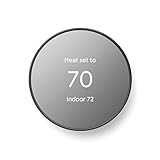
| Google Nest Thermostat (Charcoal) | Familiar smart choice | Programmable Wi-Fi thermostat |
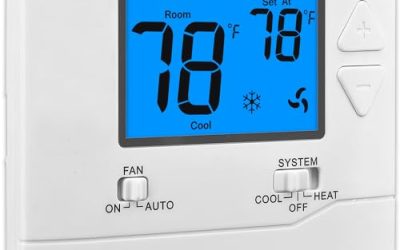
| Basic Non-Programmable Digital | Cheap like-for-like swap | 1 Heat/1 Cool, easy DIY install, white backlight |
| Sensi Smart ST55 | DIY smart upgrade | Wi-Fi, Alexa, efficiency certified, DIY |
| Suuwer Non-Programmable | Simple set-and-leave use | Conventional single-stage, blue backlight |
| Sensi Lite ST25 | Smart features on a tighter budget | Wi-Fi, Alexa, DIY, efficiency certified |
| ecobee Smart Thermostat Essential | Multi-assistant households | Wi-Fi, programmable, Siri, Alexa, Google Assistant |
How to Choose
Popular does not mean universal
Many mainstream thermostats are designed for conventional 24-volt systems with one heating and one cooling stage. Heat pumps, multi-stage furnaces, and line-voltage baseboard heaters each have their own requirements. Before you copy what most households buy, check the label on your furnace, look at the terminals behind your current thermostat, and see whether the product page lists your system type. A five-minute check can prevent an exchange that costs a weekend and leaves the house without heat while you wait.
Wi-Fi models usually need constant power
A smart thermostat with a screen and a Wi-Fi radio generally wants a common wire, or C-wire, from the furnace. Without one, some models include a power accessory and others will not work reliably. If your old thermostat has only four wires and no common wire, expect either an adapter, a new cable, or a simpler non-smart replacement. It also helps to know whether your furnace control board has a spare terminal for a common wire, because a licensed technician can often add one in a short visit.
Count the voice assistants and apps you use
The ecobee Essential lists Siri, Alexa, and Google Assistant, while the Sensi models name Alexa. A household that mixes phone types will feel the difference. Ignore minor brand arguments and check the app on your phone’s store page for recent updates, since an abandoned app turns a smart thermostat into an expensive, confusing dial. Remember that a bigger list of voice assistants does nothing for you if you only ever touch the wall display.
Think about how often you will actually adjust it
A plain non-programmable unit asks nothing of you but costs more in wasted heating when nobody adjusts it. A 5-2 day schedule saves effort for steady routines. Where budget models cut corners is user interface and documentation, so a simple layout with a lit display can matter more than a long feature list for a shared family home. Teenagers and guests rarely read manuals, so a thermostat with obvious up and down buttons survives real life better than one with hidden menus.
The 7 Best Options
Honeywell Home X2P RTH20B
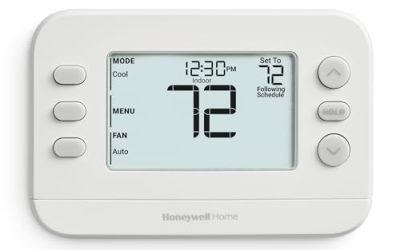
This white programmable thermostat lists single-stage compatibility with 1 Heat/1 Cool systems and a 5-2 day schedule. It is the old reliable of the group, suited to a household that wants weekday and weekend programs from a familiar brand without joining another app ecosystem, and that values a unit anyone in the family can understand quickly.
- Strength: a 5-2 day schedule covers most steady routines.
- Strength: no Wi-Fi, app, or account is needed.
- Trade-off: weekends share one program and there is no remote control.
Skip it if you want phone control, geofencing, or a multi-stage system. A traveler who wants to change settings from the road will find it limiting, and so will anyone whose weekend routine differs from the weekday pattern in more than a small way.
Google Nest Thermostat (Charcoal)
The title calls it a smart, programmable Wi-Fi thermostat in charcoal. It is aimed at buyers who want a recognizable name on the wall and an app-based schedule, and who prefer a clean look to a feature-heavy spec list. The charcoal finish gives it a darker, modern appearance that suits many living rooms and entryways.
- Strength: a well-known smart thermostat with a programmable schedule.
- Strength: Wi-Fi gives remote control from a phone.
- Trade-off: the title says little about wiring or system compatibility.
Skip it if your system is unusual or if you do not want an app and account in your routine. Because the title gives no wiring information, a buyer with a heat pump or a multi-stage furnace should confirm compatibility on the product page before ordering, not after the old unit is already off the wall.
Basic Non-Programmable Digital
This digital energy-saving model lists single-stage 1 Heat/1 Cool compatibility, easy DIY installation, and a white backlight. It is the straightforward swap for a rental, a vacation home, or a landlord replacing a worn thermostat, where nobody needs a schedule and the goal is a working unit installed in an afternoon at a low cost tier.
- Strength: easy DIY installation is named in the title.
- Strength: a plain interface that guests and tenants understand instantly.
- Trade-off: no schedule, Wi-Fi, or app, so savings depend on you.
Skip it if you want smart features, a named brand, or any automation beyond holding a temperature. A household that tends to forget to turn the heat down when leaving will quietly spend more on energy than a programmable or smart model would have cost to buy.
Sensi Smart ST55
A DIY Wi-Fi smart thermostat that lists Alexa support and an efficiency certification. It suits a buyer who wants app control and voice commands without paying for a flagship, and who is comfortable following an installation guide and checking for a C-wire. It is often compared to the Nest and ecobee as a mainstream smart alternative.
- Strength: DIY installation with Alexa support and an efficiency certification.
- Strength: smart scheduling and remote access from a phone.
- Trade-off: it generally needs continuous power, so wiring matters.
Skip it if your Wi-Fi is weak at the thermostat location or you want no account. If the hallway where the thermostat lives has patchy signal, an unreliable connection will turn the app into a source of frustration rather than convenience, so test your signal there first with a phone.
Suuwer Non-Programmable
This one targets conventional single-stage 1 Heat/1 Cool systems with a blue backlight and no scheduling. It fits a small apartment or secondary room where the thermostat setting rarely changes, and where the priority is a working display that stays readable at night without a lot of menus.
- Strength: simple, one-temperature operation.
- Strength: blue backlight helps in dim spaces.
- Trade-off: no schedule, so energy savings are manual.
Skip it if you want weekly programs or any remote control. Large households with changing routines will outgrow it quickly, and anyone who wants a recognizable brand’s printed manual and support channel should look at the Honeywell or Sensi options instead. It is a plain unit for a plain job, and that is the whole pitch.
Sensi Lite ST25
The Lite model keeps Wi-Fi, Alexa support, DIY installation, and an efficiency certification, positioned as a lighter version of the ST55. It fits buyers who want smart features and a mainstream brand but would rather limit the spend and skip extras they might never use around the house.
- Strength: Wi-Fi, Alexa, and DIY installation in a simpler package.
- Strength: efficiency certification is named in the title.
- Trade-off: as the lighter model, it likely offers fewer features than the ST55.
Skip it if you want the fullest Sensi feature set or no app at all. Buyers who like to compare a Lite model with its bigger sibling should read both product pages side by side, since the title alone does not spell out every difference between the two.
ecobee Smart Thermostat Essential
The title describes a Wi-Fi, programmable thermostat with an efficiency certification that works with Siri, Alexa, and Google Assistant. It is the pick for a mixed-device household where one person uses an iPhone, another an Android phone, and the smart speaker could be from any brand, since all three assistants are named directly.
- Strength: Siri, Alexa, and Google Assistant are all listed.
- Strength: it is Wi-Fi enabled and programmable.
- Trade-off: the title does not describe wiring needs, so verify the C-wire situation.
Skip it if you want a plain thermostat with no apps and no accounts. A household that only uses one voice assistant will not benefit from the broad support, and might choose a simpler unit that costs less and asks for less setup.
Which One Fits Your Situation
Replacing a thermostat in a rental property
The Basic Non-Programmable Digital gives a reliable, low-fuss swap with easy installation, and a landlord can fit several identical units across a building without retraining tenants.
Living in a household with iPhones and Android phones
The ecobee Smart Thermostat Essential lists Siri, Alexa, and Google Assistant, so every family member can use their own phone.
Wanting dependable scheduling with no Wi-Fi
The Honeywell Home X2P RTH20B follows a 5-2 day program without needing a network, so it keeps working through router outages, app changes, and account password resets.
Taking the first step into smart heating
The Sensi Lite ST25 brings Wi-Fi and Alexa to a mainstream brand without a flagship spec list.
Common Mistakes
- Assuming a popular model fits every heating system.
- Ignoring the C-wire requirement on Wi-Fi thermostats.
- Buying a smart model and never setting a schedule.
- Choosing by brand name without checking voice assistant support.
- Forgetting to photograph the old wiring before disconnecting.
Related guides
- What Is The Best Budget Most Responsive Gaming Mouse Wired
- Low Latency Gaming Headphones Usb-C 2.4 Ghz Wireless
- Low Latency Gaming Headphones Usb-C Dongle 2.4 Ghz
Frequently Asked Questions
Is the most popular thermostat the right one for me?
Not automatically. A popular model works for the common single-stage setup, but your system type and wiring decide whether it fits your home.
Can I install a smart thermostat myself?
Many buyers do. Turn off power at the breaker, label the wires, and follow the guide. If wiring looks unusual, hire an electrician.
Do I need a C-wire?
Most Wi-Fi models want one for steady power. Check behind your current unit, and plan for an adapter or a new wire if it is missing.
Is a non-programmable thermostat still worth buying?
Yes, for rentals, secondary spaces, or households that rarely change the setting. It is the simplest and most predictable choice.