Picking a thermostat for a home sounds simple until you notice how many categories hide behind that one word. A basic non-programmable dial holds one temperature until someone touches it. A programmable model follows a weekly schedule. A smart thermostat adds Wi-Fi, an app, and voice assistants. Each one makes sense in a different household, and the wrong choice means either paying for features you will never use or living with a schedule you cannot easily change.
This guide is for homeowners and renters with a standard forced-air furnace and central air who want to replace a tired old thermostat in 2026. The six models here cover all three categories, from plain single-stage digital units to the Google Nest, Sensi, and an Alexa-and-Ring-compatible smart thermostat. The most important question is not which brand looks best, but whether your heating and cooling system and your wiring match what the thermostat expects. A few minutes spent matching terminals now saves a return trip, a wasted weekend, and a cold house on the first chilly night.
Our Top Picks

Top 3 picks at a glance
Quick Picks
As an Amazon Associate we earn from qualifying purchases at no extra cost to you.



| Product | Best for | Key spec from the title |
|---|---|---|
| Honeywell Home X2P RTH20B | Simple scheduled comfort | Programmable, single-stage, 1 heat/1 cool, 5-2 day schedule |
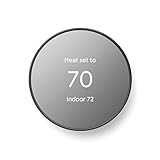
| Google Nest Thermostat (Charcoal) | Easy smart upgrade | Programmable Wi-Fi thermostat |
| Alexa and Ring Smart Thermostat | Alexa households | Works with Alexa and Ring, energy saving |
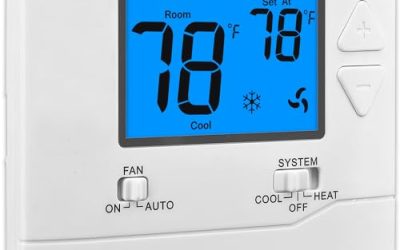
| Suuwer Non-Programmable | Set-it-and-forget-it use | 1 heat/1 cool, conventional single-stage, blue backlight |
| Basic Non-Programmable Digital | Landlords and rentals | 1 heat/1 cool, easy DIY install, white backlight |
| Sensi Smart ST55 | DIY smart control | Wi-Fi, Alexa, efficiency certified, DIY |
How to Choose
Match the thermostat to your system type
Most of these models are built for single-stage systems with one heating stage and one cooling stage, labeled 1 Heat/1 Cool. If your system has two stages, a heat pump, or electric baseboard heaters running on line voltage, a low-voltage thermostat may not work at all. Check your furnace and the terminals on your old thermostat before you shop. Letters such as R, W, Y, and G identify power, heat, cooling, and fan wires, and a quick photo of that terminal block makes comparing against a product page much easier.
Check for a C-wire before choosing smart
Smart thermostats with Wi-Fi and touchscreens need continuous power, which usually comes from a common wire, or C-wire, at the thermostat base. Several Wi-Fi models list it as required or advised. If you do not have one, look for a model that includes a power adapter option or plan to run a new wire. Ignore the temptation to skip this check, because a thermostat that loses power intermittently can drop its Wi-Fi connection or reset its schedule, which is more annoying than a dumb thermostat ever was.
Decide how much scheduling you really want
A non-programmable thermostat is perfect for a vacation rental or a household that is home all day. A 5-2 day schedule sets one pattern for weekdays and one for weekends. Smart models learn from your habits or let you adjust from a phone. If nobody will ever program it, you are paying for features that will sit idle. Households with irregular shifts or frequent travel tend to benefit most from phone control, while a steady nine-to-five routine often does fine with a simple weekly schedule.
Look at certification, voice assistants, and installation
An efficiency certification, mentioned on the Sensi, signals an efficiency standard. Voice assistants like Alexa or Google Assistant are convenient but secondary to getting the wiring right. Easy DIY installation helps when you plan to do the work yourself. Where budget models cut corners is the interface: backlights are basic and menus are cramped, so read what each option offers. Also ignore claims of large energy savings in a title unless a certification or a stated mechanism backs them up, since real savings depend on your habits, your insulation, and how much you actually adjust the schedule.
The 6 Best Options
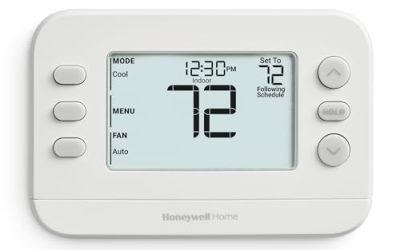
Honeywell Home X2P RTH20B
This programmable thermostat in white lists single-stage compatibility with 1 Heat/1 Cool systems and a 5-2 day schedule. It is a straightforward pick for a household that wants a weekday and weekend routine without apps, accounts, or a Wi-Fi network, and that values a recognizable brand name for a replacement that many people can install themselves. The schedule logic is easy to explain to everyone in the house, which keeps arguments about the temperature to a minimum.
- Strength: a 5-2 day schedule lets weekdays and weekends differ.
- Strength: no Wi-Fi setup is required, which keeps things simple.
- Trade-off: no remote control or app access is listed in the title.
Skip it if you want to adjust the temperature from your phone or use voice commands. It also will not suit a multi-stage or heat pump system.
Google Nest Thermostat (Charcoal)
The title describes a smart, programmable Wi-Fi thermostat in charcoal. It is aimed at buyers who want a clean, well-known smart thermostat without chasing a long list of options, and who are comfortable using a phone app to change the schedule from the couch or from the road when travel plans change. The charcoal finish also suits darker walls, where a white plate can look out of place.
- Strength: a recognizable smart brand with Wi-Fi and a programmable schedule.
- Strength: it fits renters and homeowners who want a modern look on the wall.
- Trade-off: the title does not list compatibility with every system type, so verify your wiring first.
Skip it if your system is outside the typical single-stage setup, or if you do not want an app in your daily routine.
Alexa and Ring Smart Thermostat
This smart thermostat is described as saving money and energy and working with Alexa and Ring. It fits homes already built around those devices, where voice control and a unified app make the thermostat feel like another part of the setup rather than a separate system to manage. For a household that already asks Alexa for the weather, adding the thermostat is a natural next step.
- Strength: Alexa and Ring compatibility is stated directly in the title.
- Strength: it is positioned as an energy-saving smart option.
- Trade-off: the title gives few details about system compatibility or wiring needs.
Skip it if your household uses Google Assistant or Siri, or if you do not want a smart-home ecosystem tie-in at all.
Suuwer Non-Programmable
A non-programmable thermostat for conventional single-stage 1 Heat/1 Cool systems, with a blue backlight. It suits someone who wants to set a temperature and leave it, such as a small apartment, a rental unit, or a home where one person controls the heat and no schedule is needed. With no menus to navigate, it is the least intimidating option for older relatives or guests who just want to nudge the temperature.
- Strength: simple operation with no schedule to learn or forget.
- Strength: the blue backlight helps in dim hallways and bedrooms.
- Trade-off: no scheduling means you adjust manually and may waste energy.
Skip it if you want to trim heating and cooling costs automatically with a weekly schedule.
Basic Non-Programmable Digital
This digital energy-saving thermostat lists single-stage 1 Heat/1 Cool compatibility, easy DIY installation, and a white backlight. It targets landlords, property managers, and DIYers swapping out many units, where the goal is a dependable basic replacement that tenants cannot overcomplicate with schedules or apps. It stays in the budget tier of this guide, which helps when you are outfitting several apartments at once.
- Strength: easy DIY installation is named in the title.
- Strength: a white backlight and a simple interface keep it approachable.
- Trade-off: it offers no scheduling, Wi-Fi, or remote access.
Skip it if you want smart features, a recognizable brand name, or anything beyond a straightforward temperature setting. A household that likes to fine-tune comfort by time of day will find it limiting almost immediately and may regret not paying for a schedule.
Sensi Smart ST55
A DIY-friendly Wi-Fi smart thermostat with Alexa support and an efficiency certification in the title. It fits buyers who want app control and voice commands but prefer to install it themselves, with a more affordable cost tier than some flagship smart models. It is a sensible middle path between a plain programmable unit and a fully connected smart-home setup.
- Strength: an efficiency certification and Alexa support are both named.
- Strength: DIY installation suits handy homeowners and renters with permission.
- Trade-off: Wi-Fi models usually need a C-wire, so check your wiring first.
Skip it if you have no Wi-Fi near the thermostat or want a model with no app at all. People who dislike creating accounts for household gadgets may also find the setup process more involved than a plain programmable unit.
Which One Fits Your Situation
Replacing a thermostat in a rental unit
The Basic Non-Programmable Digital is the simplest swap, with easy DIY installation and nothing for tenants to misconfigure. A property manager can buy several of the same unit and keep the spare parts and instructions identical across every apartment.
Wanting a weekday and weekend schedule without Wi-Fi
The Honeywell Home X2P RTH20B gives a 5-2 day schedule with a familiar brand name, so a family can set one routine for school and work days and a lazier one for weekends, then stop thinking about it.
Living in an Alexa and Ring household
The Alexa and Ring Smart Thermostat fits those devices directly, letting you ask for a warmer room by voice and keep every device in one app.
Wanting a smart thermostat you can install yourself
The Sensi Smart ST55 lists DIY installation, an efficiency certification, and Alexa support, which makes it a practical first smart thermostat for a handy owner who wants to learn the system by doing the wiring.
Common Mistakes
- Buying a low-voltage thermostat for a line-voltage baseboard heater.
- Ignoring the C-wire requirement on Wi-Fi models.
- Paying for smart features you will never use.
- Skipping a photo of the old wiring before disconnecting it.
- Assuming every thermostat works with heat pumps.
Related guides
- What Is The Best Budget Most Responsive Gaming Mouse Wired
- Low Latency Gaming Headphones Usb-C 2.4 Ghz Wireless
- Low Latency Gaming Headphones Usb-C Dongle 2.4 Ghz
Frequently Asked Questions
Do I need a smart thermostat?
No. A programmable or even non-programmable model suits many homes. Smart models help if you travel, share a house with changing schedules, or simply want remote control and voice commands.
What does 1 Heat/1 Cool mean?
It means the thermostat is built for systems with one stage of heating and one stage of cooling. Multi-stage or heat pump systems need a different thermostat.
Can I install a thermostat myself?
Many people do, after turning off power at the breaker and photographing the wiring. Call a professional if wires or terminals do not match, or if you find unlabeled wires, a missing common wire, or any sign of damaged insulation.
Is Wi-Fi required for a programmable thermostat?
No. Plain programmable models like the Honeywell run schedules without any Wi-Fi connection, which also means there is no account, app, or password to manage later.