A Wi-Fi thermostat earns its keep in small, specific moments: turning the heat up from the driveway after a late flight, noticing from your phone that the house is warmer than it should be, or letting a geofence drop the setpoint when the last person leaves. Those conveniences only work if the thermostat holds a steady connection and gets enough power, and that second requirement catches many buyers by surprise. Several listings in this guide spell out that a C-wire is required, and that detail can decide the purchase before any app feature does.
This guide is for homeowners and careful renters with ordinary forced-air systems who want remote control, scheduling from a phone, and voice assistant support in 2026. Seven models are covered, from the Sensi pair and a Google Nest to two Honeywell Home units, an Alexa-and-Ring thermostat, and a generic single-stage Wi-Fi unit. Heat pump owners get a few extra things to check, since only some listings mention that compatibility.
Our Top Picks
Top 3 picks at a glance
Quick Picks
As an Amazon Associate we earn from qualifying purchases at no extra cost to you.



| Product | Best for | Key spec from the title |
|---|---|---|
| Sensi Smart ST55 | Capable DIY install | Wi-Fi, Alexa, efficiency certified, DIY |
| Alexa and Ring Smart Thermostat | Alexa-centered homes | Works with Alexa and Ring |
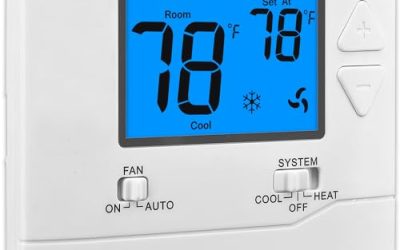
| Generic Wi-Fi Single-Stage Thermostat | App control at a low cost tier | 1 Heat/1 Cool, app remote control, 7-day programmable, C-wire required |
| Honeywell Home X2S Smart Wi-Fi | Heat pump households | Conventional and heat pump compatibility |
| Sensi Lite ST25 | Lower-cost smart basics | Wi-Fi, Alexa, DIY, efficiency certified |
| Google Nest Thermostat (Charcoal) | Minimal, clean smart upgrade | Programmable Wi-Fi thermostat |
| Honeywell Home T5 RTH8800WF2022 | Touchscreen with geofencing | 7-day programmable touchscreen, geofencing, Alexa ready |
How to Choose
Start with the C-wire question
A common wire carries 24-volt power so the Wi-Fi radio and display can run all the time. Listings such as the generic unit and the Honeywell T5 call a C-wire required. If your old thermostat has no wire attached to a C terminal, look for a spare wire in the wall bundle, a power-extender accessory, or a model that lists another power option. Skipping this check is the leading cause of failed smart installs. Some buyers hire a technician for an hour to run a new wire, which is often cheaper than returning the thermostat and starting over.
Match the system type, especially for heat pumps
Many Wi-Fi thermostats target conventional systems with one heating and one cooling stage. Heat pumps use a reversing valve and sometimes auxiliary heat, which need dedicated terminals and settings. Only listings that name heat pump compatibility, like the Honeywell X2S, should be considered for that setup. When in doubt, match the terminal letters on your old thermostat against the product’s wiring list. Terminals labeled O or B usually point to a heat pump, and if you see them, treat any listing that does not mention heat pumps as unsuitable until proven otherwise.
Look at geofencing, voice, and app support
Geofencing uses your phone’s location to change the temperature when you leave or arrive, which saves effort for irregular schedules. Voice assistants matter if you use Alexa, Google Assistant, or Siri daily. An app that is regularly updated is part of the product, so ignore flashy specs if the app’s reliability worries you. Budget models often skip geofencing or limit it to a subscription. Also look at how many people can share access, since a family with several phones may want multiple user accounts rather than one shared login.
Check the interface and the Wi-Fi band
Most thermostats connect over 2.4GHz Wi-Fi, and a weak signal near the thermostat leads to dropped commands. A touchscreen is easier for guests than a dial, though a small display with clear buttons beats a cluttered one. Where cheaper units cut corners is local control: if the Wi-Fi drops, make sure you can still change the temperature on the wall. A router restart should never leave you unable to heat the house on a cold night.
The 7 Best Options
Sensi Smart ST55
This Wi-Fi smart thermostat is labeled DIY with Alexa support and an efficiency certification. It suits a buyer who wants app control and voice commands but prefers to do the installation personally, and who plans to follow the wiring guide step by step. It occupies the middle of the market, with mainstream features and a straightforward approach to setup and daily use.
- Strength: DIY installation and Alexa support are listed together.
- Strength: Wi-Fi scheduling and remote access from a phone.
- Trade-off: the title does not say whether a C-wire is required, so confirm before buying.
Skip it if your hallway has poor Wi-Fi or you prefer no apps and accounts. Because the title is silent on power requirements, look at the installation guide before ordering, and keep a photo of your old wiring handy so you can compare terminal labels at the kitchen table.
Alexa and Ring Smart Thermostat
The title describes saving money and energy with Alexa and Ring compatibility. It fits homes where doorbells, cameras, and speakers already live in the same app family, so adjusting the temperature by voice or from the same screen feels natural. For that kind of household, it reduces the number of separate apps on the phone.
- Strength: Alexa and Ring support is stated directly.
- Strength: it aims at energy savings with smart scheduling.
- Trade-off: the title offers little detail on system or wiring compatibility.
Skip it if you rely on Google Assistant or Siri, or want to avoid a single-ecosystem commitment. The convenience cuts the other way when you later switch speakers or cameras, because the thermostat then becomes one more device tied to a platform you no longer use.
Generic Wi-Fi Single-Stage Thermostat
An unbranded Wi-Fi unit for single-stage 1 Heat/1 Cool systems with app remote control and 7-day programming, flagged as needing a C-wire. It appeals to cost-conscious buyers who want phone access and a detailed weekly schedule without paying for a major brand, and who are comfortable with a lesser-known app and a setup that needs more patience.
- Strength: 7-day programmable schedule with app remote control.
- Strength: its stated C-wire requirement is clear in the title.
- Trade-off: an unbranded app and limited support mean fewer guarantees about updates.
Skip it if you need heat pump compatibility or a well-supported voice assistant ecosystem. Anyone who worries about long-term app maintenance should also weigh that unbranded listings can disappear, leaving a thermostat whose phone features slowly stop working.
Honeywell Home X2S Smart Wi-Fi
This white Wi-Fi thermostat lists compatibility with conventional and heat pump systems. That breadth makes it the clearest option here for owners of heat pumps, who often struggle to find a smart thermostat that clearly names their system type. It combines a familiar brand with a straightforward, mainstream design.
- Strength: conventional and heat pump compatibility are both named.
- Strength: a familiar brand with Wi-Fi control.
- Trade-off: the title omits details on voice assistants and geofencing.
Skip it if voice control and geofencing are must-haves, or if your system is multi-stage beyond what the listing covers. Heat pump owners with auxiliary or emergency heat should still check the wiring chart, because compatibility on paper depends on which terminals your equipment actually uses.
Sensi Lite ST25
A lighter Sensi with Wi-Fi, Alexa support, DIY installation, and an efficiency certification in the title. It targets buyers who want a mainstream brand and the core smart functions without stepping up to the fuller model, such as a renter or a small-home owner who mainly wants phone control and a simple schedule.
- Strength: Wi-Fi, Alexa, and DIY installation at a lighter tier.
- Strength: an efficiency certification is named.
- Trade-off: as the Lite version, it probably offers fewer features than the ST55.
Skip it if you want the fullest feature set from the brand. Because the title lists so few details, compare the product page against the ST55 to see exactly which features were trimmed, and decide whether those extras would ever matter in your house.
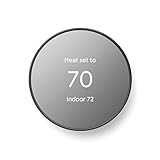
Google Nest Thermostat (Charcoal)
The title calls it a smart, programmable Wi-Fi thermostat in charcoal. It is for buyers who want a recognizable name and an uncluttered look, and who will manage the schedule from a phone. The dark finish suits modern interiors, where a bright white plate would feel out of place on the wall.
- Strength: a familiar smart brand with a programmable schedule.
- Strength: a clean, simple design.
- Trade-off: the title does not describe wiring or system compatibility.
Skip it if you want a wall touchscreen or explicit heat pump support listed. A buyer with a more complicated system may feel uneasy that the title is so short, and should confirm the details on the product page before removing the old unit.
Honeywell Home T5 RTH8800WF2022
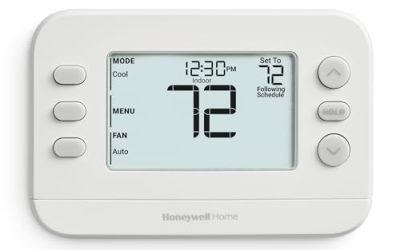
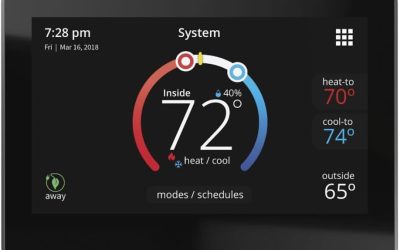
This model lists a 7-day programmable touchscreen, geofencing, Alexa readiness, an efficiency certification, and a required C-wire. It suits a household with changing routines that wants the thermostat to react to who is home, and that prefers a touchscreen on the wall instead of buttons or a dial. The Alexa readiness listed in the title also lets the thermostat slot into a voice-controlled home without extra hardware.
- Strength: geofencing and a 7-day schedule are named in the title.
- Strength: a touchscreen interface with Alexa readiness.
- Trade-off: a C-wire is required, which rules out some older installations.
Skip it if your wall has no common wire and you do not want to add one. Households that dislike location tracking should also consider that geofencing relies on phone location permissions, which not everyone is comfortable granting.
Which One Fits Your Situation
Owning a heat pump
The Honeywell Home X2S Smart Wi-Fi names heat pump compatibility directly, which narrows the risk of buying a unit whose terminals do not match your reversing valve wiring.
Having irregular work shifts
The Honeywell Home T5 RTH8800WF2022 pairs geofencing with a 7-day schedule so the house adjusts around you, even when a night shift or a sudden schedule change throws off the usual pattern.
Keeping the cost tier low while staying smart
The Sensi Lite ST25 brings Wi-Fi and Alexa support without stepping up to a larger feature set, a fair trade for a small home or a rental where a basic phone schedule is all anyone needs.
Living in an Alexa and Ring household
The Alexa and Ring Smart Thermostat keeps everything in a single family of apps.
Common Mistakes
- Ordering before confirming a C-wire is present.
- Assuming a smart thermostat supports heat pumps.
- Installing in a spot with a weak 2.4GHz Wi-Fi signal.
- Skipping the app setup and never creating a schedule.
- Forgetting to turn off power at the breaker before wiring.
Related guides
- What Is The Best Budget Most Responsive Gaming Mouse Wired
- Low Latency Gaming Headphones Usb-C 2.4 Ghz Wireless
- Low Latency Gaming Headphones Usb-C Dongle 2.4 Ghz
Frequently Asked Questions
Does a Wi-Fi thermostat work without internet?
It should still let you change the temperature from the wall unit. Remote control, app scheduling, and voice commands need the connection.
What is a C-wire and why does it matter?
It is a common wire that provides continuous 24-volt power. Many Wi-Fi thermostats need it, and listings that say required will not run reliably without it.
Can a Wi-Fi thermostat lower my energy use?
It can, by making setbacks easier and by reacting to when you are away. Actual savings depend on your habits and home, so do not rely on a promised figure.
Is geofencing necessary?
No. It helps with irregular schedules, but a simple weekly program works well for steady routines.