A kitchen is the room where a smoke alarm is most likely to be a nuisance and also the room where a fast warning matters most. Toast, searing pans and a steamy pot of pasta can all set off a poorly chosen unit, and the usual response is to pull the battery and forget about it. That habit is exactly what turns a minor kitchen flare-up into a real emergency. The decision here is not about finding the loudest alarm. It is about finding one that tolerates ordinary cooking while still sensing a genuine fire, so nobody feels tempted to disable it.
This guide is for renters, first-time homeowners and anyone replacing an alarm that chirps every time dinner gets ambitious. It compares five options based on the listed specs: sealed 10-year units, a replaceable-battery model, a bulk pack, and a hardwired interconnected alarm. Photoelectric sensing shows up across most of them, and in a kitchen that matters more than any feature on the box. In 2026 the practical question is simple: will the alarm stay installed, powered and trusted by the people living with it? The sections below help you answer that for your own layout, wiring and tolerance for maintenance.
Our Top Picks
 SITERWELL Smoke Detector Fire Alarms 9V Battery Operated1 Pack3.93 x 3.93 x 1.37 Inches0.22 poundsCheck on Amazon


Top 3 picks at a glance
Quick Picks
As an Amazon Associate we earn from qualifying purchases at no extra cost to you.


| Product | Best for | Key spec from the title |
|---|---|---|
| X-Sense SD2J0AX | Fewer cooking false alarms | 10-year battery, UL 217 certified, photoelectric |
| Siterwell hardwired interconnected | Homes with existing ceiling wiring | Hardwired with 9V backup battery, interconnected |
| Siterwell 10-pack | Landlords and multi-room coverage | 10-year product life, photoelectric sensor |
| Kidde 10SDR | Small kitchens and apartments | AA battery-powered, 4-inch, 85 dB alarm |
| Siterwell 9V battery model | Simple, low-cost replacement | 9V battery operated, silence button |
How to Choose
Sensor type decides how often it nags
Ionization alarms react quickly to flaming fires but are notorious for tripping on cooking fumes. Photoelectric sensors respond better to slow, smoldering smoke and are generally less touchy near a stovetop. For a kitchen or the hallway beside it, look for the word photoelectric in the listing. An alarm that does not state its sensor type is a gamble in this room, because you cannot predict how it will behave when a pan starts to smoke. Do not pay extra for dual-sensor claims unless the listing spells out what each sensor does. If you want broader coverage, the usual advice is to pair a kitchen-friendly photoelectric unit with proper alarms in every bedroom and on every level, rather than hunting for one magic detector.
Power source and lifespan
A sealed 10-year battery means no midnight chirps for a decade, but the whole unit gets replaced at the end of that period. A 9V or AA model lets you swap batteries yourself, which is cheaper upfront and means more upkeep. Hardwired alarms run from household power, keep a battery as backup, and continue working through an outage. Whichever you pick, find the manufacture date on the back of the alarm and plan to replace the entire unit about every 10 years, since sensors wear out even when the battery is fresh.
Placement and silence controls
Fire-safety guidance generally keeps alarms several feet away from cooking appliances, so a unit in the hallway just outside the kitchen often works better than one directly over the range. A hush or silence button lets you quiet a nuisance trigger for a few minutes without disabling the alarm. Confirm the model lists a test button as well, because monthly testing is the habit that actually keeps the device reliable. Aim for an alarm that is easy to reach with a broom handle if you mount it high. Also remember that a loud 85 dB alarm in a small apartment is plenty, while a large multi-story house benefits more from interconnection than from raw volume. Ceiling mounting is the default, and a wall mount should sit a short distance below the ceiling line, following the installation sheet.
Where budget models cut corners
Inexpensive packs may skip certification details, offer only a basic low-battery chirp, or leave out interconnection entirely. Look for a stated safety standard such as UL 217 in the listing and treat vague marketing language as a warning sign. Ignore decorative claims about slim styling; they do not change detection quality. Also be wary of any listing that promises zero false alarms, because no sensor can promise that near a hot, smoky pan.
The 5 Best Options
X-Sense SD2J0AX
This alarm is aimed squarely at buyers tired of cooking false alarms. The title lists a photoelectric sensor, a 10-year battery, UL 217 certification and a one-button hush feature, which together suit a first apartment kitchen or the hallway just outside it. It is the closest match here to the idea of set it and forget it, because there is no battery to swap and the nuisance-alarm focus is stated up front.
- Strength: photoelectric sensing with the stated aim of fewer cooking nuisance alarms.
- Strength: a sealed 10-year battery removes routine battery swaps, and the hush button handles brief false triggers.
- Trade-off: the sealed design means the whole alarm is replaced when the battery runs out.
Skip it if you want to join several units into one network, since the title does not mention interconnection.
Siterwell Hardwired Interconnected
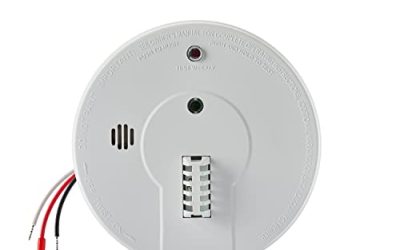
This is the pick for a house with ceiling wiring already in place. The listing describes a photoelectric alarm that is hardwired and interconnected, with a 9V backup battery and a test and silence button. Interconnection means a kitchen alarm can sound the bedrooms too, which is the real safety gain in a larger or multi-story home where a fire in the kitchen could go unheard upstairs while people are asleep.
- Strength: interconnected alarms sound together across the home, so one trigger warns everyone.
- Strength: the 9V backup keeps it working through a power outage.
- Trade-off: installation involves ceiling wiring, so a renter or a nervous do-it-yourselfer may need an electrician.
Skip it if your kitchen has no suitable junction box nearby or you rent and cannot alter the wiring.
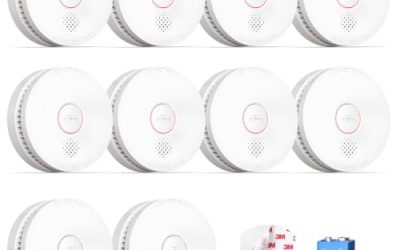
Siterwell 10-Pack
Ten alarms in one box is a landlord’s or a large household’s purchase. The title states a 10-year product life, photoelectric sensing and a low-battery warning function. For a kitchen, one or two units cover the area while the rest go to bedrooms, hallways and the basement. Buying one model for the whole property also keeps replacement dates and spare-part questions uniform, which saves time when it comes to record keeping.
- Strength: bulk coverage means every room gets the same model with the same test routine.
- Strength: photoelectric sensing with a built-in low-battery warning.
- Trade-off: ten units is far more than one kitchen needs, and spares may sit in a drawer for years.
Skip it if you are covering a single small apartment and would rather buy one sealed alarm.
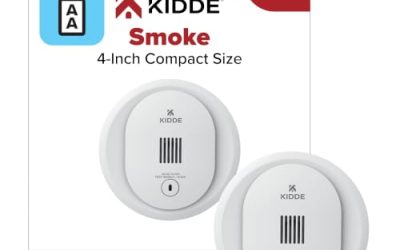
Kidde 10SDR
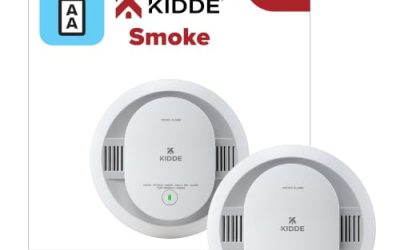
The compact 4-inch body and AA battery power make this a tidy fit for small spaces. The title mentions LED status lights and an 85 dB alarm. AA batteries are easy to find, so a dead battery is a quick fix rather than a special order. In a studio or a galley kitchen where ceiling space is limited, a small body can also be less of an eyesore than a bulky hardwired unit.
- Strength: AA power is simple to replace on your own schedule.
- Strength: LED status lights make it easy to confirm the alarm is working at a glance.
- Trade-off: replaceable batteries mean you must remember the swap, and forgotten batteries are a common failure.
Skip it if you would rather never touch a battery for a decade.
Siterwell 9V Battery Model
A plain battery-operated alarm with a silence button and a low-battery warning. It suits a buyer who wants an uncomplicated replacement without wiring or a sealed power cell, such as someone swapping out an old alarm in a rental. The 9V format is widely stocked, which keeps upkeep easy, and the silence button gives some control when a pan gets too hot.
- Strength: a silence button for nuisance triggers and a low-battery warning that prompts you to act.
- Strength: easy install with no wiring required.
- Trade-off: it relies on a battery you must monitor and change, and the title does not state a 10-year life.
Skip it if you want interconnected alarms across the house or a sealed design that removes battery chores.
Which One Fits Your Situation
You cook often and hate false alarms
Go with the X-Sense SD2J0AX. Its listed focus on fewer cooking nuisance alarms and a hush button speaks directly to that complaint, and the sealed battery removes one more reason to ignore the device. It also suits anyone replacing an old alarm that kept going off: mount it in the hallway outside the kitchen rather than copying a spot that was too close to the range.
You own a house with ceiling wiring
The Siterwell hardwired interconnected alarm makes the most sense, because a kitchen alarm that also triggers the bedrooms adds a layer the standalone units cannot provide.
You manage several units or a large household
Take the Siterwell 10-pack. Uniform models, a 10-year life and a low-battery function simplify upkeep across many rooms or apartments, and a landlord can log one install date for the whole batch instead of tracking a dozen different models and battery types.
You live in a small apartment on a tight budget
The Kidde 10SDR or the Siterwell 9V model keeps costs low and uses batteries you can buy almost anywhere, with no wiring involved. Pick the Kidde if you like the idea of status lights you can glance at, or the Siterwell if a silence button for burnt toast matters more to you. Either way, set a calendar reminder for the battery swap so the alarm never goes quiet unnoticed.
Common Mistakes
- Mounting the alarm directly above the stove, where steam and grease smoke trigger it constantly.
- Removing the battery after a false alarm and never putting it back.
- Assuming a sealed 10-year alarm lasts forever instead of noting its replacement date.
- Buying an alarm that does not state its sensor type or safety standard.
- Skipping the monthly test because the status light looks fine, even though a lit indicator does not prove the sensor and horn still work.
Related guides
- What Is The Best Budget Most Responsive Gaming Mouse Wired
- Low Latency Gaming Headphones Usb-C 2.4 Ghz Wireless
- Mechanical Gaming Keyboards Competitive Pc Gaming
Frequently Asked Questions
Is photoelectric better for a kitchen?
Photoelectric sensors are generally less prone to cooking-related nuisance alarms than ionization types. Several of the listed models specify photoelectric sensing, which is why they appear here.
Do I need a hardwired alarm?
No. Hardwired units are useful when you want interconnection and already have wiring, but a sealed-battery or replaceable-battery alarm works fine in a rental or a small home. Just make sure you place one on each level.
How far from the stove should the alarm be?
Common fire-safety guidance suggests keeping it several feet from cooking appliances. A hallway or adjacent spot usually balances early warning with fewer nuisance triggers. Follow the manufacturer’s placement instructions for exact distances. Open-plan layouts are the tricky case: with no hallway to use, a unit on the far side of the dining area can balance early detection and fewer false alarms, and a hush button becomes more valuable.
How often should I replace a smoke alarm?
Plan on replacing the whole unit around 10 years from its manufacture date, even if it seems to work. Test it monthly and change replaceable batteries as soon as the low-battery chirp starts.