Standard smoke alarms are not small. Some are as wide as a dinner plate, and in a camper, a boat cabin, a narrow hallway, or a closet-sized office they dominate the ceiling and invite bumps from tall residents. Searching for a compact smoke detector usually means one of three things: the space is tiny, the look matters, or the alarm needs to fit a mounting spot that older, bulkier models cannot use. The trick is shrinking the housing without shrinking the protection that matters.
This guide is for people outfitting studios, RVs, boat cabins, dorm rooms, and hallways where ceiling clearance is tight. Each pick is a battery-powered photoelectric or similar smoke alarm, and the notes lean on what the listing actually says about size, battery type, and silencing. Smaller does not change the basics: buyers should still look for a recognized safety certification, a test button, and a plan for replacing the unit when its service life ends.
Our Top Picks

Top 3 picks at a glance
Quick Picks
As an Amazon Associate we earn from qualifying purchases at no extra cost to you.


| Product | Best for | Key spec from the title |
|---|---|---|
| Kidde 10SDR Compact | Small apartments and tight ceilings | 4-inch body, AA battery, 85 dB, LED status lights |
| Heiman 10-Year Compact | Install-and-forget in tiny rooms | 10-year product life, photoelectric, UL 217 |
| SITERWELL Small 9V Alarm | Reducing nuisance alarms near kitchens | 9V battery, photoelectric, false-alarm reduction |
| First Alert Photoelectric | Buyers who want a familiar brand | Battery-powered, photoelectric, single pack |
| SITERLINK GS509A Single | Smoldering-fire sensitivity in small rooms | Dual-beam photoelectric, test-silence, LED |
How to Choose
Measure the ceiling spot, not the product photo
Photos are shot at flattering angles, and a close-up can make any alarm look petite. A compact alarm is only compact if it fits the place you plan to mount it. Kidde’s title cites a 4-inch body, which is a concrete number you can hold against a ceiling pocket or beam. For the others, the product page diagrams matter more than adjectives such as “tiny” or “small.” Leave clearance from walls, corners, and light fixtures, because smoke needs to reach the sensing chamber, and a unit squeezed into a dead-air corner may react late. In a camper or a boat cabin, also think about vibration and temperature swings, which can loosen adhesive mounts and shorten the life of cheap plastic housings over a few seasons.
Battery type and service life
Small housings leave little room for a large battery, so compact alarms tend to follow one of two paths. A 10-year sealed battery, as listed on the Heiman, trades repairability for years without maintenance. A replaceable AA or 9V cell, as on Kidde and SITERWELL, costs less upfront but needs a calendar reminder. In a boat or RV that sits for months, a long-life sealed battery avoids the surprise of a dead cell at the start of a trip. Whichever route you choose, write the install date on the unit so the next replacement does not depend on memory.
Sensor and false-alarm behavior
In small spaces, a shower, a toaster, or a camp stove sits only a few feet from the alarm. Photoelectric sensors are generally less prone to cooking and steam nuisance alarms than ionization types, and several titles call out reduced false alarms. A test-silence button lets you quiet the horn without removing the battery, which is the habit that leads to unprotected rooms. Make it a rule that the alarm goes back on the ceiling before the cooking is finished, not the next day.
Certification and what to ignore
Compact alarms live or die by paperwork you cannot see from the ceiling. UL 217 is the standard to look for in the United States; the Heiman title lists it. Ignore claims about being “ultra slim” unless a measurement backs them up, and ignore unbranded multipacks whose titles do not describe the sensor or the certification. Budget compact models can cut corners on horn volume and on documentation of service life, so confirm both before buying. A loud horn matters more in small spaces than people expect, because a closed door and a pillow can still muffle a weak signal.
The 5 Best Options
Kidde 10SDR Compact Smoke Alarm
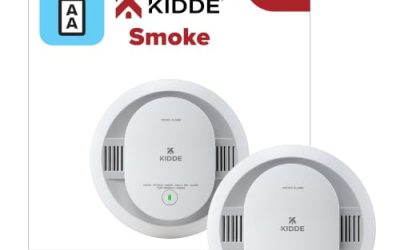
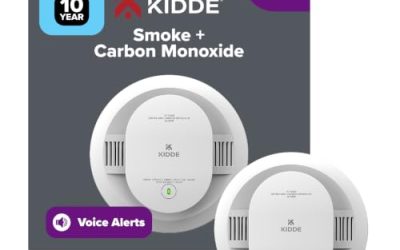
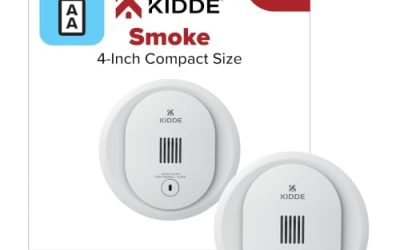
The Kidde 10SDR is the only product here that quotes a size: a 4-inch alarm powered by AA batteries, with LED status lights and a loud 85 dB horn. The listing positions it for homes and small spaces, which makes it the reference point for this keyword. It suits renters and small-home owners who want something unobtrusive on the ceiling, a visible indicator light, and batteries they can buy at any store without special ordering or fuss.
- Strength: the stated 4-inch dimension lets you plan placement before the box arrives.
- Strength: LED status lights give a quick visual confirmation that the unit is alive.
- Trade-off: AA batteries need periodic replacement, which means keeping spares on hand.
Skip it if you want a sealed battery that never needs attention, or if you need a documented certification in the title itself.
Heiman 10-Year Compact Smoke Alarm
Heiman describes a tiny, compact photoelectric fire alarm with a 10-year product life, UL 217 listing, and a test-silence button. Of the five, it makes the clearest promise for tight spaces that you rarely visit, such as a boat cabin or a seasonal cottage. It also suits landlords outfitting several small units, because a long product life means one fewer maintenance task to schedule between tenants each year.
- Strength: UL 217 and a photoelectric sensor appear right in the title.
- Strength: a 10-year product life suits places where battery changes are inconvenient.
- Trade-off: a sealed design means you replace the whole alarm at end of life.
Skip it if you would rather swap a standard battery yourself than replace a unit, or if you need to power it from household wiring.
SITERWELL Small 9V Smoke Alarm
This SITERWELL alarm is described as small, with a photoelectric sensor meant to reduce false alarms and an easy-install design. It runs on a 9V battery, one of the cheapest and most available cells. It is a sensible pick for someone setting up a small apartment on a tight budget who wants a photoelectric sensor and a simple mount, and who is comfortable doing a yearly battery change.
- Strength: the false-alarm emphasis fits small rooms next to a stove or bathroom.
- Strength: 9V batteries are inexpensive and sold almost everywhere.
- Trade-off: the title does not state exact dimensions, so verify the size before mounting in a tight spot.
Skip it if you need a quoted measurement or a stated certification before purchase.
First Alert Battery-Powered Photoelectric Alarm
First Alert sells a battery-powered photoelectric detector in a single pack. The listing is short, but it names a sensor type and a well-known safety brand, which many buyers find reassuring when they only need one unit. It is a straightforward replacement for an old alarm in a hallway or a spare room, where the buyer does not want to study specifications or compare a long list of competing models.
- Strength: a photoelectric sensor is stated, suiting rooms near cooking.
- Strength: the single-pack option avoids paying for units you will not use.
- Trade-off: the title offers no size, battery life, or horn-volume details.
Skip it if you want specifics in the listing, because you will need to read the product page for them.
SITERLINK GS509A Single Alarm
The SITERLINK GS509A in a one-pack uses a dual-beam photoelectric sensor, a replaceable battery, a test-silence button, and an LED light. Dual-beam sensing is intended to respond to a wider range of fire types. This one suits buyers who care more about the sensing technology than the exact outer size, and who have enough ceiling room that a slightly larger body is not a problem.
- Strength: dual-beam sensing is a distinctive feature among these listings.
- Strength: the LED light and test-silence button add everyday usability.
- Trade-off: the title does not highlight compact dimensions, so size needs checking.
Skip it if physical size is your overriding concern rather than sensor technology.
Which One Fits Your Situation
You live in a studio with a low ceiling
The Kidde 10SDR Compact is the clearest fit, because the 4-inch size is stated and the LED lights make testing painless. Put it between the sleeping area and the kitchenette, a few inches off the wall, and test it monthly so the habit sticks.
You own a lake cabin or boat visited a few times a year
The Heiman 10-Year Compact avoids the dead-battery problem. Test it on arrival, and note the replacement year inside a drawer or on a label for the next owner.
You cook in a tiny kitchen next to the bedroom
The SITERWELL Small 9V Alarm is aimed at cutting nuisance alarms. Mount it away from the stove and use the test button regularly to confirm it still sounds. A spot near the door of the sleeping area is usually better than one directly over the cooking zone.
You want a single, familiar-brand unit for a hallway
The First Alert Photoelectric covers that simple case. Confirm size and battery details on the product page, and place it a few feet from the ceiling corners.
Common Mistakes
- Buying on the word “compact” without checking a measured dimension against the mounting spot.
- Installing the alarm directly above a stove or shower, which guarantees nuisance alerts and tempts people to disable it for good.
- Forgetting that sealed-battery alarms still expire after about ten years.
- Skipping a test of the alarm after moving it to a new vehicle or cabin, where a jostled battery or loose mount can go unnoticed.
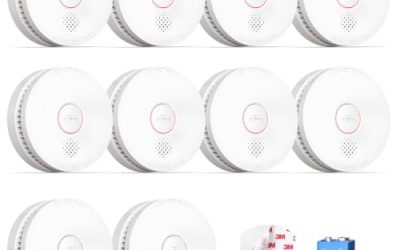
- Choosing an unbranded multipack with no stated sensor type or certification.
Related guides
- What Is The Best Budget Most Responsive Gaming Mouse Wired
- Low Latency Gaming Headphones Usb-C 2.4 Ghz Wireless
- Low Latency Gaming Headphones Usb-C Dongle 2.4 Ghz
Frequently Asked Questions
Does a smaller alarm detect smoke less well?
Not by definition. Detection depends on the sensing chamber and certification, not outer diameter. Still, a tiny unit should state its standard, such as UL 217, in the listing, and you should be wary of any product that leaves the sensor type or the certification out entirely.
Can I use a compact alarm in an RV or boat?
Many people do, provided it is rated for residential smoke detection and mounted as the instructions describe. Marine and RV rules vary, so read your vehicle’s or vessel’s guidance. Cooking fumes and condensation are more concentrated in a small cabin, so placing the alarm near the sleeping berth and away from the galley tends to work best.
How far from a corner should it sit?
Common guidance is to keep ceiling-mounted alarms several inches away from walls and corners, where dead air can delay smoke reaching the sensor. Follow the instruction sheet for your model. In a room with a peaked ceiling, mounting a short distance down from the peak is the usual advice, since the very top can hold a pocket of still air.
How often should I replace it?
Plan on about ten years from the manufacture date, which is printed on the back. A fresh purchase in 2026 should be marked with its replacement year when installed.