Shopping for commercial smoke detectors usually means one of two jobs: outfitting a small business space such as an office, shop, salon or storage unit, or covering many rooms in a rental property or multi-unit building. Both jobs push you toward multi-packs, tamper resistance, easy maintenance and some form of interconnection, so that an alarm in the back room is heard at the front counter. One honest caution before the comparison: the products below are listed as home-style alarms, and larger commercial buildings are usually required to use a monitored fire alarm panel. Think of these as options for small spaces, not a replacement for a code-required system.
This guide is for small business owners, property managers and landlords who need many alarms at a sensible cost and want to cut down on maintenance trips. Seven options are compared from their listed specs: hardwired interconnected packs, sealed 10-year battery packs, and replaceable-battery alarms. Throughout 2026 the same trade-off applies: wiring gives you power and interconnection, sealed batteries give you low upkeep, and replaceable batteries give you the cheapest entry. Confirm local fire code and inspection requirements with your fire marshal before you buy for a business.
Our Top Picks
 SITERLINK Smoke Detectors with 9V Replaceable Battery GS509A6 PACK1.4 x 3.92 x 3.92 inches0.6 poundsCheck on Amazon
 First Alert BRK SMI100-AC Hardwired Smoke Detector withSM6W015.6 x 5.6 x 2.2 inches0.6 poundsCheck on Amazon
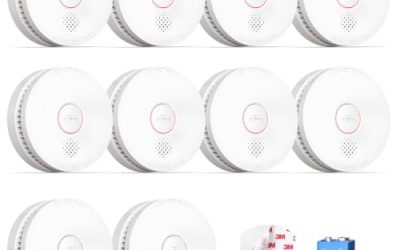
 Siterlink Hardwired Interconnected Smoke Detectorsr GS562A 8-Pack8 Pack5.67 x 5.67 x 1.5 inchesCheck on Amazon


Top 3 picks at a glance
Quick Picks
As an Amazon Associate we earn from qualifying purchases at no extra cost to you.

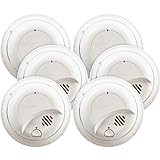


| Product | Best for | Key spec from the title |
|---|---|---|
| Siterlink GS509A 6-pack | Low-cost battery coverage | 9V replaceable battery, photoelectric, test-silence button |
| First Alert BRK SMI100-AC 6-pack | Hardwired replacement from a known brand | Hardwired with battery backup, 6 alarms |
| X-Sense SC07-W 6-pack | Wireless interconnection with CO detection | Smoke and CO, 10-year sealed battery, UL 217 |
| Siterlink GS562A 8-pack | Larger spaces with ceiling wiring | Hardwired, interconnected, photoelectric, 8 alarms |
| X-Sense SD2J0AX 5-pack | Break rooms and kitchens | 10-year battery, photoelectric, UL 217 certified |
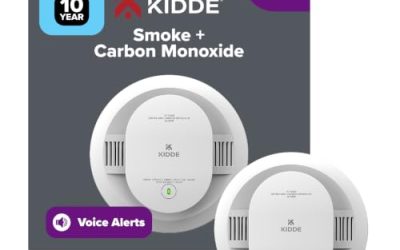
| Kidde 20SD10 | Single-spot sealed alarm | 10-year battery, LED status lights, 85 dB |
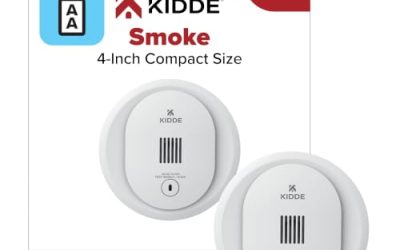
| Kidde 10SDR | Small closets and compact rooms | AA battery, 4-inch body, 85 dB |
How to Choose
Decide on wired, wireless or standalone
Hardwired alarms with battery backup are common in buildings that already have junction boxes, and interconnected versions sound together when one detects smoke. Sealed battery units that connect wirelessly avoid new wiring but still link alarms into a group. Standalone alarms are the cheapest and simplest but only protect the room they are in. For a space with several rooms and a back office, interconnection is worth prioritizing, because someone has to hear the alarm no matter where the fire starts.
Pack size and uniformity
Count the rooms, hallways, storage areas and break rooms, then add a spare. Buying one model across the entire space keeps testing routines, batteries and replacement dates consistent. Packs of five to eight are common in the listings here, and the per-unit cost drops as the pack grows. Avoid mixing hardwired and battery models across one network unless the product states they can link. A spare unit or two on a shelf also helps when an alarm fails its monthly test, since you can swap it the same day instead of leaving a room uncovered while a replacement ships.
Sensor type and smoke plus CO
Photoelectric sensors are generally better for slow smoldering fires and fewer cooking false alarms, which matters near a staff kitchen or microwave. If the space has gas appliances, a furnace or a garage, consider an alarm that also senses carbon monoxide. Look for a stated standard such as UL 217 on smoke units, and keep the manufacture date in your maintenance log.
Maintenance reality
The cost of an alarm includes the time it takes to maintain. Replaceable 9V and AA models require an annual or semiannual walk-through, while sealed 10-year units cut that to monthly testing and one replacement project a decade from now. Hush or silence buttons are practical in places where steam, dust or cooking can cause nuisance triggers. Budget models tend to cut corners on certification details and interconnection, so read those lines closely. Keep a simple log with install dates, test dates and battery changes for every alarm; inspectors and insurers often ask for exactly that kind of record.
The 7 Best Options
Siterlink GS509A 6-Pack
A six-pack of battery alarms with a replaceable 9V battery, photoelectric sensing and a test-silence button. It is the low-cost route to covering a small property quickly, with no wiring and simple installation. Because 9V batteries are cheap and widely stocked, a small landlord can keep a spare box on hand and swap them during a turnover inspection without special orders.
- Strength: photoelectric sensing and a test-silence button in an inexpensive pack.
- Strength: easy to install on any ceiling without electrical work.
- Trade-off: you must replace batteries, and a missed swap across six alarms is easy to overlook.
Skip it if staff time for battery checks is limited, or if you would like alarms that sound together across rooms.
First Alert BRK SMI100-AC 6-Pack
This pack combines a recognizable brand with a hardwired design and battery backup. The title lists a six-pack, which suits a mid-sized shop or a small apartment building. Buyers replacing older hardwired alarms often prefer a like-for-like swap, and this model is positioned for that use. A shop owner who inherited a hardwired setup and wants the least disruptive upgrade, with no new wiring plan, will find this the more familiar route.
- Strength: hardwired power with battery backup keeps it running through outages.
- Strength: six-pack quantity covers a typical small space.
- Trade-off: the title does not state a photoelectric sensor or UL 217, so check the full specifications before buying for a kitchen area.
Skip it if you need wireless or sealed-battery installation.
X-Sense SC07-W 6-Pack
A smoke and carbon monoxide combination with whole-home interconnection and a 10-year sealed battery. The title states it is not hardwired, includes an LCD display and meets UL 217. That makes it a candidate for a retrofit where running wires is impractical but linked alarms are still wanted, such as a leased office where the landlord does not allow ceiling work. The LCD display adds a readable status on the unit, which helps during a monthly walk-through.
- Strength: wireless interconnection without new wiring.
- Strength: smoke and CO in one device, with an LCD display.
- Trade-off: combination alarms cost more per unit, and the whole unit is replaced at the end of its life.
Skip it if you have no CO sources and want the cheapest smoke-only pack.
Siterlink GS562A 8-Pack
The largest pack in this group, it is aimed at spaces with enough rooms to justify eight alarms. The title describes hardwired, interconnected, photoelectric alarms with a test and silence button. For a small office suite or a rental with ceiling wiring, one purchase covers most rooms and links them. A property manager refitting several similar units can also standardize on one model, so every unit gets the same test routine and the same replacement paperwork.
- Strength: hardwired and interconnected, so one alarm sounds the others.
- Strength: eight alarms in one pack lowers the cost per room.
- Trade-off: it needs ceiling wiring, so installation often calls for an electrician.
Skip it if the building has no wiring for alarms or you only need one or two units.
X-Sense SD2J0AX 5-Pack
Five photoelectric alarms with 10-year batteries, UL 217 certification and a one-button hush. It targets the nuisance-alarm problem in break rooms and kitchens. Sealed batteries mean fewer maintenance visits, which suits anyone responsible for many rooms. In a staff kitchen where toast and microwave popcorn are daily events, a hush button also keeps employees from disabling the alarm out of annoyance.
- Strength: photoelectric sensing aimed at fewer cooking nuisance alarms.
- Strength: sealed 10-year battery cuts routine maintenance.
- Trade-off: the title does not mention interconnection, so alarms work independently.
Skip it if you need alarms that trigger each other. In that case a linked system is the better route, even if the break room is where nuisance triggers are most likely. Pairing this pack with a linked set elsewhere is also possible, but they will not talk to each other.
Kidde 20SD10
A single alarm with a 10-year battery, LED status lights and an 85 dB alarm. It is useful as an add-on for a back room or a spot not covered by your main network, from a storage closet to a stockroom. The status lights let a manager confirm at a glance that the alarm is alive, and the sealed battery means the unit will not need a ladder visit for years.
- Strength: sealed 10-year battery means no battery swaps.
- Strength: LED status lights make a walk-through quick.
- Trade-off: sold as a single unit, which raises the per-alarm cost for a large space.
Skip it if you need to cover many rooms at once, because a multi-pack is cheaper per alarm.
Kidde 10SDR
This compact 4-inch alarm uses AA batteries and has an 85 dB alarm with LED status lights. It fits closets, small offices and tight ceilings where a larger unit would be awkward. It is a reasonable supplement to a main network in a small side room, as long as someone keeps track of its battery schedule.
- Strength: small body fits compact rooms.
- Strength: common AA batteries are easy to replace.
- Trade-off: replaceable batteries add routine maintenance.
Skip it if you need a sealed or interconnected design. Because it is sold as a single unit with removable batteries, it is a poor fit for a property manager who wants uniform alarms across dozens of rooms and a simple replacement schedule.
Which One Fits Your Situation
You own a small building with ceiling wiring
The Siterlink GS562A 8-pack gives you hardwired, interconnected coverage in one purchase, while the First Alert BRK SMI100-AC 6-pack is the choice if you prefer a familiar brand for a smaller footprint.
You cannot run new wires
Choose the X-Sense SC07-W 6-pack. It links alarms without wiring and adds carbon monoxide sensing.
You manage a break room or small kitchen
The X-Sense SD2J0AX 5-pack matches the need for photoelectric sensing and a hush button, along with low maintenance.
You are on a tight budget for many rooms
Buy the Siterlink GS509A 6-pack, and schedule the battery checks on a calendar so no alarm is forgotten.
Common Mistakes
- Treating a home-style multi-pack as a code-compliant system without checking local fire rules.
- Mixing alarm brands and types on one network without confirming they can interconnect.
- Putting alarms in dusty storage areas or next to steam sources where they trigger often.
- Ignoring replacement dates on a large batch of alarms.
- Buying single alarms one at a time and ending up with an inconsistent mix of models.
Related guides
- What Is The Best Budget Most Responsive Gaming Mouse Wired
- Low Latency Gaming Headphones Usb-C 2.4 Ghz Wireless
- Mechanical Gaming Keyboards Competitive Pc Gaming
Frequently Asked Questions
Are these alarms approved for commercial buildings?
The listings describe home-style alarms, and larger commercial buildings usually need a code-compliant system. Check with your local fire marshal or inspector before relying on them.
Is hardwired better than sealed battery?
Hardwired alarms draw household power and keep a backup battery, while sealed battery units avoid wiring and last about a decade. The right choice depends on your wiring and your maintenance staff.
Do I need carbon monoxide detection?
If the space has fuel-burning equipment such as a furnace, water heater or attached garage, it is worth having. A combination unit like the X-Sense SC07-W handles both.
How many alarms do I need?
Plan for each room, hallway and level, plus any enclosed storage and the area outside sleeping or break spaces. Count them first, then pick a pack size with a spare or two, and confirm the final count against local requirements.