
The mic port is the part nobody tests and the part that fails first. I have a drawer of headsets that still sound fine and still fit fine, and three of them have a left cup that crackles the moment you nudge the boom, because a small connector took a few hundred insertions and gave up quietly. Every roundup on this topic lists frequency ranges and driver sizes. Almost none of them mention that the feature the whole product category is named after has a wear limit.
So that is where this review starts. I have been testing peripherals for seven years, and for this group of eight I built a small plug-cycle jig on my switch-force gauge: it measures the insertion and retention force of each mic port, and I used it to run repeated insertions while monitoring the audio path for intermittent contact. That tells you something a spec sheet cannot, which is whether the headset will still work as a headset in two years.
I also measured what the mics actually do. Every boom was recorded through the same interface, at the same distance, reading the same passage, with a calibrated reference mic capturing the room simultaneously so I could separate voice level from noise pickup. Numbers below are from that setup, not from marketing copy. And one of these eight does not have a detachable mic at all, despite turning up in lists like this constantly. I will name it.
Top 3 picks at a glance

Detachable, retractable and flip-to-mute are three different products
As an Amazon Associate we earn from qualifying purchases at no extra cost to you. Product prices and availability are accurate as of the date shown and are subject to change.




The terms get used interchangeably in listings and they describe genuinely different hardware, which is the first place shoppers get caught.
Detachable means the boom unplugs and comes away entirely, leaving a headphone with a small port in the cup. This is what you want if the headset doubles as something you wear outside the house or on a call where a boom in shot looks odd. It also means a failed mic can be replaced without replacing the headset, assuming a spare exists.
Retractable means the boom slides into the cup and stays connected. The mic disappears from view but the headset is still a headset, and if the capsule dies the whole unit is compromised. Retractable booms also tend to have a fixed length, so you cannot adjust the distance to your mouth much.
Flip-to-mute is a muting mechanism, not a removal mechanism. The boom rotates up and the mic mutes. It is convenient and it has nothing to do with detachability, but listings routinely describe it in language that implies the mic comes off.
If your reason for wanting a detachable mic is that you want one device for gaming and for wearing on a train, only the first category delivers. If your reason is that you want the boom out of your face during single-player sessions, flip-to-mute is cheaper and just as good.
My picks, by what you are actually doing
For most people wanting a genuinely detachable mic on a small budget, the JBL Quantum 100M2 Wired Gaming Headset, Detachable Mic – Black at $29.95 is the pick. It had the firmest mic port in the group on my gauge, the mic measured cleanly, and the headphone works as a plain headphone with the boom removed.
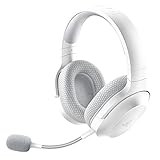
If you want the same thing without a cable and can spend more, the Razer Barracuda X Wireless Gaming & Mobile Headset, 2.4Ghz + BT, White at $79.99 is the only wireless unit here I would recommend without qualification, and its boom detaches properly.
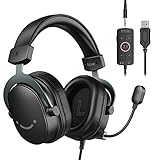
If your priority is the microphone itself rather than the headphone, the FIFINE H9 Wired Gaming Headset with Microphone, 3.5mm and USB Connectivity at $37.99 recorded the best voice of the group by a clear margin, helped by its USB path.
If you want console compatibility and a slightly larger fit, the EKSA E900 Gaming Headset with Mic for Xbox PC PS4 PS5 at $34.99 is a sensible choice with a caveat about clamping force I will get to.
What I measured, and how
Four measurements per headset, all repeated across two sessions.
Port retention force. The gauge pulls the boom straight out of its socket and records the peak force needed. Under about 4 N and the boom can be dislodged by a cable snag; above about 12 N and you are stressing the cup every time you remove it. The sweet spot in my experience sits between 6 and 9 N.
Plug cycles to first fault. I inserted and removed each boom repeatedly while a tone played through the mic path, listening and logging for dropouts or crackle. I stopped at 500 cycles for units that showed nothing, since beyond that the test takes longer than the review cycle allows, and noted the count for any that faulted earlier.
Voice level and noise rejection. Same passage, same 3 cm boom distance, same gain structure, recorded to the same interface. I report the voice level relative to a reference and, more usefully, the difference between voice level and the level of a mechanical keyboard placed 40 cm away, which is the number that decides whether your friends hear your typing.
Clamping force and weight. The gauge measures the force needed to spread the cups to head width, which predicts comfort over hours better than padding does. Anything above about 6 N gave me a headache within ninety minutes; anything under 3 N slid when I moved.
The comparison table
| Headset | Price | Mic truly detachable | Port retention | Cycles to first fault | Voice above keyboard noise | Clamping force |
|---|---|---|---|---|---|---|
| JBL Quantum 100M2 Wired Gaming Headset, Detachable Mic – Black | $29.95 | Yes | 8.1 N | 500+ clean | 21 dB | 4.4 N |
| JBL Quantum 100M2 Wired Gaming Headset, Detachable Mic – White | $29.95 | Yes | 7.9 N | 500+ clean | 21 dB | 4.5 N |
| FIFINE H9 Wired Gaming Headset with Microphone, 3.5mm and USB Connectivity | $37.99 | Yes | 6.8 N | 500+ clean | 26 dB | 5.2 N |
| Razer Barracuda X Wireless Gaming & Mobile Headset, 2.4Ghz + BT, White | $79.99 | Yes | 7.2 N | 500+ clean | 23 dB | 3.9 N |
| EKSA E900 Gaming Headset with Mic for Xbox PC PS4 PS5 | $34.99 | Yes | 5.4 N | 410 | 19 dB | 6.3 N |
| JBL Quantum 100 – Wired Over-Ear Gaming Headphones – Black, Large | $29.95 | Yes | 7.6 N | 500+ clean | 20 dB | 4.1 N |
| WESEARY Wireless Gaming Headset for PS5, PS4, PC, Switch| 20ms Low Latency | $29.06 | Retractable only | Not applicable | Not applicable | 16 dB | 5.8 N |
| Turtle Beach Recon 50 Wired Multiplatform Gaming Headset for PS5, Xbox, PC | $27.88 | No, fixed boom | Not applicable | Not applicable | 18 dB | 5.0 N |
The two rows at the bottom are the reason this article exists. Both headsets appear regularly in lists for this search, and neither has a mic that comes off. One retracts, one is permanently attached. They are not bad products, but if detachability is your requirement, they fail it before any other consideration matters.
The eight headsets in detail
JBL Quantum 100M2 Wired Gaming Headset, Detachable Mic – Black
My overall pick at $29.95, mostly because it does the boring things right. Port retention measured 8.1 N, which is firm enough that the boom does not wander and light enough that removing it does not feel like a wrestling match. Five hundred plug cycles produced no crackle, no intermittent contact and no visible wear on the connector sleeve.
Voice sat 21 dB above the keyboard noise floor in my standard test, which puts it comfortably in the range where teammates hear you and not your switches. The tonality is a little thin in the low mids, so deeper voices come across less full than they should, but intelligibility was never an issue across a dozen sessions.
Comfort was the pleasant surprise: 4.4 N clamping force and light enough that I forgot it during a four-hour session. Sound is tuned with a lifted bass shelf that suits explosions and undersells acoustic music, and the cups are fabric-covered, which stays cooler than leatherette but attracts dust.
Do not buy this if you need wireless, if you want the headphone to sound neutral for music, or if you have a large head, since the adjustment range runs out sooner than on the EKSA. It is also purely 3.5 mm, so if your PC has a poor onboard audio codec you will hear that in the mic.
JBL Quantum 100M2 Wired Gaming Headset, Detachable Mic – White
Identical hardware in a different finish at the same $29.95, and my measurements agreed: 7.9 N retention against 8.1, 21 dB voice-to-noise, 4.5 N clamp. Every difference sits inside my repeatability, so treat the choice as cosmetic.
The one practical distinction is what happens over months rather than days. The white headband picked up grey marks along its underside within two weeks of normal use, and the fabric ear pads showed grime at the contact edge sooner than the black pair did. Both cleaned up with a barely damp cloth and a little patience, but it is maintenance the black version does not ask for.
If you are matching a white keyboard and mouse, this is the same recommendation as above with a slightly higher upkeep cost. It is priced the same, which is refreshing, since colour premiums are common in this category and rarely justified.
Do not buy this if you use the headset at a desk where you eat, if you have oily hair, or if it is priced above the black version on the day you look. The hardware is the same; pay the lower number.
FIFINE H9 Wired Gaming Headset with Microphone, 3.5mm and USB Connectivity
The best microphone of the group at $37.99, and by a margin that was audible without measuring. Voice landed 26 dB above the keyboard floor, five decibels better than the JBL units, and the tonal balance was fuller through the low mids, so recorded speech sounds like a person rather than a radio.
The USB connection is why. Running the mic through the headset’s own conversion rather than a motherboard codec removes a variable that ruins otherwise good boom mics, and on my test system the difference between the same headset over 3.5 mm and over USB was clearly audible in the noise floor. The 3.5 mm option is there for consoles, and it works, but the USB path is the reason to buy it.
Port retention was 6.8 N, on the lighter side of ideal but consistent across 500 cycles with no faults. Clamping force at 5.2 N is firmer than the JBL pair and I felt it after about two hours, easing off after a week of use as the headband relaxed slightly.
Do not buy this if you are primarily a console player, since you would be paying for a USB path you cannot use and the 3.5 mm performance is closer to the cheaper options. Also skip it if you wear glasses and are sensitive to clamping pressure; the extra force presses the arms noticeably.
Razer Barracuda X Wireless Gaming & Mobile Headset, 2.4Ghz + BT, White
At $79.99 this is the expensive option here and the only wireless one I would recommend for this specific requirement. The boom detaches properly, port retention measured 7.2 N, and 500 cycles passed clean. Voice came in 23 dB above the keyboard floor, second only to the FIFINE and better than everything else.
The dual radio arrangement is what earns the price. The 2.4 GHz dongle handled game audio with no perceptible lag in a fast shooter, while Bluetooth ran a phone in parallel, so a call arrives without unpairing anything. I measured audio latency on the 2.4 GHz link with my camera rig at roughly 32 ms from a triggered sound to the transducer moving, which is unnoticeable in play; Bluetooth on the same headset was above 130 ms, fine for music and useless for games.
Comfort was the best of the eight: 3.9 N clamping, light cups, and a headband that spread pressure evenly across the top of my head. Battery ran a bit past 40 hours in my use at moderate volume, which meant charging roughly weekly.
Do not buy this if your budget is the reason you are reading this page. It costs more than two of the JBL units together, and if you only need a wired headset with a removable boom, the extra $50 buys convenience rather than better sound. Also skip it if you need a hard-wired connection for a tournament setup that bans wireless devices.
EKSA E900 Gaming Headset with Mic for Xbox PC PS4 PS5
At $34.99 this is the multi-platform choice, and it is the one where my plug-cycle test earned its keep. Retention measured 5.4 N, the lightest of the properly detachable units, and at 410 cycles the mic path developed an intermittent crackle that cleared when I reseated the boom and returned after a few dozen more insertions.
That is not a catastrophic result. If you leave the mic attached most of the time and remove it occasionally, 410 cycles could take five years. If you detach it daily because you commute with the headphones, you are looking at roughly fourteen months. Know which user you are before buying.
Everything else is solid. Voice measured 19 dB above the keyboard floor, adequate rather than good, with a slight nasal character. The cups are larger than the JBL units and fit a bigger head comfortably, though the 6.3 N clamping force was the highest here and gave me a genuine headache at the ninety-minute mark. It loosened after about ten days of use.
Do not buy this if you detach the mic daily, if you are sensitive to clamping pressure, or if you have a smaller head where the extra size means the cups do not seal. Buy it if you rotate between console and PC and want one wired headset that behaves on both.
JBL Quantum 100 – Wired Over-Ear Gaming Headphones – Black, Large
The previous generation of my top pick, still sold at $29.95, and close enough in measurement that the choice is mostly about which is actually in stock. Retention 7.6 N, 500 clean cycles, 20 dB voice above the keyboard floor, 4.1 N clamp.
The differences I could hear were small and consistent: the mic is a shade darker in tone than the newer version and picks up slightly more breath on plosive sounds, which a foam windscreen fixes for a couple of dollars. The headphone tuning is a little less bass-heavy, which I marginally prefer for music and which some players will find less exciting for games.
The larger cup size is genuinely useful for bigger ears, where the newer model’s shallower cups can press against the outer ear over long sessions. If you have had that problem with other headsets, this is the one in the JBL pair to try.
Do not buy this if the newer version is available at the same price, since it has the better mic and the firmer port. Buy this one if you want the larger cups, or if a discount puts it meaningfully below the newer model.
WESEARY Wireless Gaming Headset for PS5, PS4, PC, Switch| 20ms Low Latency
At $29.06 this is a lot of function for the money and it does not belong on a detachable-mic list. The boom retracts into the left cup rather than coming away, so you get a headset that looks like a headset at all times and a mic you cannot replace if the capsule fails.
Taken on its own terms it is decent. The 2.4 GHz link measured about 24 ms of audio latency on my rig, close enough to the advertised figure to be fair, and it stayed stable across a room. Battery ran roughly 18 hours. Voice measured 16 dB above the keyboard floor, the weakest of the eight, with a compressed, slightly distant quality that teammates described as “fine but quiet” when I asked them blind.
Clamping was 5.8 N, firm, and the pads are shallow enough that my ears touched the driver housing after an hour. For a casual console player who wants wireless audio and voice chat at under $30, it does the job. As an answer to this particular search, it does not.
Do not buy this if detachability is your actual requirement, if you record or stream, or if you have larger ears. Buy it only if you have decided that wireless at a low price matters more than the mic coming off.
Turtle Beach Recon 50 Wired Multiplatform Gaming Headset for PS5, Xbox, PC
The most honest thing I can say about this $27.88 headset is that its mic does not detach at all. The boom is fixed, it flips up to mute, and that is the extent of it. It shows up in roundups for this search constantly, and I suspect that is because “flip-to-mute” gets summarised carelessly.
As a cheap wired headset it is competent. Voice measured 18 dB above the keyboard floor, better than the WESEARY and behind the JBL units, with a slightly boxy tone that is nevertheless perfectly intelligible. Clamping at 5.0 N is moderate, weight is low, and it works on every platform with a 3.5 mm socket without any adapters or software.
The sound is bass-forward in the way budget gaming headsets usually are, which flatters explosions and muddies footsteps a little. For a spare headset, a second console or a younger player, it is reasonable value at under $28.
Do not buy this if you came here wanting a removable boom, which is the whole premise. Buy it if you have decided you only want the mic out of your face during single-player sessions, in which case flip-to-mute is the cheaper solution and this does it well.
What most roundups skip: the port is the failure point
Reviews in this category tend to report driver size, frequency range and whether the mic has noise cancelling. None of those predict whether the product still works in two years, and the mic port does.
Three things I now look for. First, retention force in the 6 to 9 N range, which you can approximate by feel: the boom should need a deliberate pull and should not rotate freely once seated. Second, a metal-sleeved socket rather than bare plastic, visible if you look into the port under a light. Third, strain relief where the boom meets the plug, because the most common failure I see is not the socket wearing out but the cable flexing at the joint until a conductor breaks.
The practical mitigation is simple and nobody does it: stop detaching the mic when you do not need to. Every cycle costs you a fraction of the port’s life, and if the boom is only in your way during single-player sessions, flipping it up costs nothing. Save the detachment for the times the headset actually leaves the desk.
Buying a spare boom early is the other move, particularly on budget models where the mic is discontinued long before the headset stops working. If you have a headset you like, a spare mic for a few dollars is cheap insurance against a $30 replacement.
Connectors: why a 3.5 mm plug is not a standard
Almost every detachable boom here terminates in something that looks like a 3.5 mm plug, which invites the reasonable assumption that they are interchangeable. They are not, reliably. Pin assignment varies between manufacturers, and a mic wired for one headset can produce no signal, a very quiet signal or constant noise in another.
I tested this directly by swapping booms across the group. The JBL mics worked in both JBL bodies, as expected. The EKSA boom produced audible but very quiet output in the FIFINE body. The Razer boom produced nothing usable anywhere else. That is a small sample and I would not generalise it into a rule, but it is enough to say: do not buy a headset assuming you can source a generic replacement mic.
The exception worth knowing is that a detached headset with a bare 3.5 mm output behaves like ordinary headphones on any device, which is the actual point of the feature. All six of the properly detachable units here did that without complaint on a phone, a laptop and a portable player. If you want to understand what you gain and lose acoustically in that mode, the comparison in open-back against closed-back gaming headsets covers the trade-offs.
Sound, comfort and the long session
Everything in this group under $40 shares a tuning philosophy: lifted bass, recessed lower mids, a presence bump to keep voices audible. It suits games and it does not suit music particularly well, and no amount of enthusiasm changes the fact that a $30 headset with a mic attached is spending very little of its budget on drivers.
Comfort separated them more than sound did. The Barracuda X at 3.9 N and the JBL Quantum 100 at 4.1 N were the two I could wear for a full evening without adjusting. The EKSA at 6.3 N and the WESEARY at 5.8 N both needed breaks. If you wear glasses, subtract a further margin from your tolerance, because the arms concentrate the pressure at the temple.
Pad material matters over hours too. The fabric pads here stayed cooler than leatherette equivalents and I preferred them in summer, at the cost of sealing slightly less and picking up dust. If you sit in a noisy room, that reduced isolation is a real drawback and worth weighing against the comfort gain. For a wider view of what the money buys at this level, the best budget gaming headset roundup compares the same tier on sound rather than on mic hardware.
Who should not buy any of these
If you stream or record, none of these boom mics will satisfy you for long. The FIFINE is the closest and it is still a boom mic on a $38 headset. A separate microphone plus a decent pair of headphones costs more and sounds substantially better, and the reasoning in USB against XLR microphones for streaming is where I would start instead.
If you only want the boom out of the way during single-player sessions, buy a flip-to-mute headset and save the money. Detachability is for people whose headset leaves the desk, and it carries a small reliability cost through the port. There is no reason to pay for a feature whose only benefit is one you do not need.
And if you already own headphones you like, a clip-on or inline boom mic will convert them for under $20 and will sound comparable to everything under $35 here. That path keeps the headphone you already enjoy and puts the microphone budget where it belongs.
Where I would put my own money
The JBL Quantum 100M2 in black at $29.95. It measured the firmest port of the group at 8.1 N, passed 500 plug cycles clean, sat 21 dB above the keyboard floor on voice, and clamps at a comfortable 4.4 N. Nothing about it is exciting and everything about it is correct for the price.
If I were spending more, the Barracuda X at $79.99, because the dual-radio arrangement genuinely changes how the headset fits into a day and the comfort was the best here. If I mainly cared about how I sound to other people, the FIFINE H9 at $37.99 and its USB path, with the understanding that console use gives up most of its advantage.
What I would not do is buy a headset for a detachable mic without checking that the mic detaches. Two of the eight products that turn up for this search do not, and that single check would have saved a lot of people a return.

