
If your chair is set high enough to keep your wrists level with the keyboard, there is a good chance your feet no longer sit flat on the floor—and dangling feet pull your weight onto the back of your thighs, cutting circulation and slumping your lower back. An under-desk footrest closes that gap. It is one of the cheapest ergonomic upgrades on a desk and one of the most overlooked.
Our Top Picks
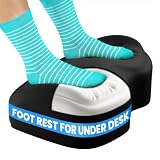
 CasaZenith Foot Rest Under Desk at Work13 x 9.6 x 5 Inch12.8 x 9.6 x 5.1 inches1.8 poundsCheck on Amazon


Top 3 picks at a glance
The main footrest styles
There are three broad types, and they solve slightly different problems. A fixed-angle foam or plastic platform simply raises your feet to a comfortable height. An adjustable rocking footrest tilts 0–30 degrees and often adjusts in height, letting you change ankle angle through the day. A hammock-style sling hangs from the desk edge for a reclined, feet-up posture that suits reading and calls more than typing.
As an Amazon Associate we earn from qualifying purchases at no extra cost to you.



| Type | Height range | Best for | Price tier |
|---|---|---|---|
| Fixed foam platform | 9–12cm | Simple height correction | Budget |
| Adjustable rocker | 10–16cm, 0–30° | All-day active sitting | Budget to mid-range |
| Under-desk hammock | Sling, adjustable straps | Reclined reading/calls | Budget |
More footrests worth a look
The picks above cover the popular foam and plastic rockers. The six models below fill the gaps: an office-grade steel-base rocker, a free-gliding platform, an unusually tall riser for high desks, a budget tilting option, a heated model for cold rooms, and a hanging hammock for people who want to lean back between matches. Each one solves a slightly different posture problem, so read the “who it’s for” part before the spec list.
3M Adjustable Foot Rest (FR330)

Who it’s for: people who want a stable, office-grade rocker that will not slide around a hard floor and that will still feel solid after years of daily kicking and shifting.
The 3M FR330 is one of the long-running standards in office ergonomics. It pairs an 18-inch-wide contoured plastic platform with a heavy steel base. The platform has a non-skid surface with soft raised bumps that give your soles some grip and a little texture to press against. Tilt is controlled with your feet: the platform pivots roughly 20 degrees forward or back, so you can rock it through the day or hold one angle while you concentrate.
Key specs: 18 x 13-inch platform, height adjustable from about 4 to 4.75 inches, tilt range of roughly plus or minus 20 degrees, steel base.
Strengths: The wide platform suits people who like to spread their feet or switch between a narrow and wide stance, and the steel base keeps it planted far better than lightweight foam blocks. Because the tilt is free rather than locked into notches, it encourages the small ankle movements that keep blood moving in your calves.
Drawbacks: Height adjustment is minimal, only about three-quarters of an inch, so it only suits people whose gap from floor to sole is already close to 4 to 5 inches. It also sits in the premium tier for what is essentially a plastic platform on a steel frame.
How it compares: Against the HUANUO rocker above, the 3M trades a wider height range for a heavier, more planted base. If your measurement lands in the 4 to 5-inch window and you have hard floors where lighter rests wander, the 3M is the more durable long-term choice.
Safco Ergo-Comfort Adjustable Footrest (2105)

Who it’s for: anyone who likes to keep their feet moving and wants a smooth, quiet glide instead of a clicking rocker that shows up on voice chat.
The Safco 2105 uses a vinyl-covered platform on a chrome-finished steel frame. Instead of fixed tilt steps, the platform glides freely to any angle as you push with your heels or toes, which makes it one of the better options for “active sitting.” The listed size is 18.5 inches wide by 11.5 inches deep, with an overall height of about 5 inches.
Key specs: 18.5 x 11.5 x 5 inches, vinyl-covered MDF platform, steel frame, free-glide tilt, sold with a limited lifetime warranty from the maker.
Strengths: The gliding motion is smooth and silent, so it suits streamers and anyone on long calls. The vinyl top wipes clean and feels better under socks than hard ribbed plastic. The steel frame adds stability without much bulk.
Drawbacks: There is no real height adjustment; the 5-inch height is what you get. Shorter users at a tall fixed desk may need something taller, and people who want to lock a single angle may find the free glide too loose at first.
How it compares: It sits between the plastic rockers and the premium gliders. Compared with the 3M FR330, it is slightly narrower front to back but moves more freely, so pick the Safco if motion matters more to you than fine height tuning.
VIVO Height Adjustable Foot Rest Platform (STAND-FT01)

Who it’s for: shorter users at tall fixed gaming desks, or anyone using a drafting chair or counter-height setup where a normal 4 to 6-inch footrest simply is not tall enough.
Most footrests top out around 6 inches. VIVO’s STAND-FT01 is built differently: a steel frame holds a padded platform that adjusts between roughly 5 and 10.25 inches. That extra reach makes it the rare footrest that works for people whose feet hang well clear of the floor, such as when a desk sits at a standard 29 to 30 inches and the user is on the shorter side.
Key specs: height range of about 5 to 10.25 inches, platform roughly 10 x 15.7 inches, steel frame rated for about 55 pounds, textured top and padded feet to stop sliding.
Strengths: Unmatched height range in this lineup, a solid steel build, and a grippy surface that keeps feet from drifting. It also suits people sitting on tall stools at standing desks who need a bar-like perch.
Drawbacks: It does not tilt, so you lose the ankle movement that rockers provide. The platform is narrower front to back than most, and VIVO notes it is not meant to be stood on.
How it compares: None of the foam or plastic picks above reach 10 inches. If you measured a gap bigger than 7 inches, this is the one to start with; if your gap is under 6 inches, a tilting rocker is the better buy.
Mind Reader Adjustable Foot Rest (FTREST-BLK)

Who it’s for: first-time footrest buyers who want height adjustment and tilt at the lowest possible cost.
The Mind Reader FTREST is a simple black plastic rocker with a massage-texture top. The listing gives a 17 x 13-inch footprint and a height range of about 3.25 to 6.25 inches, which covers most people at a typical fixed desk. The textured surface doubles as grip and as a light foot massage when you roll your soles across it.
Key specs: 17 x 13 inches, height adjustable from about 3.25 to 6.25 inches, tilting platform, plastic build, about 5.5 pounds.
Strengths: It covers the most common height range at a budget price. The 3-inch adjustment window is wider than the 3M’s, so it is more forgiving if you are not sure of your exact gap. Plastic is easy to wipe down.
Drawbacks: The plastic build feels lighter and less premium than steel-frame options, and some editorial reviewers find budget plastic rockers wear faster at the pivot. The ribbed texture can feel hard under bare feet over long sessions.
How it compares: It is a direct alternative to the HUANUO and CasaZenith rests above. Choose it if you want a basic tilting rest and do not care about memory foam or premium materials.
Snailax Heated Foot Rest with Vibration

Who it’s for: people who game or work in cold rooms, basements, or drafty apartments and whose feet get chilly during long sessions.
Snailax builds heating and gentle vibration into a padded under-desk footrest. The controls sit on the side of the unit and let you run heat and vibration separately or together, with an auto shut-off timer. The cover is removable and machine washable, and the underside is non-slip. Snailax sells several versions of this footrest, and the number of heat levels and height settings varies by version, so check the listing you are buying.
Key specs: heated padded platform, vibration modes, safety timers for heat and vibration, adjustable height (number of settings varies by version), washable cover, mains power required.
Strengths: Heat is a genuine comfort upgrade in winter and makes it easier to sit still for a long raid without cold toes. The soft surface feels good with socks or bare feet.
Drawbacks: It needs to sit near a power outlet, which adds one more cable under the desk. The vibration is gentle rather than a real massage, and a fixed padded block cannot rock the way a tilting rest can.
How it compares: It overlaps with the ComfiLife and Everlasting Comfort foam rests above but adds heat. If warmth matters more to you than ankle motion, it is worth the step up to mid-range.
iMissiu Foot Hammock Under Desk
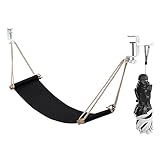
Who it’s for: players who like to lean back in a reclining gaming chair during cutscenes, streams, or calls and want somewhere to put their feet without a block on the floor.
The iMissiu hammock is a cotton sling that hangs from two steel clamps attached to the underside of your desk edge. A stopper on the rope lets you set the hammock height between roughly 12 and 24 inches below the desk, so you can use a higher “rest” position or a lower “work” position. The clamps also double as hooks for a headset or backpack.
Key specs: about 22 x 6.6-inch cotton sling, rope height adjustable from roughly 12 to 24 inches, steel clamps with rubber stoppers, listed for desktops up to about 2.4 inches thick, rated to around 176 pounds.
Strengths: It takes up no floor space, packs flat, and gives a relaxed feet-up posture that suits reclining chairs. The headset hook is a nice bonus on a gaming desk.
Drawbacks: A swinging sling is not ideal for precise mouse work, since it moves with your legs. It will not fit very thick desktops or desks with metal frames right at the edge, and it does nothing for posture when you sit upright.
How it compares: It is the hammock option in the style table above. Treat it as a complement to a floor footrest rather than a replacement if you spend most of your time sitting upright at the keyboard.
How to choose the right one
Get the height from your chair, not the box
Sit with your wrists level at the keyboard, then measure the gap from the floor to your relaxed sole. That distance is the platform height you need—usually 8–14cm for people whose desks cannot go lower. If the footrest is too tall it just tips your knees above your hips, so an adjustable model that fine-tunes within a couple of centimeters is safer than a fixed one if you are between sizes.
Prioritize a tilting surface
A footrest that rocks or holds a 15–20 degree tilt lets your ankles flex, which keeps calf muscles active and blood returning up your legs. Static feet, even at the right height, still go numb over a few hours. Look for a textured, non-slip top so your feet do not slide off, and a base heavy or grippy enough that it does not scoot away when you push on it.
More selection criteria that matter
Height and tilt are the two big decisions, but a few other details decide whether a footrest becomes part of your routine or ends up shoved against the wall after a week.
Motion type: static, rocking, or gliding
A static platform holds your feet at one height and angle. It is the simplest fix for dangling feet, and it works well if you mostly want support. A rocking footrest pivots on a center axis, so your ankles move as you push with your toes or heels. A gliding footrest, like the Safco above, moves smoothly to any angle and tends to be quieter. Ergonomics guidance generally favors some movement, because static postures held for hours reduce circulation even when the angles are correct. If you can’t decide, choose a rocker that can be locked or that resists motion until you push it.
Platform size and foot position
Measure the space under your desk before buying. A platform that is 17 to 18 inches wide lets you shift between feet together and feet apart, which is useful during long sessions. Depth matters too: a shallow platform forces your feet into one spot, while a deeper one lets you slide your feet forward to open the knee angle. Check that the footrest will not collide with your chair’s star base when you roll in close to the desk. On a crowded gaming desk with a PC tower on the floor, a narrow rest may be the only thing that fits.
Shoes or bare feet
If you wear shoes at your desk, a hard plastic or steel-frame platform with a textured top grips better and wears longer. If you game in socks or barefoot, a memory foam or vinyl surface feels kinder, and a heated or washable cover becomes more appealing. Massage nubs feel good for a few minutes but can become irritating over a long session without shoes.
Seated vs standing desk use
At a standing desk, a footrest serves a different purpose: you rest one foot at a time on it to shift your weight, much like a bar rail. A tall, sturdy platform such as the VIVO works better for this than a soft foam block. Check the maker’s weight rating, because some footrests are not designed to take your full weight.
Noise and floor type
Plastic rockers can click when the pivot hits its stop, which a sensitive microphone may pick up. Foam, gliding steel frames, and hammocks are the quietest. On carpet, a narrow rocker can sink and lose its tilt range, so a wider base or steel frame works better. On hardwood or tile, rubber feet or a heavy base stop the rest from creeping away from you.
Comparison of the added picks
| Model | Style | Height | Motion | Best for | Price tier |
|---|---|---|---|---|---|
| 3M FR330 | Plastic platform, steel base | About 4 to 4.75 in | Rocks about 20 degrees each way | Durable office-style rocker | Premium |
| Safco 2105 | Vinyl top, steel frame | About 5 in fixed | Free-glide tilt | Quiet active sitting | Mid-range to premium |
| VIVO STAND-FT01 | Padded platform, steel frame | About 5 to 10.25 in | None | Short users at tall desks | Mid-range |
| Mind Reader FTREST | Plastic rocker | About 3.25 to 6.25 in | Tilt | First footrest on a budget | Budget |
| Snailax heated | Padded, heated | Adjustable (varies by version) | Vibration only | Cold rooms | Mid-range |
| iMissiu hammock | Cotton sling | About 12 to 24 in below desk | Swings | Reclined breaks | Budget |
As a rule of thumb, budget foam and plastic rests handle the basic job well. Mid-range buys you better materials, heat, or a taller range. Premium options mostly add durability and smoother motion rather than better ergonomics, so spend more only if you will use the footrest every day for years.
Materials and durability
Dense foam is warm and quiet but eventually compresses; hard plastic with a rubberized top lasts longer and cleans easily. Weight matters for stability—a rest under about 1kg tends to wander. Check that the tilt mechanism is smooth and does not clack loudly each time you shift, since a noisy rocker becomes annoying on video calls.
FAQ
Do I need a footrest if my desk height is adjustable?
Often no—if you can lower the desk so your feet sit flat while your wrists stay level, you are set. Footrests exist for fixed-height desks or short users who must raise the chair to reach the keyboard.
Is a footrest better than just crossing my legs?
Yes. Crossing your legs twists the pelvis and cuts circulation on one side. A footrest supports both feet evenly and keeps your hips square, which is the whole point.
How high should an under-desk footrest be?
Measure the gap between the floor and the bottom of your relaxed feet after setting your chair for keyboard height. For most people that is roughly 3 to 7 inches. Set the footrest at or slightly below that number, so your thighs are close to level and your knees are not higher than your hips.
Is a rocking footrest better than a fixed one?
For most people, yes. A rocking or gliding platform lets your ankles move, which keeps calf muscles working and helps circulation over long sessions. A fixed platform is fine if you mostly need height correction, or if the clicking or motion of a rocker bothers you. A footrest that can be held at one angle but still moves when you push gives you both options.
Can a footrest help with lower-back pain?
It can help when the cause is posture. Dangling feet tend to pull you forward onto the front of the seat, away from the lumbar support. Supporting your feet lets you sit back in the chair so the backrest can do its job. It is not a treatment for injuries or conditions, so see a clinician if pain persists.
Should I use a footrest with shoes on or off?
Either works. Hard plastic and steel-frame platforms suit shoes and wear better. Memory foam, vinyl, and heated rests feel more comfortable in socks or bare feet. Massage-texture tops can feel harsh barefoot over long sessions.
Do footrests work on carpet?
Yes, but narrow rockers can sink into thick carpet and lose some tilt. Wider bases and steel-frame designs stay more stable. A thin hard mat under the footrest also helps on deep pile.
Is a foot hammock good for gaming?
A hammock suits reclined breaks, streams, and calls more than intense matches. Because it swings, it does not give a stable base when you lean forward for precise mouse work. Many people use one alongside a floor footrest instead of in place of it.
Can I use a footrest at a standing desk?
Yes. At a standing desk, a sturdy, taller footrest works like a bar rail: you rest one foot on it at a time to shift weight off your lower back. Choose a stable steel-frame model and check its weight rating, since many footrests are designed for seated use and are not meant to be stood on with full body weight.
How long does it take to get used to a footrest?
Most people adjust within a few days. The new position can feel odd at first, especially if you are used to perching on the front of the seat. If your legs or hips still feel uncomfortable after a week, recheck the height, since a platform set too high is the most common cause.
Footrest materials compared in more depth
The materials section above covers the basics. Here is how each common build holds up in a gaming or home-office setup over months of use.
Memory foam and foam blocks
Foam footrests are soft, warm, and quiet. They are often shaped as a half-cylinder or wedge, and many can be flipped to give two heights. A removable, washable cover is important, because foam absorbs sweat and odors over time. The main weakness is compression: foam gradually loses height and spring, especially under heavier users. If your foam rest starts to feel noticeably lower, it is time to replace it or add a thin firm pad underneath.
Hard plastic rockers
Plastic rockers are the most common budget and mid-range design. They are light, easy to clean, and usually offer several height steps plus tilt. Look closely at how the height is set. Click-in legs or stacked risers are more robust than thin sliding clips. The pivot is the usual failure point, so heavier users should favor models with a wide base and a thicker pivot.
Steel frames with plastic, vinyl, or padded tops
Steel-frame footrests, such as the 3M, Safco, and VIVO picks, are heavier and more stable. They resist sliding on hard floors and tend to outlast all-plastic rests. Vinyl and padded tops feel better under socks than ribbed plastic. The trade-off is cost and weight, which makes them less convenient to move between rooms.
Wood rockers
Wooden rockers use a curved base that rolls on the floor. They look good on a warm-toned desk setup and are usually very sturdy, but they have no height adjustment beyond the curve itself. They suit people who already know the height they need and want a footrest that looks like furniture rather than office equipment.
Fabric hammocks
Hammocks are the lightest and cheapest option and take no floor space. Cotton or canvas slings are breathable and wash easily. They depend entirely on the desk edge for support, so check desktop thickness and whether there is a metal frame or drawer in the way before buying.
Pairing a footrest with the rest of your ergonomic setup
A footrest is one part of a chain that runs from your eyes to your feet. It works best when the other parts are set correctly.
- Chair: Seat depth should leave two or three fingers of space between the seat edge and the back of your knees. If the seat is too deep, you will slide forward no matter what your feet rest on. The lumbar support should meet the curve of your lower back once you sit all the way back.
- Keyboard tray: If your desk is too high but you would rather not raise the chair, an under-desk keyboard tray can bring the keyboard and mouse down to elbow height. That often removes the need for a footrest entirely.
- Monitor arm or riser: When you raise the chair to suit a high desk, your eyes rise too. A monitor arm lets you lift the screen to match so you do not end up looking down.
- Desk mat: A large desk mat keeps the mouse at the same height as the keyboard, which helps keep your shoulders level while your feet are supported.
- Standing desk: If you have one, set it to seated height with your feet flat first. Use a footrest only if the desk’s lowest position is still too high for you.
Care and lifespan
Most footrests are low maintenance, but a little care keeps them working.
- Wipe hard surfaces weekly. Plastic and vinyl tops collect dust and grime from shoes. A damp cloth with mild soap is enough.
- Wash fabric covers monthly. Follow the care label for foam and heated models. Never wash the heating element itself; remove it or wipe the cover in place if the maker says so.
- Check the pivot and legs. Every few months, look for cracks around the tilt pivot and height legs on plastic rockers. Tighten any screws on steel frames.
- Watch for compression. If a foam rest no longer holds its height, replace it rather than living with a lower position.
- Unplug heated rests when not in use. Even with auto shut-off timers, unplugging overnight is a sensible habit.
With basic care, a plastic rocker typically lasts a few years of daily use, and steel-frame models often last much longer. Foam has the shortest life but is also the cheapest to replace.
Footrest vs lowering the whole desk
Before you buy, it is worth asking whether you need a footrest or a lower desk. The ideal is that your feet rest flat on the floor with your thighs roughly parallel and your wrists level at the keyboard—if a height-adjustable desk can deliver that, you may not need a footrest at all. Footrests earn their place when the desk is fixed too high, when you are shorter than the desk was designed for, or when a keyboard tray is not an option. In those cases raising your feet restores the neutral hip and knee angles a too-tall desk destroys. A quick self-check: sit normally, and if your heels lift or you find yourself perching on the front of the seat to reach the floor, a footrest will help. If instead your knees ride above your hips, the seat is too low and a footrest will make it worse—raise the seat first, then add the footrest to catch your feet.
Setting up your footrest step by step
A footrest only helps if the rest of the desk is set up around it. Work through these steps in order, because each one depends on the one before it.
- Set the keyboard and mouse height first. Sit back in your chair and adjust the seat until your elbows sit at roughly 90 degrees with your forearms level with the keyboard and mouse surface. This is the height your hands need, and it decides everything else.
- Check your feet. With the chair at that height, see whether your feet rest flat on the floor with your thighs roughly level. If your heels lift, you are perching on the front of the seat, or you feel pressure under your thighs near the knee, you need a footrest.
- Measure the gap. Let your feet hang relaxed, then measure from the floor to the bottom of your shoe or heel. That is your target platform height. Most people land somewhere between 3 and 7 inches.
- Set the footrest slightly lower than the gap. Start a little under your measurement. Your thighs should be close to level, with your knees no higher than your hips. If your knees rise above your hips, lower the platform.
- Place it where your feet naturally fall. Most people sit with their feet slightly forward of the knees. Put the footrest there, not tucked right under the chair, so your knees stay open at a little more than 90 degrees.
- Re-check your monitor. Raising your feet does not change your eye height much, but it can change how you sit. Make sure the top of the screen is still roughly at or just below eye level.
Using it through a long session
The point of a tilting or gliding footrest is movement. Every so often, roll your feet back and forth, press your toes down, then your heels. These tiny calf contractions help push blood back up the legs, which is why ergonomics guides stress movement over a perfect static posture. On a static footrest, change position deliberately: move both feet forward, then back, then put one foot on the floor for a while.
Pair the footrest with regular breaks. Standing up every 30 to 60 minutes, even for a minute or two between matches, does more for circulation than any accessory. A footrest makes the time you do spend sitting less tiring; it does not replace getting up.
Common mistakes to avoid
- Buying the tallest setting “just in case.” Too much height pushes your knees above your hips and rolls your pelvis backward, which can make lower-back slouching worse.
- Ignoring the chair. A footrest corrects a chair that must sit high for the desk. If the chair itself is too low, raise it first.
- Letting it drift. A footrest that slides away makes you reach with your legs. On hard floors, use a model with rubber feet or a heavier base, or put a small rug pad underneath.
- Crossing legs on the footrest. It defeats the purpose. Keep both feet on the platform with your hips square.
Who benefits most
Footrests make the biggest difference for people under average height at fixed-height gaming desks, anyone whose chair has to sit high to clear the armrests under the desk, and people who spend long stretches seated, such as streamers, students, and remote workers. People with circulation concerns, pregnancy-related swelling, or lower-back pain often find them helpful too, though anyone with a medical condition should follow advice from a clinician or physical therapist on positioning.
Quick buying checklist
Before you order, run through this short list. It catches the mistakes that lead to returns.
- Measured gap: You know the distance from the floor to your relaxed feet with the chair set for keyboard height, and the footrest’s height range covers it with a little room on either side.
- Floor space: The platform fits between your chair base, desk legs, PC tower, and any cable tray or power strip on the floor.
- Motion: You have decided between static support, a rocker, a glider, or a hammock based on how you actually sit, not just how it looks.
- Surface: The top suits how you sit, hard and textured for shoes, soft or padded for socks and bare feet.
- Stability: The base is heavy enough or grippy enough for your floor type, carpet or hard flooring.
- Noise: If you stream or take calls, the mechanism is quiet enough that it will not click on every shift.
- Power: For a heated model, there is an outlet within reach that will not add a trip hazard under the desk.
- Desk edge: For a hammock, the desktop thickness and edge layout allow the clamps to fit.
If two models tick every box, pick the one with the wider adjustment range. Your ideal height often shifts after you change chairs, desks, or even shoes, and extra range saves you from buying again.
Bottom line
Measure the gap under your relaxed feet after setting chair height for your wrists, then pick a footrest that matches it—ideally one that tilts 15–20 degrees and grips the floor. Even a budget model fixes the dangling-feet slump that a good chair alone cannot.


