
A manual lawn mower solves a simple but stubborn problem: you have a small-to-medium yard, a gas mower is overkill, and you would rather not think about battery charging schedules. Reel mowers cut quietly, cost a fraction of powered alternatives, and reward you with a clean scissor-like action that rotary mowers simply cannot replicate. The catch is that not every manual lawn mower is built the same.
Blade count, cutting width, wheel size, and whether a grass catcher is included all determine whether you will actually push it twice a week or leave it in the garage collecting dust. We compared these eight models on published specs, listed prices, and owner feedback to separate the genuinely usable mowers from the ones that frustrate buyers after a single session.
As an Amazon Associate we earn from qualifying purchases at no extra cost to you.


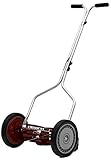


Top 3 picks at a glance
Quick Picks
| Product | Best For | Price |
|---|---|---|
| American Lawn Mower 1604-16 | Small yards on a tight budget | $60.12 |
| LawnMaster LMRM1801 | Larger strips needing a wider cut | $98.99 |
| American Lawn Mower 1204-14 | Light trimming and narrow passages | $82.21 |
| American Lawn Mower 1304-14 | Medium yards needing five-blade engagement | $90.38 |
| Earthwise 1715-16EW | Dense or slightly overgrown grass | $83.99 |
| American Lawn Mower 1804-18 | Wide coverage without high cost | $67.23 |
| American Lawn Mower 1304-14SK2 | Long-term blade maintenance | $100.99 |
| American Lawn Mower 2204-14 | Simple, no-frills mowing | $87.99 |
How We Picked
Three factors drove our selection. First, price-to-feature ratio: at these budgets, a grass catcher or extra blade should not force you into a different tier. Second, cutting width matched to realistic yard sizes — a 14-inch mower is a poor fit for anything beyond a narrow border strip. Third, blade engagement quality, which determines whether the mower leaves uncut streaks or delivers a uniform finish on your first pass.
The 8 Best Manual Lawn Mower in 2026
American Lawn Mower 1604-16
This is the entry point for anyone who wants to try a manual lawn mower without spending much. The 16-inch cutting width handles a typical small front yard in a reasonable number of passes, and the five-blade reel gives you clean, even cuts on grass up to moderate height. A built-in grass catcher keeps clippings out of flower beds and walkways. Owner feedback highlights the lightweight frame as a genuine plus for anyone who struggles with heavier mowers.
- Pro: Grass catcher included at a sub-$65 price
- Pro: Light enough to lift and store without effort
- Con: Four-position height adjustment tops out low for shaggy yards
Skip this one if you have more than a quarter-acre or frequently let grass grow above four inches.
LawnMaster LMRM1801
The 18-inch cutting width sets this LawnMaster apart from most rivals at this price point. You cover noticeably more ground per pass, which matters if your lawn is a wider rectangle rather than a long narrow strip. The five-blade reel produces a clean scissor cut, and the overall frame feels sturdier than budget-tier competitors. Owners generally praise the push effort, calling it manageable on flat, well-maintained grass.
- Pro: Widest cutting path in the group for fast coverage
- Pro: Solid frame at mid-range pricing
- Con: No grass catcher included
Skip this mower if your yard borders patios or garden beds where flying clippings become a nuisance.
American Lawn Mower 1204-14
At 14 inches, this is a narrow-cutting reel mower best suited for trim borders, edges, and tight spaces where a wider mower simply does not turn easily. The four-blade design is adequate for light, well-maintained grass but does struggle as thickness increases. The red finish is a nice touch, and the unit stores flat against a wall without issue. Weight is very manageable, making it one of the easiest options to pick up and set down.
- Pro: Extremely maneuverable around obstacles
- Pro: Minimal weight for frequent storage and retrieval
- Con: Four blades leave less uniform cuts on uneven terrain
Skip this one if your main lawn area is anything larger than a narrow side strip.
American Lawn Mower 1304-14
This 14-inch, five-blade model occupies a middle ground — narrow enough to maneuver around flower beds and tree trunks, with enough blade engagement to deliver a cleaner finish than the four-blade version above. Owners report that the five-blade reel catches more individual blades of grass per revolution, reducing the need for a second pass on well-maintained lawns. The adjustment range is straightforward, and the handle folds for storage.
- Pro: Five-blade cut quality on a narrow, easy-to-steer frame
- Pro: Folding handle simplifies garage or shed storage
- Con: Narrow path demands more passes on open lawns
Skip this one if speed matters more than precision; a wider model will serve you better on open ground.
Earthwise 1715-16EW
Seven blades on a 16-inch width is the standout spec here. Most manual lawn mowers in this bracket offer four or five blades, so the extra two give this Earthwise a noticeably finer cut, especially on slightly longer or denser grass. Owners frequently mention that it handles grass they had let grow a little too long without stalling — a common complaint with lower-blade-count alternatives.
- Pro: Seven-blade reel tolerates slightly overgrown grass better than any four- or five-blade model here
- Pro: Competitive pricing for the blade count
- Con: Narrower than the LawnMaster and 1804-18, meaning more passes on wide lawns
Skip this one if your yard is wide and open; the cutting width becomes a daily time sink.
American Lawn Mower 1804-18
This model offers 18-inch cutting width at one of the lowest prices in our roundup, which makes it an aggressive value play. Five blades deliver a standard clean cut, and the included grass catcher is a genuine bonus at this price tier. Owners who upgraded from smaller mowers cite the reduced number of passes as the biggest quality-of-life win.
- Pro: 18-inch width plus catcher for under seventy dollars
- Pro: Meaningfully fewer passes than 14- or 16-inch models
- Con: Frame build feels adequate but not premium
Skip this one if you have a small, tight yard; the extra width becomes awkward around corners and garden features.
American Lawn Mower 1304-14SK2
The “SK2” suffix stands for the integrated blade sharpener, a feature that addresses the single biggest long-term annoyance with manual lawn mowers: dull blades. Most owners ignore sharpening until cut quality degrades noticeably, and this model keeps the solution attached to the frame. The 14-inch five-blade reel is identical to its non-sharpener sibling, so cutting performance matches the standard version.
- Pro: Integrated sharpener extends usable blade life without extra tools
- Pro: Matches 1304-14 cut quality with added maintenance value
- Con: Highest price in the group, and the sharpener demands some technique for even results
Skip this one if you are confident you will maintain blades with an off-tool sharpener anyway — the premium over the base model is real.
American Lawn Mower 2204-14
This is the simplest mower on our list: 14 inches, four blades, no catcher, no sharpener, no extras. For a buyer who just wants to push a reel across a narrow strip and put it back in the shed, the low part count is a feature, not a bug — fewer components mean fewer things to adjust or break. Owner feedback is mixed depending on lawn type.
- Pro: Minimalist design with very few failure points
- Pro: Light and easy to store in tight spaces
- Con: Struggles quickly if grass grows even slightly beyond ideal height
Skip this one if you want any kind of growth room in your yard’s maintenance schedule.
Buying Guide
Blade Count and Cut Quality
A manual lawn mower works like a pair of scissors: each blade sweeps past a fixed bottom blade, slicing grass at the base. More blades mean more cutting events per wheel revolution, which translates to a cleaner, more uniform finish. Four-blade mowers are workable on short, well-maintained grass. Five blades is the practical sweet spot for most yards. Seven or more handles slightly overgrown turf with noticeably less effort and fewer missed strands.
Cutting Width vs. Yard Size
Cutting width directly determines how many passes you need to cover your lawn. A 14-inch mower on a 30-foot-wide yard requires roughly three to four times the passes of an 18-inch model, which is the difference between ten minutes and thirty minutes of pushing. For small front yards and border strips, 14 to 16 inches keeps the unit maneuverable around trees, planters, and fencing. For anything wider and more open, prioritize 16 to 18 inches even if it means trading a feature elsewhere.
Grass Catchers and Maintenance Features
A grass catcher is not essential, but it changes the feel of weekly mowing dramatically. Without one, clippings scatter onto hardscaping, garden beds, and sidewalks, turning a five-minute job into a twenty-minute cleanup. Among these eight models, only two include catchers at their listed prices. The 1304-14SK2 is the only model that bundles a blade sharpener, a worthwhile addition if you plan to keep the mower beyond a few seasons and want to avoid gradual cut-quality decline.
Our Verdict
Top pick: Earthwise 1715-16EW — the seven-blade reel delivers the cleanest, most consistent cut across a realistic range of grass heights, and the 16-inch width is a versatile match for most small-to-medium yards.
Budget pick: American Lawn Mower 1804-18 — 18-inch coverage plus a grass catcher for under seventy dollars is the best value in this group.
Conditional winner: If your yard has narrow passages and you prioritize long-term blade maintenance over width, the American Lawn Mower 1304-14SK2’s integrated sharpener makes it the smarter investment despite the higher price.
FAQ
Do manual lawn mowers work on wet grass?
No — a reel mower’s scissor action depends on firm, dry blades gripping individual stems. Wet or damp grass clumps and clogs the reel, producing torn, ragged cuts. Wait until the grass is dry to the touch before mowing.
How often should I mow with a manual lawn mower in 2026?
During peak growing season, weekly is standard. Reel mowers are less forgiving of long grass than rotary or gas models, so consistent timing keeps the cutting height manageable and prevents the blades from bogging down between sessions.
Can I use a manual lawn mower on slopes?
Light slopes under about ten degrees are workable, especially on the narrower models. Steeper terrain causes the mower to run away downhill or stall uphill due to gravity working against the wheel-driven blade action.
What grass height can a manual lawn mower handle?
Most models in this list cut comfortably up to three or four inches. Once grass exceeds four inches, even the seven-blade Earthwise struggles to feed blades through the density without requiring excessive forward pressure from the operator.


