
The best RV surge protectors for most campers are portable EMS units with automatic power shutoff: choose a 30-amp model for a 30-amp RV, a 50-amp model for a 50-amp RV, and prioritize electrical-fault detection over a large joule number alone.
As an Amazon Associate we earn from qualifying purchases at no extra cost to you.
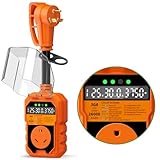
![GEARGO RV Surge Protectors 30 Amp RV Circuit Analyzer, [𝟐𝟎𝟐𝟔 𝐍𝐞𝐰 𝐔𝐩𝐠𝐫𝐚𝐝𝐞𝐝 & 𝐆𝐞𝐧𝟐] Full Protection, RV Adapter Plug for Camper(Orange)](https://m.media-amazon.com/images/I/41NU4tSRcLL._SL160_.jpg)


Top 3 picks at a glance
Best RV Surge Protectors at a Glance
| Model or class | Best for | Plug type | Notable protection | Display and connection style |
|---|---|---|---|---|
| Progressive Industries EMS-PT30X | 30-amp RV owners wanting a portable EMS | 30A TT-30 | Surge suppression, high/low voltage, miswired pedestal, open ground, open neutral, frequency and polarity checks | Portable LCD; plug-in pedestal unit |
| Progressive Industries EMS-PT50X | 50-amp RV owners wanting a portable EMS | 50A 14-50 | Whole-pedestal monitoring for 120/240-volt service, voltage and wiring fault protection | Portable LCD; plug-in pedestal unit |
| Hughes Autoformers Power Watchdog PWD30-EPO | 30-amp campers who value a clear display and automatic disconnect | 30A TT-30 | Surge protection, voltage monitoring, wiring-fault detection and emergency power-off protection | Portable display; some versions support app monitoring |
| Hughes Autoformers Power Watchdog PWD50-EPO | 50-amp RVs with high electrical demand | 50A 14-50 | EMS-style voltage and wiring protection with automatic disconnect | Portable display; app-compatible versions may be available |
| Southwire Surge Guard 34930 or 34950 | Campers who prefer Surge Guard’s portable EMS format | 30A TT-30 or 50A 14-50, depending on model | Surge suppression, voltage monitoring and common pedestal wiring checks | Portable diagnostic display |
Model specifications can vary by revision, so confirm the exact product label before buying. The key distinction is between a basic surge protector and an EMS, or electrical management system. A basic unit mainly absorbs transient voltage spikes. An EMS also checks the campground pedestal and disconnects the RV when voltage, frequency or wiring conditions become unsafe.
What to Look For in the Best RV Surge Protectors
1. Correct amperage and plug type
A 30-amp RV normally uses a TT-30 plug: one hot conductor, one neutral and one ground. A 50-amp RV uses a 14-50 plug with two 120-volt hot conductors, a neutral and a ground. These are not interchangeable simply because both are used at campgrounds.
Buy the protector that matches the RV’s shore-power cord. A 30-amp adapter can connect to some campground receptacles, but it does not give a 30-amp RV the capacity of a 50-amp service. Likewise, a 50-amp protector is not a substitute for a properly wired 30-amp connection.
2. Electrical fault detection
Useful EMS protection includes open ground, open neutral, reversed polarity, low voltage, high voltage and abnormal frequency detection. The unit should test the pedestal before energizing the RV, then continue monitoring while the RV is connected.
Low voltage matters because campground voltage can sag when many air conditioners start at once. Motors may draw more current while trying to operate on undervoltage, increasing heat and stress. A disconnect threshold around 104 volts on a nominal 120-volt circuit is common among RV EMS products, but check the manufacturer’s specifications rather than assuming every model uses the same setting.
For a 50-amp RV, the protector should evaluate both hot legs. One leg can have a problem while the other appears normal. A diagnostic display that identifies the affected leg is more useful than a simple green “protected” light.
3. Joule rating: useful, but not the whole decision
The joule rating estimates how much transient energy the surge components can absorb before their protective capability is exhausted. Higher is generally preferable, but it is not a complete quality score. A unit with a large joule rating that cannot detect an open neutral or dangerous voltage will not provide EMS-level protection.
For RV use, compare joule ratings within the same product category and look for a replaceable or status-monitored surge module when available. A protector that shows a failed protection circuit is safer than one that silently continues passing power after a major surge.
4. Weather resistance and physical security
A portable protector hangs outside between the pedestal and the RV, so rain, sprinklers, condensation, heat and ultraviolet exposure all matter. Look for a weather-resistant enclosure, sealed or covered receptacle connections, and a display that can be read in bright sunlight.
Weather resistance does not mean the unit should sit in standing water. Keep the connection elevated, use the manufacturer’s cover or locking bracket, and route the cord so water cannot run directly into the plug connection. A lockable loop or compatible pedestal lock also helps prevent opportunistic theft.
5. Display and error information
A numeric display that shows line voltage, error codes and delay status is more informative than a single indicator light. Some products also provide app-based monitoring, which can be convenient when the pedestal is several feet away or when you want to observe voltage changes without going outside.
Do not choose an app feature over core protection. A bright, readable local display and clear fault codes are more important if campground Wi-Fi or cellular service is unreliable.
30-Amp Versus 50-Amp: Which Protector Fits Your RV?
| RV shore connection | Nominal maximum power | Typical appliances competing for power | Recommended protector |
|---|---|---|---|
| 30A TT-30 | 3,600 watts at 120 volts | Air conditioner, microwave, water heater, refrigerator and battery charger | 30A EMS with TT-30 plug |
| 50A 14-50 | 12,000 watts total across two 120-volt legs | Two air conditioners, induction cooking, electric water heating and entertainment systems | 50A EMS that monitors both hot legs |
These are theoretical service limits, not a promise that every campground supplies the full rating. The 30-amp calculation is 30 × 120 = 3,600 watts. A 50-amp RV has two 50-amp, 120-volt legs, so the calculation is 50 × 120 × 2 = 12,000 watts when the load is balanced appropriately.
As a practical example, a 30-amp RV might use a 13,500-BTU air conditioner drawing roughly 1,300–1,600 watts while running, a microwave drawing about 1,000–1,500 watts, and a converter or charger using 300–800 watts. Starting current can be higher than running current. Running the air conditioner and microwave together may leave little comfortable margin, especially if the water heater is also on electric mode. An EMS cannot create additional capacity, but it can disconnect the RV before unstable voltage causes damage.
Decision Matrix: Match the Protector to Your Camping Style
| Your situation | Best choice | Why |
|---|---|---|
| 30-amp RV used at older or crowded campgrounds | Portable 30A EMS with voltage and wiring checks | Voltage sag and miswired pedestals are more important risks than maximum surge joules alone |
| 50-amp RV with two air conditioners | Portable 50A EMS monitoring both legs | It can identify a bad leg and protect a much larger electrical system |
| Frequent rain, exposed sites or humid climates | Weather-resistant portable EMS with a cover or locking solution | Outdoor connection durability and water management become priorities |
| Want to verify voltage from inside the RV | Model with a readable remote display or supported app | Convenient monitoring is useful, but retain local fault indicators |
| Permanent installation preferred | Hardwired EMS rated for your RV’s amperage | It is less visible and does not need to be connected at every campsite, but installation should follow RV electrical requirements |
Portable Versus Hardwired EMS Protection
Portable units are the easiest choice for most owners. Plug the protector into the campground pedestal, wait through its startup test and delay, then connect the RV. You can move it between trailers and replace it without opening the RV’s electrical compartment. The disadvantages are theft risk, weather exposure and the need to remember it at every departure.
Hardwired EMS units remain inside the RV and protect the shore-power feed without hanging outdoors. They are harder to steal and cleaner to use, but installation takes more effort and may require access to the electrical bay. A hardwired unit also protects only the RV in which it is installed, while a portable unit can follow you to another trailer.
How to Use an RV Surge Protector Safely
- Inspect the campground receptacle and your shore cord for heat damage, cracked plastic or loose blades. Do not energize visibly damaged hardware.
- Plug the EMS into the pedestal first. Its startup test should identify wiring faults before power reaches the RV.
- Read the voltage and fault display. If it reports an open neutral, reversed polarity, missing ground or abnormal voltage, leave the RV disconnected and notify campground staff.
- After the EMS permits power, connect the RV shore cord and secure the weather cover or locking device.
- If the unit disconnects repeatedly, turn off major loads inside the RV and observe the display. Repeated low-voltage events indicate a campground supply or overloaded circuit problem, not necessarily a defective protector.
- Before moving, switch off the RV’s main load if practical, disconnect the shore cord, remove the EMS and close the pedestal cover.
Final Buying Recommendation
For a 30-amp RV, the Progressive Industries EMS-PT30X, Hughes Autoformers PWD30-EPO and comparable 30A Southwire Surge Guard EMS models are sensible product classes to compare. For a 50-amp RV, compare the EMS-PT50X, PWD50-EPO and equivalent 50A Surge Guard units. Select based on fault coverage, both-leg monitoring for 50-amp service, weather protection, display clarity and warranty support before treating joule count as the deciding factor.
A basic surge-only device may be adequate for a tightly controlled electrical setup, but the best RV surge protectors for changing campground conditions are EMS units that test the pedestal, monitor voltage continuously and disconnect the RV when the supply becomes unsafe.


